Nordic Semiconductor’s nRF52, nRF53, nRF54, and nRF91 families power a large share of India’s BLE, Thread, Matter, and cellular IoT products, smart home devices built in Pune, asset-tracking beacons deployed by Chennai logistics companies, industrial wireless sensors in Bengaluru factories, and cellular-connected meters in Delhi NCR utility rollouts. Across every one of these designs, the debug probe connected to the SWD header determines how much debug and profiling visibility the firmware team actually has into the Nordic softdevice, the application core, and the network core.
This guide helps Indian Nordic developers pick the right SEGGER J-Link model, use RTT effectively for BLE debug, and move from bench development into production programming with SEGGER Flasher. GSAS Micro Systems is an authorized SEGGER engineering partner in India, every probe and programmer listed here is available with local stock, INR invoicing, and engineering support from our Bengaluru, Chennai, Hyderabad, Delhi NCR, Mumbai, and Pune offices.
Why Nordic ships J-Link on every dev kit
Nordic’s official development kits (nRF52840 DK, nRF5340 DK, nRF9161 DK, nRF54L15 DK) all include an on-board SEGGER J-Link OB debug probe. This isn’t an accident, Nordic and SEGGER have been tightly integrated for over a decade, and the Nordic Connect SDK (NCS) toolchain is built on J-Link drivers, nrfjprog (which wraps J-Link), west flash (which also wraps J-Link), and Ozone for graphical debug. When Nordic engineering publishes a sample application or a knowledge base article, the debug instructions assume J-Link is what you have connected.
For Indian product teams moving from the Nordic development kit into a custom board layout, the consequence is direct: your in-house test and bring-up stack, the CI/CD pipeline scripts, and the flash-and-test rig that your team already uses on the dev kit keep working unchanged when you plug a standalone J-Link into the custom board’s SWD header. There is no toolchain migration.
Which J-Link model for Nordic development
- J-Link BASE / BASE Compact: the entry choice for nRF52 and nRF53 bring-up and bench debug. Works with every nRF52 variant (nRF52805 through nRF52840), both cores of the nRF5340 (application and network), and the nRF9160/9161 cellular modems.
- J-Link PLUS / PLUS Compact: adds the unlimited flash breakpoints license on top of BASE. This matters a lot on nRF52 because Nordic softdevice interrupt handlers take several of the hardware breakpoints, leaving almost none for application code. Choose this if your team is building commercial products around Nordic silicon.
- J-Link ULTRA: USB 2.0 Hi-Speed with download speeds up to 4 MB/s and high-speed RTT. The ULTRA is the right call when your Nordic firmware produces high-volume RTT logs, for example, a BLE long-range mesh node debugging connection events, or an audio-over-BLE product streaming log data during stress tests. RTT throughput matters a lot at this volume.
- J-Link PRO: Ethernet interface. Essential for CI racks that flash Nordic boards over LAN from a build server. For benches testing high-current Nordic-based battery products where a short could damage the programming PC via USB, pair the probe with the separate SEGGER J-Link Isolator; galvanic isolation is not built into the probe itself.
The nRF5340’s dual-core architecture (Cortex-M33 application + Cortex-M33 network) is handled transparently by every J-Link model. SEGGER’s device profiles target each core individually, so you can attach Ozone twice, once per core, and debug the softdevice controller on the network core while stepping through your application code on the app core.
RTT for Nordic BLE debugging
The Real-Time Transfer (RTT) feature of every J-Link is almost more important on Nordic than on any other silicon family. Here’s why:
- Nordic’s softdevice is interrupt-driven and latency-sensitive. Semihosted printf stops the CPU, breaking BLE connection timing. UART debug costs hardware pins you probably need for something else.
- RTT uses no target resources beyond the J-Link SWD connection that is already present. The target CPU continues running at full speed while log data is shuttled over the debug pin into the host PC.
- For BLE connection event debugging, where the softdevice must respond within microseconds, RTT is often the only debug approach that doesn’t break the timing you are trying to measure.
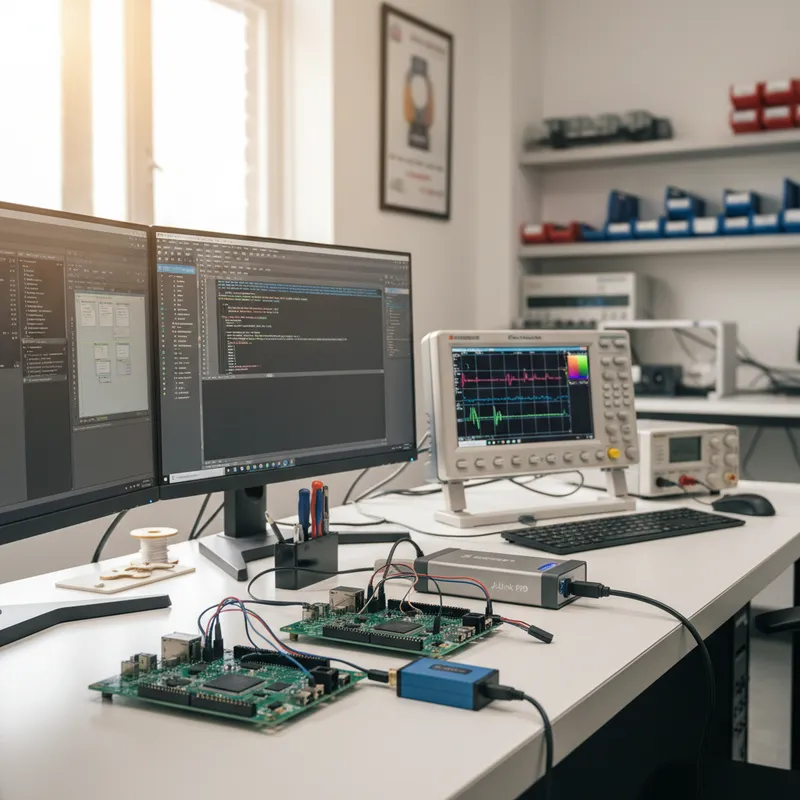
The typical Indian Nordic BLE debug setup: J-Link PLUS or ULTRA connected to the SWD header, JLinkRTTViewer running on the laptop, SEGGER_RTT_printf calls scattered through the softdevice event callbacks. When a BLE connection drops mid-transfer, you get a full stream of what the firmware was doing at the moment of the drop, without the timing distortion that semihosting or UART logging would introduce.
Ozone and SystemView for nRF53 dual-core work
Nordic’s nRF5340 is a dual-core chip, and coordinating the application core with the network core is where real bugs live. SEGGER Ozone supports simultaneous debug of both cores from a single J-Link, with separate register windows, call stacks, and breakpoint sets per core. SystemView adds live trace of ISRs, tasks, and user events across both cores on a common timeline, essential for diagnosing timing races between softdevice events and application-level RTOS tasks.
For Indian teams using Zephyr RTOS via the Nordic Connect SDK, SystemView integration is a one-line CMake option (CONFIG_SEGGER_SYSTEMVIEW=y). No additional probe purchase, no extra licenses, every J-Link ships with the RTT firmware needed to stream SystemView events.
Production programming Nordic with SEGGER Flasher
For Indian EMS houses and contract manufacturers programming nRF52 or nRF53 at volume, the SEGGER Flasher family replaces J-Link in the production environment:
- Flasher Compact: in-circuit programming of Nordic boards at bench scale
- Flasher PRO / Flasher ARM: standalone line-side programmers with no host PC requirement
- Flasher ATE: rack-mounted automated test equipment integration
- Flasher Hub: 10-gang parallel programming for high-volume nRF52 builds
- Flasher Secure: for Nordic devices using secure boot, Root-of-Trust injection, and one-time-programmable region provisioning
Because Flasher shares the same SEGGER device database as J-Link, the flash algorithm you validated on the bench is byte-identical to the one running on the factory line. This matters when you are producing BLE products for Indian markets under CDOT or BIS certification, where consistency between lab and line is part of the compliance story.
Buy SEGGER J-Link and Flasher for Nordic in India from GSAS
GSAS Micro Systems supplies SEGGER J-Link and Flasher across all Nordic device families, nRF52, nRF53, nRF54, nRF91, with local stock and application engineering support tailored to Indian BLE, Thread, Matter, and cellular IoT product development. Contact us for model selection guidance, a hands-on demo at any of our 11 offices across India, or to discuss production programming fixtures for your upcoming Nordic-based product launch.
Interested in SEGGER tools?
Talk to our application engineers for personalized tool recommendations.
More from SEGGER
View all →
Meet the GSAS Team at electronica India 2026, Stall H3.I45
15 Sept · 3 min
J-Link Is Now Validated by ST for StellarStudio
13 Sept · 2 min
An AI Agent That Drives the Debugger: SEGGER and Embedder Connect J-Link to the Loop
13 Sept · 6 min
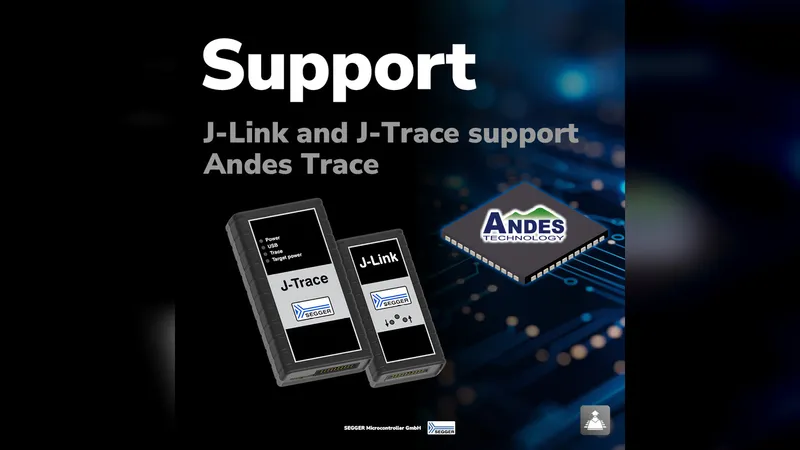
SEGGER J-Link and J-Trace Now Support Andes Trace: Why This Matters for RISC-V
21 Jul · 6 min
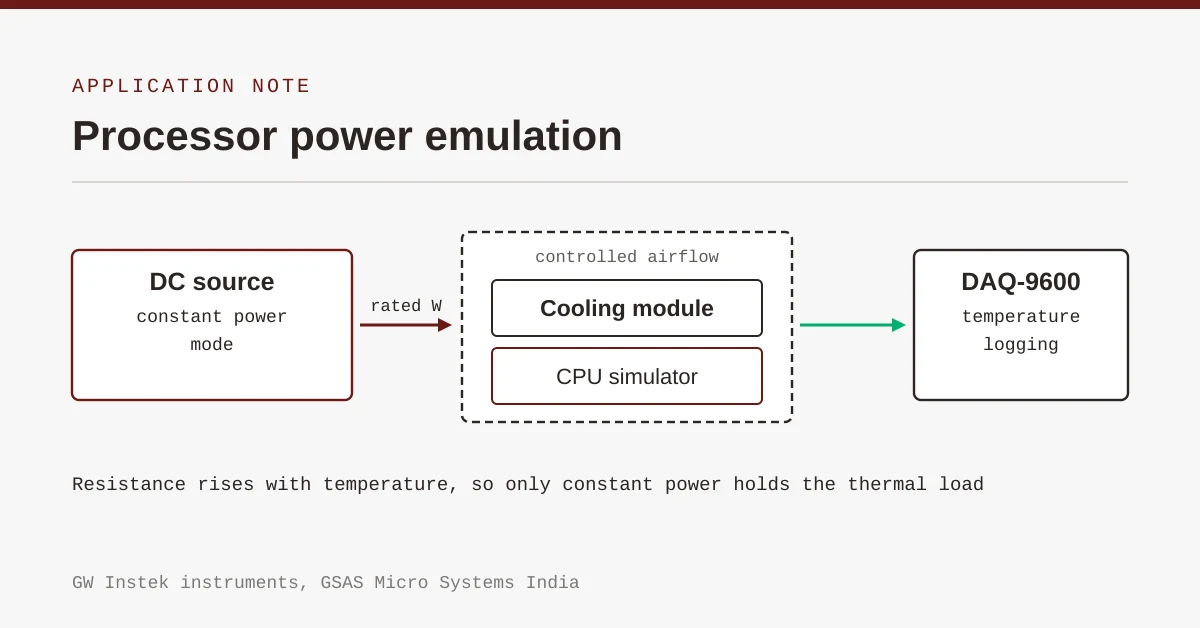
Emulating Processor Power for Thermal Testing: Why Constant Power
7 Oct · 7 min
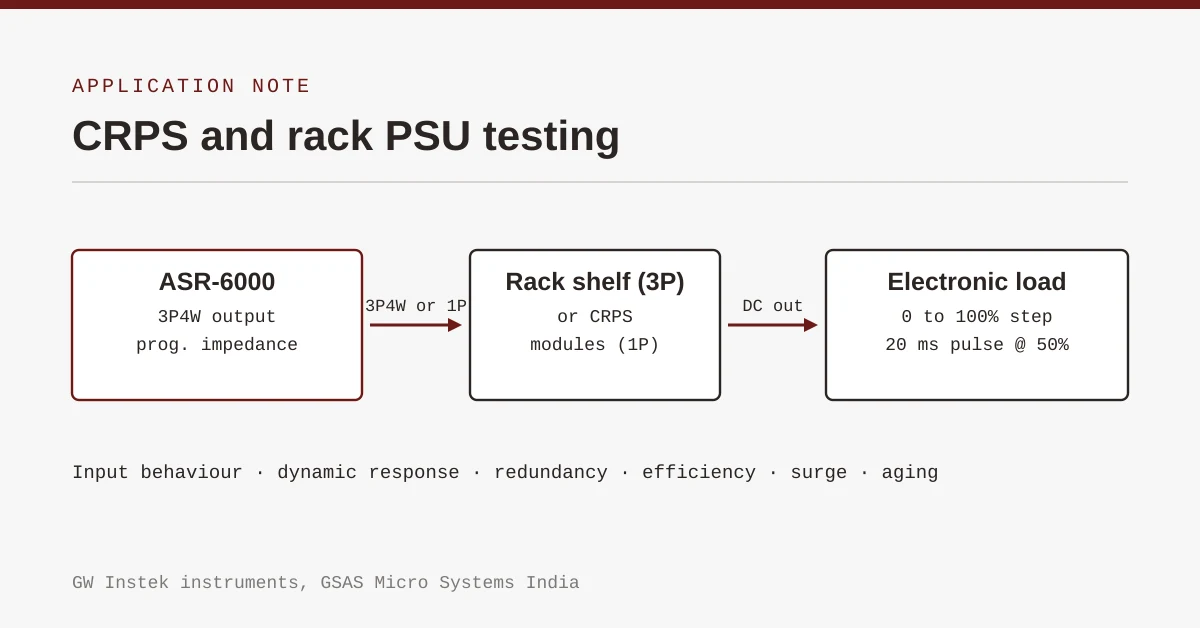
CRPS and Rack Power Supply Testing: The Six Tests That Matter
7 Oct · 7 min