Two probes sit at the top of SEGGER’s J-Link family, and they are closer siblings than their names suggest. The J-Link PRO and J-Link ULTRA share the same 4 MB/s download class, the same 50 MHz target interface clock, the same 100 MHz SWO sampling, and the same included software licenses. If you are choosing between them on performance, stop: on the bench they flash and debug at the same speed.
The real question is a simpler one. Does the probe need a network port?
The two-minute decision
Buy the J-Link PRO if any of these apply:
- Multiple developers share target hardware in a lab, and the probe should be reachable from any desk
- Your CI/CD pipeline flashes and tests physical boards, and the build server is not physically next to the target
- You debug hardware at another site, on a factory floor, or across a VPN
- You are building a test farm today and want probes your infrastructure can address by IP
Buy the J-Link ULTRA if this is closer to your day:
- The probe serves one engineer at one workstation, plugged in over USB
- Bench or rack space is tight, and a probe with a footprint smaller than a credit card matters
- You want to bolt the probe permanently into a fixture: the 2026 redesign has integrated mounting holes and USB Type-C
- You want SEGGER’s top USB performance without paying for network hardware you will not use
One more branch: if your probes will live in rack-mounted test farms, the J-Link PRO PoE runs power and data down a single Ethernet cable (IEEE 802.3af) and can supply up to 1 A to the target from its dedicated power port.
Verified spec comparison
Both columns below are verified against SEGGER’s published specifications.
| Feature | J-Link PRO | J-Link ULTRA (2026 redesign) |
|---|---|---|
| Download speed | Up to 4 MB/s | Up to 4 MB/s |
| Host interface | USB 2.0 Hi-Speed + 100 Mbit Ethernet | USB 2.0 Hi-Speed (USB-C) |
| Target interface clock | Up to 50 MHz | Up to 50 MHz |
| SWO sampling | Up to 100 MHz | Up to 100 MHz |
| Debug interfaces | JTAG, SWD, cJTAG, SPI | JTAG, SWD, cJTAG, SPI |
| Target connector | 20-pin JTAG/SWD | 20-pin JTAG/SWD |
| Target voltage | 1.2 V to 5 V | 1.2 V to 5 V |
| Architectures | Arm Cortex-M/A/R, RISC-V | Arm Cortex-M/A/R, RISC-V |
| Flash breakpoints | Unlimited (license included) | Unlimited (license included) |
| Included licenses | Ozone, J-Flash, RDI, Unlimited Flash Breakpoints | Ozone, J-Flash, RDI, Unlimited Flash Breakpoints |
| J-Link SDK | Available separately | Available separately |
| Size | 100 x 53 x 27 mm | 73 x 46 x 19 mm |
| Weight (without cables) | 73 g | 40 g |
| Mounting | Bench enclosure | Integrated mounting holes |
| Remote debug | Native Ethernet + J-Link Remote Server | Via J-Link Remote Server on a host PC |
Two details worth calling out. First, the ULTRA was redesigned in 2026: SEGGER moved it to a compact USB-C housing while keeping the performance unchanged, and earlier generations of the same line were sold as the J-Link ULTRA+. Second, the PRO is the model SEGGER positions for remote debugging in distributed development environments; its Ethernet interface accepts GDB Server and J-Link tool connections directly over the network.
What “same speed, different connectivity” means in practice
For a single engineer flashing a 2 MB image, PRO and ULTRA are indistinguishable: both move firmware at up to 4 MB/s, both give you unlimited flash breakpoints while stepping through driver code, and both run Ozone, SystemView, and every major IDE, SEGGER Embedded Studio, Keil MDK, IAR, Eclipse, and VS Code included.
The difference shows up the day a second person needs the probe. With an ULTRA, sharing means walking over to the bench or running J-Link Remote Server on the PC it is attached to. With a PRO, the probe itself is a network citizen: give it an IP address and any J-Link-compatible tool on the LAN, or across a VPN with Remote Server, can flash, debug, and script it. That is why CI/CD teams standardise on the PRO: the build agent addresses the probe directly, with no dedicated PC babysitting it.
Recommendations by team profile
- Individual professional, large firmware images: ULTRA. Top USB speed, smallest footprint, lowest-friction setup.
- Small team, one shared lab bench: one PRO on the shared target, ULTRAs at individual desks.
- Firmware team with hardware-in-the-loop CI: PRO per test target; PRO PoE when racks grow past a handful of probes.
- Field or production fixtures: ULTRA bolted into the fixture via its mounting holes, or PRO PoE where the fixture already has Ethernet.
If your firmware sits under 1 MB and none of the network scenarios apply, also weigh the mid-range J-Link PLUS: it carries the same included license bundle at the 1 MB/s speed class. Our complete J-Link buyer’s guide walks the whole family.
Buy J-Link PRO or ULTRA in India from GSAS
GSAS Micro Systems is an authorized SEGGER engineering partner in India. We supply both flagships with competitive pricing and short lead times, INR invoicing, and GST documentation, backed by field application engineers in Bengaluru, Hyderabad, Chennai, Pune, Mumbai, and Delhi NCR who help teams plan probe fleets, CI/CD integration, and debug workflows.
Request a quote for either probe, or explore the J-Link PRO and J-Link ULTRA product pages and the full SEGGER portfolio at GSAS.
Also appears in:
Interested in SEGGER tools?
Talk to our application engineers for personalized tool recommendations.
More from SEGGER
View all →
Meet the GSAS Team at electronica India 2026, Stall H3.I45
15 Sept · 3 min
J-Link Is Now Validated by ST for StellarStudio
13 Sept · 2 min
An AI Agent That Drives the Debugger: SEGGER and Embedder Connect J-Link to the Loop
13 Sept · 6 min
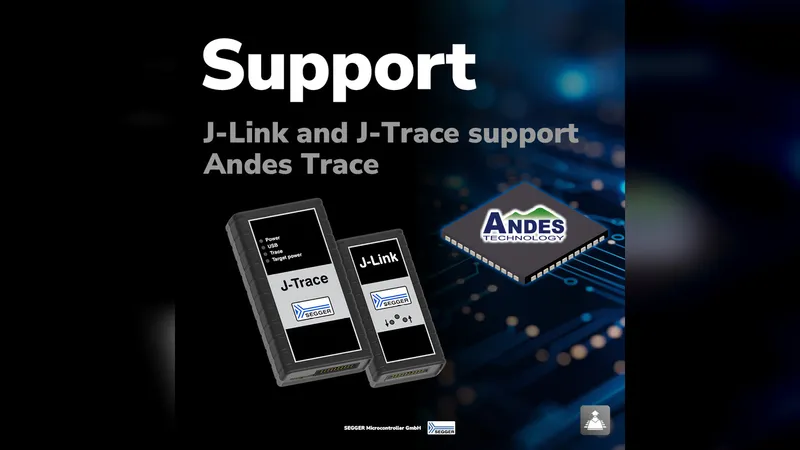
SEGGER J-Link and J-Trace Now Support Andes Trace: Why This Matters for RISC-V
21 Jul · 6 min
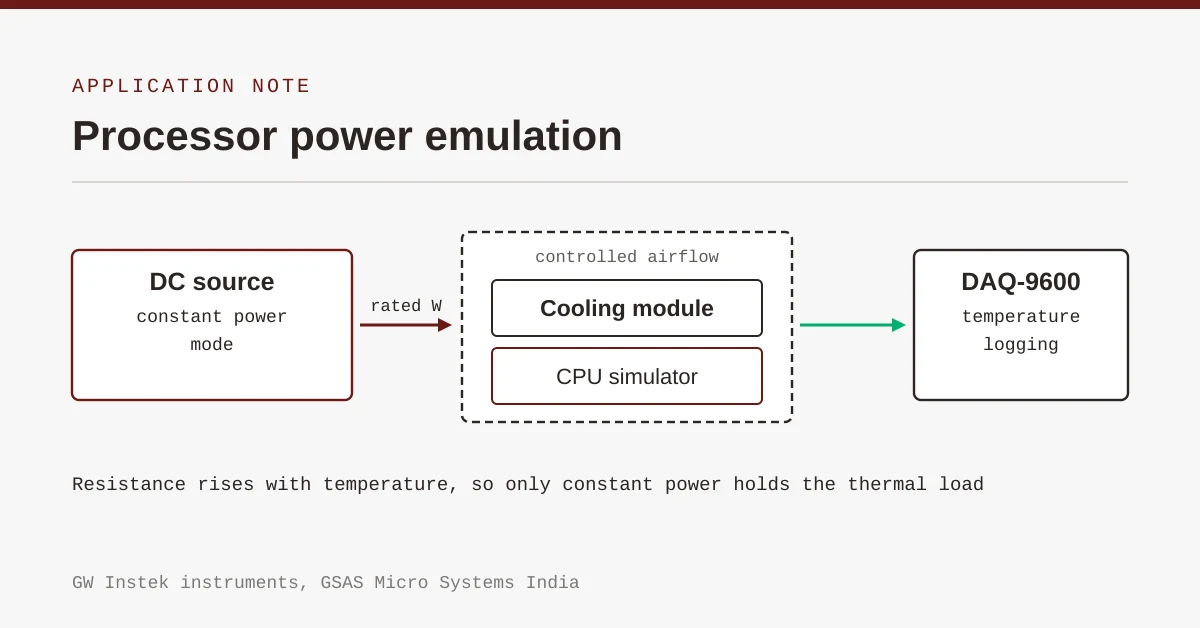
Emulating Processor Power for Thermal Testing: Why Constant Power
7 Oct · 7 min
CRPS and Rack Power Supply Testing: The Six Tests That Matter
7 Oct · 7 min