
Embedded Perspectives
Comparisons & Buying
35 articles tagged with Comparisons & Buying.
100BASE-T1 Media Converters: How to Choose One
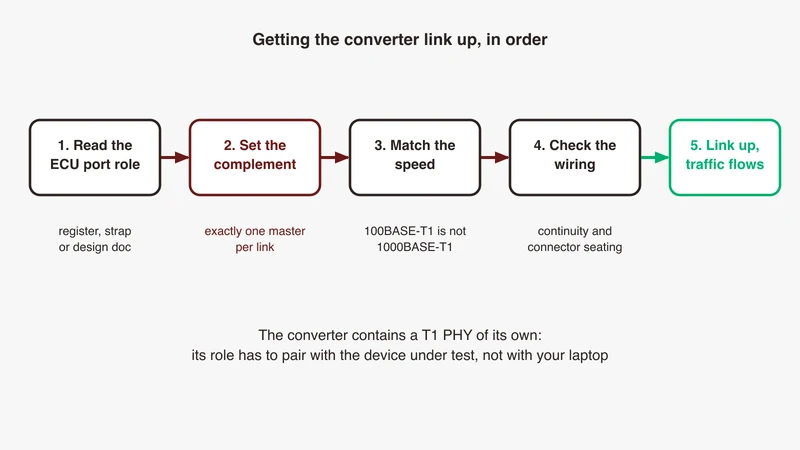
Search for a 100BASE-T1 media converter and you get SKU pages that document their own DIP switches, plus a pile of copper-to-fibre converters that have nothing to do with single-pair automotive Ethernet. This is the selection guide neither publishes: what the box does at the PHY layer, when a converter is the wrong box, and the nine criteria that decide fitness, each written as a question to put to the supplier rather than a specification we invented. Standards claims trace to IEEE 802.3 task force records and the public OPEN Alliance specifications. Written by the GSAS Micro Systems engineering team in India.
Automotive Data Loggers: Capture Without Loss
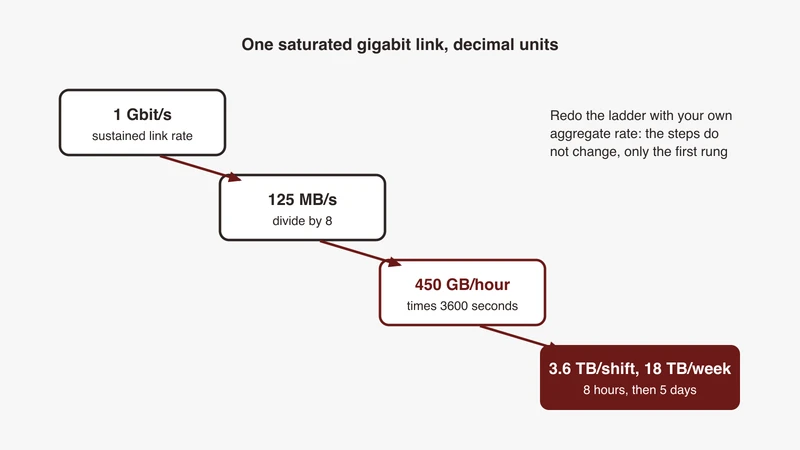
Search for an automotive data logger and the results split into cheap OBD dongles at one end and enterprise ADAS recorders at the other, with nothing in between explaining the engineering that decides whether you lose frames. This is the loss budget end to end: mirror oversubscription upstream of the logger, encapsulation overhead on the capture path, sustained write rate against burst rate, rotation stalls, and storage arithmetic worked in full so you can redo it with your own numbers instead of trusting ours. Written by the GSAS Micro Systems engineering team in India.
Automotive Ethernet Connectors: H-MTD, MATEnet, MQS
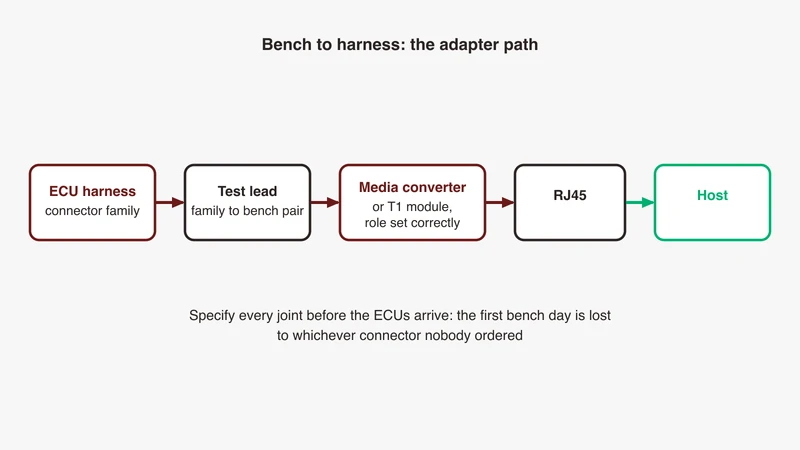
An ECU arrives on the bench with a connector nobody has a mate for, and the day is gone. Search the family names and you get connector product pages that describe their own part and stop there. This article puts the families side by side in one table using only what their public pages state, then makes the point those pages leave out: the IEEE link segment definition, not the connector, is what sets reach and loss limits, and shielding is a channel decision rather than a preference. Written by the GSAS Micro Systems engineering team in India.
How to Choose an Automotive Ethernet Switch for the Lab
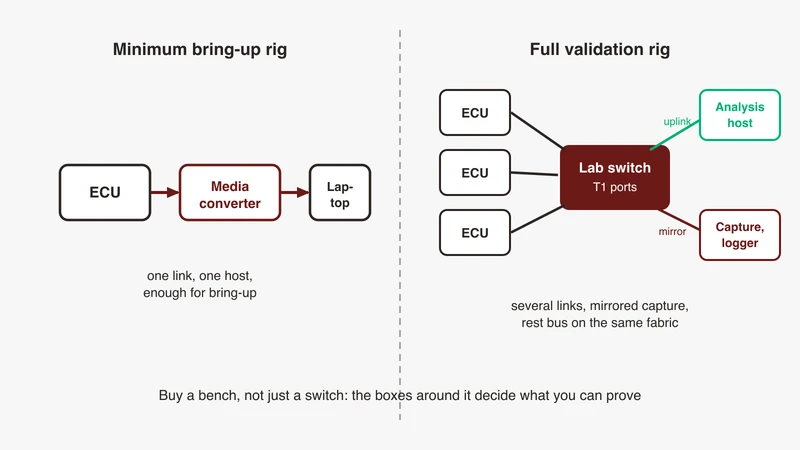
Search for an automotive Ethernet switch and you get silicon selection tables written for the engineer choosing a die for a zonal controller. The person searching from a validation lab wants a boxed switch that reproduces a vehicle network on a bench, and finds nothing addressed to them. This is that guide: how to separate the two products, how to count the ports you actually need, and an eight-row scoring matrix written as questions to put to a supplier rather than specifications we invented. Standards and documentation claims trace to IEEE 802.1 and 802.3, ASAM, AUTOSAR, the IETF and public Linux and Wireshark documentation. Written by the GSAS Micro Systems engineering team in India.
Buying Automotive Ethernet Test Gear in India
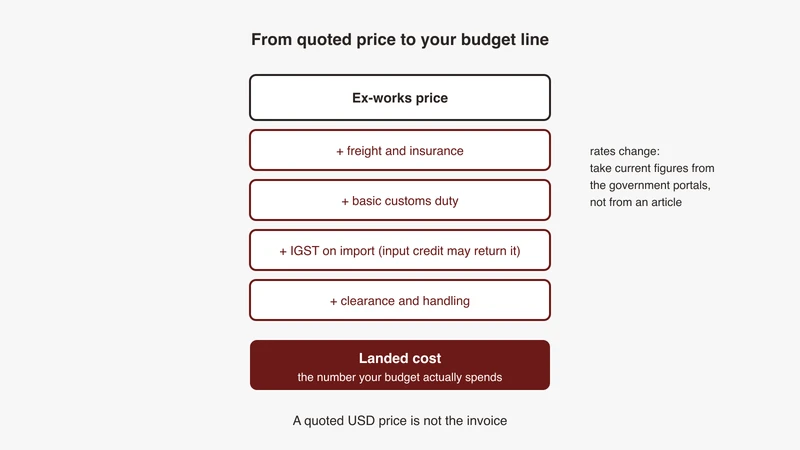
Search for a 100BASE-T1 tap or a T1 to RJ45 media converter from India and the results are fibre media converters and LAN cable testers, none of which are T1, and no forum thread that has been through the purchase. This is the missing page: the capability table for a first bench with a defer-or-borrow column, an honest account of what is stocked here versus imported to order, the parts that make up a landed cost as a structure rather than a number, and the compliance portals your teams will actually use. No prices, no duty rates and no lead-time bands, because all three change and none of them belong in an article. Written by the GSAS Micro Systems engineering team in India.
Capturing Automotive Ethernet: Tap vs Mirror vs Converter
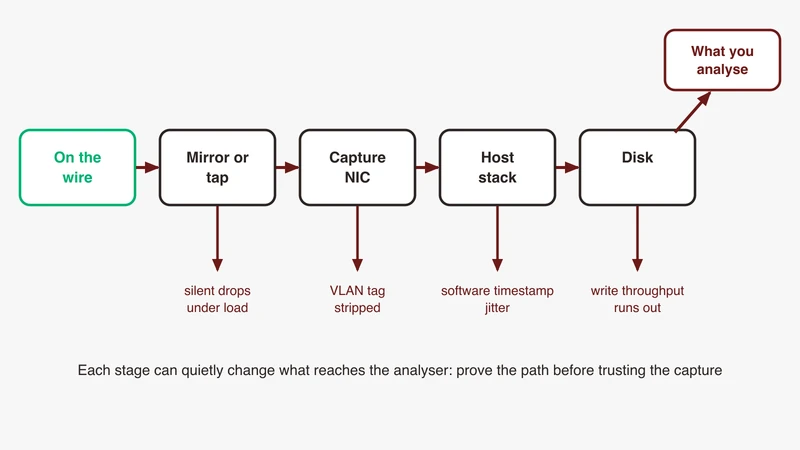
Search for how to capture in-vehicle Ethernet and you get product pages that assume you already chose the method, plus an IT tap-versus-mirror debate that never touches a vehicle. This is the method: how to pick between a media converter, a mirror port, an active tap and a capture module, and the four ways a capture goes quietly wrong instead of obviously broken. Every claim traces to the Wireshark documentation and wiki, a public Wireshark Q and A thread, an adapter vendor's support article or a published whitepaper, written by the GSAS Micro Systems engineering team in India.
Klocwork vs Perforce QAC: Choosing a Perforce Analyzer in India
Klocwork and Perforce QAC are both Perforce static analysis tools, but they solve different problems: Klocwork is built for DevSecOps CI/CD velocity across many languages, Perforce QAC is built for precision MISRA compliance depth in C/C++. GSAS supplies both in India.
Saleae Logic MSO: Standard or Pro? The India Buying Decision
Standard and Pro are the same Logic MSO hardware, the choice is 9-bit vs 12-bit analog resolution and sample memory per channel. Here is how Indian engineering teams should decide, model by model.
Choosing a SEGGER Flasher: Standalone vs Gang vs Secure vs Portable
Standalone, gang, secure, or portable, the SEGGER Flasher family covers four different production-programming problems, not one. Here is how Indian engineering and production teams should decide.
J-Trace PRO vs TRACE32: An Honest Comparison for India
SEGGER J-Trace PRO delivers much of the same core streaming-trace capability as Lauterbach TRACE32 for Arm Cortex-M/A/R and RISC-V targets, at a lower cost point. Here is where each platform is the stronger fit for Indian engineering teams.
Aardvark vs Cheetah vs Promira: Total Phase Host Adapter Guide (India)
Aardvark, Cheetah, or Promira: which Total Phase USB host adapter fits your I2C, SPI, or eSPI workflow. A decision guide for Indian embedded teams, plus a short note on which Beagle analyzer to pair with it.
J-Link PRO vs J-Link ULTRA: Which SEGGER Flagship Debug Probe Should You Buy?
J-Link PRO and J-Link ULTRA share SEGGER's fastest 4 MB/s download class, so the choice comes down to Ethernet. Here is the decision framework Indian engineering teams can apply in two minutes, with a full verified spec comparison.
JTAG-HS3 vs HS2 FPGA Programming Cable: Boundary Scan, Production & Validation in India
A use-case guide to the Digilent JTAG-HS2 vs JTAG-HS3 FPGA programming cables for the engineers who actually rely on them, memory-validation bench teams, defence and aerospace FPGA production lines, and high-volume EMS boundary-scan test. Specs, IEEE 1149.1 structural test, production flash programming, and which cable to buy in India.
J-Link vs ST-Link vs CMSIS-DAP vs Black Magic Probe: Which Debugger Should an Indian Team Buy?
A neutral, fact-checked decision matrix for Indian embedded teams choosing a debug probe, J-Link vs ST-Link vs CMSIS-DAP vs Black Magic Probe, compared on device neutrality, toolchain support, flash speed, unlimited flash breakpoints, commercial-license clarity, and support in India.

MCC USB DAQ Selection Guide for Indian Labs: USB-1808X vs USB-1608G vs MCC 118
Choosing an MCC USB data acquisition device for an Indian lab comes down to three questions: do you need simultaneous sampling, how many channels, and Raspberry Pi or PC? This guide compares the MCC USB-1808X, USB-1608G Series, and MCC 118 DAQ HAT.

SEGGER J-Link Price in India: Models, INR Cost Bands, GST & Where to Buy (2026)
How SEGGER J-Link pricing actually works in India, the per-model cost ladder (BASE to PRO PoE), GST invoicing, customs and lead time, the EDU-versus-commercial licence trap, and where to buy J-Link in India without import headaches.
USRP SDR Selection Guide for India: B200mini, B205mini-i, B210, X310 and E320
Picking the right USRP software-defined radio for an Indian RF lab, telecom prototype, or embedded sensing node depends on channels, bandwidth, host link, and whether you need standalone operation. This guide compares the NI Ettus USRP B200mini, B205mini-i, B210, X310 and E320.
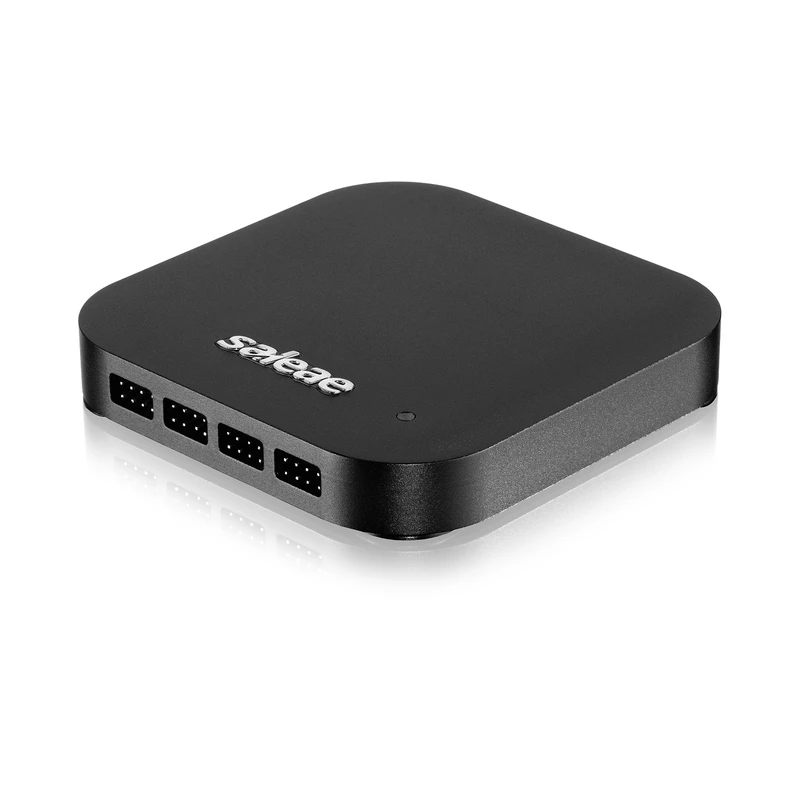
Saleae Logic in India: Buyer's Guide and Pricing (2026)
How to buy Saleae Logic in India, pricing context, procurement options (GeM, SAP Ariba, Coupa, TReDS), GST and import logistics, and which Saleae Logic model fits Indian engineering bench, lab, and CI/CD use cases.
FADOS Circuit Board Tester: Complete Guide for Indian Repair Teams
The complete guide to FADOS circuit board testers for Indian repair teams, FADOS9F1 and FADOS XI Advanced compared, VI curve tracing workflow, equivalent circuit diagrams, short circuit detection, frequency scanning, and the buying path in India.
Keil Studio Cloud and Desktop: India Buyer's Guide for Arm Embedded Teams
The complete buyer's guide to Arm Keil Studio Cloud and Keil Studio Desktop for Indian Cortex-M teams, how it compares to µVision, Arm Compiler 6, ULINK probes, commercial MDK licensing, and the VS Code migration path.
Altium Designer vs Siemens Xpedition Standard: For Indian PCB Teams
A fair, technical comparison of Altium Designer and Siemens Xpedition Standard for Indian PCB design teams, schematic capture, routing, HyperLynx integration, constraint management, and the migration path from one to the other.
PicoScope: The Complete Guide to Buying a PC-Based Oscilloscope in India
The complete buyer's guide to the Pico Technology PicoScope family for Indian engineering teams, 2000 to 9000 series, software, decoders, use cases, and the buying path through GSAS as an authorized Indian engineering partner.
SEGGER J-Link: The Complete Buyer's Guide for Indian Engineering Teams
The definitive buyer's guide to the SEGGER J-Link debug probe family for Indian commercial firmware teams, every model, RTT, Ozone, Flasher production path, and how to pick the right J-Link for your workflow.
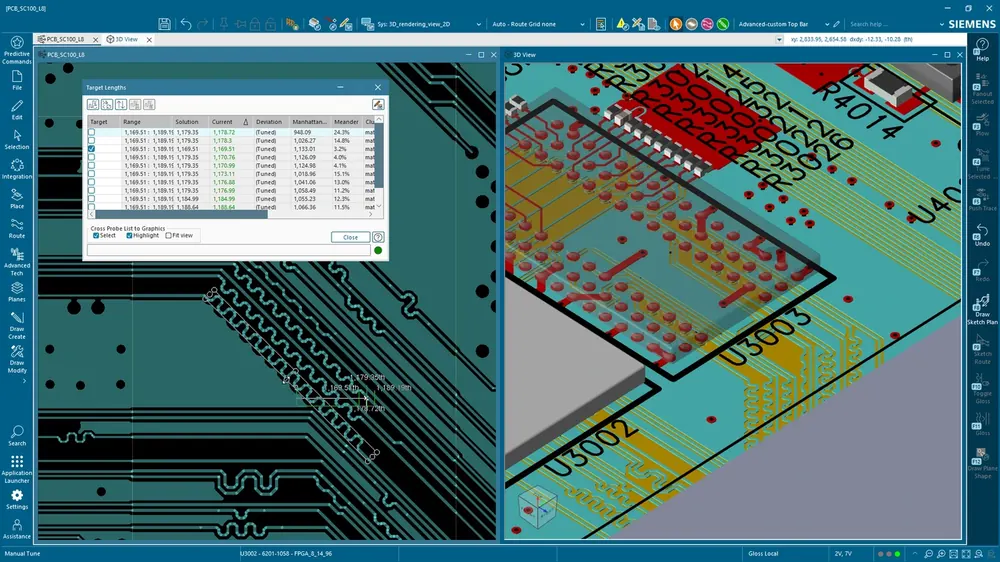
PCB Design Tool Comparison 2026: Xpedition vs Altium vs OrCAD vs PADS: An Indian Buyer's Guide
Choosing a professional PCB design tool in 2026, an honest, India-focused comparison of Siemens Xpedition Standard, Altium Designer, Cadence OrCAD, and PADS Essentials. Sourced from public OEM documentation, with a recommendation matrix by team profile.
Sensepeek PCBite Oscilloscope Compatibility: PicoScope, Keysight, Tektronix, R&S, and GW Instek
A compatibility guide for Sensepeek PCBite probes with major oscilloscope brands, connection types, impedance matching, probe detection, and what to verify before pairing your scope with SQ and SQG probes.
Sensepeek PCBite Kit Buying Guide: SQ10-Only vs SQ200 Kit vs SQ500 Kit
A practical buying guide comparing the three Sensepeek PCBite kit configurations, SQ10-only starter kit, SQ200+SQ10 mid-range kit, and SQ500+SQ10 premium kit, to help you choose the right one for your lab.

SEGGER Flasher for Production Programming in India: Compact, PRO, ATE2, Secure
Production flash programming is a different discipline from development.
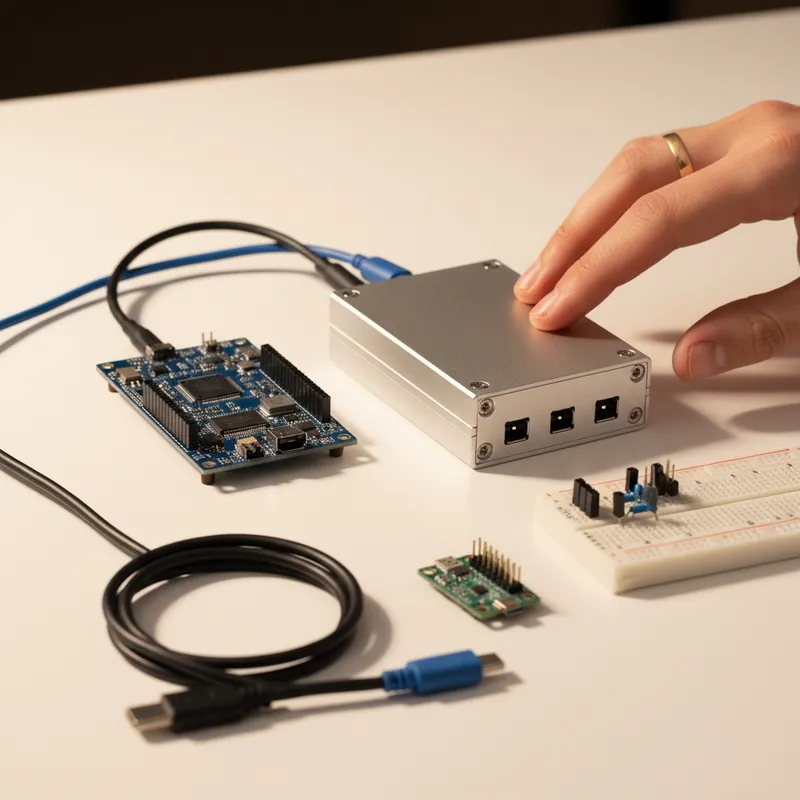
In-System vs Offline Programming: Choosing the Right IC Programming Strategy
A practical comparison of in-system programming (ISP) and offline socket programming for IC production: when to use each approach, the technical tradeoffs, hybrid strategies, and how Indian manufacturing teams can select the right Xeltek tools for their workflow.
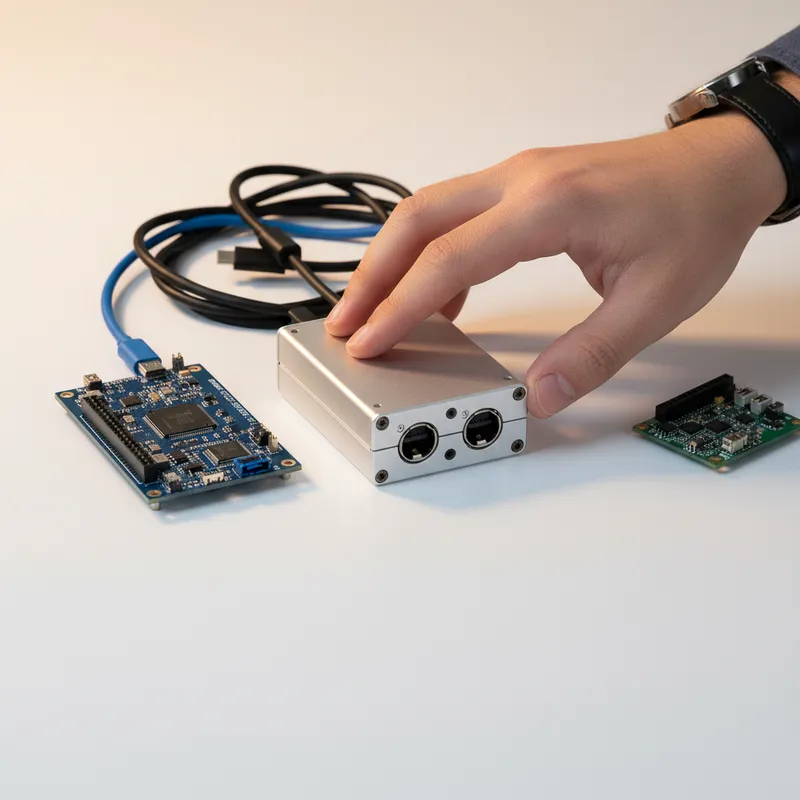
SuperPro 610P vs 6100N vs 7500N: Which Xeltek Programmer Is Right for You?
A practical buying guide comparing the Xeltek SuperPro 610P, 6100N, and 7500N: device coverage, pin drivers, standalone mode, LAN, gang programming, and how to choose the right universal programmer for your engineering lab or production floor in India.
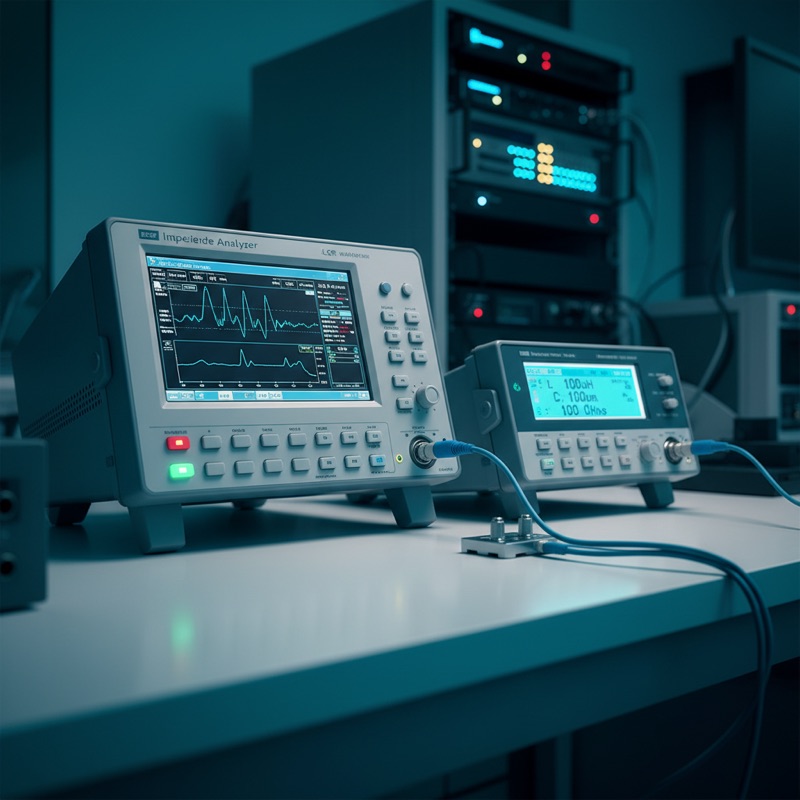
Microtest 6632+ vs 6350+ DC Bias Systems: Which One Fits Your Lab?
Both the Microtest 6632+ and 6350+ measure inductor saturation under DC bias, but they start from different instruments with different frequency ranges and cost profiles. Here is how to choose between them.
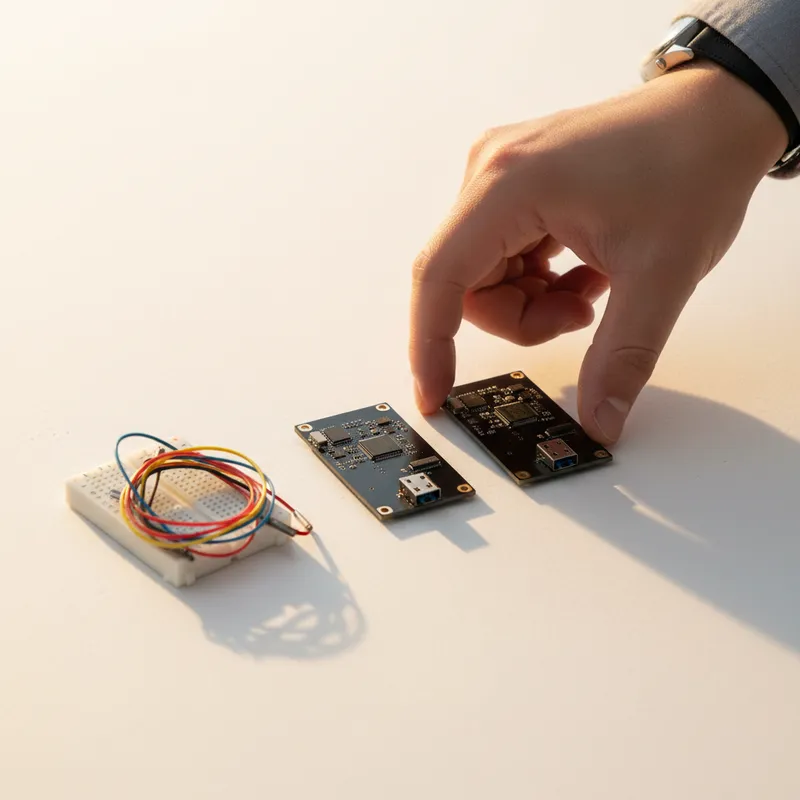
Binho Nova vs Supernova vs Pulsar: Which USB Host Adapter Is Right for You?
On Binho's published specifications: the Nova is the first-generation adapter for I2C, SPI, UART and 1-Wire; the Supernova is the MIPI I3C instrument, specified as Controller or Target at 12.5 MHz with SDR and HDR-DDR; the Pulsar adds half-duplex RS-485 and programmable downstream power. CAN-FD and 1-Wire on the Pulsar are still listed by Binho as coming soon.
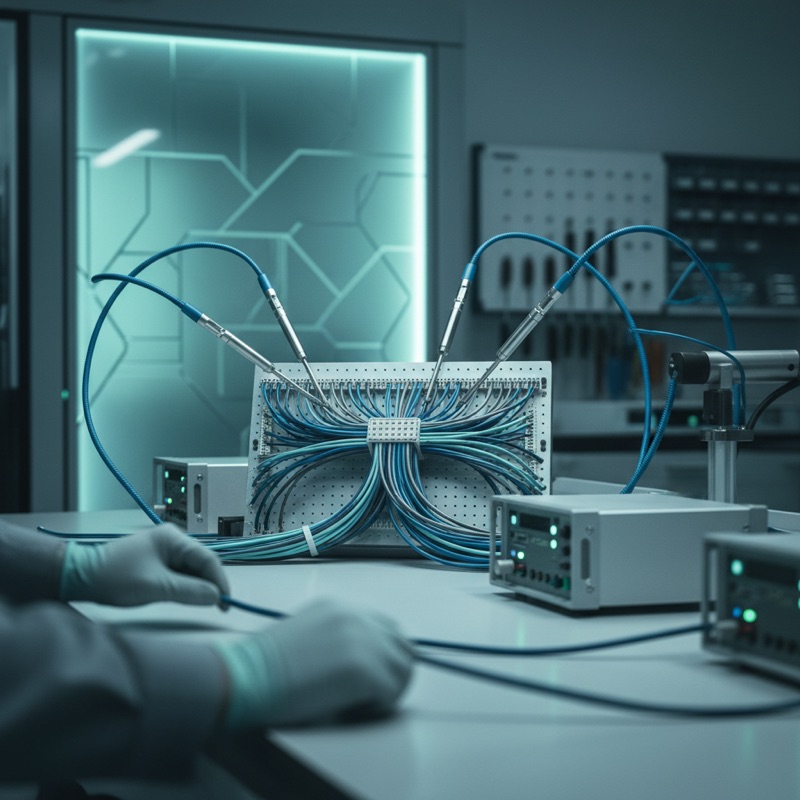
2-Wire vs. 4-Wire Cable Harness Testing: Which Method Does Your Production Line Need?
A practical comparison of 2-wire and 4-wire cable harness testing methods, measurement accuracy, test speed, cost, and when each approach is the right choice for Indian harness manufacturers.
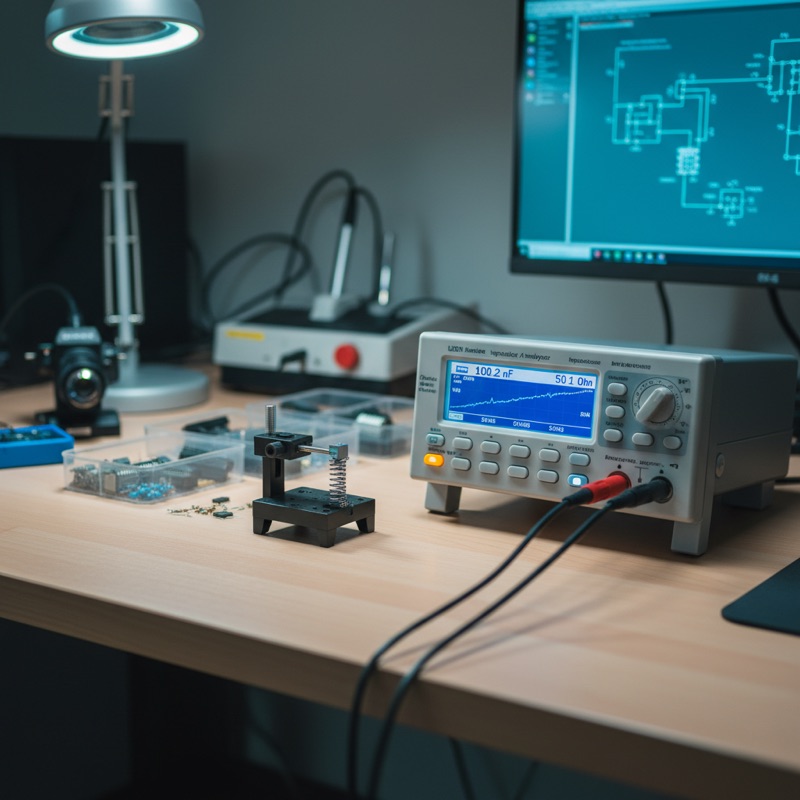
LCR Meter vs. Impedance Analyzer: Which Instrument Does Your Application Need?
A practical comparison of LCR meters and impedance analyzers, measurement capability, frequency range, applications, and how to choose the right instrument for passive component testing, magnetics design, and material characterisation.
LoRa vs. Wi-Fi vs. BLE for IoT: Choosing the Right Wireless Technology for Your Project
A practical comparison of LoRa, Wi-Fi, and Bluetooth Low Energy for IoT applications, range, power consumption, data rate, and cost tradeoffs to help Indian engineering teams choose the right wireless technology.
RYLR998 vs. RYLR993: Choosing Between P2P LoRa and LoRaWAN for Your IoT Deployment
A detailed comparison of the Reyax RYLR998 (P2P LoRa) and RYLR993 (LoRaWAN + P2P dual-mode), when to choose point-to-point simplicity versus LoRaWAN network management for IoT sensor deployments in India.
Questions about Comparisons & Buying?
Our application engineers help teams evaluate tools, plan validation, and scope pilots across India.