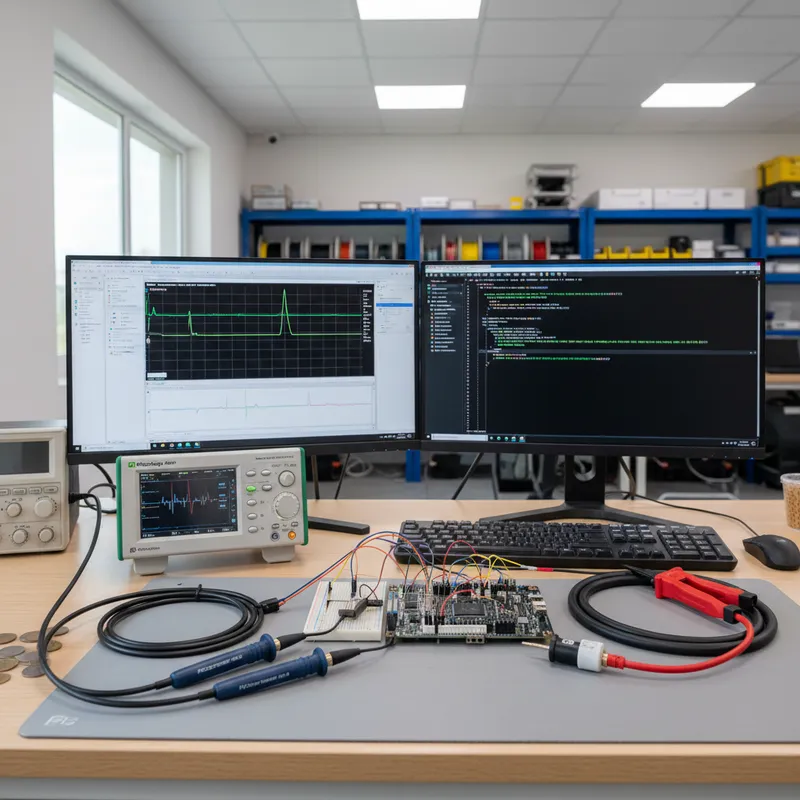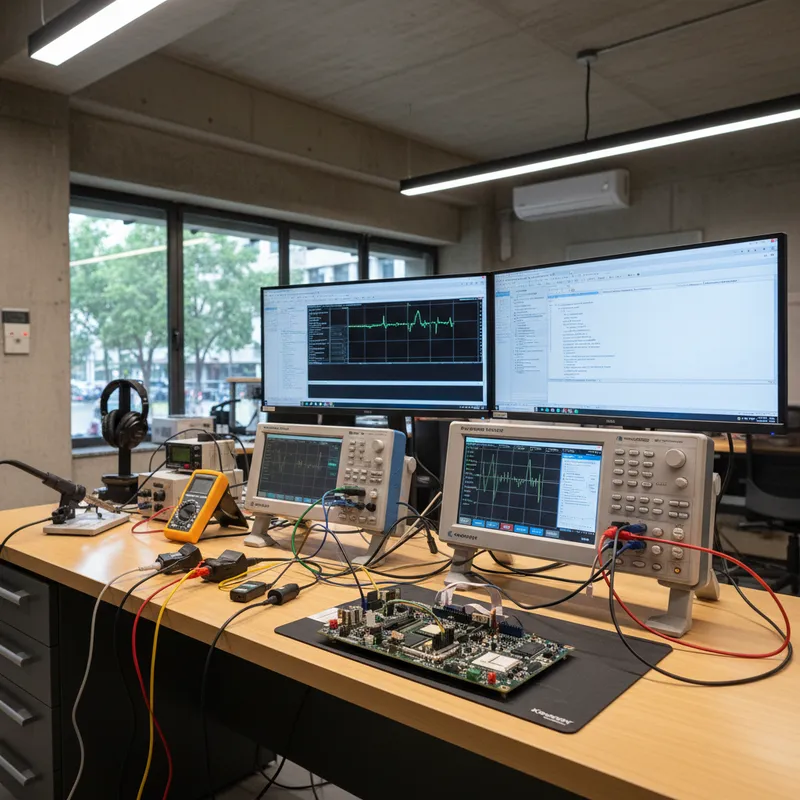
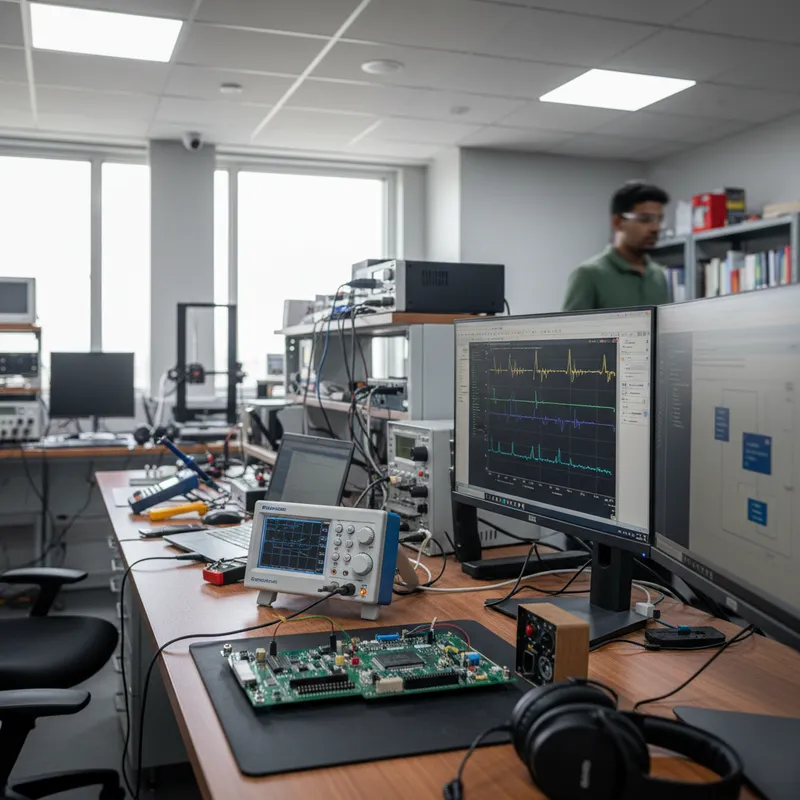
If you have searched “picoscope” or “picoscope india” and landed here, this is the single page you need. It is a complete buyer’s guide to the Pico Technology PicoScope family written for Indian engineering teams, whether you are a power-electronics designer bringing up a SiC inverter in Pune, a telecom R&D lead in Bengaluru, a defence bring-up engineer in Hyderabad, or an embedded consultancy in Chennai deciding between a PC-based oscilloscope and a traditional benchtop. For the partner page, see Pico Technology at GSAS, GSAS Micro Systems is an authorized Pico Technology engineering partner for India.
PicoScope is not a single product. It is a family of USB-connected PC-based oscilloscopes that spans entry-level 2-channel education scopes to 33 GHz sampling scopes for photonics research. This guide covers every major line, the host software, the free decoders, the trade-offs against benchtops, and the buying path in India.
What Is a PicoScope?
A PicoScope is a PC-based USB oscilloscope. Instead of a traditional benchtop instrument with its own display and keypad, a PicoScope splits the problem into two pieces:
- A compact USB-connected hardware front end containing the input amplifiers, ADCs, acquisition memory, trigger logic, and AWG. No display, no keypad, purely the acquisition engine.
- PicoScope 7 host software running on your laptop or workstation (Windows, macOS, or Linux). The host handles display, triggering UI, math, decoding, measurements, masks, persistence, and export.
The USB cable carries acquisition data back to the host. The scope feels like a traditional bench instrument, but you get your laptop’s full-resolution display, unlimited screen real estate, multi-window layouts, and direct waveform export into Jira, Confluence, or a report.
A PicoScope gains cost efficiency, deep memory, free lifetime software updates, cross-platform host support, scriptable automation via PicoSDK, and lab consolidation (one box replaces scope plus logic analyzer plus spectrum analyzer plus serial decoder). It loses standalone bench form factor without a laptop, and the knob-and-dial muscle memory of a traditional benchtop. For most Indian teams, the cost and deep-memory advantages are decisive, a 1 GHz PicoScope 6000E with 4 GS of buffer costs a fraction of an equivalent-bandwidth benchtop flagship.
The PicoScope Family in 2026
Pico Technology’s 2026 lineup spans eight major product families, from 10 MHz education scopes to 33 GHz SXRTO sampling scopes. Here is the complete family overview:
| Series | Bandwidth | Resolution | Channels | Sample Rate | Memory | Best For |
|---|---|---|---|---|---|---|
| 2000 Series | 10–100 MHz | 8-bit | 2 + AWG | up to 1 GS/s | up to 128 MS | Education, hobby, field service |
| 3000E Series | 100–500 MHz | 8/10-bit | 4, MSO opt. | up to 5 GS/s | up to 2 GS | General embedded, MSO needs |
| 4262 | 5 MHz | 16-bit | 2 | 10 MS/s | 16 MS | Audio, sensor, vibration, low-noise |
| 4000A / 4824A | 20 MHz | 12-bit | 8 | 80 MS/s | 256 MS | Multi-channel motor/drive, battery cell monitoring |
| 4444 | 20 MHz | 14-bit differential | 4 true diff | 400 MS/s | 256 MS | Mains, 3-phase, HV DC link, PWM inverter |
| 5000D Series | 60–200 MHz | FlexRes 8/12/14/15/16-bit | 2 or 4 | up to 1 GS/s | up to 512 MS | Resolution-flexible R&D, medical, precision |
| 6000E Series | 300 MHz – 1 GHz | FlexRes 8/10/12-bit | 4 or 8, MSO opt. | 5 GS/s | 4 GS | High-bandwidth R&D, SI, automotive Ethernet |
| 6428E-D | 3 GHz | 10-bit | 4, MSO opt. | 10 GS/s (1 ch) | 4 GS | Flagship SI, PCIe, DDR, 10GBASE-T |
| 9300 Series | up to 30 GHz | sequential sampling | 2 or 4 elec, 1 opt | equivalent-time | - | Telecom eye diagrams, optical SERDES |
| 9400A SXRTO | up to 33 GHz | real-time sampling | 2 or 4 | up to 1 TS/s eq. | - | Jitter, single-shot photonics, 5G front-haul |
The family splits into three decision zones:
- 2000 / 3000 / 4262 / 4000A: affordable, single-purpose. Pick one if you know exactly what you need (16-bit audio, 8-channel motor winding, a basic MSO).
- 5000D / 6000E / 4444: the R&D workhorse zone. 5000D gives FlexRes up to 16-bit; 6000E gives 1 GHz, 5 GS/s, 4 GS memory; 4444 gives 1000 V CAT III isolated differential.
- 9300 / 9400A: the specialist zone. 30+ GHz bandwidth, optical inputs, SXRTO.
Most Indian buyers settle on a 5000D, a 6000E, a 4444, or a 6000E + 4444 pair sharing a bench.
PicoScope 6000E: High-Bandwidth Workhorse
The PicoScope 6000E is Pico Technology’s high-bandwidth flagship and the most common pick for serious Indian R&D work, SiC/GaN inverter bring-up, Automotive Ethernet, FPGA SERDES validation, and R&D consultancies needing one instrument that handles almost anything.
The base specifications:
- Bandwidth: 300 MHz, 500 MHz, 750 MHz, or 1 GHz standard variants. The 6428E-D flagship reaches 3 GHz for signal-integrity work on PCIe, DDR, and 10GBASE-T.
- Sample rate: 5 GS/s real-time.
- Memory: 4 GS deep buffer, the 6000E’s biggest single differentiator. At any price point, 4 GS of acquisition memory is unusual.
- Resolution: FlexRes hardware 8/10/12-bit. FlexRes is hardware-level, not software averaging, the ADC reconfigures.
- Channels: 4 or 8, with optional MSO inputs for 16 additional digital channels.
- Trigger and math: multi-level trigger, serial protocol trigger, pulse-width, runt, window, logic, and Boolean triggers; extensive math library.
The 4 GS memory matters more than most teams expect. On a 1 GHz scope at 5 GS/s, 4 GS gives you 800 ms at full rate: long enough to capture an entire PWM burst, a full CAN transaction, or an inverter startup without decimation. Most benchtop flagships top out at 50–400 MS.
For the full technical deep-dive, see the PicoScope 6000E deep-dive. Workload guides: power electronics IGBT/SiC/GaN, CAN-FD/LIN/FlexRay/Automotive Ethernet, and USB/PCIe/DDR/Ethernet signal integrity.
PicoScope 4444: Differential Safety Bench
The PicoScope 4444 is the scope we recommend to any Indian power-electronics team that regularly touches mains, 3-phase systems, or HV DC links. It is a 4-channel true differential oscilloscope, genuine 4-input differential front end where every channel has isolated positive and negative inputs, not a single-ended scope with a math subtract.
Key specifications:
- Channels: 4 true differential inputs.
- Resolution: 14-bit.
- Bandwidth: 20 MHz.
- Sample rate: 400 MS/s.
- Memory: 256 MS buffer.
- Isolation: 1000 V CAT III when paired with PicoConnect 442 probes. The 4444 hardware is differential, but the full 1000 V CAT III rating is only valid with the matched PicoConnect 442 probe family.
For 3-phase inverter, HV DC-link, and PWM capture where you need to reference a floating midpoint rather than chassis ground, the 4444 is the right pick. The 14-bit resolution captures low-side switching noise cleanly on top of a 600 V or 800 V rail, something an 8-bit scope cannot do without aggressive averaging.
For the probe ecosystem, see the PicoConnect 442 and current probe guide. For inverter workflows, see inverter and motor drive analysis and partial discharge and harmonics.
PicoScope 5000D FlexRes and PicoScope 4262 Precision Scopes
The PicoScope 5000D Series is the resolution-flexible R&D scope. FlexRes trades sample rate for vertical resolution at the hardware ADC level, not software averaging:
- 60, 100, or 200 MHz bandwidth variants.
- Hardware FlexRes 8, 12, 14, 15, or 16-bit: higher resolution at lower maximum sample rate.
- 2 or 4 channels, up to 512 MS memory.
The 5000D is the right pick for medical R&D, precision analog work below 1 GHz, and any workload where you would otherwise buy two scopes. See PicoScope 5000D FlexRes vs Siglent SDS2000X HD for a head-to-head comparison.
The PicoScope 4262 is the ultra-precision option, 5 MHz, 16-bit, 2-channel. Buy it for audio-grade noise floors, sensor front-ends, strain gauge capture, or any narrow-band measurement where the question is what is happening at the least-significant bit. See the 4262 precision-audio and sensor deep-dive.
PicoScope 9300 and 9400A: Telecom and Photonics
At the high end, Pico Technology splits into two specialist sampling-scope families.
The PicoScope 9300 Series uses sequential (equivalent-time) sampling to reach 30 GHz electrical and 9.5 GHz optical on the optical variants. It can only capture repetitive signals, stitching waveforms together from many acquisitions, perfect for eye diagrams on clocked SERDES lanes and optical transceiver qualification, unsuitable for single-shot capture.
The PicoScope 9400A SXRTO (Sampler-Extended Real-Time Oscilloscope) pushes real-time sampling up to 33 GHz on the 9404A-33. SXRTO combines sampling-scope front-end bandwidth with single-shot real-time capture, essential for jitter, spread-spectrum analysis, and burst-mode photonics.
For Indian telecom, 5G front-haul, and photonics teams working on 25G/50G/100G optical links, these scopes replace instruments from far more expensive competitors. See the 9300 telecom and photonics guide.
PicoScope 7 Software and Free Decoders
Every PicoScope in the family, from the cheapest 2000 series to the 33 GHz 9404A, runs the same host application: PicoScope 7. It is cross-platform, running natively on Windows, macOS, and Linux. Updates are free for the life of the hardware. Buy a PicoScope 6000E today and you will still receive free software updates ten years from now, including any new decoders and math modes added in that time.
The feature set:
- Over 40 serial protocol decoders, all free. CAN 2.0, CAN-FD, LIN, FlexRay, SENT, J1939, I²C, SPI, UART, USB 1.1/2.0/3.0, Ethernet, 1-Wire, ARINC 429, MIL-STD-1553, DALI, DMX, Manchester, Modbus, and more. On most benchtop scopes, each serial decoder is a paid license. On PicoScope 7 the full library ships at zero cost, which matters when your team suddenly needs to decode a new protocol mid-project.
- Spectrum analyzer mode with configurable RBW, span, and peak-hold for EMC pre-compliance.
- Math channels with FFT, filter, integrate, differentiate, Boolean, and custom functions.
- Persistence display, mask test, and averaging for signal-quality analysis.
- PicoSDK: scriptable automation via C/C++, Python (pypicosdk), MATLAB, and LabVIEW bindings.
For the software deep-dive see PicoScope 7, math, masks, spectrum, persistence. For LabVIEW integration see PicoScope LabVIEW integration.
PicoLog: the Data Logger Sibling Family
PicoScope’s sibling family, PicoLog, is worth mentioning because buyers occasionally search “picoscope” when they actually need a long-duration data logger. PicoLog instruments are purpose-built for multi-day environmental and precision logging:
- PicoLog TC-08: 8-channel thermocouple logger, 20-bit, supports B/E/J/K/N/R/S/T types with CJC. The workhorse for temperature mapping across a test chamber or battery pack.
- PicoLog PT-104: 4-channel PRT/RTD logger, 24-bit, 0.015 °C accuracy. For calibration labs, laser stabilization, and medical qualification.
- PicoLog CM3: 3-channel AC current logger, 24-bit, for long-term current monitoring on 3-phase feeds.
If your actual need is “log temperature or current over days or weeks”, PicoLog is what you want. See the PicoLog industrial and environmental guide and the PicoLog precision measurement guide.
PicoScope vs Benchtop Oscilloscope
Indian teams frequently arrive at PicoScope after pricing a benchtop and finding the budget won’t stretch. The trade-off is genuine.
Where PicoScope wins:
- Cost per GHz of bandwidth. A 1 GHz 6000E is a fraction of a 1 GHz benchtop flagship from any tier-one vendor.
- Deep memory. 4 GS buffer is unusual at any benchtop price point, most flagships top out at 50–400 MS.
- Free serial decoders. CAN-FD, FlexRay, Automotive Ethernet, USB, SENT, J1939, and 30+ other protocols ship in base PicoScope 7.
- Free lifetime software updates: new decoders years later are free.
- Lab consolidation. One PicoScope replaces scope + logic analyzer + basic spectrum analyzer + serial decoder + PWM analyzer.
- Portability. USB-powered, laptop-bag sized.
- Screen real estate. Your full laptop display, multi-window layouts, decoded protocol tables alongside waveforms.
- Programmatic automation. PicoSDK + Python makes every PicoScope a data source for a test rig.
Where benchtop oscilloscopes win:
- Standalone bench form factor. Power on, turn a knob, see a waveform, no laptop required.
- Knob-and-dial muscle memory for engineers trained on traditional benches.
- Waveform update rate on some flagship benchtops for rare transient-hunting workloads.
- Vendor-specific ecosystem: compliance suites, probes, and application automation you already own.
Neither answer is universally correct. See the PicoScope vs benchtop overview, plus head-to-head guides against the Keysight InfiniiVision 3000T, the Rohde & Schwarz RTB2000/RTM3000, and the Tektronix TBS2000B/MSO24.
PicoScope Features and Why Indian Teams Pick It
Beyond bandwidth and cost, a short list of features lands well with Indian engineering teams:
- Linux host support: genuine factor for R&D teams on Ubuntu workstations, Fedora university labs, and headless CI rigs.
- Python-first automation: pypicosdk fits the Python tooling most Indian embedded teams have standardized on, and pairs cleanly with pytest.
- Deep memory: the 6000E’s 4 GS buffer is the single feature that most surprises teams migrating from benchtops.
- Free decoders: CAN-FD, FlexRay, Automotive Ethernet, USB, SENT, J1939 all ship free. A team can decide at 3pm it needs to debug SENT traffic and be doing it at 3:15pm, without a PO.
- Scriptable CI: PicoSDK enables automated test rigs and production end-of-line testers. See the pytest EMC compliance framework and the production test rig C/C++ guide.
Use Cases by Indian Industry
- Power electronics (SiC / GaN / IGBT inverter): 6000E for switching-edge capture, plus 4444 with PicoConnect 442 probes for isolated mains and DC-link. See power electronics IGBT/SiC/GaN.
- EV and automotive bring-up: 6000E MSO for CAN-FD/LIN/FlexRay/Automotive Ethernet, 4444 for BMS. See CAN-FD/LIN/FlexRay/Ethernet, automotive NVH drivetrain, and EV charging OCPP compliance.
- Smart metering and grid: 4444 for 3-phase harmonics and partial discharge, plus PicoLog CM3 for multi-day current logging.
- Defence and aerospace bring-up: 6000E for FPGA SERDES and mixed-signal, 9400A SXRTO for radar and RF photonics, PicoSDK C/C++ for air-gapped lab automation.
- Education and academic research: 2000/3000 for undergrad labs, 5000D FlexRes for graduate research, MATLAB bindings for research data capture. See PicoSDK MATLAB.
- R&D consultancies: one 6000E shared across a team consolidates scope, MSO, decoder, and spectrum needs into a single billable instrument.
- Telecom and optical R&D: 9300 for eye diagrams on 25G/50G links, 9400A SXRTO for single-shot jitter. See 9300 telecom and photonics.
PicoScope 6000E vs 4444 vs 5000D vs 9300: the Buying Decision
The four most common R&D choices in the PicoScope family, side by side:
| Workload | Best pick | Why |
|---|---|---|
| High-bandwidth R&D, SI, 1 GHz work | PicoScope 6000E | 1 GHz (3 GHz on 6428E-D), 5 GS/s, 4 GS deep memory |
| Automotive Ethernet, CAN-FD decode | PicoScope 6000E MSO | 1 GHz analog + 16 digital, free decoders |
| 3-phase inverter, mains, HV DC-link | PicoScope 4444 | 1000 V CAT III with PicoConnect 442, 14-bit |
| Medical, precision analog, 16-bit | PicoScope 5000D | FlexRes 8–16-bit hardware, 200 MHz |
| 8-channel motor winding, battery cell | PicoScope 4824A | 8 true channels, 12-bit, 256 MS |
| Audio, sensor, strain gauge | PicoScope 4262 | 16-bit, 5 MHz, ultra-low noise |
| Optical eye diagrams, 25G/50G SERDES | PicoScope 9300 | Sequential sampling up to 30 GHz electrical, optical |
| Single-shot jitter, 33 GHz real-time | PicoScope 9404A-33 | SXRTO real-time sampling up to 33 GHz |
| Entry-level embedded, education | PicoScope 2000/3000 | USB-powered, low cost, PicoScope 7 host |
If you are still not sure, the default answer for a general-purpose Indian R&D bench in 2026 is a PicoScope 6000E (pick 500 MHz or 1 GHz based on signal rates), with a PicoScope 4444 + PicoConnect 442 kit added if any of your work touches mains or 3-phase power electronics. That combination covers well over 80% of what a typical embedded, automotive, or power-electronics team encounters.
Buying PicoScope in India
GSAS Micro Systems is an authorized Pico Technology engineering partner for India. We are engineering-led, with pre-sales application engineers who help you size the right scope, and post-sales support engineers who help your team get productive on PicoScope 7 and PicoSDK.
The buying experience in India through GSAS:
- Local INR invoicing under GST: we handle duty, GST, and logistics; you receive a clean INR invoice with IGST/CGST/SGST as applicable.
- Local stock on 6000E, 4444, 5000D, and 4262, with lead times in days not months.
- Pre-sales application engineering: deciding between 500 MHz and 1 GHz 6000E? Between a 4444 kit and a 6000E plus isolation probe? We walk through the workload with you before you commit.
- Post-sales support: PicoScope 7 onboarding, PicoSDK walk-throughs, pypicosdk/MATLAB/LabVIEW integration, decode setup.
- Factory escalation to Pico Technology in the UK for any hardware issue we cannot resolve locally.
- Local calibration and RMA: we handle the logistics.
To request a quote or a demo, see the Pico Technology partner page and the product pages for PicoScope 6000E, PicoScope 4444, and PicoScope 5000D.
Further Reading
External canonical sources:
GSAS internal cross-links:
- Pico Technology partner page
- PicoScope 6000E product page
- PicoScope 4444 product page
- PicoScope 5000D product page
- PicoScope 6000E deep-dive
- PicoScope for power electronics, IGBT, SiC, GaN
- PicoScope for CAN-FD, LIN, FlexRay, Automotive Ethernet
- PicoScope for EV charging station OCPP compliance
- PicoScope 9300, telecom, photonics, and optical test
- PicoScope LabVIEW integration
- PicoConnect 442 probes and current clamps
- PicoScope 7 software, math, masks, spectrum, persistence
- PicoScope 5000D FlexRes vs Siglent SDS2000X HD
- PicoScope 4262 precision audio and sensor
PicoScope is the right answer for most Indian R&D teams in 2026 because it delivers high-bandwidth acquisition, deep memory, free serial decoders, free lifetime software updates, and scriptable automation in a single USB-connected form factor at a fraction of equivalent benchtop cost. The 6000E is the default workhorse; the 4444 is the safety pick for mains and 3-phase; the 5000D and 4262 cover precision analog; the 9300 and 9400A cover telecom and photonics. GSAS Micro Systems is an authorized Pico Technology engineering partner for India, with local INR invoicing, local stock, and pre- and post-sales application engineering support across Bengaluru, Chennai, Hyderabad, Delhi NCR, Mumbai, and Pune. When you are ready to talk through a specific workload, we are one conversation away.
Also appears in:
Interested in Pico Technology tools?
Talk to our application engineers for personalized tool recommendations.
More from Pico Technology
View all →
How to Buy an Oscilloscope in India (2026): USB vs Benchtop, Bit Depth, Bandwidth: A Buying Guide
5 Jun · 11 min
PicoScope 5000D vs 5000E: Native 16-Bit or FlexRes? A Buyer's Guide for Indian Labs
4 Jun · 11 min
PicoScope 5000E in India: The World's First 4-Channel 16-Bit USB Oscilloscope, Explained
4 Jun · 11 min
PicoScope 7 Goes Native Arm64: Apple Silicon, Snapdragon Windows and Arm Linux Test Benches in India
4 Jun · 11 min
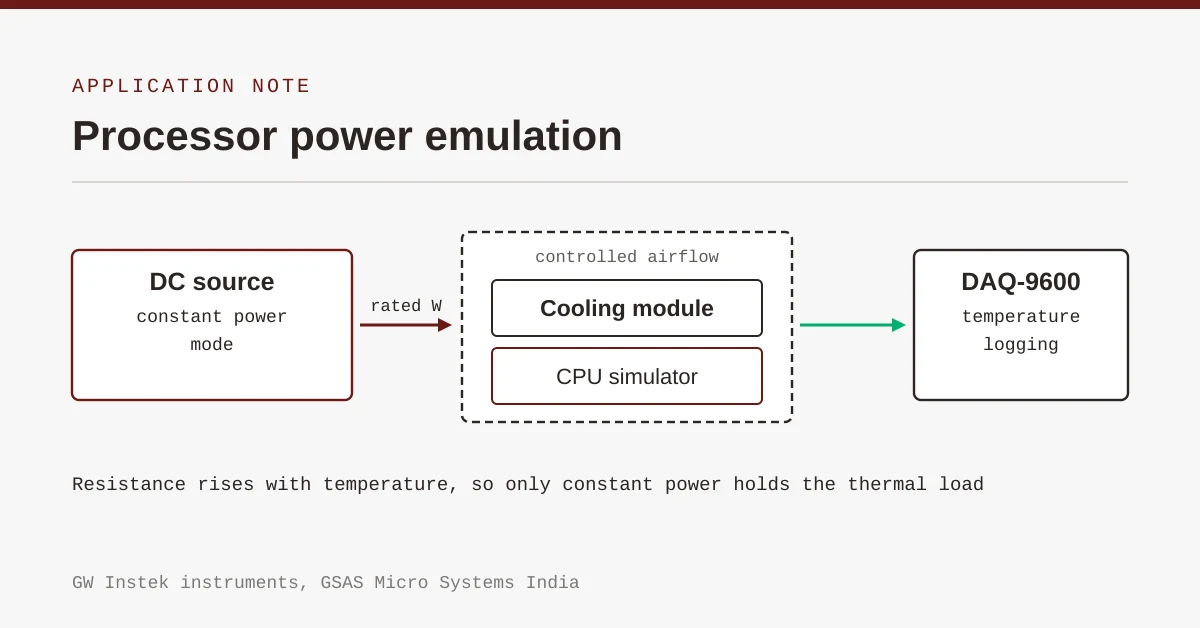
Emulating Processor Power for Thermal Testing: Why Constant Power
7 Oct · 7 min
CRPS and Rack Power Supply Testing: The Six Tests That Matter
7 Oct · 7 min