The Newest Decision on the Indian High-Resolution Bench
For years, the high-resolution USB oscilloscope decision in Indian labs was simple: if you needed more than 8 bits of vertical resolution, you reached for the PicoScope 5000D and its FlexRes architecture. FlexRes let you switch resolution in hardware, 8-bit for fast captures, all the way up to 16-bit for precision work, trading bandwidth for vertical detail as the measurement demanded.
In May 2026, Pico Technology changed the question. The company launched the PicoScope 5000E Series, which it describes as the world’s first 4-channel 16-bit USB oscilloscope, with a front end that runs native 16-bit, always on. So the decision is no longer “8-bit scope or high-resolution scope.” It is now a more interesting one: do you want switchable resolution (5000D FlexRes), or always-on native 16-bit (5000E)?
This guide answers that question specifically for buyers in Bengaluru, Hyderabad, Chennai, Pune, Mumbai, and Delhi NCR: battery and EV labs, power-electronics teams, audio and sensor designers, academic research groups, and production-test engineers who care about dynamic range as much as bandwidth. Every number below is verifiable on the OEM site, picotech.com.
Looking for a 5000D-vs-other-scope comparison instead? See our PicoScope 5000D FlexRes vs Siglent SDS2000X HD guide for the high-resolution USB-vs-benchtop trade-off, or the complete guide to buying a PC-based oscilloscope in India for the bigger picture.
What “Native 16-Bit” Actually Means
A standard 8-bit oscilloscope quantizes each sample into one of 2⁸ = 256 voltage levels. A 16-bit oscilloscope quantizes into 2¹⁶ = 65,536 levels. Pico Technology states the 5000E’s native 16-bit hardware delivers 256 times more vertical detail than a standard 8-bit scope, and the arithmetic is exactly that: 65,536 ÷ 256 = 256.
The important word is native. On the PicoScope 5000D, 16-bit is a FlexRes mode, the hardware reconfigures to reach 16-bit and the sample rate drops to 62.5 MS/s when you do. On the PicoScope 5000E, the ADC front end is 16-bit by design, all the time, and the sample rate stays high (up to 2.5 GS/s on a single channel). That difference, switchable vs always-on, is the heart of this comparison.
This matters most when your signal of interest is small. A millivolt of power-supply ripple riding on a multi-volt rail, the noise floor of a sensor front end, the THD of an audio stage, the fine structure of a battery-cell discharge curve, these are exactly the measurements where 8 bits run out of resolution and where 16 bits earn their keep. For a refresher on the physics, Pico’s own resolution enhancement knowledge base is a good primer.
PicoScope 5000D vs 5000E: The Spec Comparison
The table below is the fast answer. Detailed discussion follows. All figures are from the official Pico Technology product and specification pages.
| Specification | PicoScope 5000D (FlexRes) | PicoScope 5000E (native 16-bit) |
|---|---|---|
| Vertical resolution | Switchable 8 / 12 / 14 / 15 / 16-bit (FlexRes hardware) | Native 16-bit, always on |
| 8-bit high-speed mode | Yes (all models) | Plus models only (5000E Plus) |
| Analog channels | 2 or 4 (model dependent) | 4 |
| Bandwidth (16-bit) | 60 / 100 / 200 MHz | 60 / 100 / 200 MHz |
| Bandwidth (8-bit mode) | Up to 200 MHz | Up to 500 MHz (Plus models) |
| Max sample rate (16-bit) | 62.5 MS/s | Up to 2.5 GS/s (1 channel) |
| Max sample rate (8-bit) | 1 GS/s | Up to 5 GS/s (Plus models) |
| Capture memory | Up to 512 MS | Up to 1 GS (2 GS on Plus, 8-bit) |
| Noise floor | Low-noise front end (shielded design) | As low as 22 µV RMS |
| THD | - | Better than −73 dB |
| MSO digital channels | 16 (MSO models, 2 ports × 8) | 16 (MSO models, 2 ports × 8) |
| AWG | 14-bit, 200 MS/s | 14-bit, 200 MS/s |
| Serial decoders | 40 protocols, standard | Full PicoScope 7 decoder set, standard |
| Host interface | SuperSpeed USB 3.0 (Type-A) | SuperSpeed USB-C |
| Software | PicoScope 7 (Windows / macOS / Linux) | PicoScope 7 (Windows / macOS / Linux) |
Resolution: switchable FlexRes vs always-on native 16-bit
This is the architectural fork.
- PicoScope 5000D FlexRes lets you choose 8, 12, 14, 15, or 16-bit in hardware. The price of 16-bit is sample rate: at 16-bit, the 5000D samples at 62.5 MS/s. At 8-bit, it runs at 1 GS/s. You pick the trade per measurement.
- PicoScope 5000E is native 16-bit with no compromise on speed to get there, up to 2.5 GS/s on a single channel while staying at 16 bits. There is no “switch to high-res mode and lose sample rate” step on the standard 5000E, because it is never in low-res mode to begin with.
If most of your work is precision measurement, the 5000E removes a decision you used to have to make on every capture. If your work genuinely alternates between fast wide-bandwidth debug and high-resolution precision, read the next two rows carefully, the 5000E Plus brings FlexRes back, and pushes it further than the 5000D ever went.
The 8-bit high-speed mode: 5000D vs 5000E Plus
The standard 5000E does only 16-bit. If you need a fast 8-bit debug mode too, the 5000E Plus models add a switchable 8-bit FlexRes mode, and they go well beyond the 5000D:
- 5000D (8-bit mode): up to 200 MHz bandwidth, 1 GS/s, up to 512 MS memory.
- 5000E Plus (8-bit mode): up to 500 MHz bandwidth, up to 5 GS/s, up to 2 GS memory.
So a 5000E Plus is effectively a precision 16-bit oscilloscope and a 500 MHz / 5 GS/s debug oscilloscope in one portable USB-C instrument. That is a materially faster 8-bit mode than the 5000D family offers. The 5000E Plus models are the 5462E+, 5463E+, and 5464E+, covering 60/200 MHz, 100/350 MHz, and 200/500 MHz (16-bit / 8-bit) respectively.
Sample rate and capture memory
In the resolution mode that matters for precision work, 16-bit, the 5000E is dramatically faster on sample rate:
- 5000D at 16-bit: 62.5 MS/s.
- 5000E at 16-bit: up to 2.5 GS/s (single channel), 1.25 GS/s (two channels), 625 MS/s (four channels).
Capture memory also grows: the 5000D tops out at 512 MS, while the standard 5000E reaches up to 1 GS (and the Plus reaches 2 GS in 8-bit mode). Deeper memory plus higher sample rate at full resolution is the combination that lets you capture a long, high-fidelity record, a full battery discharge transient, a complete audio sweep, a multi-cycle power-electronics event, without stitching acquisitions together or dropping to 8 bits to keep up.
Noise floor and distortion
For high-resolution work, resolution is only useful if the front end is quiet enough to expose what those extra bits can resolve. The 5000E is built around this:
- Noise floor as low as 22 µV RMS.
- THD better than −73 dB and SFDR better than 73 dB.
Pico positions the 5000E as an ultra-low-noise instrument precisely because 16 bits of resolution are wasted under a noisy front end. The 5000D has a carefully shielded low-noise front end as well, but the 22 µV RMS figure is a 5000E headline specification, it is the reason the 5000E is the stronger choice for the lowest-amplitude signal work.
USB 3.0 vs USB-C
A practical, easy-to-miss difference: the 5000D connects over SuperSpeed USB 3.0 (Type-A), while the 5000E uses a SuperSpeed USB-C connection. For Indian labs standardizing on USB-C laptops and docking setups, the 5000E fits the current cable ecosystem more cleanly. Both are 5 Gbps SuperSpeed links; both are bus-powered and fanless.
MSO, AWG, and software: what is the same
It is worth being clear about what does not change, so the comparison stays honest:
- MSO: Both families offer mixed-signal variants with 16 digital channels (two ports of eight), for correlating SPI, I²C, UART, CAN, or LIN traffic against analog waveforms.
- AWG: Both include a built-in 14-bit, 200 MS/s arbitrary waveform generator for stimulus, frequency-response, and sensor-excitation work.
- Software: Both run PicoScope 7 on Windows, macOS, and Linux, with serial protocol decoders included as standard (40 protocols on the 5000D). Both work with the PicoSDK / pyPicoSDK automation stack, see our pyPicoSDK pytest framework guide and streaming acquisition guide.
The instrument’s job is the same. What changed is how it gets to 16 bits, and how fast and clean it is when it gets there.
5444D vs 5464E: The Head-to-Head Most Indian Buyers Are Weighing
The single most common comparison we are asked about is the PicoScope 5444D (the 4-channel, 200 MHz flagship of the 5000D FlexRes family) against the PicoScope 5464E / 5464E+ (the 4-channel, 200 MHz native-16-bit member of the 5000E family). Here is the focused view:
| Specification | PicoScope 5444D | PicoScope 5464E / 5464E+ |
|---|---|---|
| Resolution | Switchable 8–16-bit FlexRes | Native 16-bit (5464E); switchable 16/8-bit on 5464E+ |
| Bandwidth (16-bit) | 200 MHz | 200 MHz |
| Bandwidth (8-bit) | 200 MHz | 500 MHz (5464E+) |
| Sample rate (16-bit) | 62.5 MS/s | Up to 2.5 GS/s (1 ch) |
| Sample rate (8-bit) | 1 GS/s | Up to 5 GS/s (5464E+) |
| Capture memory | Up to 512 MS | Up to 1 GS (2 GS on 5464E+, 8-bit) |
| Noise floor | Shielded low-noise front end | As low as 22 µV RMS |
| Channels | 4 analog (+16 MSO) | 4 analog (+16 MSO) |
| Interface | USB 3.0 | USB-C |
The short version: if you are choosing between these two today, the 5464E wins on resolution-at-speed, memory depth, and noise floor; the 5464E+ adds a 500 MHz / 5 GS/s 8-bit debug mode the 5444D cannot reach. The 5444D remains an excellent, proven instrument, and is often the more cost-effective choice when 62.5 MS/s at 16-bit is comfortably enough for your signals and you do not need the 5000E’s noise floor.
Need help selecting the exact model? See the PicoScope 5444D product page, the PicoScope 5000D Series page, or request a quote and our application engineers will map your signals to the right model.
Which One Should an Indian Lab Buy?
There is no single right answer, there is a right answer for your bench. Use these decision rules.
Choose the PicoScope 5000E (native 16-bit) when…
- Precision is your default. Most of your captures are low-amplitude or high-dynamic-range, power-rail ripple, sensor noise, audio THD, battery-cell behaviour, and you do not want to think about resolution modes.
- You need 16-bit resolution and high sample rate at the same time (up to 2.5 GS/s at 16-bit).
- The lowest possible noise floor matters, the 22 µV RMS front end is a genuine measurement advantage.
- You want the deepest capture memory (up to 1 GS) for long, full-resolution records.
- Your laptops and docks are USB-C.
Choose the PicoScope 5000E Plus when…
- You want everything above, plus a fast 8-bit debug mode that the 5000D family cannot match: up to 500 MHz, 5 GS/s, 2 GS memory.
- You are consolidating a precision oscilloscope and a high-speed debug oscilloscope into one portable instrument.
Choose the PicoScope 5000D (FlexRes) when…
- 62.5 MS/s at 16-bit is enough for your signals (low-frequency precision work often is).
- You value the proven, widely deployed FlexRes platform and want a cost-effective high-resolution USB oscilloscope.
- You want 2-channel options, the 5000D family offers 2-channel models (e.g., 5242D/5243D/5244D), whereas the 5000E is 4-channel.
- USB 3.0 Type-A fits your existing setup and you do not need the 5000E’s extended 8-bit bandwidth.
Indian use cases, mapped
- EV and battery characterization (Pune, Chennai, Bengaluru): 5000E for clean ripple and cell-noise capture at full sample rate; 5000E Plus if you also probe fast switching transients. See our pyPicoSDK EV battery characterization guide.
- Power electronics, IGBT / SiC / GaN (Hyderabad, Pune): 5000E Plus for the dual high-res / 500 MHz capability; pair with our power electronics measurement guide.
- Audio, sensor, and low-noise analog design (Bengaluru, Mumbai): 5000E for the 22 µV RMS noise floor and −73 dB THD.
- EMC and partial-discharge work (Delhi NCR, Chennai): deep memory plus high resolution; see our EMC and partial discharge guide.
- Academic research and shared T&M labs: 5000D remains a strong value pick where 16-bit-at-62.5-MS/s is sufficient; 5000E where research demands the best dynamic range.
If you genuinely need more than 200 MHz of analog bandwidth at high resolution, step up to the PicoScope 6000E Series, compared against benchtop instruments in our 6000E vs Keysight InfiniiVision 3000T and 6000E vs Rohde & Schwarz RTB2000/RTM3000 guides.
Frequently Asked Questions
Is the PicoScope 5000E better than the 5000D?
For high-resolution precision work, the 5000E is the stronger instrument: it runs native 16-bit at up to 2.5 GS/s (vs 62.5 MS/s at 16-bit on the 5000D), has a quieter 22 µV RMS front end, and offers up to 1 GS of capture memory. The 5000D remains an excellent, cost-effective FlexRes oscilloscope and still wins on 2-channel model availability and proven deployment. “Better” depends on whether you need 16-bit-at-speed and the lowest noise floor, if so, the 5000E; if 16-bit at 62.5 MS/s is enough, the 5000D is a very capable, value-oriented pick.
What is the difference between FlexRes and native 16-bit?
FlexRes (on the 5000D and the 5000E Plus) is a hardware feature that lets you switch vertical resolution, for example, 8-bit for fast captures and 16-bit for precision, trading sample rate for resolution. Native 16-bit (the standard 5000E) means the front end is 16-bit at all times, so you get full resolution without dropping sample rate and without switching modes. The 5000E Plus gives you both worlds: native 16-bit plus a switchable high-speed 8-bit mode up to 500 MHz.
Does the standard PicoScope 5000E have an 8-bit mode?
No. The standard 5000E models are native 16-bit only. The switchable 8-bit high-speed mode (up to 500 MHz, 5 GS/s, 2 GS memory) is exclusive to the 5000E Plus models, the 5462E+, 5463E+, and 5464E+.
5444D vs 5464E: which should I choose?
Both are 4-channel, 200 MHz instruments. The 5464E gives native 16-bit at up to 2.5 GS/s, up to 1 GS memory, and a 22 µV RMS noise floor. The 5444D gives switchable FlexRes (8–16-bit) but caps at 62.5 MS/s in 16-bit mode with up to 512 MS memory. Choose the 5464E (or 5464E+ for a 500 MHz 8-bit mode) for the best precision-at-speed; choose the 5444D when its 16-bit performance is sufficient and budget is the priority.
Does the PicoScope 5000E use USB-C?
Yes. The 5000E connects over SuperSpeed USB-C (5 Gbps). The earlier 5000D uses SuperSpeed USB 3.0 with a Type-A connector. Both are bus-powered and fanless.
Is the PicoScope 5000E really the world’s first 4-channel 16-bit USB oscilloscope?
That is Pico Technology’s stated claim for the 5000E Series at its May 2026 launch, the world’s first 4-channel 16-bit oscilloscope and MSO range. Both the standard and MSO (4 + 16 channel) variants are native 16-bit across all four analog channels.
Can I automate the 5000D and 5000E from Python in India?
Yes. Both families work with PicoSDK and pyPicoSDK, so Indian test teams can script acquisition, streaming, and analysis in Python. See our guides on the pyPicoSDK pytest automated test framework and pyPicoSDK streaming continuous acquisition.
Further Reading
- PicoScope 5000D Series product page
- PicoScope 5444D product page
- PicoScope 6000E Series product page
- PicoScope 4444 differential oscilloscope
- PicoScope 7 software
- PicoSDK / pyPicoSDK
- Pico Technology partner page
- PicoScope 5000D FlexRes vs Siglent SDS2000X HD
- Complete guide to buying a PC-based oscilloscope in India
- PicoScope 6000E deep dive
Evaluate the 5000D and 5000E at GSAS
GSAS Micro Systems is an authorized Pico Technology engineering partner in India. We supply the full PicoScope 5000D FlexRes range and the new PicoScope 5000E and 5000E Plus native-16-bit oscilloscopes with INR invoicing, GST-compliant documentation, and hands-on application engineering, not just a box on a shelf.
If you are weighing native 16-bit against FlexRes, or 5444D against 5464E, bring us your hardest precision-measurement problem. Our application engineers in Bengaluru, Hyderabad, Chennai, Pune, Mumbai, and Delhi NCR will put your real signals on both instruments and show you the difference in dynamic range, noise floor, and capture depth before you commit a purchase order.
Request a quote or talk to our team about a hands-on PicoScope 5000D vs 5000E evaluation at your nearest GSAS office.
Also appears in:
Interested in Pico Technology tools?
Talk to our application engineers for personalized tool recommendations.
More from Pico Technology
View all →
How to Buy an Oscilloscope in India (2026): USB vs Benchtop, Bit Depth, Bandwidth: A Buying Guide
5 Jun · 11 min
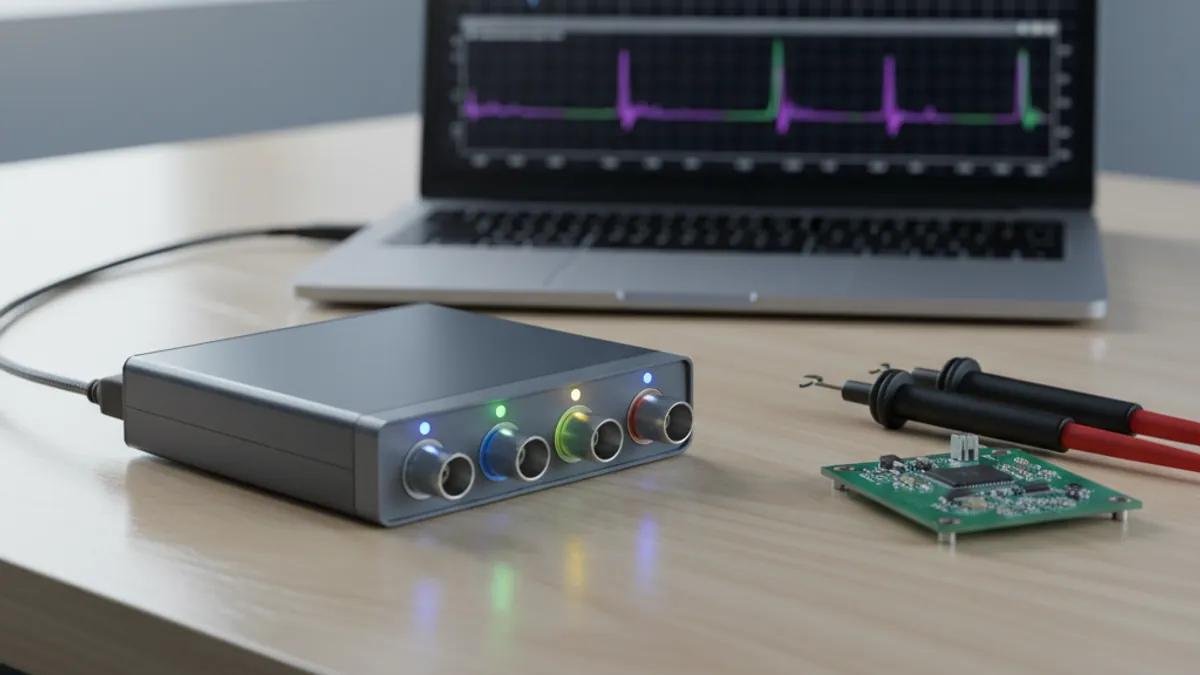
PicoScope 5000E in India: The World's First 4-Channel 16-Bit USB Oscilloscope, Explained
4 Jun · 11 min
PicoScope 7 Goes Native Arm64: Apple Silicon, Snapdragon Windows and Arm Linux Test Benches in India
4 Jun · 11 min
Pico Technology for Indian Engineering Education: Lab Kits, Curriculum, IIT/NIT Programs
15 Apr · 9 min
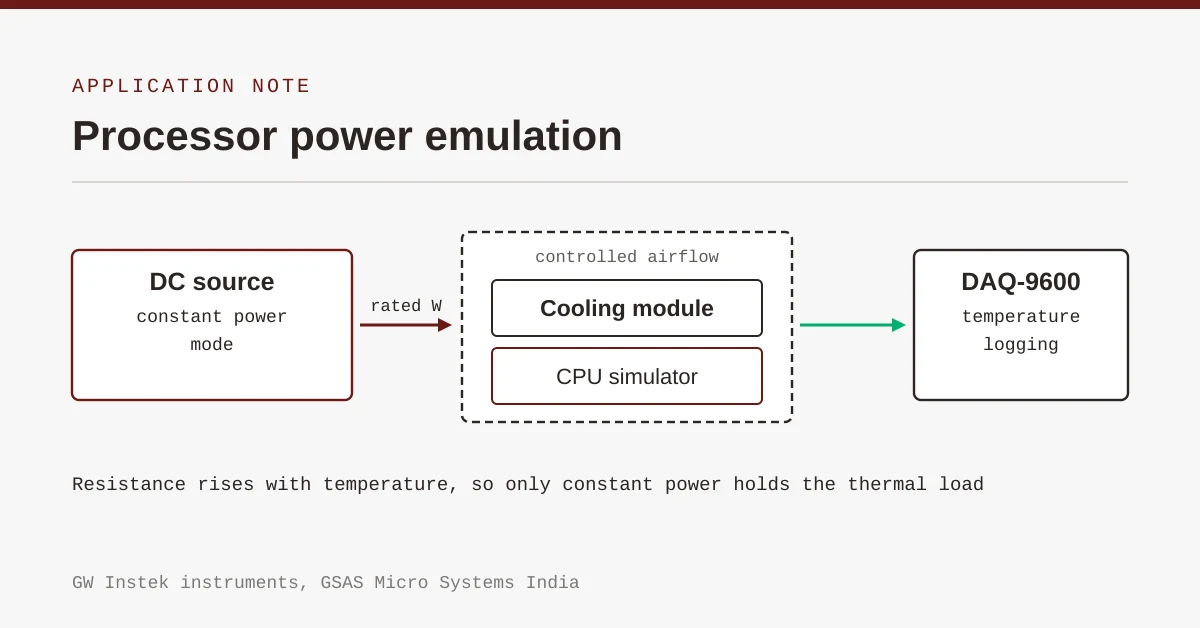
Emulating Processor Power for Thermal Testing: Why Constant Power
7 Oct · 7 min
CRPS and Rack Power Supply Testing: The Six Tests That Matter
7 Oct · 7 min