The Flagship PC-Based Oscilloscope
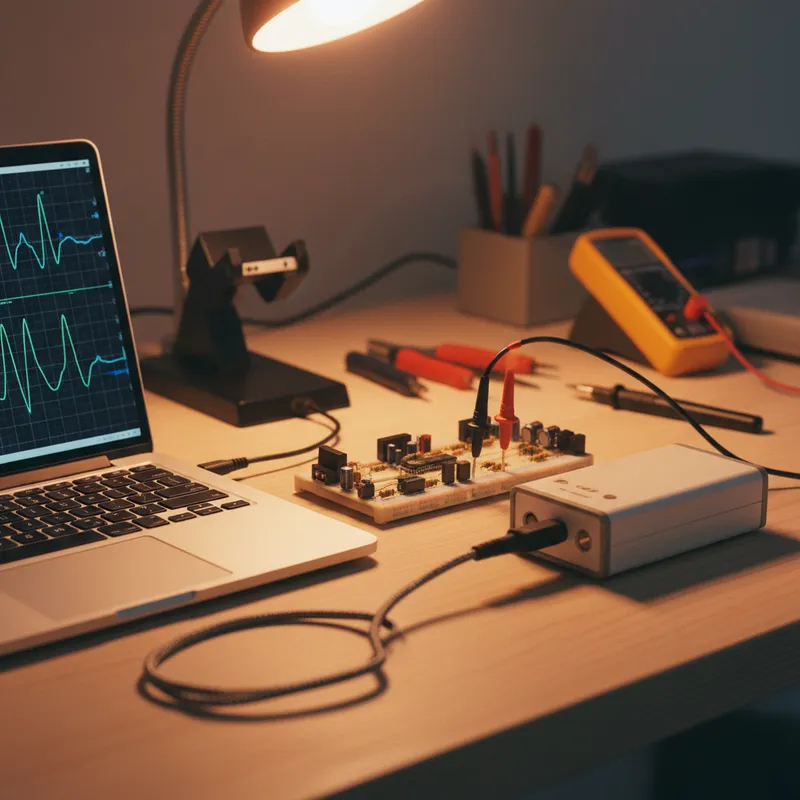
The PicoScope 6000E series represents the top of Pico Technology’s oscilloscope range, designed for engineers who need high bandwidth, deep memory, and flexible resolution in a compact USB-connected form factor.
Available in 4-channel and 8-channel configurations with bandwidth options up to 500 MHz, the 6000E series competes directly with benchtop oscilloscopes costing significantly more.
Key Specifications
- Bandwidth: 300 MHz and 500 MHz models
- Sampling rate: Up to 5 GS/s (single channel), 1.25 GS/s (all channels)
- Buffer memory: Up to 4 GS (4 billion samples), the deepest buffer in its class
- Resolution: 8-bit standard, with FlexRes mode offering 10-bit or 12-bit at reduced bandwidth
- Channels: 4 analog + 16 digital (MSO) or 8 analog configurations
- Input range: ±50 mV to ±20 V, 1 megohm or 50 ohm input coupling
- Interface: USB 3.0 SuperSpeed
Why Deep Memory Matters
The 4 GS buffer memory is arguably the 6000E’s most significant specification advantage. In oscilloscope measurement, buffer depth determines how long you can capture a signal while maintaining full sample rate.
With a 5 GS/s sample rate and 4 GS buffer, the 6000E captures approximately 800 ms of continuous data at maximum resolution. For comparison, most benchtop oscilloscopes in the same bandwidth class offer 50–250 MS of buffer, the 6000E provides 16–80 times more capture depth.
This matters for:
- Serial protocol debugging: Capturing entire communication sequences (I2C, SPI, UART, CAN, CAN FD) without missing events between trigger points
- Power supply analysis: Recording startup sequences, load transients, and regulation behaviour over complete operating cycles
- Intermittent fault capture: Leaving the scope in single-trigger mode to catch rare glitches, the deep buffer ensures the surrounding context is preserved
- EMC pre-compliance: Capturing conducted emission profiles over extended time windows for frequency-domain analysis
FlexRes: Trading Bandwidth for Resolution
The FlexRes (Flexible Resolution) feature allows the engineer to increase ADC resolution beyond the standard 8 bits by combining channels and reducing bandwidth:
- 8-bit mode: Full bandwidth, all channels available
- 10-bit mode: Reduced bandwidth, enhanced dynamic range for precision measurements
- 12-bit mode: Further bandwidth reduction, ideal for DC and low-frequency precision measurements
This is not interpolation or averaging, FlexRes uses hardware ADC interleaving to deliver genuine resolution improvement. For power electronics engineers measuring voltage ripple on DC rails, or sensor engineers characterizing low-level signals, the 12-bit mode provides measurement fidelity that would otherwise require a high-resolution digitizer.
PicoScope 7 Software
Every PicoScope ships with PicoScope 7, a full-featured oscilloscope application that runs on Windows, macOS, and Linux. The software includes:
- Spectrum analyzer with up to 1 million FFT points, no separate spectrum analyzer needed
- Protocol decoders for 20+ protocols (I2C, SPI, UART, CAN, CAN FD, LIN, FlexRay, I2S, and more), all included free, no per-protocol licensing
- Mask limit testing for automated pass/fail production testing
- Advanced math channels including filters, derivatives, integrals, and custom expressions
- Persistence display for analog-style waveform intensity grading
The software receives free updates for the lifetime of the instrument. Pico Technology does not charge annual maintenance fees or per-seat license fees.
Comparison: PC-Based vs Benchtop at 500 MHz
At the 500 MHz bandwidth class, the PicoScope 6000E competes with benchtop instruments from established oscilloscope manufacturers. The comparison involves trade-offs:
PicoScope 6000E advantages:
- Deeper buffer memory (4 GS vs typical 50–250 MS)
- Lower total cost (instrument + software, no annual license fees)
- Portable, the oscilloscope hardware fits in a laptop bag
- Software runs on the user’s existing PC, larger display, more processing power
- Free lifetime software updates and protocol decoders
Benchtop advantages:
- Standalone operation, does not require a PC
- Dedicated front panel with physical knobs and buttons
- Some engineers prefer the tactile interaction of a hardware interface
- Established calibration and compliance ecosystems
For R&D labs in Bengaluru, Hyderabad, Chennai, and Pune where engineers already work at their PCs and value display real estate over standalone hardware, the PC-based approach often wins on both capability and cost.
Application Fit
Embedded Systems Development
High-bandwidth digital signal integrity measurements, mixed-signal debugging (analog + digital MSO), and protocol analysis for SoC bring-up and firmware development.
Power Electronics
Motor drive analysis, inverter switching characterization, and power supply design verification. FlexRes mode enables high-resolution ripple measurement on DC output rails.
Automotive Electronics
ECU bus analysis (CAN, CAN FD, LIN, FlexRay), sensor signal characterization, and EMC pre-compliance measurement. The deep buffer captures complete drive cycles for post-analysis.
Communications and RF
Signal integrity analysis for high-speed serial interfaces (USB, HDMI, PCIe), clock jitter measurement, and spectral analysis up to 500 MHz using the built-in FFT spectrum mode.
Why Buy PicoScope from GSAS
GSAS Micro Systems is an authorized Pico Technology partner, providing the full PicoScope range with INR invoicing, demo units, and application engineering support.
- Demo units available at offices in Bengaluru, Hyderabad, Chennai, Pune, Mumbai, and Delhi NCR
- Probe selection guidance: matching differential probes, current clamps, and passive probes to your application
- PicoSDK integration support for automated test systems
- Free lifetime software updates: no recurring license costs
Also appears in:
Interested in Pico Technology tools?
Talk to our application engineers for personalized tool recommendations.
More from Pico Technology
View all →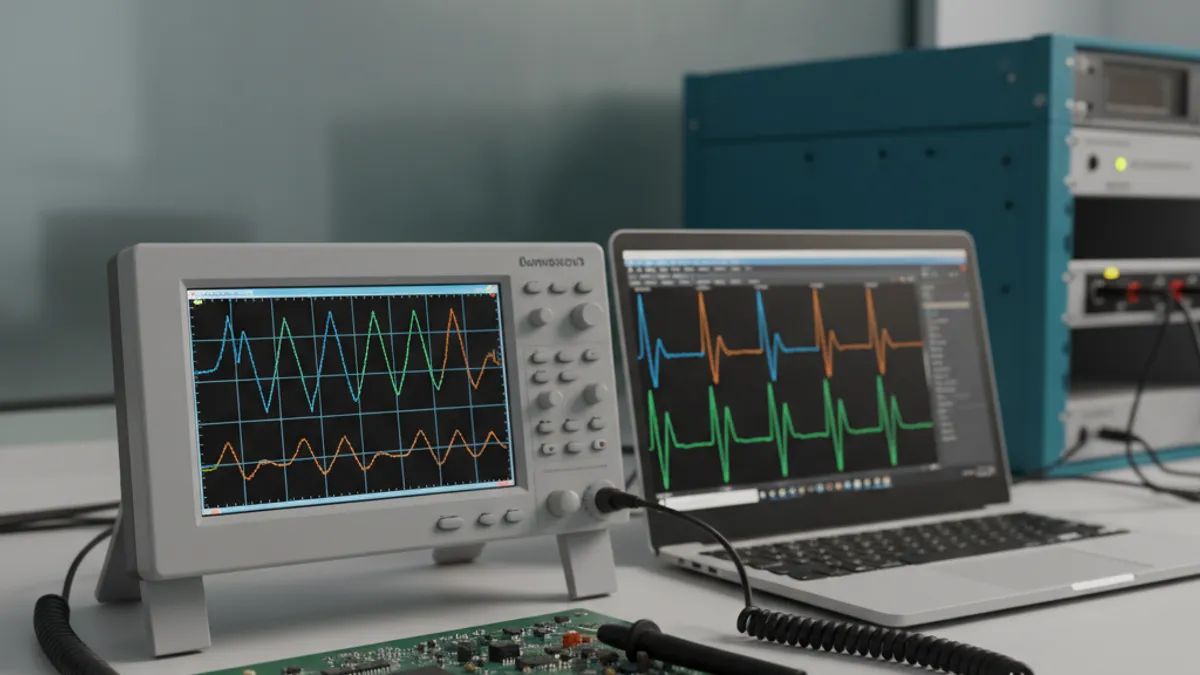
How to Buy an Oscilloscope in India (2026): USB vs Benchtop, Bit Depth, Bandwidth: A Buying Guide
5 Jun · 11 min
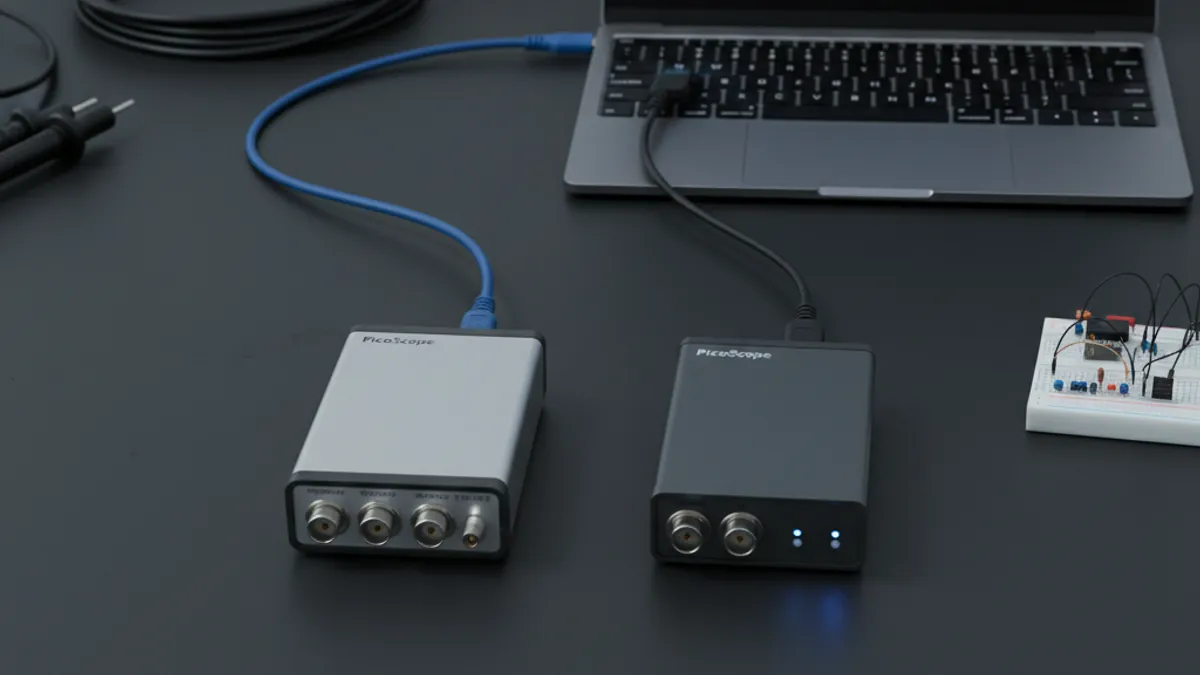
PicoScope 5000D vs 5000E: Native 16-Bit or FlexRes? A Buyer's Guide for Indian Labs
4 Jun · 11 min
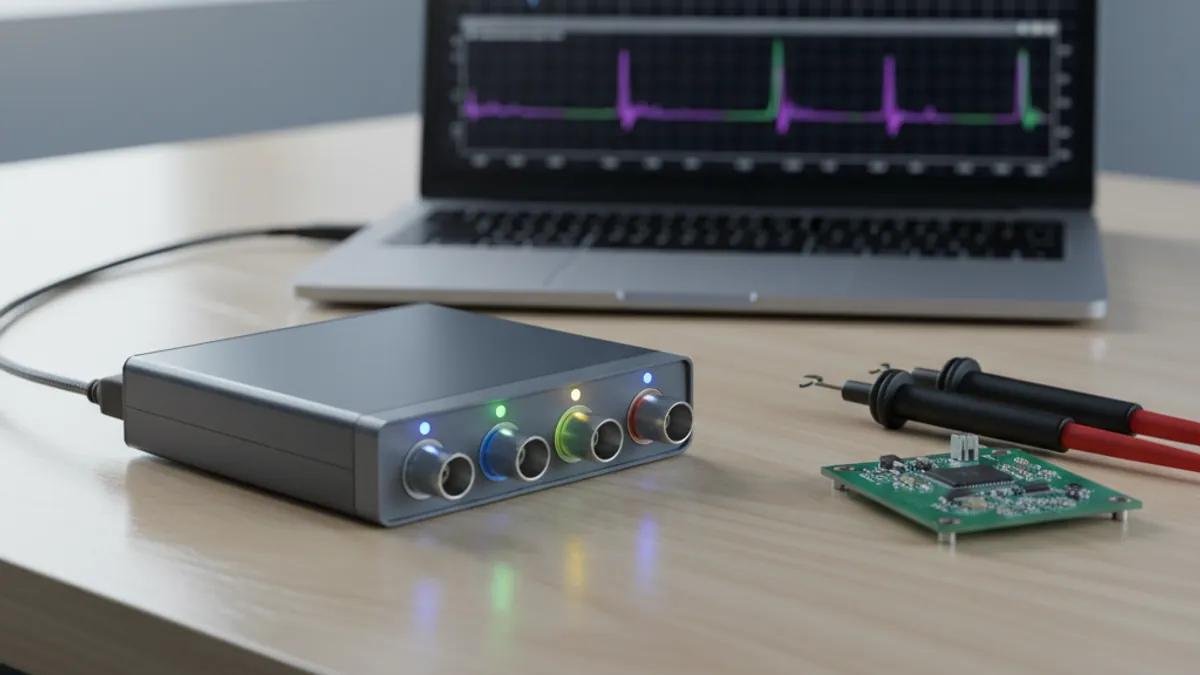
PicoScope 5000E in India: The World's First 4-Channel 16-Bit USB Oscilloscope, Explained
4 Jun · 11 min
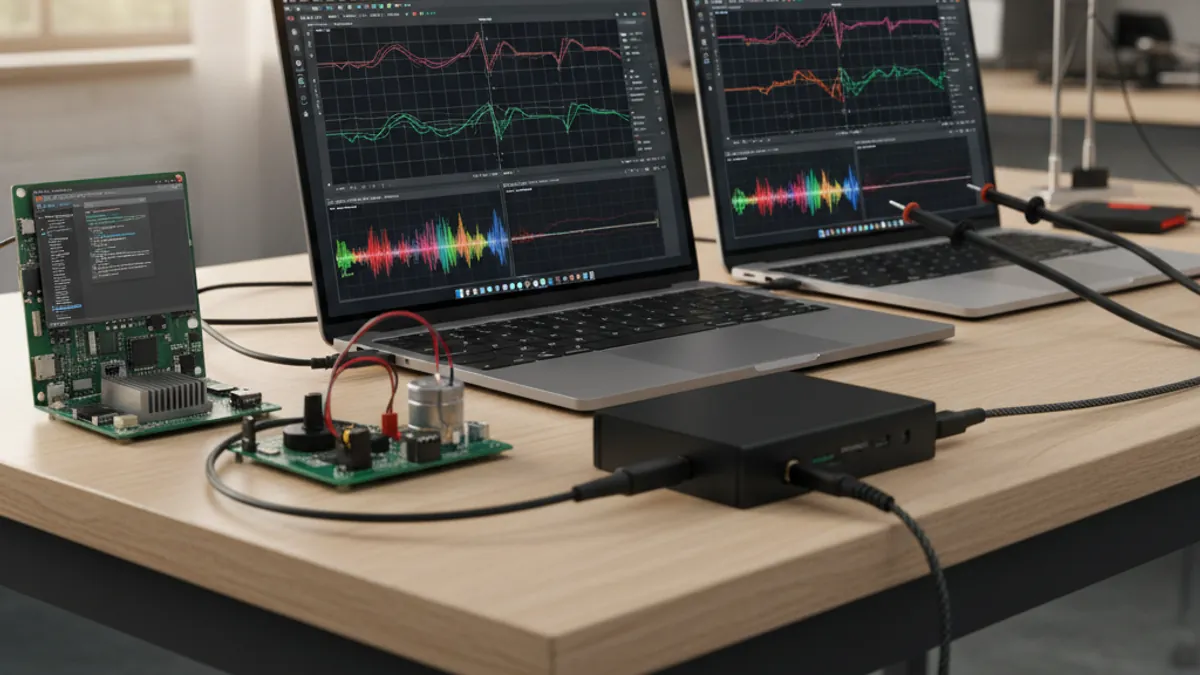
PicoScope 7 Goes Native Arm64: Apple Silicon, Snapdragon Windows and Arm Linux Test Benches in India
4 Jun · 11 min
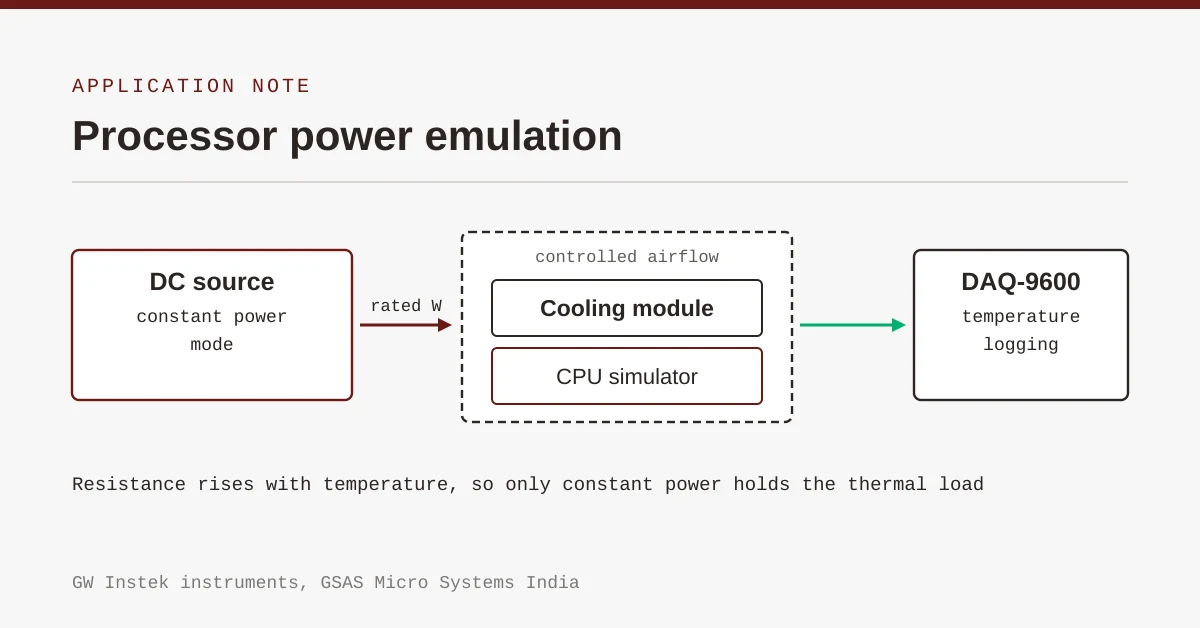
Emulating Processor Power for Thermal Testing: Why Constant Power
7 Oct · 7 min
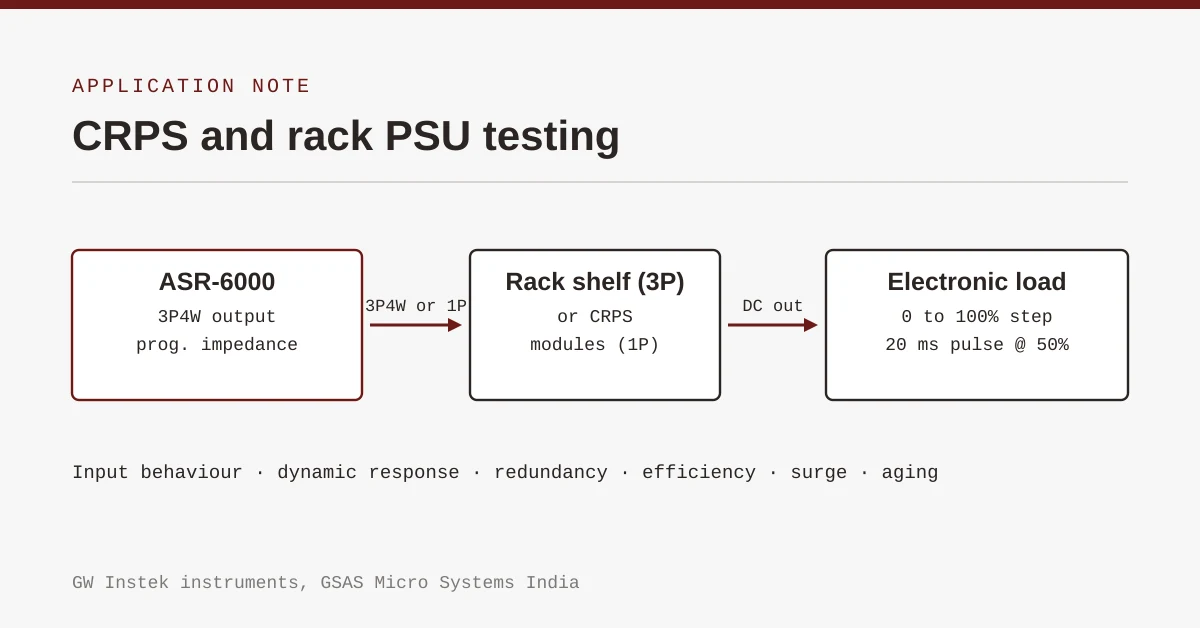
CRPS and Rack Power Supply Testing: The Six Tests That Matter
7 Oct · 7 min