
Security
Security Engineering
From secure boot chains and TrustZone partitioning to automotive cybersecurity compliance and EU CRA readiness, GSAS delivers hardware-rooted security for embedded systems across India.
What We Secure
Security Engineering Services in India
Six security disciplines covering the full embedded attack surface, from silicon boot ROM through application layer, backed by the tools we supply and the hardware we build.
Secure Boot Chain
We implement multi-stage secure boot chains that verify firmware integrity from ROM bootloader through application code. Our implementations cover first-stage bootloader authentication, chain-of-trust propagation, anti-rollback protection, and secure firmware update mechanisms. Whether you are building an automotive ECU, an IoT gateway, or a defence subsystem, your boot chain is the foundation of device security.
- ROM-to-application chain of trust
- Firmware image signing and verification
- Anti-rollback counters and version enforcement
- Secure OTA update with A/B failover
- Bootloader hardening and attack surface reduction
TrustZone and TEE Configuration
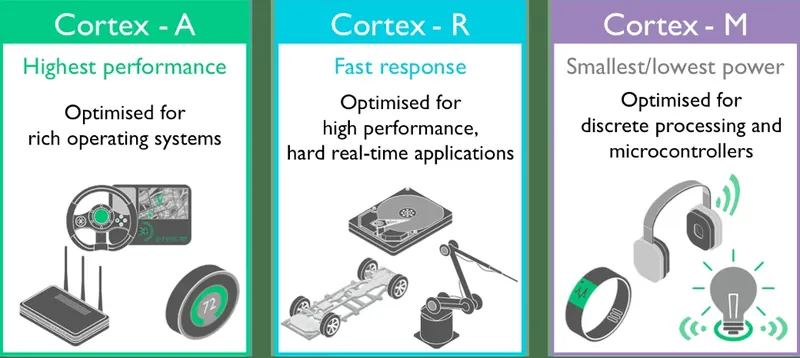
Arm TrustZone provides hardware-enforced isolation between secure and non-secure worlds. GSAS engineers configure TrustZone partitioning on Cortex-M23/M33/M55 and Cortex-A devices, defining secure memory regions, peripheral assignments, and interrupt routing. We implement Trusted Execution Environments (TEE) that protect cryptographic keys, DRM assets, and safety-critical functions from compromise.
- SAU/IDAU configuration for Cortex-M devices
- Secure/non-secure peripheral and memory partitioning
- Trusted Firmware-A (TF-A) integration for Cortex-A
- Secure key storage and cryptographic isolation
- Inter-world communication and mailbox design
HSM Integration
Hardware Security Modules provide tamper-resistant key storage and cryptographic acceleration. We integrate on-chip HSMs (such as Infineon OPTIGA, NXP EdgeLock, and STM32 STSAFE) into your firmware architecture, handling key provisioning, secure manufacturing flows, and runtime crypto offload. For automotive applications, we implement SHE+ and EVITA-compliant HSM configurations.
- On-chip HSM driver development and integration
- Key provisioning workflows for production
- SHE/SHE+ and EVITA compliance for automotive
- Secure manufacturing and device identity injection
- Hardware crypto acceleration for AES, RSA, ECC

Automotive Cybersecurity: ISO 21434 and UNECE R155
ISO/SAE 21434 defines cybersecurity engineering requirements across the automotive product lifecycle. UNECE WP.29 R155 mandates a certified Cybersecurity Management System (CSMS) for vehicle type approval in 54 countries. GSAS supports OEMs and Tier-1 suppliers with threat analysis and risk assessment (TARA), cybersecurity concept development, and evidence packages for type approval.
- Threat Analysis and Risk Assessment (TARA) per ISO 21434
- Cybersecurity concept and requirements specification
- CSMS documentation for UNECE R155 type approval
- Vulnerability management and incident response planning
- Cybersecurity validation and penetration testing support

EU Cyber Resilience Act (CRA) Compliance
The EU Cyber Resilience Act introduces mandatory cybersecurity requirements for all products with digital elements sold in the European market. GSAS helps manufacturers understand CRA obligations, implement secure development lifecycles, establish vulnerability handling processes, and prepare technical documentation for conformity assessment. Early preparation is critical, enforcement timelines are approaching.
- CRA obligation analysis and gap assessment
- Secure Software Development Lifecycle (SSDLC) implementation
- Vulnerability disclosure and handling processes
- Software Bill of Materials (SBOM) generation
- Technical documentation for conformity assessment

Crypto Library Integration
Selecting and integrating the right cryptographic library is critical for performance, certification, and security. GSAS integrates proven crypto implementations including Mbed TLS, wolfSSL, SEGGER emCrypt, and hardware-accelerated vendor libraries. We handle algorithm selection, key management architecture, side-channel hardening, and FIPS 140-2/3 preparation.
- Mbed TLS, wolfSSL, and emCrypt integration
- Hardware crypto accelerator enablement
- Side-channel attack mitigation
- FIPS 140-2/3 boundary definition and preparation
- TLS/DTLS stack configuration for IoT and automotive

Need to secure your embedded product?
Our security engineers specialize in secure boot, TrustZone, HSM integration, and automotive cybersecurity compliance.
Toolchain
Tools We Use for Security Engineering
We do not just recommend tools, we use them daily in our own secure boot implementations and customer projects.




Blog
Security Engineering Insights
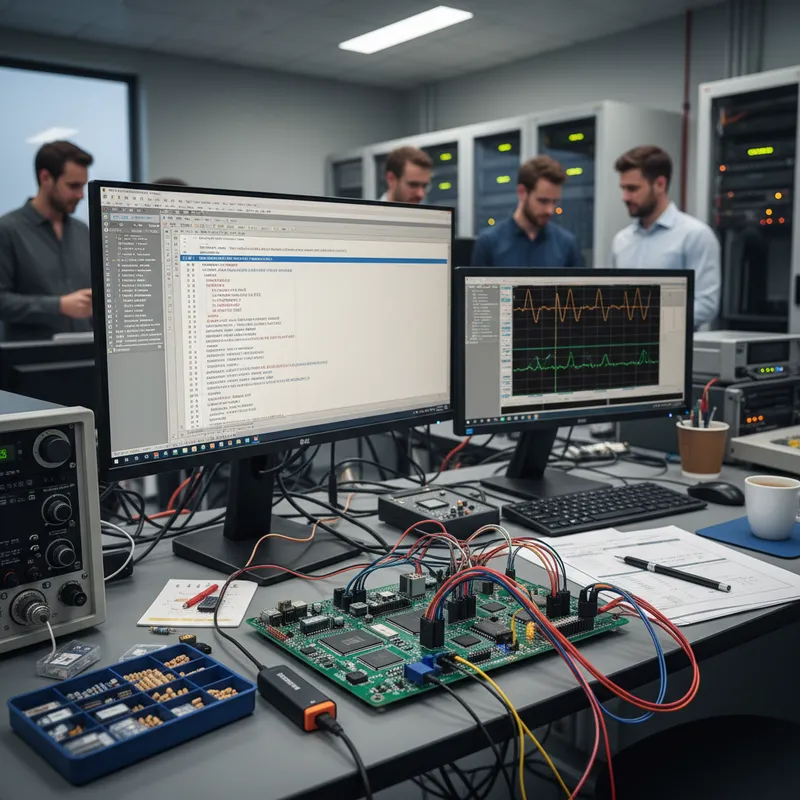
SEGGER emCrypt: Cryptographic Primitives for Indian Custom-Crypto Teams on Cortex-M
How Indian product teams use SEGGER emCrypt, AES, SHA, HMAC, ECC, RSA, ChaCha20-Poly1305, as a commercial, portable-C cryptographic primitives library on STM32, i.MX RT, Nordic, Renesas, and Microchip Cortex-M targets.
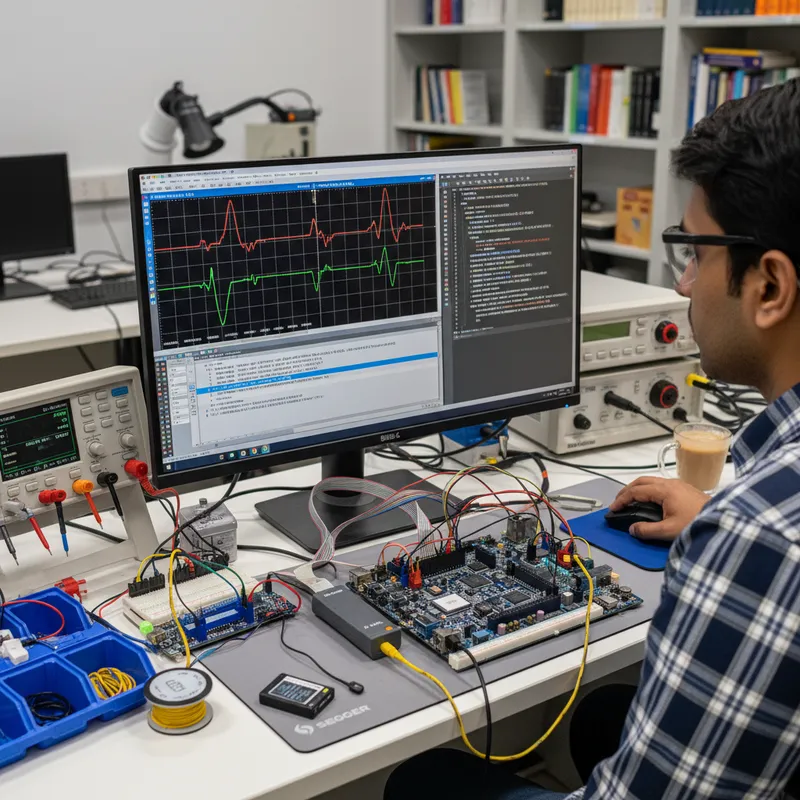
SEGGER emSecure-RSA and emSecure-ECDSA for Indian Secure Boot on Cortex-M
How Indian product teams use SEGGER emSecure-RSA and emSecure-ECDSA to sign firmware offline in Bengaluru and verify it on Cortex-M bootloaders in the field, with Flasher Secure tying the factory floor together.
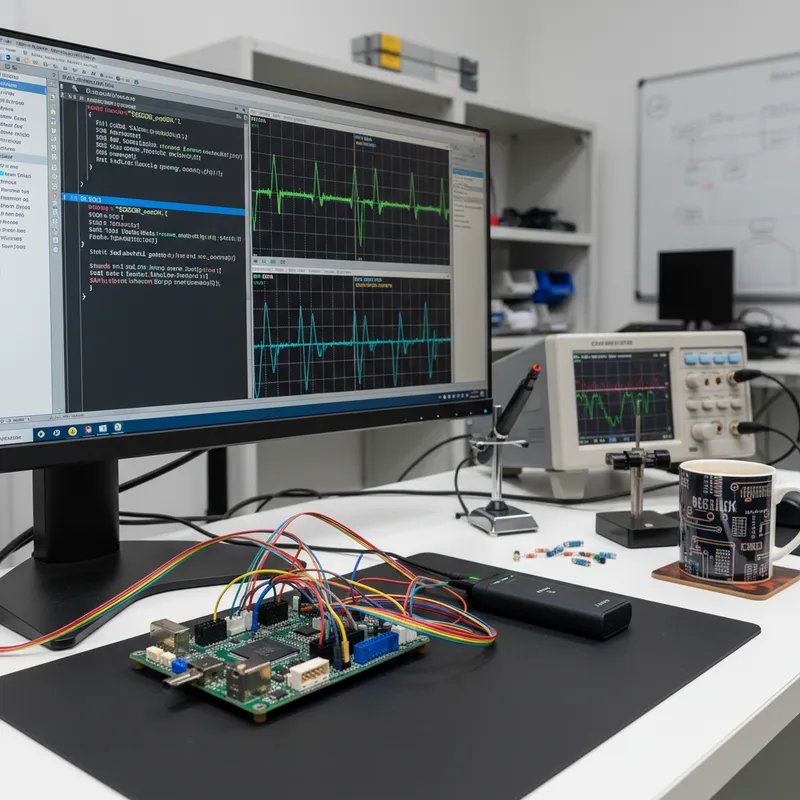
SEGGER emSSH: Secure Remote Management for Indian Industrial Gateways on Cortex-M
How Indian industrial gateway OEMs use SEGGER emSSH, a commercial SSH-2 server library, for secure remote management, SCP log retrieval, and fleet automation of deployed Cortex-M products across Indian solar farms, factories, and transport networks.
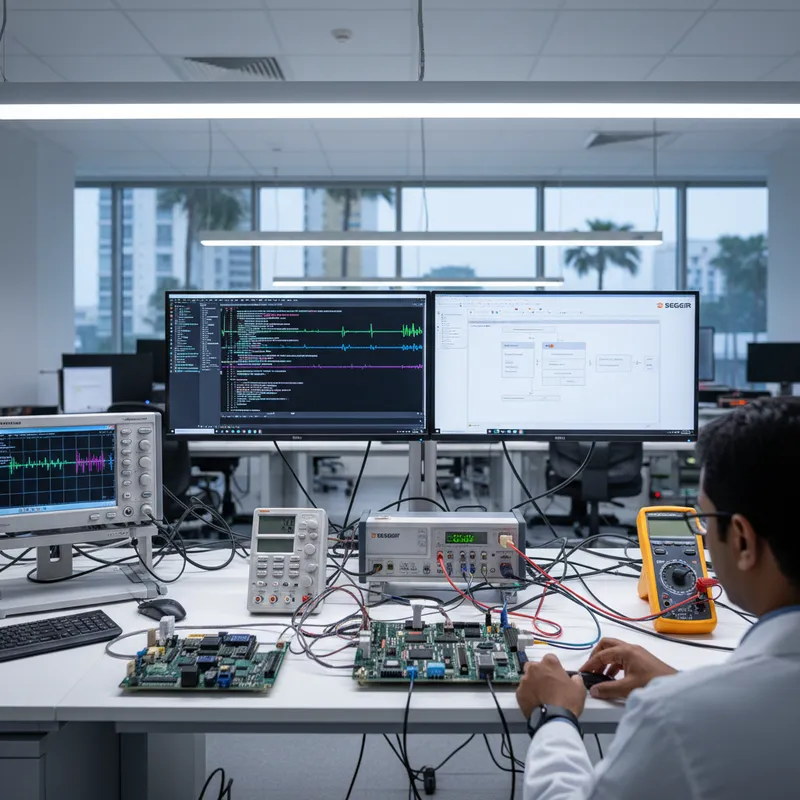
SEGGER Flasher Secure + HSM: Root-of-Trust Programming for Indian OEMs
How Indian OEMs combine SEGGER Flasher Secure with an HSM, Thales, Utimaco, nCipher, YubiHSM, or AWS CloudHSM Mumbai, to build a proper root-of-trust programming pipeline for smart meters, EV chargers, medical devices, and automotive Tier-1 production.
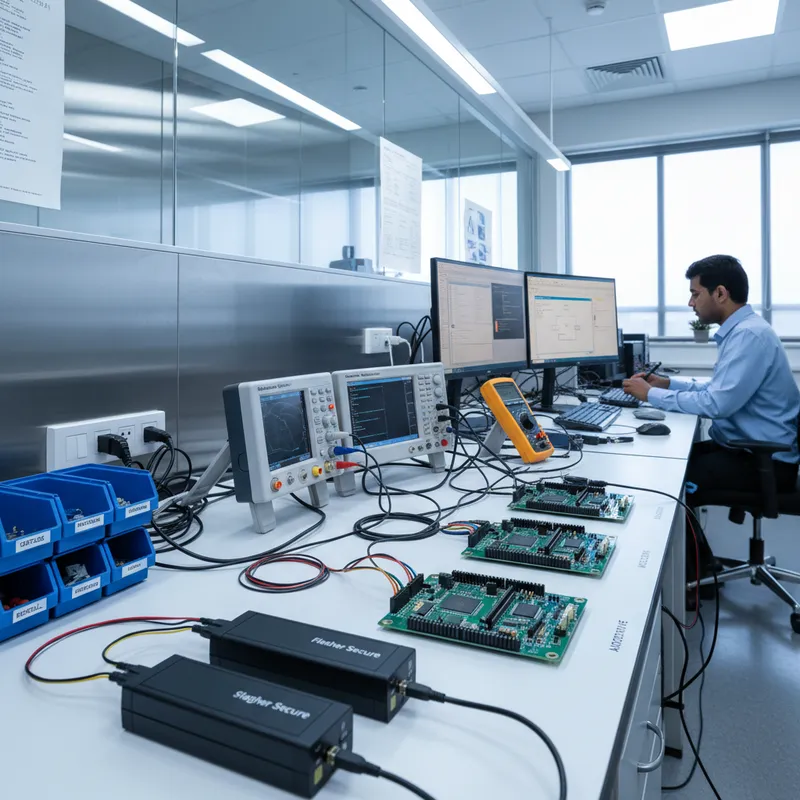
Programming Encrypted Firmware at Indian Contract Manufacturers: A SEGGER Flasher Secure Walkthrough for Defence, Medical, and Automotive IP Owners
How Indian OEMs program firmware at contract manufacturing lines without exposing plaintext, SEGGER Flasher Secure, Flasher Secure Server (FSS), and authorized flashing for defence (iDEX, DGQA), medical (CDSCO, ISO 13485), and automotive IP owners.
Need to Secure Your Embedded Product?
Whether you need a secure boot chain, TrustZone configuration, HSM integration, or automotive cybersecurity compliance, our security engineers are ready to help.