

Arm: Buy in India
Authorized India Partner · GSAS Micro Systems
Arm × GSAS
Arm (Cambridge, founded 1990) designs the processor architecture that ships in billions of devices each year, Cortex-M microcontrollers in sensor nodes, Cortex-R cores in safety-critical controllers, and Cortex-A application processors in smartphones, vehicles, and industrial gateways. Arm IP is the common thread running through nearly every embedded market. But architecture alone does not ship products, engineers need toolchains, debuggers, profilers, and frameworks that turn silicon into working firmware.
GSAS has been the authorized Arm development tools engineering partner for India, the UAE and Sri Lanka since 2018. Across 11 offices in nine Indian cities, including Bengaluru, Chennai, Hyderabad, Delhi NCR, Mumbai, and Pune, we provide hands-on application engineering, migration consulting (MDK v5 to v6, FlexNet to UBL), evaluation units, and technical workshops delivered to automotive, industrial, and consumer engineering teams. Whether you are selecting your first Cortex-M toolchain or certifying a safety-critical Cortex-R application to ISO 26262, GSAS is your local engineering partner for the entire Arm tool ecosystem.
Latest Insights
Product Families
Arm Products by Category
Keil MDK v6
Migrating from MDK v5 or FlexNet?
GSAS provides free migration consulting from legacy nodelocked/floating licenses to the new UBL subscription model. Contact us →
Upcoming: Keil MDK v6 Workshop, Bengaluru, April 2026
Hands-on session with GSAS application engineers. VS Code workflow, CMSIS-Toolbox, CI/CD pipeline setup. Register →
MDK Essential
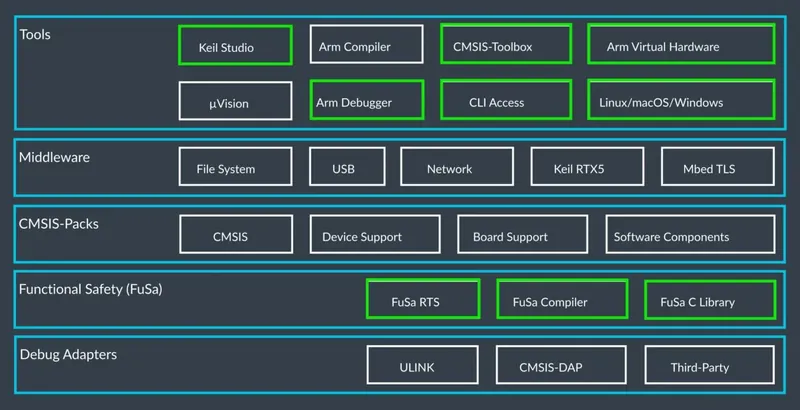
Full Cortex-M toolchain with Keil Studio for VS Code and µVision. Bundled Arm Compiler 6 (AC6) + Arm Toolchain for Embedded (ATfE); Arm GNU Toolchain supported as a target toolchain via separate free Arm download. Device support comes from the CMSIS-Pack ecosystem, whose public Keil catalogue listed 13,389 devices when read on 30 July 2026. RTX5 RTOS, CMSIS-FreeRTOS, and MDK-Middleware (USB / TCP/IP / File System / IoT Clients) bundled. Ideal for single-developer commercial workflows on STM32, NXP, Renesas, and Infineon targets, and we cover the Keil Studio + VS Code cloud workflow in detail for modern Indian embedded teams.
MDK Professional
Everything in Essential plus the FuSa Compiler (TÜV-certified for ASIL D / SIL 3 / SIL 4 / Class C), FuSa RTS qualified runtime, Arm Fixed Virtual Platforms for shift-left development, and the armlm genlic legacy-NL recipe for MDK v5 / PK51 / DK251 / PK166 maintenance. MDK-Middleware (USB Host/Device, TCP/IP, File System, IoT Clients) and the RTX5 / CMSIS-FreeRTOS RTOS pair are bundled in every MDK edition, not just Pro. For Indian Tier-1 safety teams, Keil MDK Professional is the default commercial Cortex-M toolchain we recommend.
All three editions share the same modern workflow: csolution.yml project files for reproducible builds, CMSIS-Toolbox CLI for headless CI/CD integration, and GitHub Copilot support inside VS Code. MDK v6 reaches devices through the CMSIS-Pack ecosystem, and Arm's public Keil device catalogue listed 13,389 devices when read on 30 July 2026.
Arm Development Studio
Gold Edition
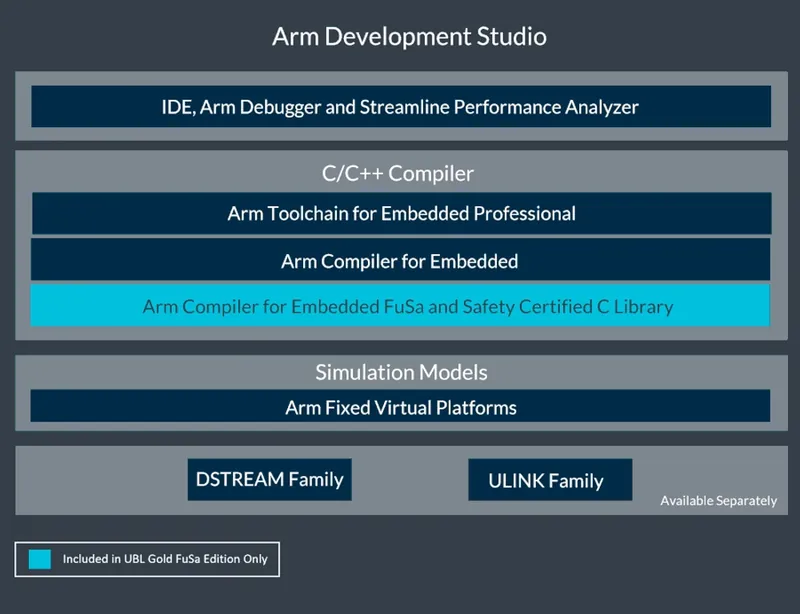
The professional-grade IDE for Cortex-R and Cortex-A SoC development. Multicore SMP/AMP debugger, Streamline performance analyzer, CoreSight trace decode, and Arm Compiler 6 with LTO. Supports bare-metal, Linux kernel, and hypervisor debug across Arm v7/v8/v9 architectures, we have a dedicated walkthrough of Arm Development Studio for Cortex-A, Cortex-R and Neoverse teams in India.
Gold FuSa Edition
Everything in Gold plus the Arm FuSa Compiler (qualified to IEC 61508 SIL 3 / ISO 26262 ASIL D), FuSa RTS, FuSa C Library, and the Safety Qualification Kit. For automotive, industrial, and medical teams building safety-critical firmware on Cortex-R processors.
Functional Safety Tools: Buy in India
Arm Compiler for Embedded FuSa
The safety-qualified variant of Arm Compiler 6. Per Arm's published Arm Compiler for Embedded FuSa product page, the toolchain is assessed by TUV SUD and qualified for developing software to IEC 61508 (Industrial) SIL 3, ISO 26262 (Automotive) ASIL D, EN 50716 (Railways) SIL 4, and IEC 62304 (Medical) Class C. Certification applies to specific qualified releases, so talk to GSAS for the scope that applies to the release you plan to certify against. Each qualified release ships with the Qualification Kit, TUV SUD certificate, Safety Manual, Test Report, Defect Report, and Development Process Report. Certification applies to specific qualified releases of AC6 FuSa, not to every AC6 release. DO-178C (aerospace) is not in Arm's current AC6 FuSa qualification scope.
Arm FuSa RTS
The safety-certified C runtime library qualified alongside the FuSa Compiler. TUV SUD certified implementations of standard C library functions, string, memory, math, and startup code. Without a qualified runtime, teams must qualify the C library themselves or avoid standard library calls entirely.
The FuSa Compiler qualifies C/C++ compilation for Cortex-M and Cortex-R targets; FuSa RTS adds the certified runtime for Cortex-M. Available standalone, as part of Keil MDK Professional, or as part of Arm Development Studio Gold FuSa edition. The Safety Qualification Kit provides the complete evidence package, certificates, test reports, and safety manuals, that assessors require. GSAS provides FuSa licensing, qualification guidance, and support for Indian engineering teams in Bengaluru, Hyderabad, Chennai, Pune, Mumbai, and Delhi NCR.
Debug & Trace Probes
ULINKplus
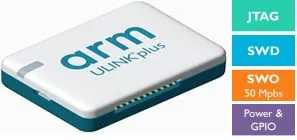
JTAG/SWD debug with integrated power measurement, I/O automation, and test pin control. The all-in-one probe for Cortex-M development and power profiling.
ULINKpro
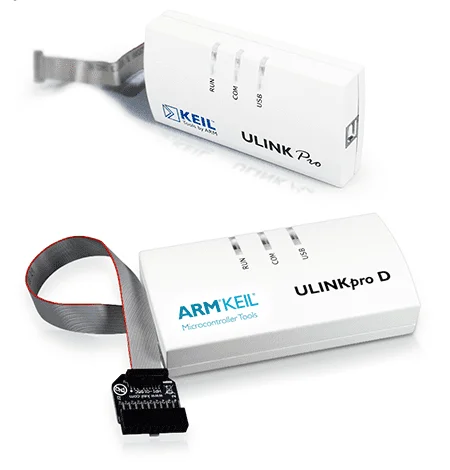
Streaming ETM trace (up to 800 Mbit/s) with statement + branch coverage in gcov format. MC/DC coverage is produced downstream by a qualified analyser (TESSY / LDRA / VectorCAST) that consumes ULINKpro trace, the probe itself is not safety-qualified. JTAG up to 50 MHz; SWV up to 100 Mbit/s (Manchester mode); memory R/W up to 1 MB/s, per Arm's published Keil ULINKpro specifications.
DSTREAM-ST
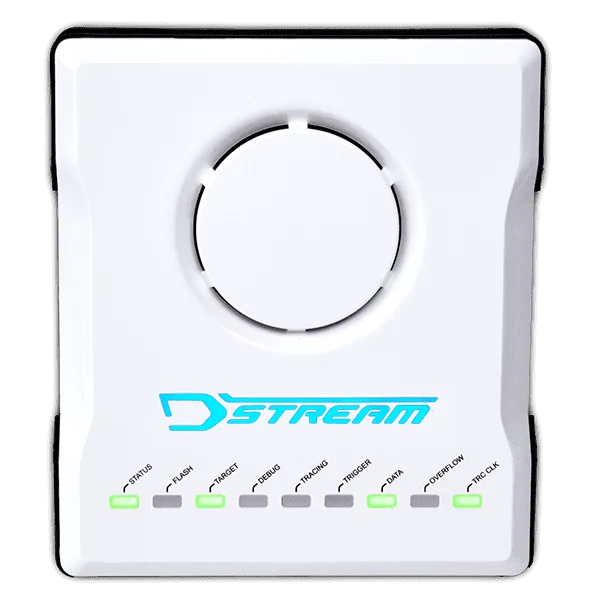
Streaming-trace probe for Cortex-M, Cortex-R, and Cortex-A. Captures 4-bit parallel TPIU trace and streams to host at up to 2.4 Gbps, capture length bounded by host storage, no large on-probe buffer. JTAG / SWD / cJTAG run-control. Pairs with Arm Development Studio for SoC-level debug, we map DSTREAM-ST and DSTREAM-PT onto Corstone reference subsystems for Indian SoC teams. (For wide-TPIU capture into an on-probe buffer, see DSTREAM-PT.)
Arm Virtual Hardware (AVH)
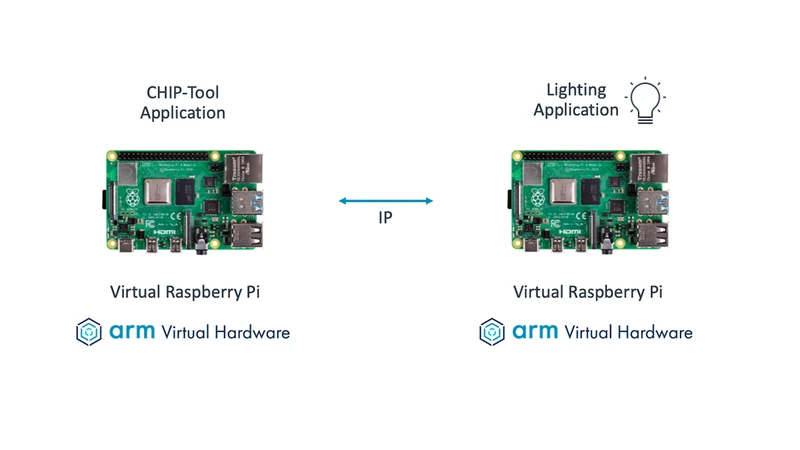
Arm Virtual Hardware (AVH) delivers ready-to-use models of Arm-based processors, systems, and third-party hardware running as cloud applications. AVH removes the need for physical board farms by enabling the entire Develop-Test-Deploy cycle in the cloud, fast prototyping, automated testing, and continuous integration without a single piece of hardware.
| Feature | Benefit |
|---|---|
| No physical hardware needed | Eliminate expensive board farms, automate the Develop-Test-Deploy cycle in the cloud |
| Exact logical behaviour | Verify functional correctness with automated algorithm testing on cycle-accurate models |
| CI/CD integration | Plug into GitHub Actions, GitLab CI, Jenkins, continuous testing for embedded and IoT projects |
| Model-to-hardware transfer | Direct firmware transfer from AVH model to physical target, system modelling for sensor, audio, video |
<div class="flex flex-wrap gap-2 mb-4">
<span class="inline-flex items-center px-2.5 py-1 rounded-full bg-gray-100 text-gray-700 text-xs font-medium">Cortex-M/A/R FVPs</span>
<span class="inline-flex items-center px-2.5 py-1 rounded-full bg-gray-100 text-gray-700 text-xs font-medium">CI/CD Automation</span>
<span class="inline-flex items-center px-2.5 py-1 rounded-full bg-gray-100 text-gray-700 text-xs font-medium">Pre-Silicon Development</span>
<span class="inline-flex items-center px-2.5 py-1 rounded-full bg-gray-100 text-gray-700 text-xs font-medium">FuSa Test Automation</span>
<span class="inline-flex items-center px-2.5 py-1 rounded-full bg-gray-100 text-gray-700 text-xs font-medium">Shift-Left Validation</span>
<span class="inline-flex items-center px-2.5 py-1 rounded-full bg-gray-100 text-gray-700 text-xs font-medium">Corellium Partner</span>
</div>
<p class="text-sm text-m-ink-muted mb-4">AVH is powered by <a href="https://support.avh.corellium.com/getting-started" class="text-m-primary hover:underline" target="_blank" rel="noopener">Corellium</a>, Arm's partner for cloud-based virtual hardware. Available as part of Keil MDK Professional and Arm Development Studio subscriptions.</p>
<div class="flex flex-wrap gap-3">
<a href="/request-quote" class="bg-m-primary text-white px-4 py-2 rounded-lg text-sm font-semibold hover:bg-m-primary/90 transition-colors">Request Quote</a>
<a href="https://support.avh.corellium.com/getting-started" class="text-m-primary font-semibold text-sm hover:underline" target="_blank" rel="noopener">AVH Getting Started Guide →</a>
</div>CMSIS v6: The Foundation of Every Arm Tool
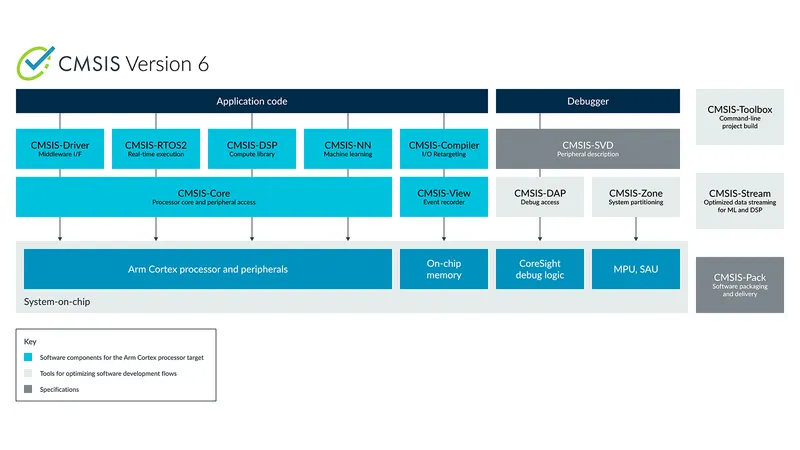
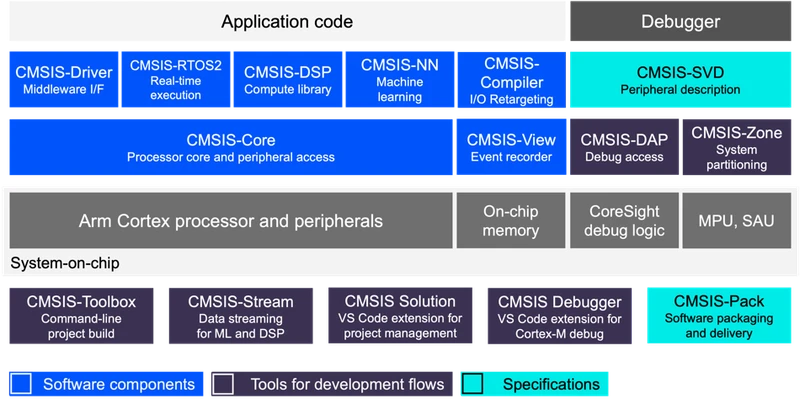
CMSIS v6 (Common Microcontroller Software Interface Standard) is the vendor-agnostic foundation underpinning every Arm tool on this page. With 15+ years of evolution, the pack ecosystem it feeds now lists 13,389 devices, 1,468 software packs, and 531 boards, 453 of them with example projects, in Arm’s public Keil catalogue (devices, packs, boards, counts read on 30 July 2026). It is the reason teams can change MCU vendors, switch RTOSes, or move from µVision to VS Code without rewriting application code. CMSIS-NN is also the runtime entry point for on-device inference, on Cortex-M devices that means Ethos-U microNPU for edge AI on Indian embedded products, and for Cortex-A class designs it means Ethos-N NPU for vision inference in Indian SoCs.
| Component | What It Does |
|---|---|
| CMSIS-Core | Standardized access to Arm Cortex processor cores and peripherals |
| CMSIS-RTOS2 | Common RTOS API. Arm-published implementations: RTX5 and CMSIS-FreeRTOS. (Process isolation is provided by the separate FuSa RTS product on qualified Cortex-M safety projects, not by base CMSIS-RTOS2.) |
| CMSIS-Driver | Generic peripheral driver interfaces for middleware portability |
| CMSIS-DSP | Optimized compute functions, FFT, filters, matrix, statistics |
| CMSIS-NN | Neural network kernels optimized for Cortex-M (TinyML inference) |
| CMSIS-View | Event Recorder and Component Viewer for real-time system analysis |
| CMSIS-Compiler | Retarget printf/scanf/fopen to custom interfaces or Event Recorder |
| CMSIS-Stream | Block data streaming between DSP/ML processing steps |
| CMSIS-Toolbox | CLI tools for csolution.yml builds, CI/CD, and pack management |
| CMSIS-DAP | Debug unit firmware for CMSIS-DAP compliant probes |
| CMSIS-Zone | Memory and peripheral partitioning across cores / TrustZone domains |
| CMSIS-Pack | Software component delivery; 1,468 packs covering 13,389 devices in Arm’s public Keil catalogue, read 30 July 2026 |
| CMSIS-SVD | Peripheral register descriptions for debugger register views |
What’s new in v6: CMSIS-View (Event Recorder for all developers), CMSIS-Compiler (portable printf/scanf), CMSIS-Stream (DSP/ML pipelines), and restructured GitHub repos. Arm Compiler v5 support discontinued, v6 requires Arm Compiler 6.10+, GCC 10+, IAR 8+, or LLVM/Clang 17+. For safety-class memory and process isolation on Cortex-M, see the separate FuSa RTS product.
CMSIS is included free with Keil MDK and Arm Development Studio. No separate purchase, it ships as part of the CMSIS-Pack ecosystem built into both IDEs. Open source under Apache 2.0 license.
Licensing: User-Based Licensing (UBL) for Indian teams
User-Based Licensing (UBL), the model going forward
Keil MDK v6, Arm Development Studio, the Arm Toolchain for Embedded family, and Arm Virtual Hardware use the User-Based Licensing model. Arm states that user-based licensing does not apply to Arm development tools released before 2022, so check the version table below before assuming an older installation can be switched over. One subscription per developer identity, usable on any machine. Activation writes a cached licence that is valid for 7 days; each day the tool runs it makes one attempt to renew for another 7 days, and if renewal keeps failing the cache becomes invalid at the end of the current 7-day window. For machines that cannot reach the licence server at all, proxy activation with Arm License Management Utilities 1.3.2 or later sets a borrow period of any value from 7 to 365 days, which is how air-gapped benches and CI fleets are handled; extending the period also extends how long the licence stays locked to that user. All per Arm's User-based Licensing User Guide (document 102516). One CI bot identity claims one seat regardless of parallel build count (a single UBL licence enables concurrent tool instances for the same user identity). Monthly or annual terms; CI/CD headless build entitlements included.

CLS vs LLS: pick the deployment model that matches your network
| Property | Cloud License Server (CLS) | Local License Server (LLS) |
|---|---|---|
| Hosted by | Arm | Customer (on-prem) |
| Best for | Most commercial Indian product teams | Air-gapped defence, aerospace, secure-medical, classified networks |
| Network requirement | Outbound HTTPS on port 443 to both api.arm.com and arm.compliance.flexnetoperations.eu from developer machines and CI agents. Arm names both hostnames and advises against allow-listing IP addresses, because the addresses are not static (Arm 102516) | Internal DNS reachable from developer machines and CI agents; LLS itself runs without outbound internet |
| Setup overhead | Provisioned by GSAS at purchase; developers armlm activate and start working | Customer stands up the LLS server, GSAS provides setup runbook + on-site session |
| Ongoing operations | Arm operates the licensing infrastructure | Customer’s licensing administrator owns the LLS host |
| Failure mode | Outbound access blocked → armlm fails (rare; firewall-fix once) | LLS host down → all licensed activity stops (mitigate with HA / backup) |
CLS is the default. LLS is the right answer for programmes running on classified or air-gapped build networks, customers with formal “no public internet during build” network policies, and any environment where outbound access to Arm’s licensing hosts is not negotiable. GSAS supports Indian customers through both deployment models for the Arm tools we sell (Keil MDK, AC6, AC6 FuSa, Arm Development Studio, FuSa RTS).
armlm quick-reference
The armlm CLI utility ships with Keil MDK v6 and Arm Development Studio. The four commands developers and CI bots use most often:
| Command | When to use it |
|---|---|
armlm activate | Claim a UBL seat. Arm supports two activation routes with two different identifiers, and they are easy to confuse. On the Cloud License Server, the Arm-hosted route and the default for most Indian teams, you pass an activation code: armlm activate --code <activation_code>, where an activation code is a sequence of letters and digits in the pattern XXXXXXXX-XXXX-XXXX-XXXX-XXXXXXXXXXXX. You generate it in the Arm portal under Cloud Server, then Generate Activation Code (Arm cloud setup guide). Against your own Local License Server you pass the server URL plus a product code instead: armlm activate --server <server_URL> --product <product_code>, where a product code looks like KEMDK-PRO0, DEVST-GLD0 or HWSKT-EAC0 (end-user install guide). Arm’s ARM-software/cmsis-actions/armlm GitHub Action exposes exactly these as its code, server and product inputs; see the action README for CI usage. An activation code is not associated with any user or service account until its first use, so whoever runs it first owns that seat; if the wrong username activates it, the administrator has to revoke the code and issue a new one (Arm 102516). |
armlm deactivate | Removes the licence from the local cache on that one device. It does not return the seat to the pool: Arm states that “Deactivating a license is an activity local to a single device” and “Deactivation does not release the license so it can be used by another user”. A licence-server licence is released for another user only after it has gone un-renewed for a minimum of 7 days; an activation code has to be revoked by an administrator, and even then cannot be reallocated until at least 7 days after the current user last renewed the cache on any device. A per-job armlm deactivate in CI therefore frees nothing, so size seats per identity, not per job. See Arm UBL in CI/CD Pipelines for the full CI treatment. |
armlm inspect | Show the current entitlement state on the local machine, which seats are active, when the cache last refreshed, what tier is in use. |
armlm genlic | Pro-tier only. Generate a legacy node-locked license file under a current MDK v6 Pro UBL umbrella. Arm’s eligible list is MDK v4.20 to v5.36 (including MDK v5.x using Arm Compiler 5), PK51, PK166, DK251 and AR166. The FuSa-branch compilers are not in scope: they are separate Arm products with their own legacy archive entitlements. |
For the full administrator reference (including the LLS admin command surface, port configuration, and server-software install steps), Arm publishes the install guide at learn.arm.com/install-guides/license/ubl_license_admin/, that is the authoritative source. GSAS works with Indian customers’ IT-security teams during LLS deployment for the Arm tools we sell, but we don’t reproduce Arm’s admin command list here; refer to the Arm install guide.
For the genlic legacy recipe specifically see Keeping Legacy AC5 / PK51 / DK251 / PK166 Projects Alive Under MDK v6 Pro UBL.
Minimum tool versions for UBL
UBL is not a runtime upgrade you toggle on existing tool installations, and it does not apply to Arm development tools released before 2022 at all. Arm publishes two separate columns in Table 1-1 of the User-based Licensing User Guide (102516), and they are not the same number. Plan against the recommended column:
| Tool | Recommended minimum | First version that supports UBL (where different) |
|---|---|---|
| Keil MDK | 5.38 | 5.37 |
| Arm Compiler for Embedded | 6.19 | 6.18 |
| Arm Compiler for Embedded FuSa 6.16 | not stated by Arm | 6.16.2 |
| Arm Compiler for Embedded FuSa 6.22 | 6.22.1 | same |
| Arm Development Studio (Gold) | 2022.0 | same |
| Arm Development Studio (Platinum, archive licence only) | 2022.a | same |
| Arm Fast Models | 11.18 | 11.17.1 |
| Arm Socrates | 1.8.2 | 1.7.0 |
Running a version that supports UBL but sits below the recommended minimum is exactly where licence failures show up, and Arm names the symptoms: a 501 - Library communication error or a License capability data was invalid error. If your Indian project is locked to a specific compiler version for a TÜV-certified safety case (for example, AC6.16 LTS for an automotive ECU certified against ISO 26262 ASIL-D), the UBL minimum-version constraint is a real planning concern. Talk to GSAS about sequencing the UBL migration with your safety re-verification cycle.
Migration paths: Indian teams typically hit one of three
- FlexNet Node-Locked → UBL. The standard migration. FL-NL is reaching end-of-life and the modern model is UBL. See FlexNet Node-Locked Is Ending, How Indian Arm Keil MDK Teams Should Migrate to UBL in 2026 for the full playbook including minimum tool versions, seat sizing, the 60-day rollout shape, firewall fixes, and CI-image gotchas.
- AC6.16 LTS → AC6.22 LTS for FuSa programmes. A separate workstream from the licensing migration but often coordinated with it. See Planning the AC6.16 LTS → AC6.22 LTS Migration for Indian FuSa Programs for the safety re-verification plan, the new-cores list, and the Certified C Library bundling change.
- Maintaining legacy projects (AC5 / PK51 / DK251 / PK166 / MDK v5) under modern UBL. The
armlm genlicrecipe, see the legacy NL from UBL Pro guide, keeps the museum toolchains licensable from a single Pro-tier pool.
GSAS Micro Systems handles the licensing migration for Indian Arm customers across Bengaluru, Hyderabad, Chennai, Pune, Mumbai, Delhi NCR, and Visakhapatnam. We have done this conversation with Indian teams every week for the last two years; we know what 60-day migrations look like and where the firewall and CI gotchas hide. Talk to us about your UBL migration.
Why GSAS
Why Choose GSAS as Your Arm Engineering Partner
Since 2018
Authorized Arm Partner
Hands-on
Workshops & Training
India-wide
Local Support
- Application engineering: debug probe selection (ULINK2 vs ULINKplus vs DSTREAM), ETM trace configuration, Cortex-M vs Cortex-R toolchain guidance, and TrustZone secure/non-secure partitioning setup
- Domain expertise: automotive functional safety: Arm FuSa Compiler and FuSa RTS deployment for ISO 26262 ASIL B/D programs, safety qualification kit integration, and Cortex-R lockstep configuration for safety-critical ECU firmware
- Migration consulting: MDK v5 to v6, legacy Arm Compiler 5 to Arm Compiler 6, FlexNet to UBL licensing transition, and CMSIS-Pack ecosystem adoption
- CI/CD pipeline setup: CMSIS-Toolbox CLI integration into GitHub Actions, GitLab CI, or Jenkins for automated build, test, and flash workflows
- Arm technical workshops conducted since 2018 across automotive, industrial, and consumer segments, hands-on labs covering Keil MDK debugging, ULINKplus power measurement, DSTREAM trace capture, and CMSIS-RTOS2 integration
- Evaluation and demo units: probes, licenses, and hands-on lab setups from Bengaluru, Chennai, Hyderabad, Delhi NCR, Mumbai, and Pune
- Local procurement: INR invoicing on all Arm development tools (Keil MDK v6, Arm Development Studio, ULINKplus, ULINKpro, DSTREAM-ST, Arm Virtual Hardware) with GeM, SAP Ariba, Coupa, and TReDS support
Arm's India design and customer footprint clusters in Bengaluru, India's largest embedded systems and semiconductor design hub. Read our Bengaluru engineering ecosystem guide →
Videos
Arm Video Library
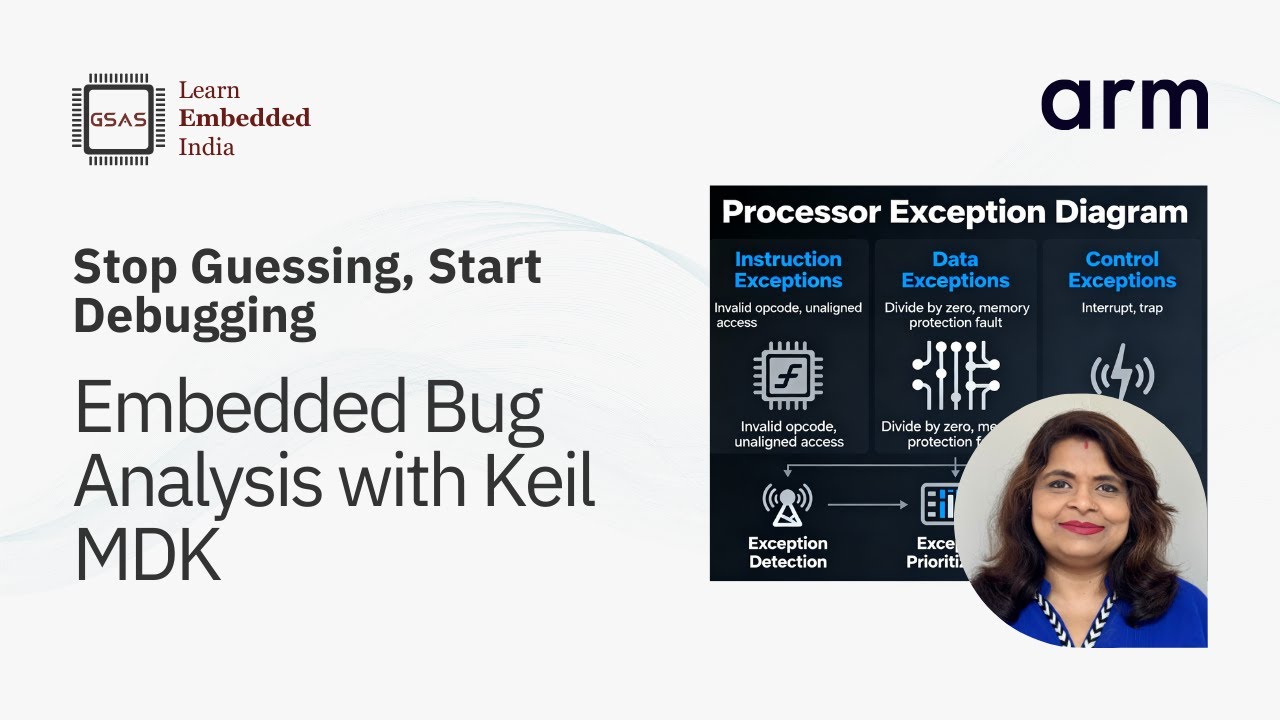
Bug Analysis with Keil MDK: GSAS
Reinhard Keil on CMSIS & Embedded Workflows: Arm
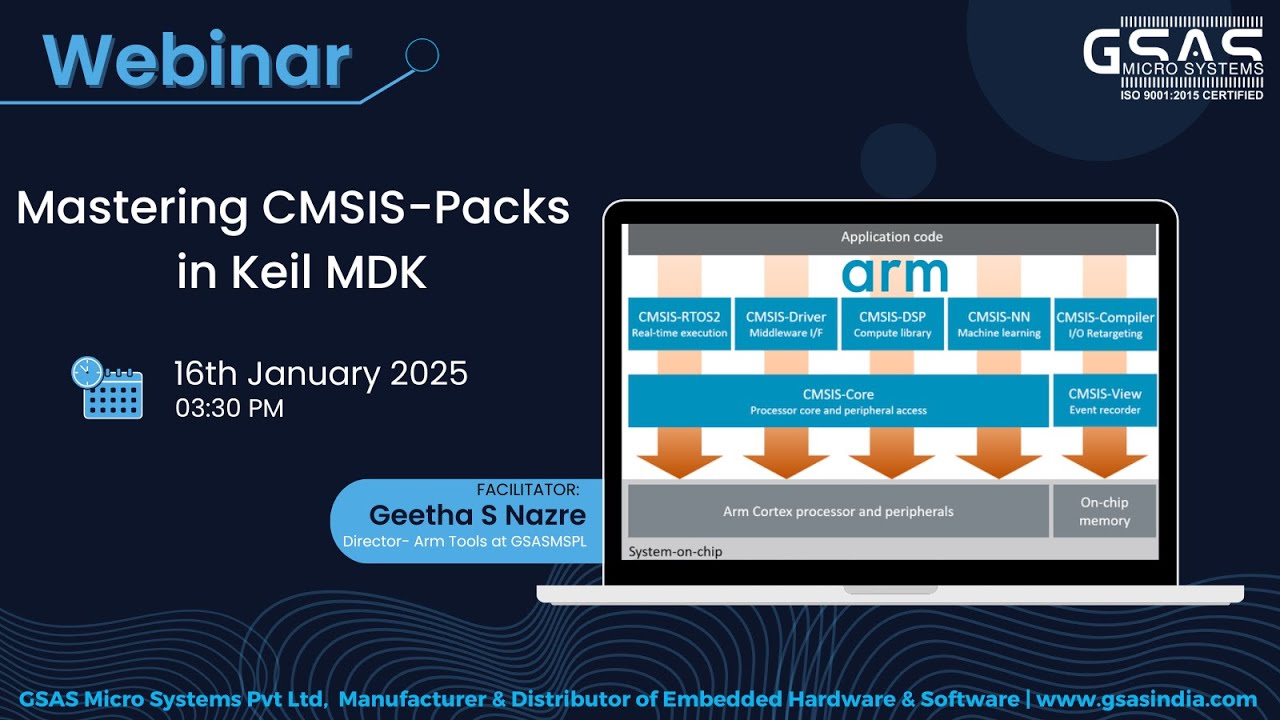
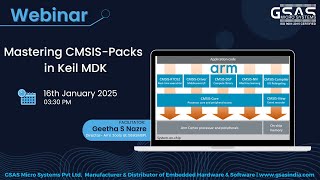
CMSIS-Packs: GSAS
TrustZone: GSAS
Keil Studio Intellisense: Arm

Keil Studio Overview: Arm
Available across India
Arm by City
Blog
Arm Insights

Meet the GSAS Team at electronica India 2026, Stall H3.I45
electronica India 2026 opens on 16 September at BIEC Bengaluru. The GSAS team is on the floor all three days at Stall H3.I45, and this is who you will be talking to and what they can show you.
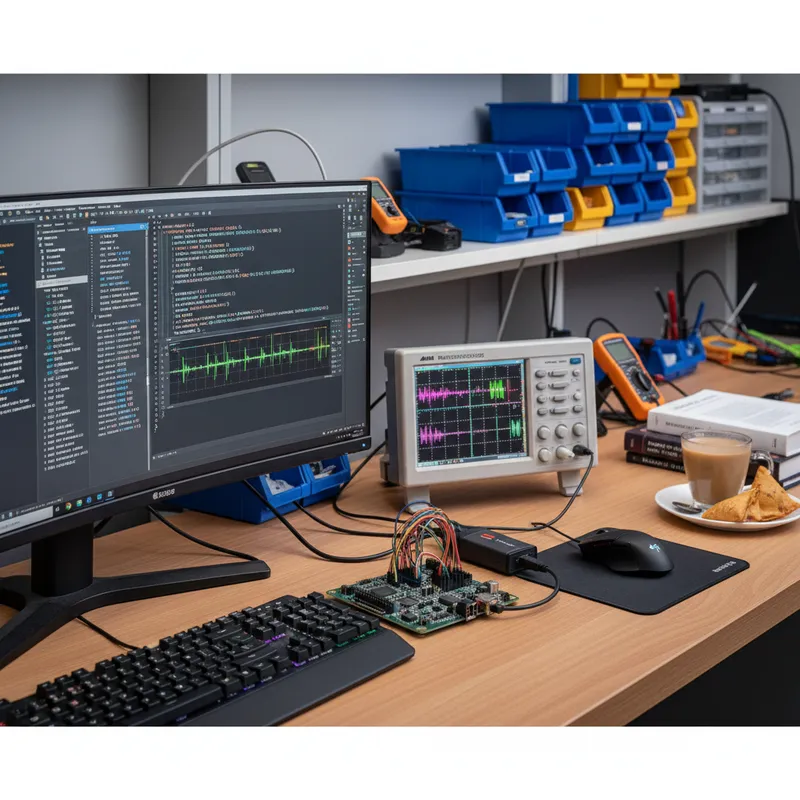
Arm's Agentic AI Push: What Indian Embedded Teams Can Actually Use Today
Arm has set out its platform strategy for the agentic era, putting inference everywhere it has compute. Indian embedded teams can start on that direction this quarter with the Cortex-M toolchain they already own: Helium, CMSIS-NN, Ethos-U and Vela, on boards you can order today.
Arm User-Based Licensing in CI/CD: armlm, Proxy Activation and What Breaks
A licensing failure in an Arm pipeline blocks the release branch and puts a firmware engineer on armlm output instead of driver code, up to seven days after the change that caused it. The reason: a UBL licence is a cached certificate valid for 7 days, not a checkout. Here is what that changes about pipeline design, and what to fix first.
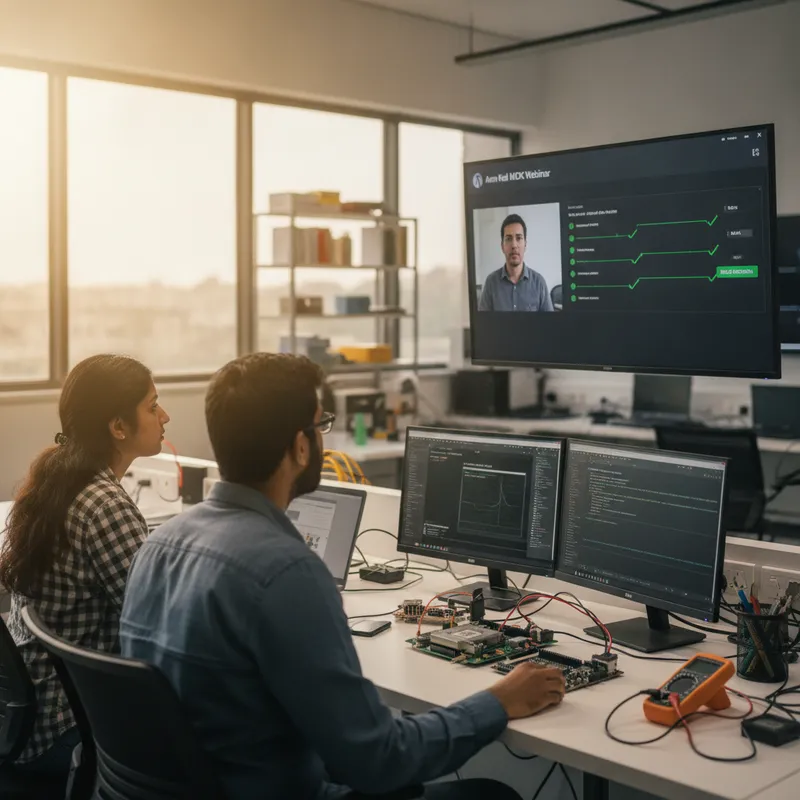
Two Arm Keil MDK Webinars This Summer: DevOps and Edge AI for Indian Cortex-M Teams
Arm is running two free live Keil MDK webinars this summer: DevOps with Keil MDK on 23 June and edge AI with ModelNova Fusion Studio on 21 July. What Cortex-M teams in Bengaluru, Hyderabad, Pune, Chennai, Mumbai, and Delhi NCR should know, shared by GSAS, Arm's authorized partner in India for Arm Development Tools.
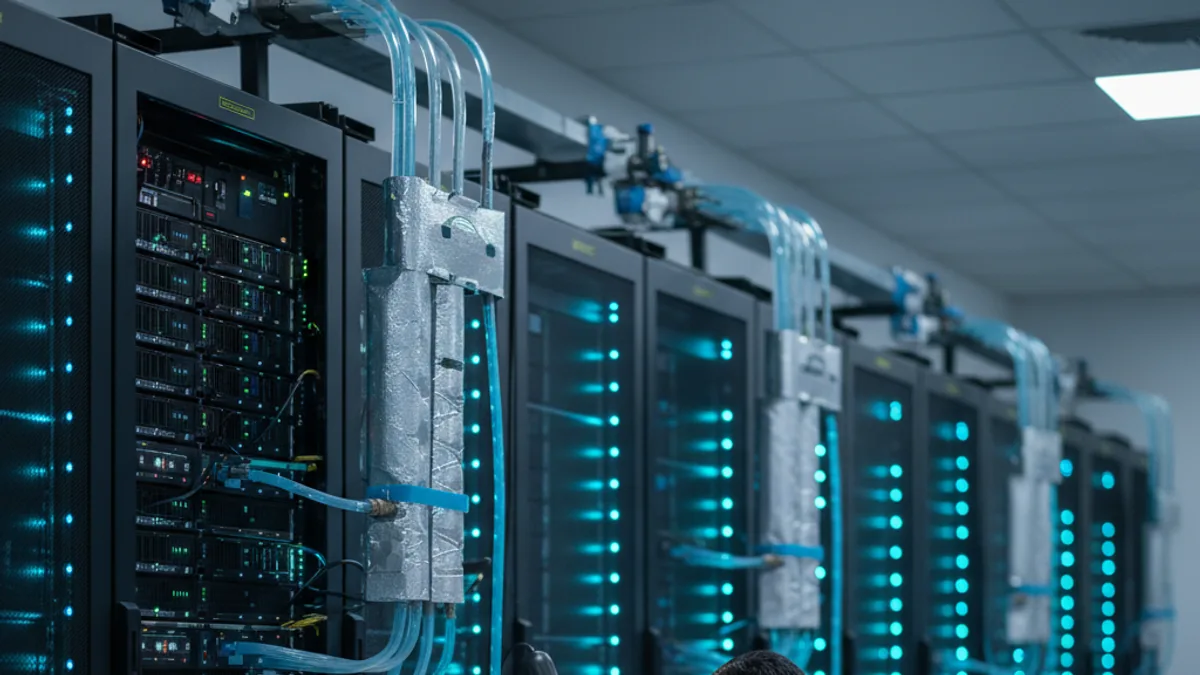
AI Data Centers in India: Test, Measurement & Memory Boom
AI is a hardware supercycle. Every AI rack has to be designed, brought up, powered, fed with memory, and kept alive, and each of those is a test, measurement and memory problem. Here is the full engineering toolchain behind the AI data center, mapped to what Indian teams can buy today through GSAS.
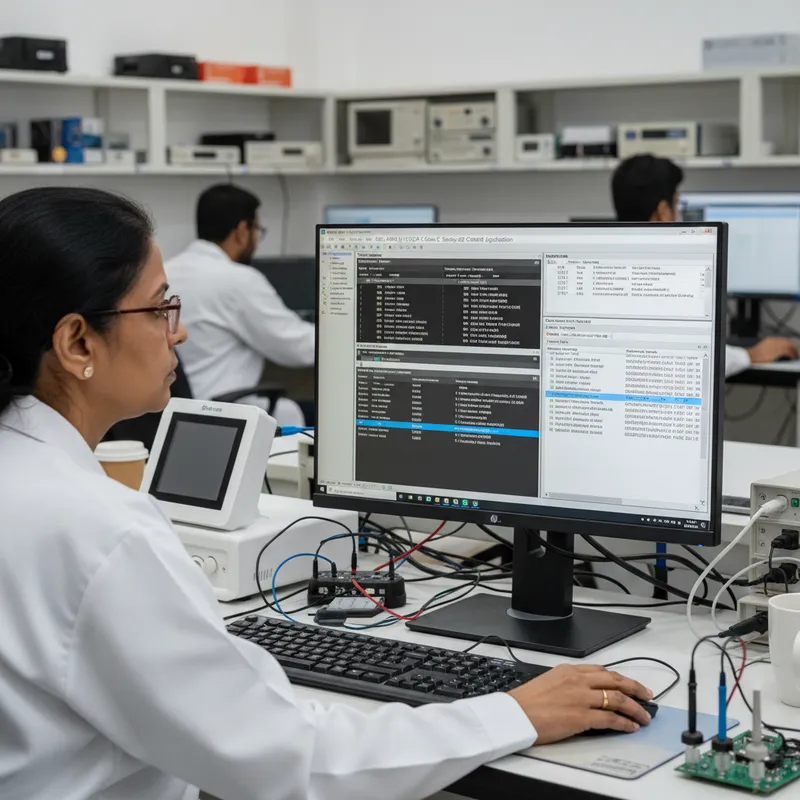
Arm FuSa RTS in Production: MPU Isolation, Thread Watchdogs, and Safety Class API for Indian Medical and Industrial Firmware
Beyond the certification dossier: how Arm FuSa RTS actually works in production firmware. MPU-based spatial isolation, thread-watchdog patterns, and the Safety Class API that Indian medical-device, industrial-controls, and railway-signalling teams use to keep ASIL/SIL/Class-C designs running safely.
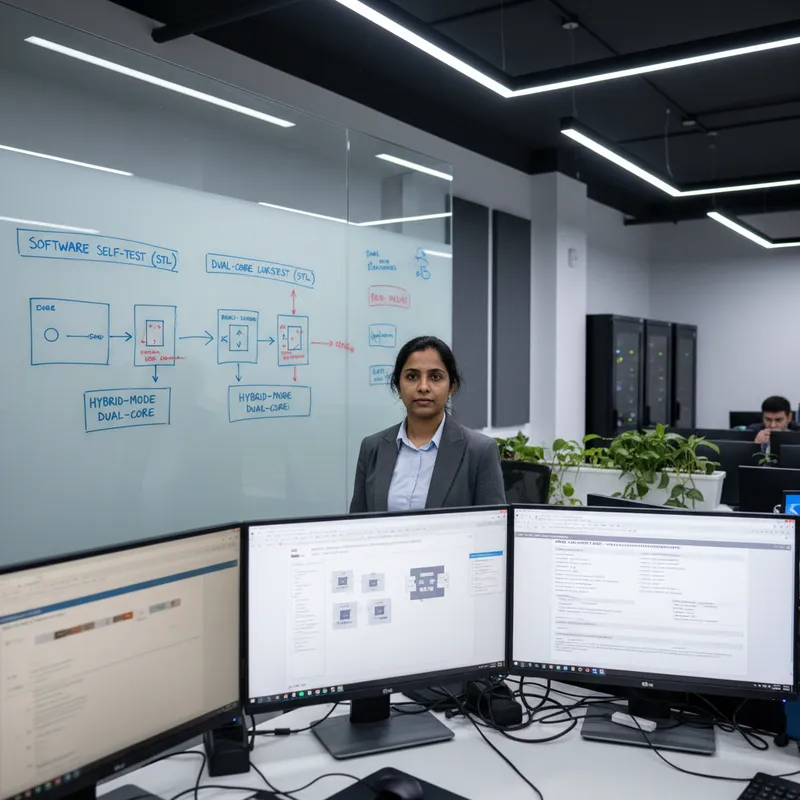
STL vs DCLS vs Split-Lock vs Hybrid Mode: Picking the Right Fault-Detection Strategy for Indian Safety Programmes
Four different fault-detection techniques cover four different parts of the ASIL spectrum on Arm safety silicon, Software Test Library, Dual-Core Lock-Step, Split-Lock (Cortex-R52), and Hybrid Mode (next-generation automotive Cortex-A AE). The decision framework GSAS gives Indian Tier-1 / Tier-2 automotive teams, anchored on Arm's published functional-safety solutions.

How Many Arm UBL Seats Do You Actually Need?: A Sizing Guide for Indian CI/CD Teams
How Arm User-Based Licensing actually sizes against your team: per developer identity, not per parallel CI job. A short guide for Indian engineering managers planning the UBL migration, talk to GSAS for the per-team sizing exercise.
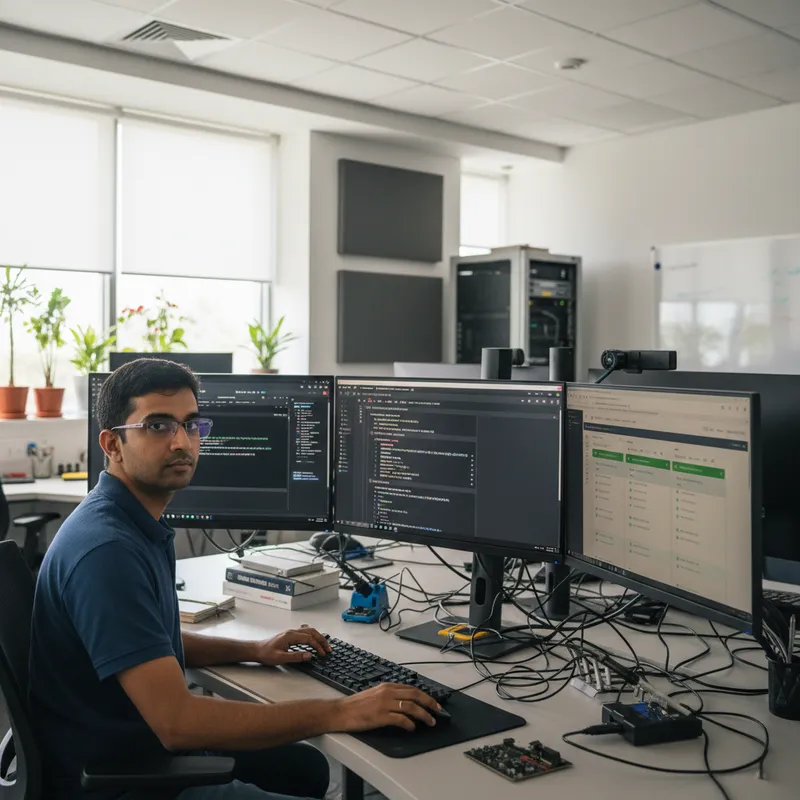
Cortex-M CI/CD with csolution.yml + cbuild + GitHub Actions: A Working Pipeline for Indian Firmware Teams
A concrete CI/CD pipeline pattern for Indian Cortex-M firmware teams using the modern Arm CMSIS-Toolbox CLI (csolution + cbuild + cpackget) on GitHub Actions runners, UBL-licensed builds, vcpkg tool deployment, parallel build matrix, and the firewall + caching gotchas that catch most teams.
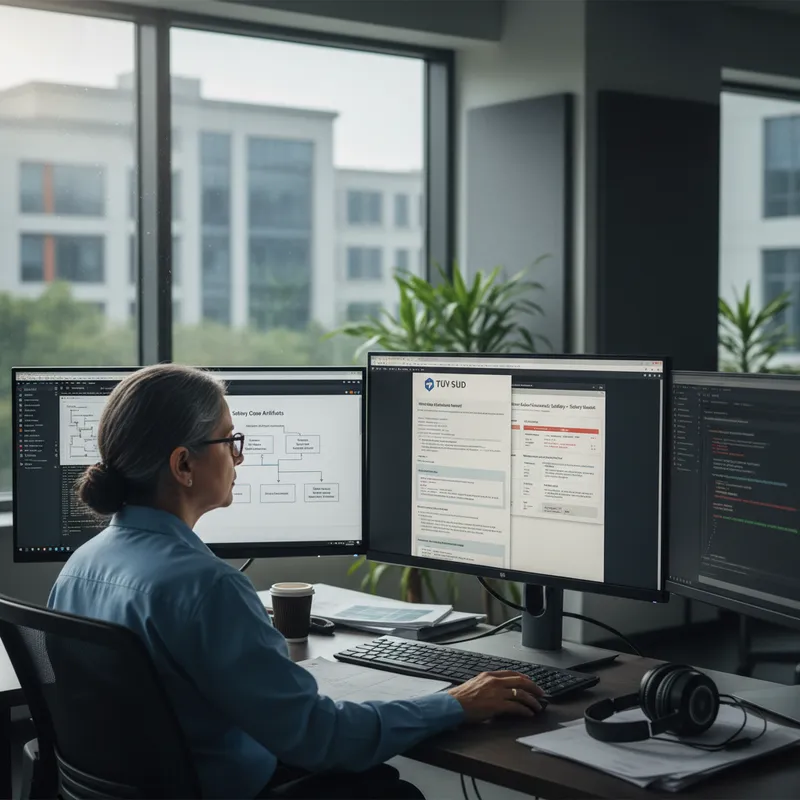
Planning the AC6.16 LTS → AC6.22 LTS Migration for Indian FuSa Programs
Arm Compiler 6.16 LTS Term licenses are reaching end-of-life. AC6.22 LTS is the FuSa successor with new core support and the Certified C Library now bundled. This is the migration playbook GSAS gives Indian automotive, railway, and industrial teams in Bengaluru, Hyderabad, Chennai, and Pune.
FlexNet Node-Locked Is Ending: How Indian Arm Keil MDK Teams Should Migrate to UBL in 2026
Arm has announced end-of-life for FlexNet Node-Locked (FL-NL) licensing of Keil MDK and Arm Compiler 6. The framing GSAS gives Indian teams in Bengaluru, Hyderabad, Chennai, Pune, Mumbai, and Delhi NCR planning the move to User-Based Licensing.
Keeping Legacy AC5 / PK51 / DK251 / PK166 Projects Alive Under MDK v6 Pro UBL
If your Indian engineering team still maintains old 8051 (PK51), C166 (DK251), or ARM7 (AC5) firmware while writing new Cortex-M product lines, MDK v6 Pro UBL has a backwards-compatibility path. The framing GSAS gives Indian teams in Bengaluru, Hyderabad, and Pune.
FAQ
Frequently Asked Questions about Arm in India
Arm Development Studio vs Keil MDK, which do I need?
DSTREAM-ST vs DSTREAM-PT, which trace probe?
Is Arm Development Studio available in India?
What is Arm Development Studio Gold vs Gold FuSa?
Which Arm probe for Cortex-A SoC bring-up?
Ready to Get Started with Arm?
Get pricing, evaluation units, or a technical consultation from our application engineers across India.