
 Arm
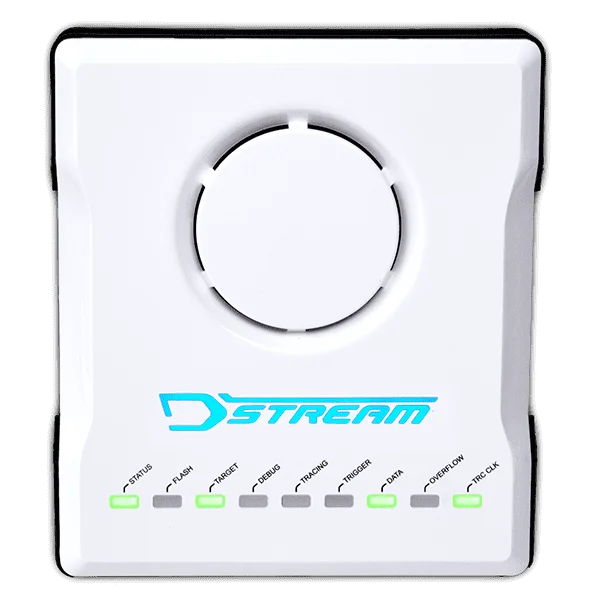
DSTREAM-ST
Debug & TraceStreaming-trace debug probe for Cortex-A/R/M, captures 4-bit parallel trace and streams it to the host at up to 2.4 Gbps. JTAG/SWD/cJTAG run-control and CoreSight support. Authorized India partner, GSAS Micro Systems.
Trace
4-bit parallel TPIU, streamed to host
Bandwidth
Up to 2.4 Gbps streamed
Architecture
Cortex-A, R, M
Interface
JTAG, SWD, cJTAG
Trace capture
4-bit wide at up to 300 MHz DDR (600 Mbit/s per pin)
Interface Vref
1.2 V to 3.3 V, configurable by target
Minimum software
Arm Development Studio 2018.0 or DS-5 5.27
CoreSight
ETM, PTM, ITM, STM
IDE
Arm Development Studio
Overview
About DSTREAM-ST
Quick Facts
- Trace
- 4-bit parallel TPIU, streamed to host
- Bandwidth
- Up to 2.4 Gbps streamed
- On-Probe Buffer
- None, streams to host
- Architecture
- Cortex-A, R, M
- Interface
- JTAG, SWD, cJTAG
- IDE
- Arm Development Studio
The DSTREAM-ST is Arm’s streaming-trace debug probe, designed for teams developing on Cortex-A, Cortex-R, and Cortex-M targets where instruction-level visibility is essential. DSTREAM-ST captures 4-bit parallel trace from the target’s TPIU and streams the trace data continuously to the host PC at up to 2.4 Gbps. The host receives the trace in real time, so capture duration is bounded by host storage rather than by an on-probe buffer.
Streaming trace enables non-intrusive code coverage collection, execution profiling, and crash root-cause analysis, useful for functional safety evidence packages under ISO 26262 and IEC 61508. The probe connects via USB to the host and supports JTAG, SWD, and cJTAG target interfaces. For wider trace ports (8/16/32-bit TPIU), the DSTREAM-PT provides parallel trace capture with an on-probe buffer.
Debug Probe Comparison
| Feature | DSTREAM-ST | DSTREAM-PT | ULINKpro |
|---|---|---|---|
| Target Architecture | Cortex-A, R, M | Cortex-A, R, M | Cortex-M |
| Trace Method | 4-bit streaming to host | Parallel TPIU with on-probe buffer | ETM streaming (4-bit) |
| Trace Port Width | 4-bit | 4/8/16/32-bit | 4-bit |
| On-probe trace buffer | None (streams to host) | Yes (Arm publishes no capacity figure) | Small / pass-through |
| Trace Bandwidth | Up to 2.4 Gbps streamed | Up to 19.2 Gbps captured | ~800 Mbit/s |
| Run-Control | JTAG, SWD, cJTAG | JTAG, SWD, cJTAG | JTAG, SWD |
| Host IDE | Arm Development Studio | Arm Development Studio | Keil MDK |
Where DSTREAM-ST fits
DSTREAM-ST works with Arm Development Studio (Gold edition), providing an integrated debug and trace workflow from source code through hardware execution. (Arm Development Studio’s two current editions per the published edition matrix are Gold and Gold FuSa.) Streaming directly to the host means total capture length is limited only by host disk, useful for capturing rare, timing-dependent faults that surface after minutes of execution. For safety-critical projects, DSTREAM-ST trace data feeds Development Studio’s code coverage tools, supporting the structural coverage evidence required by certification assessors.
When the target exposes a wider parallel trace port (8/16/32-bit TPIU), DSTREAM-PT is the appropriate choice, it captures wider trace into an on-probe buffer. GSAS stocks DSTREAM-ST units in India with manufacturer warranty and provides evaluation support, probe configuration assistance, and training on trace-based debug workflows.
Blog
Arm Insights
CMSIS and SEGGER: J-Link, RTT and SystemView in Keil Studio
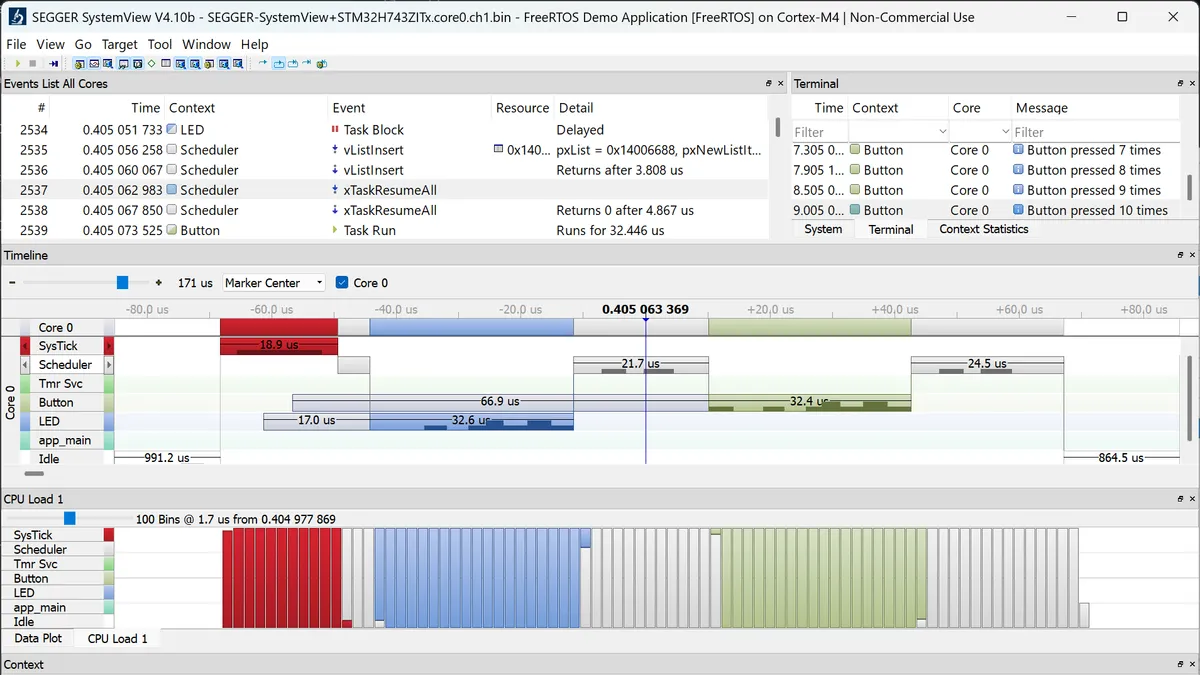
SEGGER tools now plug into the CMSIS workflow in Keil Studio for VS Code: the Arm CMSIS Debugger connects to J-Link, SEGGER RTT and SystemView are available as CMSIS software packs, and pyOCD reads RTT on multi-core targets, including to files for hardware-in-the-loop tests. GSAS is demonstrating the workflow at embedded world India 2026, Stand D4, BIEC Bengaluru, 17 to 19 November.
Choosing Debug and Trace Tools for Indian Automotive Tier-1s
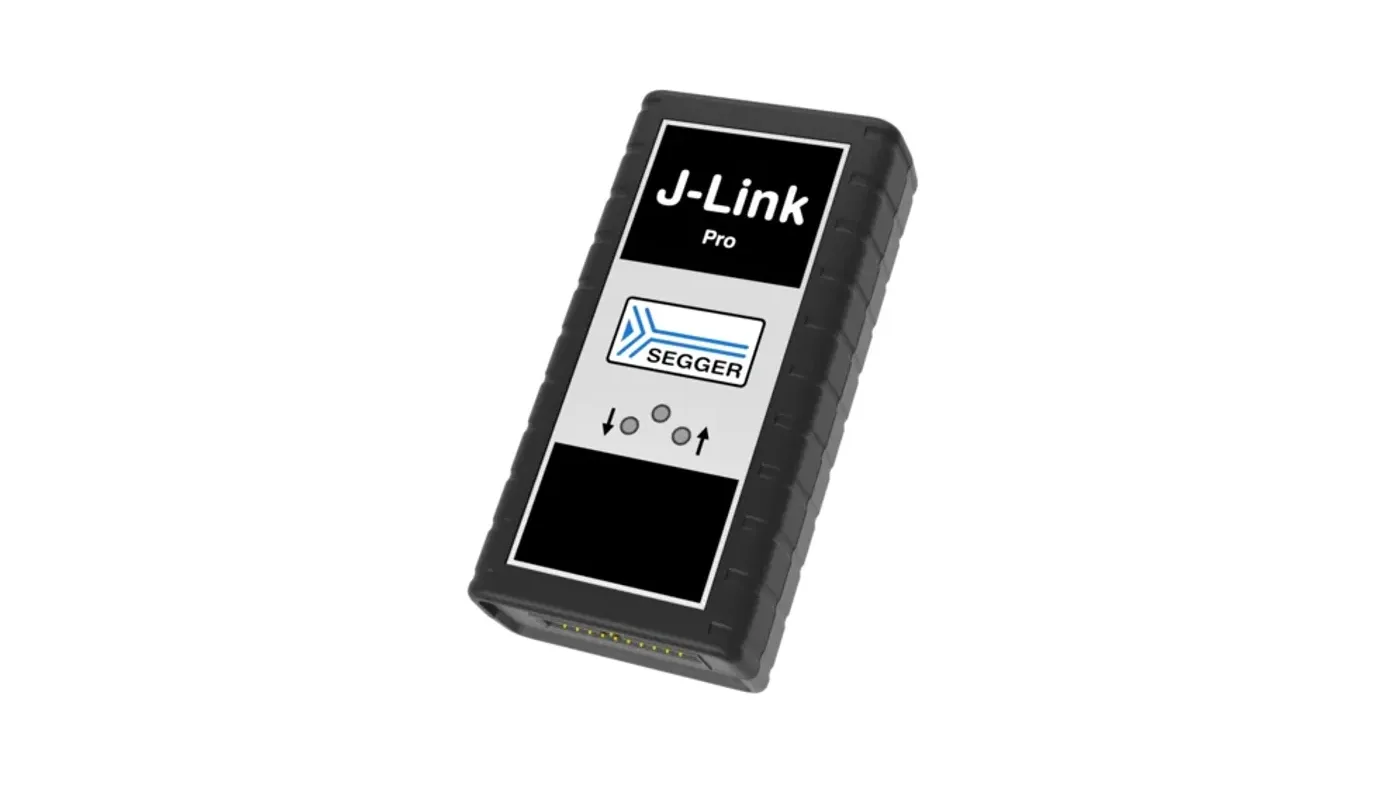
A probe that is right for a Cortex-M body controller is the wrong tool for a multicore TriCore powertrain ECU. This guide walks Indian automotive Tier-1 teams through choosing a debug and trace setup by architecture: Cortex-M, Cortex-R and Cortex-A, TriCore, RH850 and RISC-V, and by the question each programme actually needs trace to answer.
Multicore Debug on AURIX, RH850 and Cortex-R52 in India
Halting one core of a multicore safety microcontroller while the others keep running changes the system you are trying to debug. This guide explains lockstep, cross-triggering and synchronous halt on Infineon AURIX, Renesas RH850 and Arm Cortex-R52, from public silicon-vendor documentation, for automotive teams in India.
Related products
More from Arm
All Arm products →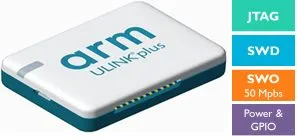
ULINKplus
Advanced debug adapter with power measurement, test I/O, and SWV trace for Arm Cortex-M development and testing. Available in India from GSAS with hands-on application engineering and local support.
View ULINKplus →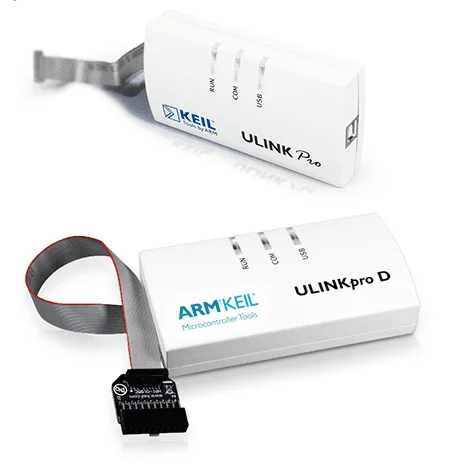
ULINKpro
High-speed debug and trace probe with ETM streaming trace and code-coverage support for Arm Cortex-M, JTAG up to 50 MHz, SWV up to 100 Mbit/s (Manchester), ETM up to 800 Mbit/s, memory R/W up to 1 MB/s, per Arm's published ULINKpro specifications. Local stock and support across India, GSAS.
View ULINKpro →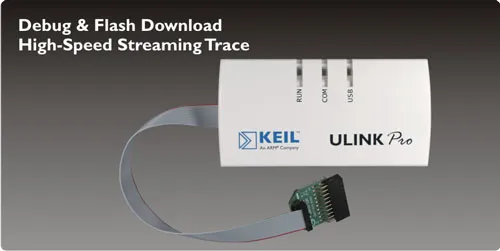
ULINKpro D
Debug variant of ULINKpro for Cortex-M, JTAG up to 50 MHz, SWV up to 100 Mbit/s (Manchester), memory R/W up to 1 MB/s, per Arm's published Keil ULINKpro specifications. No ETM trace (use ULINKpro for ETM). India pricing and local support from GSAS.
View ULINKpro D →FAQ
Common questions about DSTREAM-ST
DSTREAM-ST vs DSTREAM-PT?
Does DSTREAM-ST have an on-probe buffer?
Is DSTREAM-XT a real Arm product?
Which DSTREAM for high-bandwidth parallel trace?
Interested in DSTREAM-ST?
Get pricing, an evaluation unit, or a technical consultation from our application engineers.