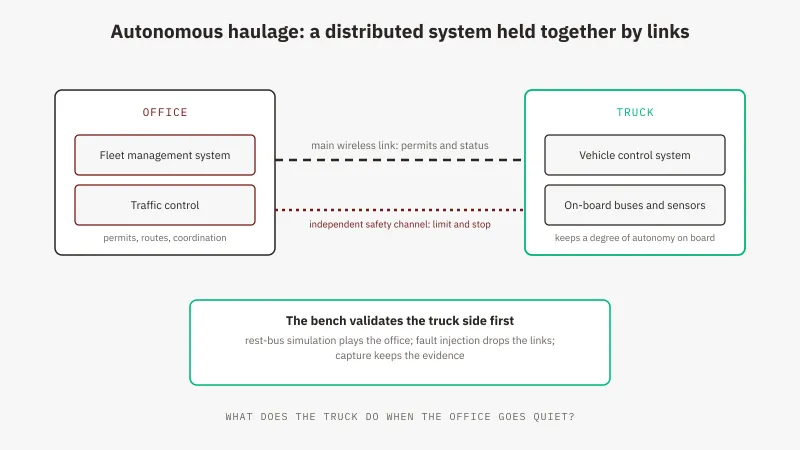
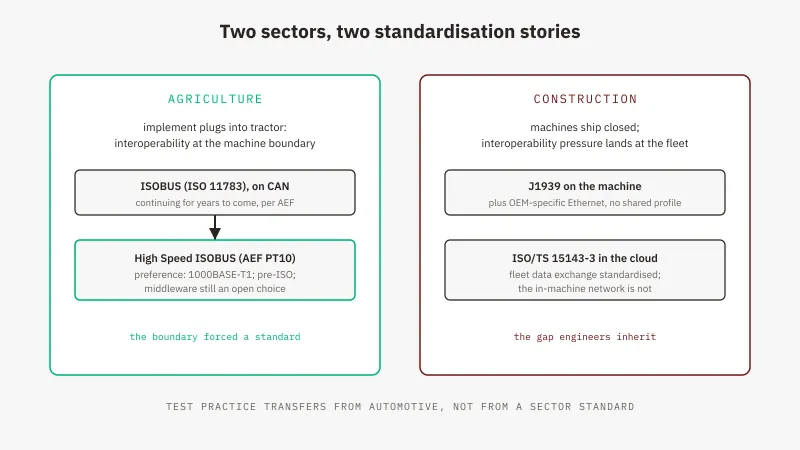
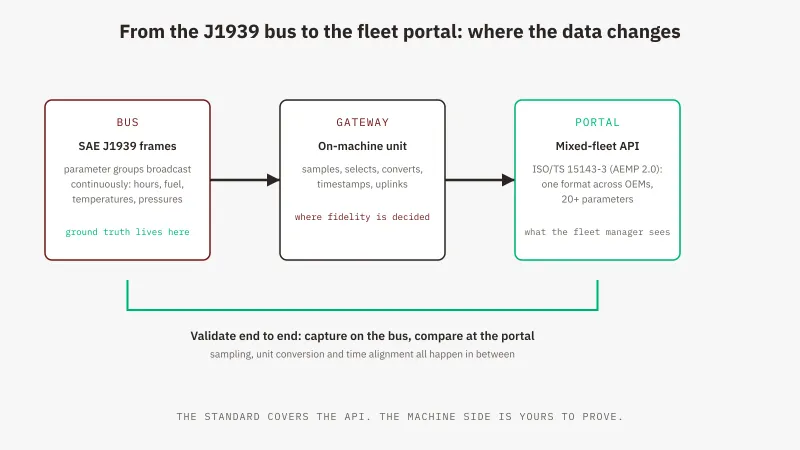
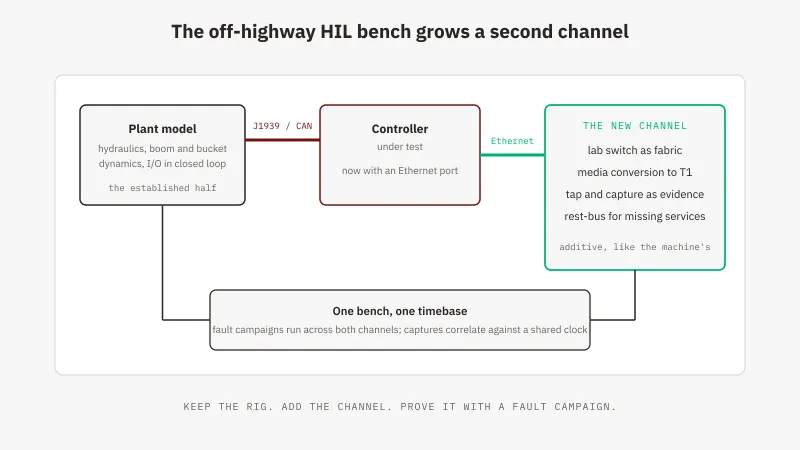
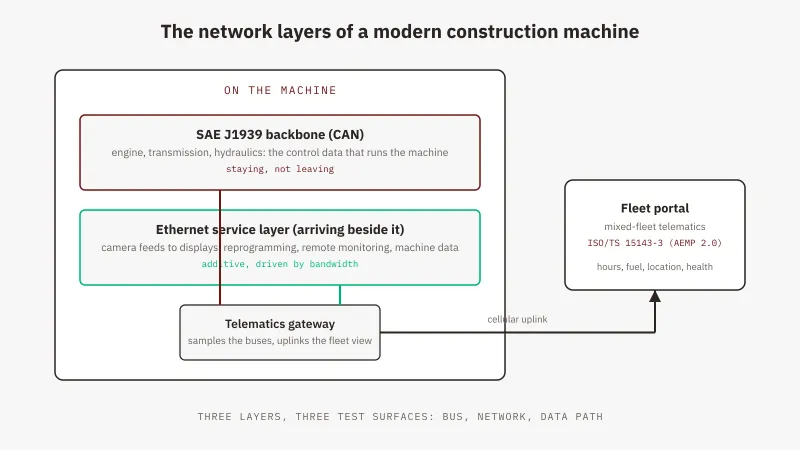
Construction and mining machines increasingly depend on their electronics. Telematics, operator assistance and electrification all rest on the same foundations: the SAE J1939 backbone that carries powertrain and hydraulics data, the newer network layer growing beside it, and the battery and power systems behind electrified models. The engineering problem is validating all three on machines that mix old and new buses and run on 12 V and 24 V electrics.
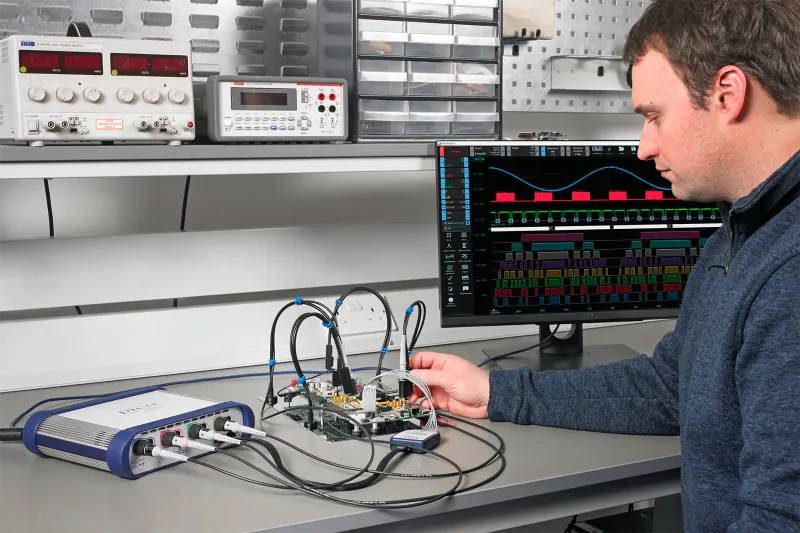
On the network side, PicoScope oscilloscopes decode the CAN and CAN FD frames that carry SAE J1939 traffic and check the 100BASE-T1 physical layer on the same bench, which matches the mixed-bus reality of a machine mid-migration (see CAN and LIN bus testing). The AutoPi TMU CM4 telematics platform, with a supply range built for 12 V and 24 V machine electrics, gives fleets and OEM pilot teams a programmable path from on-machine data to the cloud, the same edge-to-cloud work described under Industrial IoT. For machine dynamics, Adams multibody simulation lists off-highway among its applications, from construction and mining equipment dynamics to articulated vehicle stability.
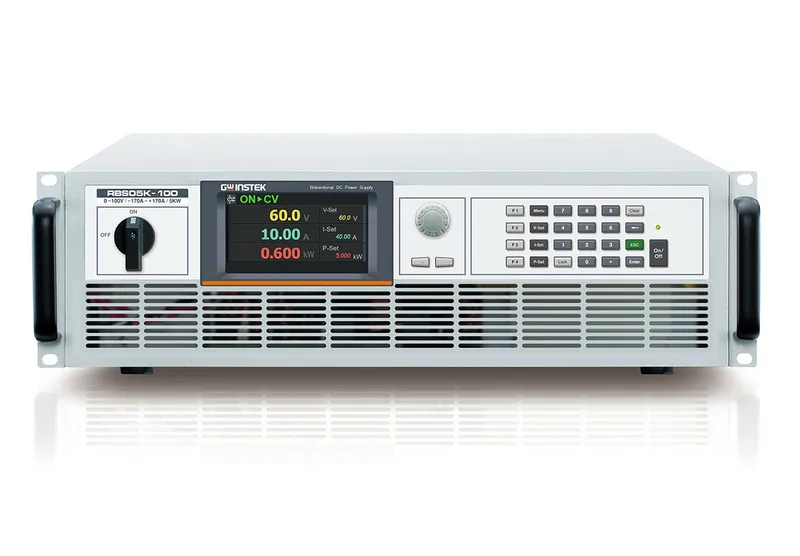
Electrification brings pack and drivetrain validation with it. The RBS Series regenerative bidirectional DC source covers charge and discharge cycling for machine packs and DC-DC work at up to 30 kW per chassis, with battery emulation for controller validation before cells arrive. GSAS engineers support construction and mining equipment programmes from offices across India, with the test benches, calibration and application engineering to keep machine electronics projects moving.