
Functional Safety
Functional Safety & Compliance
End-to-end safety lifecycle engineering, hazard analysis, FMEA, safety case development, tool qualification, and assessor-ready evidence packages. From automotive ASIL-D to aerospace DAL A, delivered by India's embedded safety specialists.
Safety Lifecycle
V-Model Safety Engineering
Every functional safety engagement follows a structured lifecycle from hazard analysis through validated safety case. We cover the full V-model, not just the comfortable middle.
Hazard Analysis & Risk Assessment
Systematic identification of hazards, determination of safety integrity levels, and definition of safety goals. HARA, FTA, FMEA, and FMEDA methodologies applied across automotive, industrial, aerospace, and medical domains.
Safety Concept & Architecture
Technical safety concept development, safety-relevant architecture decomposition, hardware-software interface specification, and freedom from interference analysis for multi-core and mixed-criticality systems.
Implementation & Verification
Safety-compliant code development with MISRA C/C++ adherence, unit testing with MC/DC coverage, static analysis, and requirements traceability from safety goals through code.
Validation & Safety Case
End-to-end safety case development, compiling all evidence, verification reports, and compliance arguments into assessor-ready documentation packages.
Tool Qualification
Tool Confidence Level assessment and tool qualification per ISO 26262 Part 8, IEC 61508 Part 3, or DO-330. We produce the Tool Qualification Plan, Tool Qualification Report, and manage the assessor dialogue.
Starting a safety-critical project?
Our safety engineers can help you select the right tools and processes for ISO 26262, IEC 61508, DO-178C, and IEC 62304 compliance.
Standards
Safety Standards We Cover in India
Five international safety standards across four industries. Each backed by engineers who have delivered real compliance projects, not just read the standards documents.
ISO 26262
AutomotiveFull lifecycle, HARA through safety case, tool qualification, AUTOSAR safety analysis
IEC 61508
IndustrialSafety function design, FMEDA, proven-in-use analysis, SFF calculation
DO-178C
AerospaceObjectives matrix, structural coverage, model-based supplement (DO-331)
IEC 62304
Medical DevicesSoftware lifecycle, risk management integration (ISO 14971), unit verification

ISO 21434
Automotive CybersecurityThreat analysis, cybersecurity concept, TARA methodology, UNECE R155 compliance
Quick Reference
Standards at a Glance
| Standard | Domain | Integrity Levels | GSAS Coverage |
|---|---|---|---|
| ISO 26262 | Automotive | ASIL A-D | ASIL A-D |
| IEC 61508 | Industrial | SIL 1-4 | SIL 1-3 |
| DO-178C | Aerospace | DAL A-E | DAL A-C |
| IEC 62304 | Medical Devices | Class A-C | Class A-C |
| ISO 21434 | Automotive Cyber | CAL 1-4 | CAL 1-4 |
Tool Qualification
TUV SUD Process Expertise
Tool qualification is where most safety projects stall. GSAS has deep experience in the TUV SUD assessment process, we know what assessors expect, what evidence satisfies each objective, and how to structure the Tool Qualification Plan and Report to pass review on first submission.
We have qualified development tools (compilers, IDEs), verification tools (test frameworks, static analyzers), and production tools (flash programmers) across ISO 26262, IEC 61508, and DO-330.
Toolchain
Safety-Qualified Tools We Support
Every tool we recommend for safety-critical projects is one we have used in our own compliance engagements. We supply and support these tools across India.
 Arm
Arm Arm Compiler 6
Safety-qualified compiler (TUV SUD certified) for Cortex-M/R targets. Functional safety variant with documented compiler anomalies.
View product →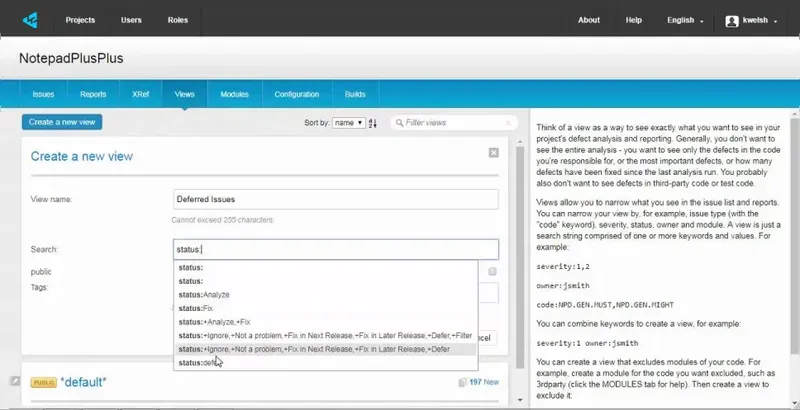
 Perforce
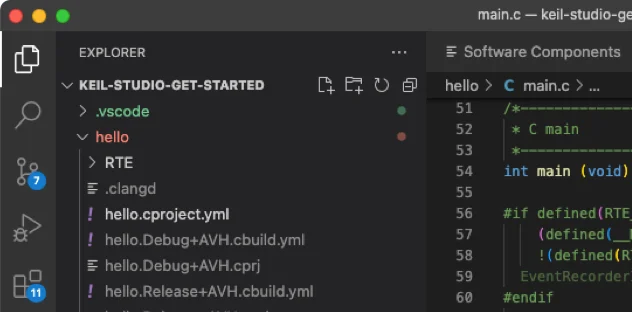
 Perforce Klocwork
Static analysis for C/C++/Java with MISRA, CERT, CWE, and AUTOSAR checkers. Differential analysis for CI/CD integration.
View product →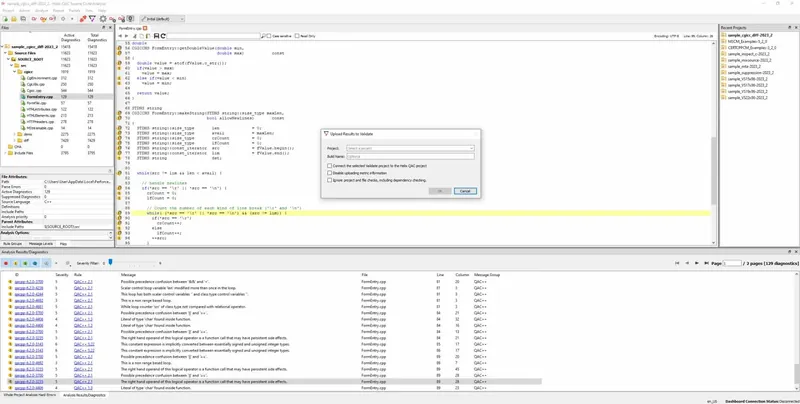 Perforce
 Perforce QAC
MISRA C/C++ compliance checker with deep dataflow analysis. The industry-standard tool for coding guideline enforcement.
View product →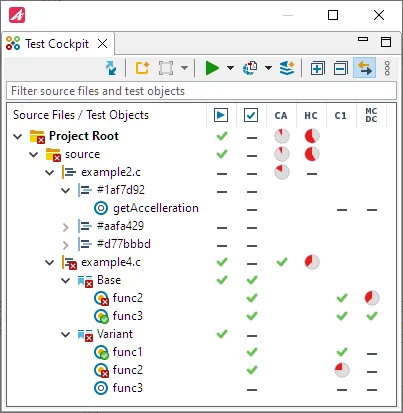
 Razorcat
 TESSY
Automated unit testing for embedded C/C++ with MC/DC coverage. Qualified for ISO 26262 ASIL D, IEC 61508 SIL 3, and DO-178C DAL A.
View product →Blog
Safety & Compliance Insights
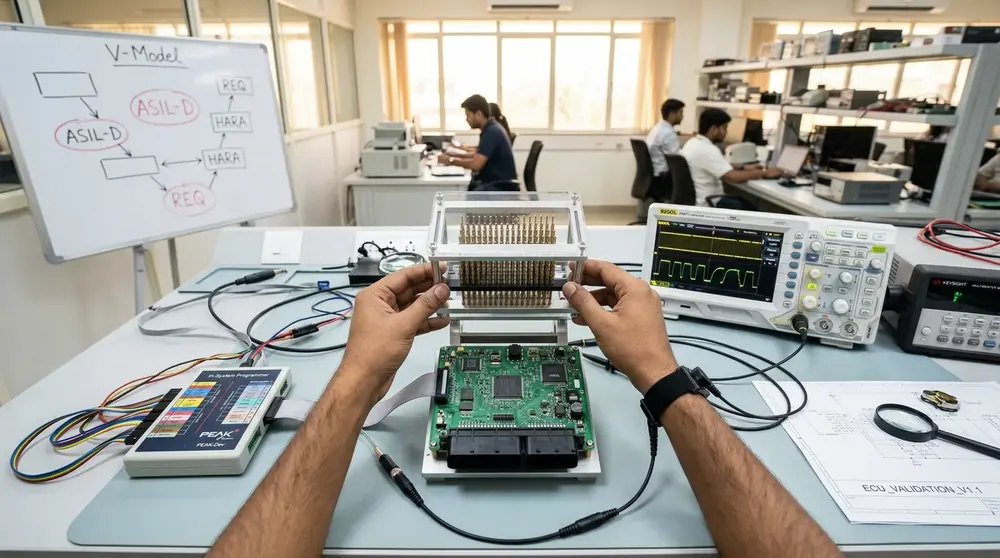
AI Inside the Engineering Process: What Is Worth Automating, and What Still Needs an Engineer
Arm, SEGGER, Perforce and Siemens EDA have each put AI inside a step of the engineering process rather than on top of it: debug, remediation, design entry, inference on the part. GSAS sets out the position behind our coverage of each: which steps are now worth automating, and which keep a human because the cost of being wrong is a recall.
Verification Economics: What a Late Defect Actually Costs, and What the Evidence Really Says
Finding a defect in month 2 instead of month 14 is a budget decision before it is a quality decision. This sets out what the published evidence supports, what it does not, including the 100x multiplier that traces back to a course handout rather than a study, and how an Indian embedded team builds the case on its own numbers.
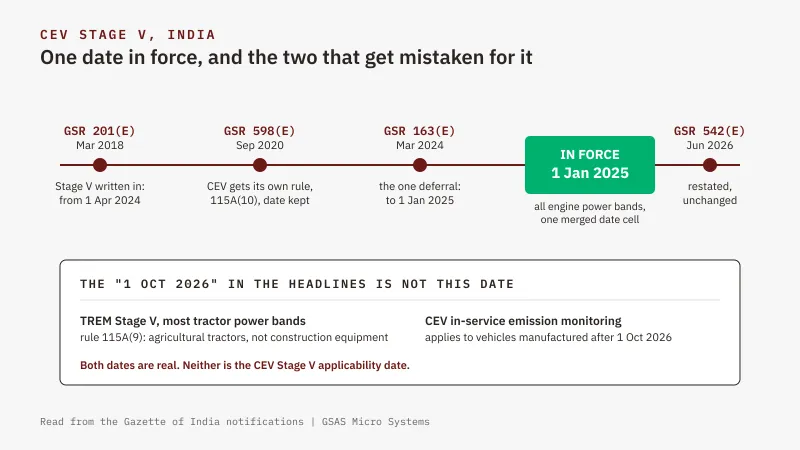
CEV Stage V Began in India on 1 January 2025
Trade coverage keeps putting CEV Stage V in October 2026. The gazette puts it on 1 January 2025, after one deferral and no band-by-band split. Here is the notification chain, what the October 2026 dates really govern, and what the limits mean on the bench.
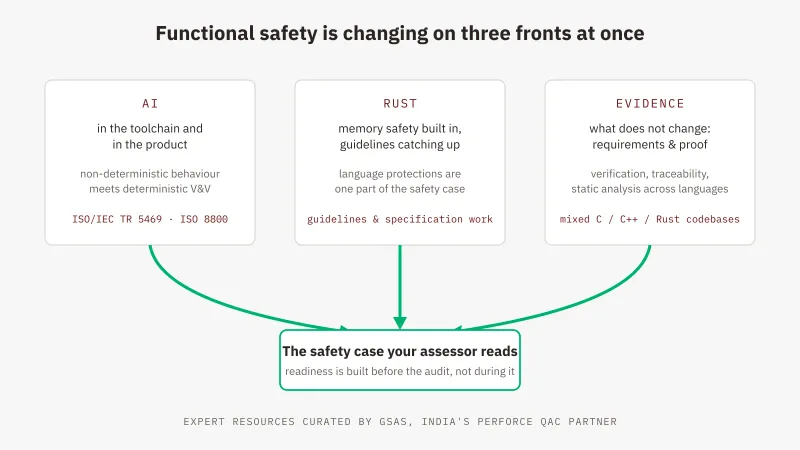
AI, Rust and the New Functional Safety Standards
AI has entered both the development flow and the shipped product, Rust is taking new safety-critical code that would once have been C, and the guidance layer is moving to cover both. A guide to five Perforce resources on that shift, from the GSAS engineering team in India.
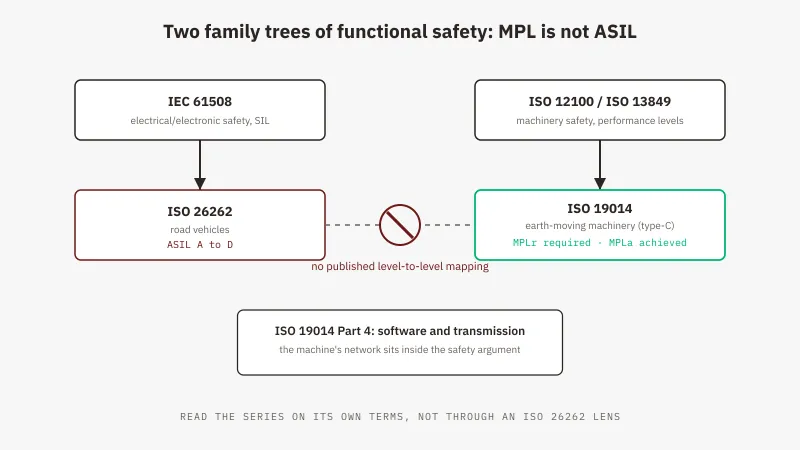
ISO 19014 for ISO 26262 Engineers: MPL Is Not ASIL
India's functional safety talent pool grew up automotive. Earth-moving machinery answers to a different series with a different family tree, and reading one through the lens of the other produces confident, expensive errors.
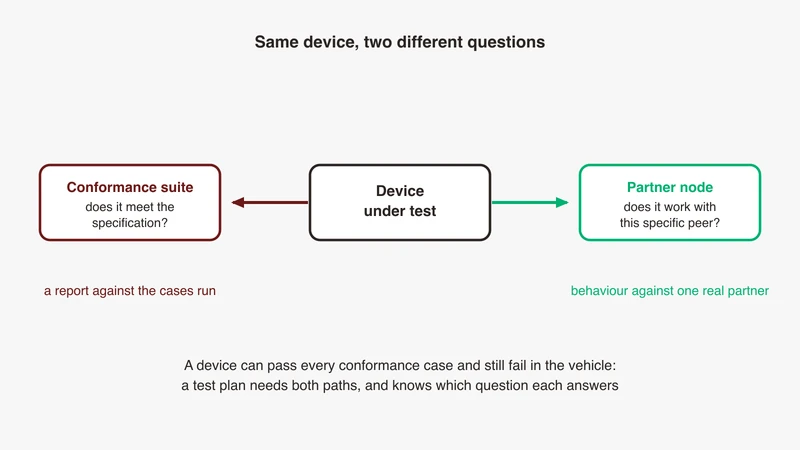
Automotive Ethernet Conformance: TC8 and Testing Above It
Summarising TC8 as a layer 1 to layer 4 suite is wrong in both directions. The public OPEN Alliance ECU test documents run from transmitter distortion up to a SOME/IP chapter with its own standardised test stub, and they contain exactly one time synchronisation test case. This is what those documents enumerate, chapter by chapter, what genuinely lives above their boundary, why a passing ECU can still fail against a partner node, and how much pre-compliance work a Tier-1 in India can honestly do in-house before a test house visit. Written by the GSAS Micro Systems engineering team in India.
Need Functional Safety Support?
Whether you are starting a new safety-critical project, qualifying a tool, or preparing for an assessor review, our safety engineers are ready to help.