 Perforce
 Klocwork
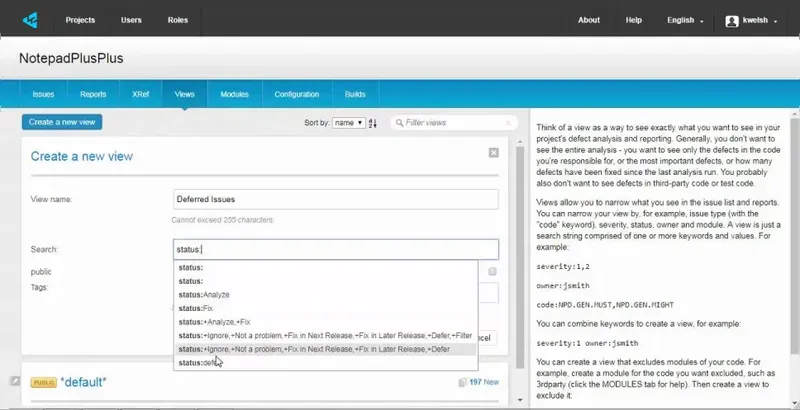
Static AnalysisKlocwork by Perforce is a scalable SAST tool for C, C++, C#, Rust, Java, JavaScript, Python, and Kotlin, built for DevSecOps with incremental analysis, MISRA, CERT, and CWE enforcement, and TUV SUD certified ISO 26262 and IEC 61508 tool qualification. Deployed and supported across India by GSAS.
Languages
C, C++, C#, Rust, Java, JavaScript, Python, Kotlin
Security
CWE Top 25, OWASP, CERT, DISA STIG
Safety
MISRA C:2025, MISRA C++:2023, AUTOSAR C++14, JSF AV C++
Certification
TUV SUD: ISO 26262, IEC 61508, IEC 62304, railway software safety
Analysis
Incremental diff-based, inter-procedural dataflow
Integration
Jenkins, GitLab, GitHub, VS Code, Visual Studio
Scale
Millions of lines, multi-branch, DevSecOps
Overview
About Klocwork
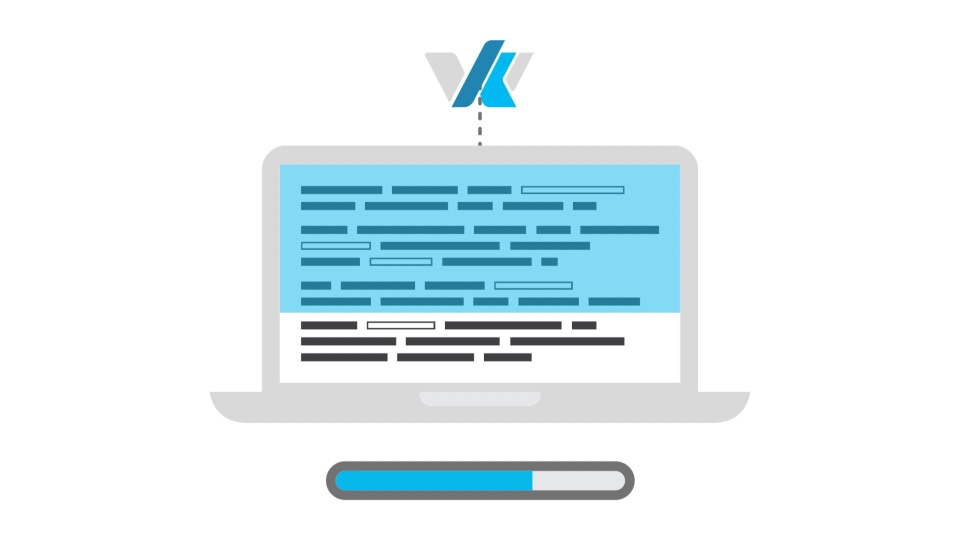
Klocwork, The Ideal Static Code Analyzer for DevSecOps
Klocwork by Perforce is an enterprise-grade SAST (Static Application Security Testing) platform that identifies security vulnerabilities, quality defects, and coding-standard violations across C, C++, C#, Rust, Java, JavaScript, Python, and Kotlin codebases. Perforce positions it as the scalable SAST tool for mission-critical software. Built for DevOps and DevSecOps workflows, its incremental, diff-based analysis engine scales to code spanning millions of lines and hundreds of cross-compilers while returning results in minutes, so developers receive actionable feedback on every commit without blocking CI/CD pipelines.
Perforce Klocwork is a static application security testing (SAST) tool that identifies security vulnerabilities, quality defects, and coding-standard violations across C, C++, C#, Rust, Java, JavaScript, Python, and Kotlin codebases, using incremental, diff-based analysis so it fits DevSecOps CI/CD pipelines without blocking builds.
- Detects: null pointer dereferences, buffer overflows, memory and resource leaks, uninitialized variables, and injection vulnerabilities via deep inter-procedural dataflow analysis
- Security standards: CWE Top 25, OWASP, CERT, and DISA STIG
- Safety standards: MISRA C:2004, MISRA C:2012, MISRA C:2023, MISRA C:2025, MISRA C++:2008, MISRA C++:2023, and AUTOSAR C++14
- Certifications: TUV SUD certified tool qualification for ISO 26262, IEC 61508, IEC 62304, and railway software safety; Perforce states that qualification covers ISO 26262 up to ASIL D, IEC 61508 up to SIL 4, and IEC 62304 up to Software Safety Class C (ask GSAS for the current railway certificate revision)
- CI/CD fit: command-line interface, full REST API, XML/JSON/PDF output, and IDE plugins for VS Code, Visual Studio, Eclipse, and IntelliJ
- Languages: C, C++, C#, Rust, Java, JavaScript, Python, and Kotlin
AI-Assisted Code Remediation in Klocwork
Klocwork adds AI-assisted code remediation on top of detection, and Perforce ships the same feature on Perforce QAC: Perforce states the integrated AI assistant “analyzes each found defect using deep contextual data from QAC or Klocwork and suggests highly accurate, compliant code corrections”, and lists the feature under both Perforce Klocwork and Perforce QAC.
The delivery mechanism is an MCP server rather than a bundled model. Perforce states the feature is “Delivered via the Perforce Static Analysis MCP server, any MCP-compatible host can connect and apply remediations using its own configured LLM”, summarising the design as “Your LLM. Your IDE. Your Environment.” On editors, Perforce states: “While there is an out-of-the-box plugin for use with VS Code (across development platforms), the feature is MCP-based and therefore designed as an IDE-agnostic and Code-Assist tool-agnostic solution.” The shipping out-of-the-box integration today is VS Code, most commonly paired with GitHub Copilot; the Model Context Protocol server, which Perforce lists under Klocwork 2026.1, is what gives other IDEs and AI assistants a standardised way in. Because the host brings its own model, teams can, in Perforce’s words, “Use your already approved AI solution”, with “no additional approvals required”, which removes a security-review cycle from adoption.
Three properties matter for regulated and security-sensitive programs:
- Air-gapped deployment. Perforce states that “Support for private, air-gapped environments means no data leaves your network.” Perforce also limits what crosses the boundary at all, stating the feature “only sends the information necessary to make the fix” (the focused issue, source code required, fix instructions, documentation and trace info), so “you’ll use fewer tokens and only use AI tokens when needed”.
- Human-in-the-loop approval. Perforce states that “Every fix requires explicit developer approval before it is applied”, that a suggestion “is still only a proposed solution and therefore maintains the developer-in-the-loop review and approval step”, and that code reviews remain a key and often mandatory practice for safety-critical and security-critical projects. Developers can keep the proposed change, undo it, or use interactive chat to request alternatives.
- Automated re-analysis and reporting. Perforce states that “Automated re-analysis runs after each proposed fix is generated”, and that “Compliance-ready reports are automatically generated, making it safer and easier to demonstrate regulatory adherence”.
The separation of duties is what keeps this usable as a DevSecOps gate: the CWE, CERT and OWASP finding is produced by Klocwork’s inter-procedural dataflow engine, which is the component carrying TUV SUD certified tool qualification; the model proposes a correction for a defect the engine already found, and an engineer merges it. Perforce headlines the feature with “Boost Remediation Accuracy from 20% to over 70%”, citing Carnegie Mellon University research finding “vulnerability resolution accuracy from 20-30% when AI operates alone to 72-90% when enriched with static analysis data about the defect”; Perforce names no paper for that research, so treat the figures as vendor-cited rather than independently verified.
For the full workflow, including an interactive demo of the assistant inside the IDE, see AI-Assisted Code Remediation for Safety-Critical C and C++.
Klocwork for DevSecOps: Shift-Left Static Analysis
DevSecOps only works when security testing runs at the speed of development, not as a late-cycle audit. Klocwork is built for that model. Defect remediation cost rises sharply the later a defect is found (Perforce cites Capers Jones’ finding that defect cost increases 10 to 100x across SDLC phases), so Klocwork moves detection to the moment code is written and to every pull request, where fixes are cheapest.
Incremental, diff-based analysis
Rather than re-scanning the whole project on each commit, Klocwork analyzes only the files that changed and their dependents, while still providing differential results as if the entire system had been analyzed. This is what makes it practical as a CI/CD gate: pipelines get whole-system accuracy without paying the wall-clock cost of a full rescan on every build. It manages large multi-branch, multi-variant codebases across hundreds of cross-compilers, so monorepos and platform-variant products stay in scope.
Deep dataflow and developer-first analysis
Klocwork’s engine performs deep, inter-procedural dataflow analysis to trace how untrusted data moves through an application, surfacing issues such as null pointer dereferences, buffer overflows, memory and resource leaks, uninitialized variables, and injection vulnerabilities, with a focus on fewer false positives and false negatives so developers keep trusting the results. Connected Desktop plugins push immediate differential analysis into the IDE, so engineers see and fix findings before the code ever reaches the pipeline.
CI/CD and IDE Integration
Klocwork is designed to be automated. It exposes common command-line interfaces and a full REST API, emits standard formats including XML, JSON, and PDF, and runs in containerized and cloud build systems, so it slots into Jenkins, GitLab, and GitHub pipelines as a security and quality gate. IDE plugins for Microsoft Visual Studio, Eclipse, IntelliJ, and VS Code bring findings directly into the developer’s editor with one-click navigation to the defect location. For enterprise programs running both Klocwork and Perforce QAC, Perforce Validate provides a single governance dashboard, one pane of glass for analysis data, compliance reporting, access control, and defect prioritization across the organization.
Supported Standards
| Category | Coverage |
|---|---|
| Security | CWE, CWE Top 25, OWASP, CERT, PCI DSS, DISA STIG, ISO/IEC TS 17961 |
| MISRA | MISRA C:2004, MISRA C:2012, MISRA C:2023, MISRA C:2025, MISRA C++:2008, MISRA C++:2023 |
| Automotive / aerospace | AUTOSAR C++14, JSF AV C++, HKMC |
| Quality | NASA’s 10 Rules, Klocwork Quality, custom rule creation |
| ISO 26262 | TUV SUD certified tool qualification; Perforce states up to ASIL D (automotive) |
| IEC 61508 | TUV SUD certified tool qualification; Perforce states up to SIL 4 (industrial) |
| Railway software safety | TUV SUD certified tool qualification; GSAS confirms the current certificate revision and scope |
| IEC 62304 | TUV SUD certified tool qualification; Perforce states up to Software Safety Class C (medical) |
| DO-178C | Certification support for aerospace software |
Built-in checker packs enforce MISRA C/C++, CERT C/C++, CWE Top 25, AUTOSAR C++14, and OWASP guidelines out of the box, and teams can author custom rules for internal standards. Tool qualification for ISO 26262, IEC 61508, and IEC 62304, plus railway software safety, streamlines certification for automotive, industrial, railway, and medical teams. Perforce reports that Klocwork earned Best in Show at Embedded World North America for two consecutive years, and publishes customer results such as Raytheon’s, where a software engineer states productivity dramatically increased with Perforce Klocwork.
Klocwork vs Coverity, SonarQube, and Fortify
Enterprise teams evaluating SAST platforms typically compare Klocwork against alternatives such as Coverity, SonarQube, and Fortify. Klocwork’s primary differentiation is its incremental, diff-based analysis engine: instead of re-scanning the entire codebase on each commit, it analyzes only changed files and their dependents while still reporting whole-system results, delivering findings in minutes even on very large codebases. That makes Klocwork viable for CI/CD gating where blocking pipelines for full-project scans is not practical.
Its second differentiator is regulated-industry readiness: TUV SUD certified tool qualification for ISO 26262, IEC 61508, IEC 62304, and railway software safety, plus DO-178C support, backed by out-of-the-box enforcement of CWE Top 25, CERT, OWASP, and DISA STIG across C, C++, C#, Rust, Java, Python, and Kotlin. IDE plugins for VS Code, Visual Studio, Eclipse, and IntelliJ bring findings into the developer workflow, while centralized dashboards give management visibility into vulnerability trends and standards adherence. The right tool depends on your language mix, target standards, and pipeline, which is exactly what a GSAS evaluation pilot is designed to establish on your own code.
Applications
- Automotive ECU firmware: MISRA C/C++ compliance and ISO 26262 functional-safety tool qualification (TUV SUD certified; Perforce states up to ASIL D)
- Aerospace and defense: DO-178C certification support with DISA STIG and CWE Top 25 security scanning
- Railway systems: TUV SUD certified tool qualification for railway software safety; GSAS confirms the current certificate revision and SIL scope for your project
- Medical devices: IEC 62304 tool qualification with automated traceability (Perforce states up to Software Safety Class C)
- Industrial control systems: IEC 61508 functional-safety tool qualification for SCADA and PLC software (Perforce states up to SIL 4)
- Enterprise DevSecOps: OWASP Top 10, CERT, and CWE vulnerability detection across Java, C#, Rust, Python, and Kotlin codebases
Klocwork in India: GSAS DevSecOps Enablement
GSAS Micro Systems is the authorized Perforce partner supplying Klocwork static analysis across India, and our value is technical, not transactional. Our field application engineers work hands-on with your team to stand up the Klocwork server, wire analysis into your Jenkins, GitLab, or GitHub pipelines, configure checker packs for the exact standards you certify against (MISRA, AUTOSAR, ISO 26262, IEC 61508, IEC 62304, DO-178C, and the railway software safety standard your assessor requires), tune the ruleset to cut false-positive noise, and run adoption workshops so static analysis becomes part of the daily commit workflow rather than a late-cycle gate.
For Indian automotive, aerospace, defense, railway, medical-device, and industrial teams building safety-critical and security-critical software, that shift-left DevSecOps enablement is the difference between a tool that sits unused and one that measurably improves code quality and audit readiness. We support engineering teams across Bengaluru, Hyderabad, Chennai, Pune, Mumbai, and Delhi NCR, with local evaluation pilots, deployment planning, and India pricing on request.
Klocwork + Perforce QAC + Razorcat Tessy: A Complete DevSecOps Toolchain
Klocwork’s multi-language DevSecOps coverage pairs naturally with two other tools in the GSAS static and dynamic analysis stack, each solving a different part of the shift-left problem.
For teams whose C/C++ codebase also needs deep MISRA and AUTOSAR C++14 compliance, Perforce QAC runs alongside Klocwork as the reference implementation for those standards, while Klocwork covers the broader multi-language DevSecOps surface (C#, Java, JavaScript, Python, Kotlin, Rust) and CWE/OWASP security scanning. Both share the Perforce Validate dashboard for unified governance.
For the dynamic half of the shift-left pipeline, pair Klocwork with Razorcat TESSY: automated unit, module, and integration testing with structural code coverage, including MC/DC, the evidence certification bodies expect at the highest safety levels (ISO 26262 ASIL D, IEC 62304 Class C, DO-178C). Static analysis with Klocwork catches coding-standard violations and latent defects before code runs; Tessy proves the cleaned code behaves correctly against requirements at runtime.
Together, Klocwork (multi-language SAST) plus Perforce QAC (MISRA/AUTOSAR reference implementation) plus Razorcat Tessy (dynamic testing and coverage) form a complete DevSecOps toolchain spanning static compliance, static security, and dynamic verification, all available from a single authorized engineering partner. GSAS Micro Systems delivers this toolchain as one purchase order and one support relationship for embedded teams across Bengaluru, Hyderabad, Chennai, Pune, Mumbai, and Delhi NCR. Explore the full catalog on the Perforce partner page or the dynamic-testing side on the Razorcat partner page.
Watch the Klocwork overview
Blog
Perforce Insights
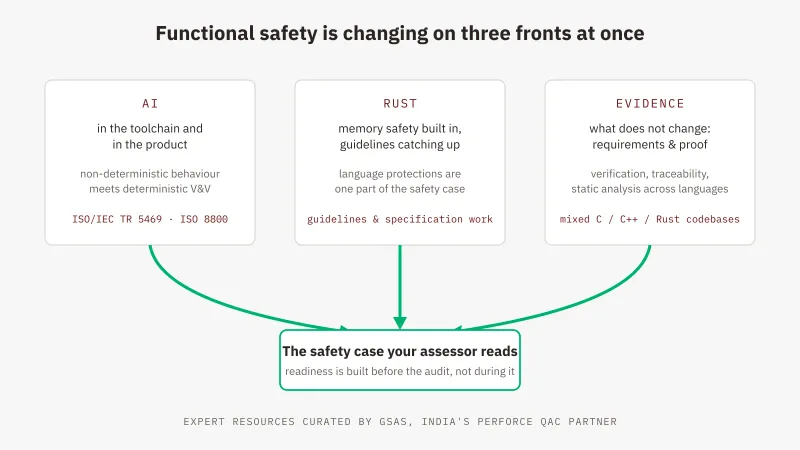
AI, Rust and the New Functional Safety Standards
AI has entered both the development flow and the shipped product, Rust is taking new safety-critical code that would once have been C, and the guidance layer is moving to cover both. A guide to five Perforce resources on that shift, from the GSAS engineering team in India.
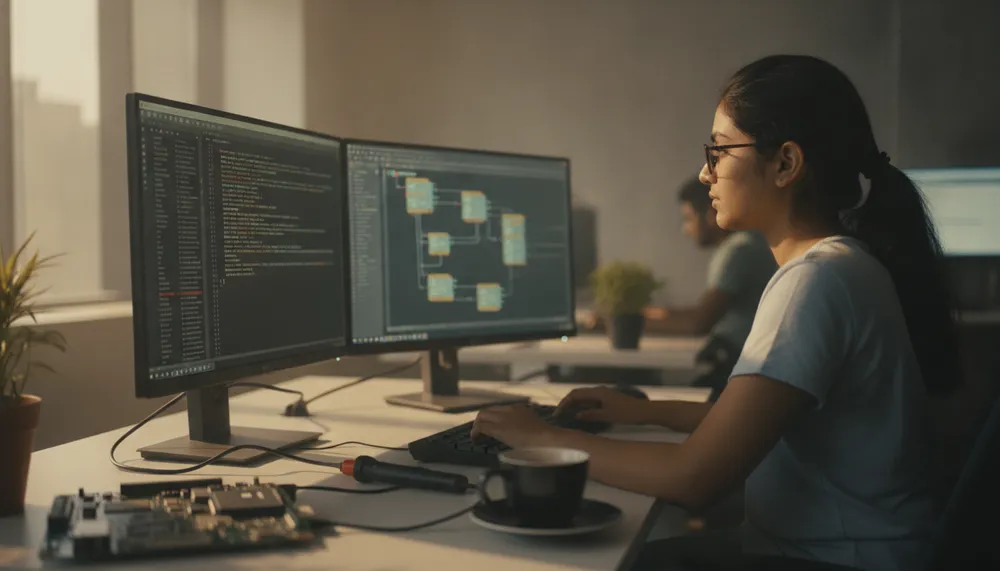
The Complete AUTOSAR Verification Chain: AUTOSAR C++14 Static Analysis with Perforce QAC, SWC and RTE Testing with TESSY 6
AUTOSAR software component code carries two separate proof burdens: coding-standard compliance across every execution path, and correct runtime behaviour through the RTE. Static analysis and dynamic testing answer different audit questions, so most ISO 26262 evidence packages need both. This guide walks the chain end to end: AUTOSAR C++14 and MISRA analysis with Perforce QAC or Klocwork, then ARXML-driven SWC and RTE testing in Razorcat TESSY 6, then coverage evidence. GSAS Micro Systems is the India engineering partner for both Perforce and Razorcat.
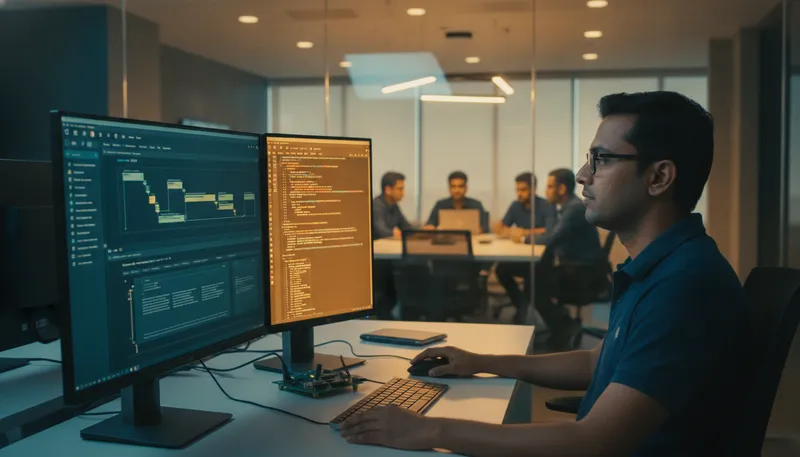
DevSecOps Tools and Practices for Embedded Teams in India
DevSecOps moves security scanning and coding-standard enforcement into the CI/CD pipeline itself. Here is how embedded teams in India assemble a SAST, unit-test, and traceability toolchain, and where GSAS's Perforce and Razorcat tools fit.
Related products
More from Perforce
All Perforce products →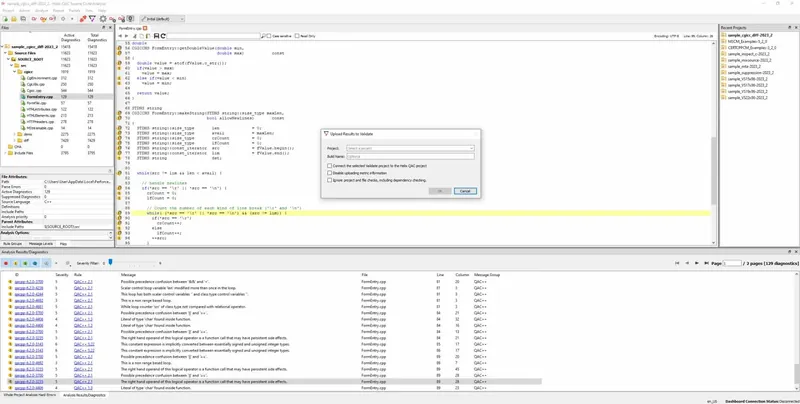
Perforce QAC
MISRA compliance analysis tool for C and C++ with qualification kits for automotive and safety-critical certification. India pricing and local support from GSAS.
View Perforce QAC →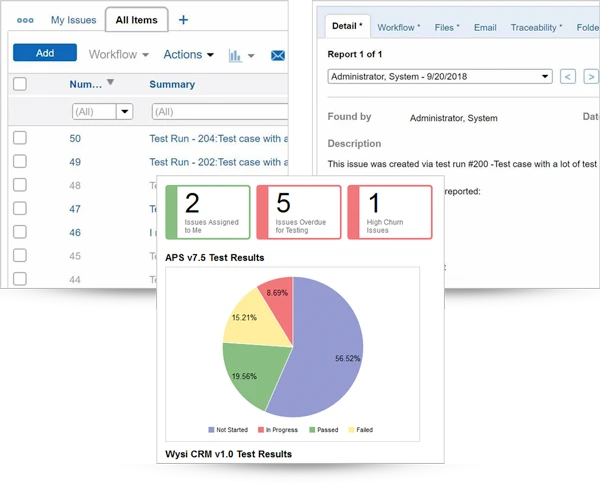
Helix ALM
Requirements management, test management, and issue tracking platform with end-to-end traceability for safety-critical and regulated development. Buy in India from GSAS with local support.
View Helix ALM →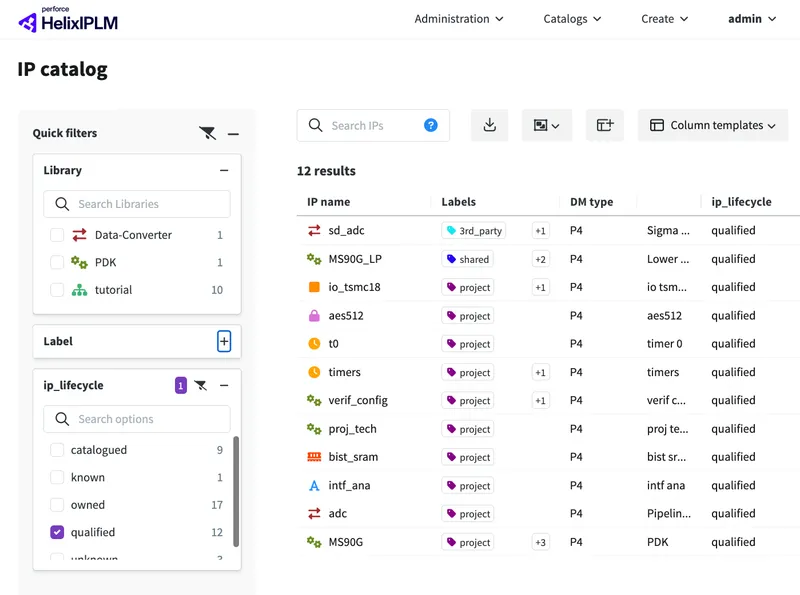
Helix IPLM
IP lifecycle management platform for license compliance tracking, SBOM generation, and open-source risk management in embedded and SoC development. Available in India from GSAS with hands-on application engineering and local support.
View Helix IPLM →FAQ
Common questions about Klocwork
What is Klocwork?
How does Klocwork compare to Coverity, SonarQube, and Fortify?
Which coding standards and safety certifications does Klocwork support?
How does Klocwork fit a DevSecOps CI/CD pipeline?
Is Klocwork available in India, and how is it licensed?
Does Klocwork support AI-assisted code remediation, and can it run air-gapped?
How much does Klocwork cost in India?
Interested in Klocwork?
Get pricing, an evaluation unit, or a technical consultation from our application engineers.