Ask an Indian embedded team how they handle security today and the honest answer is often “manual code review plus whatever the compiler warns about.” DevSecOps is the practice of closing that gap: moving security scanning and coding-standard enforcement out of an occasional audit and into the same automated pipeline that builds, tests, and packages firmware on every commit. This is not a new category invented for web teams. Applied correctly, it is the natural evolution of practices embedded and safety-critical engineering has used for years, now wired into CI/CD instead of run by hand before a release.
What Is DevSecOps for Embedded Teams?
DevSecOps means running security scanning, coding-standard enforcement, and test coverage measurement automatically inside the same build pipeline that compiles and flashes firmware, so defects are caught at every commit instead of during a manual audit before release. The name blends Development, Security, and Operations: security stops being a gate that a separate team owns at the end of a project and becomes a set of automated checks that run alongside the compiler, on every pull request.
For embedded C and C++ teams, DevSecOps for embedded looks different from a web application’s pipeline. There is no container registry to scan or web-facing API to fuzz on most firmware projects. Instead, the checks that matter are static analysis of the source for memory-safety and security-relevant defects, enforcement of a coding standard such as MISRA C, automated unit and integration testing with structural coverage, and traceability from requirement to test to source change for the auditors and certification bodies that safety-critical programs answer to.
Most Indian embedded teams already run pieces of this. A code review checklist, a nightly build, a manual MISRA audit before a milestone review, these are DevSecOps practices without the DevSecOps label. What changes when a team formally adopts DevSecOps is not the list of checks, it is where they run: inside the pull-request pipeline, automatically, on every commit, instead of as a periodic manual exercise that only catches problems weeks after the code was written.
Which Tools Make Up a DevSecOps Pipeline?
A DevSecOps pipeline for embedded software typically combines five categories of tooling: static application security testing (SAST) for source-code defects, coding-standard enforcement for MISRA or CERT compliance, automated unit testing with structural coverage, requirements traceability and ALM for audit evidence, and CI/CD infrastructure to run all of it on every commit.
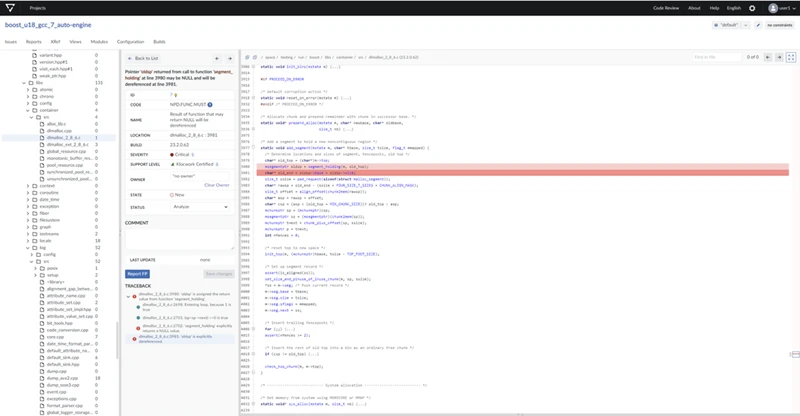
- Static analysis (SAST): scans source code without executing it, tracing data flow across function and file boundaries to find memory errors, null-pointer dereferences, concurrency defects, and security weaknesses mapped to taxonomies such as CWE, before the code ever runs.
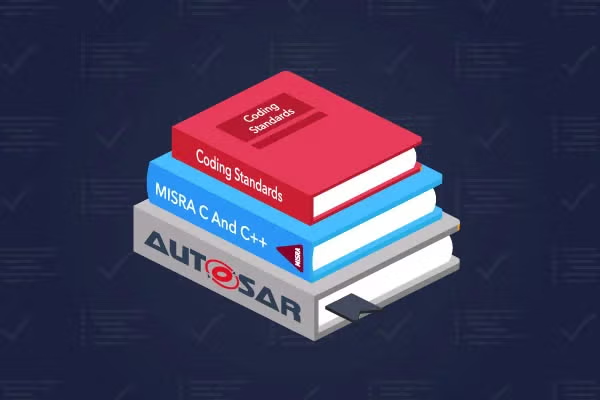
- Coding-standard enforcement: checks a codebase against a defined rule set, MISRA C, MISRA C++, AUTOSAR C++14, or CERT C/C++, and reports every violation with the rule identifier an auditor will ask for. For C/C++ teams under a functional-safety mandate, this is often a certification prerequisite, not an optional quality gate.
- Automated unit and integration testing: builds and runs test drivers against individual functions and modules, measuring structural coverage (statement, branch, decision, and MC/DC) so a team can demonstrate that its test suite actually exercised the logic it claims to have verified.
- Requirements traceability and ALM: links every requirement to the test cases that verify it, the defects raised against it, and the source code changes that implement it, generating the traceability matrices that safety and quality assessors require as evidence.
- CI/CD infrastructure: Jenkins, GitLab CI, GitHub Actions, and Azure DevOps are the pipelines that host and sequence all of the above. They are infrastructure, not analysis tools in their own right, they trigger the SAST scan, run the test suite, and fail the build when a quality gate is not met.
Static analysis running inside CI/CD, gating a pull request the moment a new defect appears, is the piece most embedded teams in India are still missing. It is also the highest-leverage addition: a single incremental scan on changed files completes in seconds and blocks a regression before it merges, rather than surfacing it weeks later in integration testing.
None of these categories require replacing the CI/CD infrastructure a team already runs. A SAST scanner, a coding-standard checker, and a unit-test harness all plug into Jenkins, GitLab CI, GitHub Actions, or Azure DevOps as build steps, reading source, writing a report, and setting a pass or fail exit code the pipeline already understands. The infrastructure stays the same; what DevSecOps adds is the set of automated checks running inside it.
How Is DevSecOps Different for Embedded and Safety-Critical Systems?
Embedded DevSecOps has to satisfy two masters at once: security weaknesses catalogued in taxonomies such as CWE, and functional-safety coding standards such as MISRA C, that were written for reliability long before “DevSecOps” was a term anyone used. The good news is that the two overlap more than teams expect, and a single static analysis pass can report against both.
A MISRA C rule against uninitialised variables and a CWE entry for improper initialization are, in practice, catching the same class of defect from two different governance angles: one written by an automotive safety committee, the other by a security taxonomy maintained by MITRE. Coding-standard enforcement and security-focused static analysis are not competing activities, they are two lenses on the same source code, and a mature embedded DevSecOps pipeline runs both together.
Where a product connects to a network, a bus, or a field-configurable interface, industrial cybersecurity standards such as IEC 62443 add a further layer, requiring documented threat modelling and secure development practices on top of the coding-standard and safety-case work most embedded teams already do. Static analysis output, tied to a recognised weakness taxonomy, is a direct input into that threat-modelling evidence.
Embedded targets also change what a DevSecOps pipeline can practically run. A web team can spin up a container per pull request and run a dynamic scan against a live endpoint. An embedded team is analysing source that will eventually run on a microcontroller with no operating system, no filesystem, and no network stack to attack directly. That constraint pushes embedded DevSecOps further toward static analysis and structural test coverage, and further away from the dynamic web-security tooling (DAST scanners, dependency vulnerability databases keyed to package registries) that dominates DevSecOps discussion in enterprise software contexts. The categories are the same in name; the tools that actually apply are different.
Which Perforce and Razorcat Tools Map to a DevSecOps Toolchain?
GSAS Micro Systems is the authorized engineering partner for Perforce and Razorcat in India, and the products in that portfolio map cleanly onto the toolchain categories above, forming one supported toolchain rather than four disconnected point tools.
- Klocwork, static application security testing (SAST). Multi-language incremental analysis across C, C++, C#, Rust, Java, JavaScript, Python, and Kotlin, built for CI/CD gating with CWE, OWASP, CERT, and DISA STIG coverage, plus TÜV SÜD certified tool qualification for ISO 26262, IEC 61508, IEC 62304, and railway software safety. See perforce.com for the full specification.
- Perforce QAC, coding-standard compliance depth. The reference implementation for MISRA C and MISRA C++, with dedicated C and C++ parsers and TÜV SÜD certified qualification kits, for teams whose primary certification driver is MISRA rather than multi-language security scanning. See perforce.com for details.
- Razorcat TESSY, dynamic unit and integration testing. Automated test-driver generation and execution for embedded C/C++, with statement, branch, decision, and MC/DC coverage, the runtime complement to static analysis: static analysis flags defects and standard violations before code runs, TESSY proves the resulting code behaves correctly against requirements.
- Helix ALM, requirements traceability. End-to-end, bi-directional linking from requirement to test case to defect to source change, generating the traceability matrices that ISO 26262, IEC 62304, IEC 61508, and DO-178C assessors expect to see.
Run together inside Jenkins, GitLab CI, or GitHub Actions, these four tools cover static security scanning, coding-standard depth, dynamic verification, and audit traceability, the same categories any DevSecOps pipeline needs, sized and qualified for embedded and safety-critical development.
How Do You Choose the Right DevSecOps Toolchain?
The right toolchain depends on your language mix, your certification target, and how much of your pipeline is already automated. A short checklist before you evaluate tools:
- What languages does your codebase span? A single-language embedded C/C++ project has different SAST needs than a mixed C/C++ plus Java or Python stack.
- What is your certification target? ISO 26262, IEC 61508, IEC 62304, EN 50716, and DO-178C each carry specific tool-qualification expectations that not every static analysis tool has evidence for.
- Is MISRA compliance a primary driver or a secondary check? Teams certifying primarily on MISRA depth typically want a dedicated reference implementation; teams balancing MISRA with broader multi-language security scanning want a platform that does both.
- Do you already gate pull requests on the compiler and unit tests? If not, that is the first automation to add, before layering in SAST and traceability.
- Who owns the traceability evidence today? If requirements, tests, and defects live in separate spreadsheets, ALM integration should be part of the same rollout, not a later phase.
- What does your CI/CD infrastructure look like? Jenkins, GitLab CI, GitHub Actions, and Azure DevOps all support the same category of plugin and command-line integration; the toolchain should fit the pipeline you already run, not force a migration.
Where Can Indian Engineering Teams Buy and Support DevSecOps Tools?
GSAS Micro Systems is the authorized engineering partner for Perforce (Klocwork, Perforce QAC, Helix ALM) and Razorcat (TESSY) in India, with field application engineers who configure CI/CD integration, MISRA and CWE baselines, and traceability workflows on your own codebase rather than shipping a license and walking away.
Our engineers support automotive, industrial, aerospace, and medical device teams building DevSecOps pipelines across Bengaluru, Hyderabad, Chennai, Pune, Mumbai, and Delhi NCR. Whether you need a single SAST scanner added to an existing Jenkins pipeline or a full static-plus-dynamic-plus-traceability toolchain for a new safety-critical program, GSAS offers competitive pricing and short lead times on the complete Perforce and Razorcat portfolio, with local support and GST-compliant invoicing.
Ready to map a DevSecOps toolchain onto your pipeline? Contact GSAS Micro Systems or explore the Perforce partner page and Razorcat partner page for the full product catalog.
Also appears in:
Interested in Perforce tools?
Talk to our application engineers for personalized tool recommendations.
More from Perforce
View all →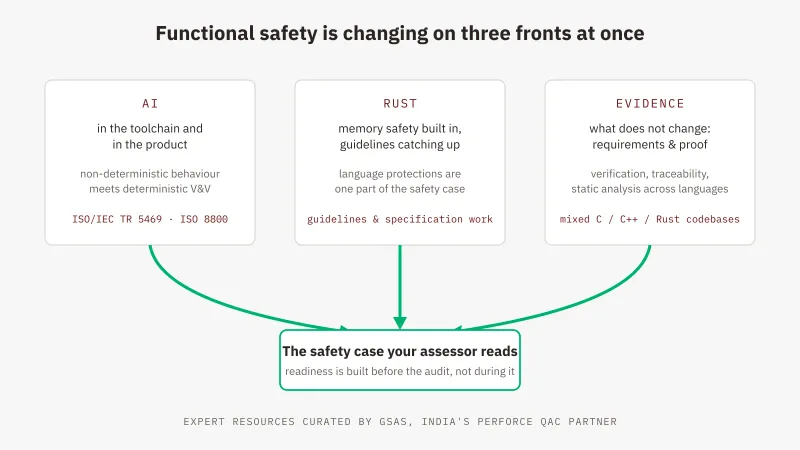
AI, Rust and the New Functional Safety Standards
2 Sept · 9 min
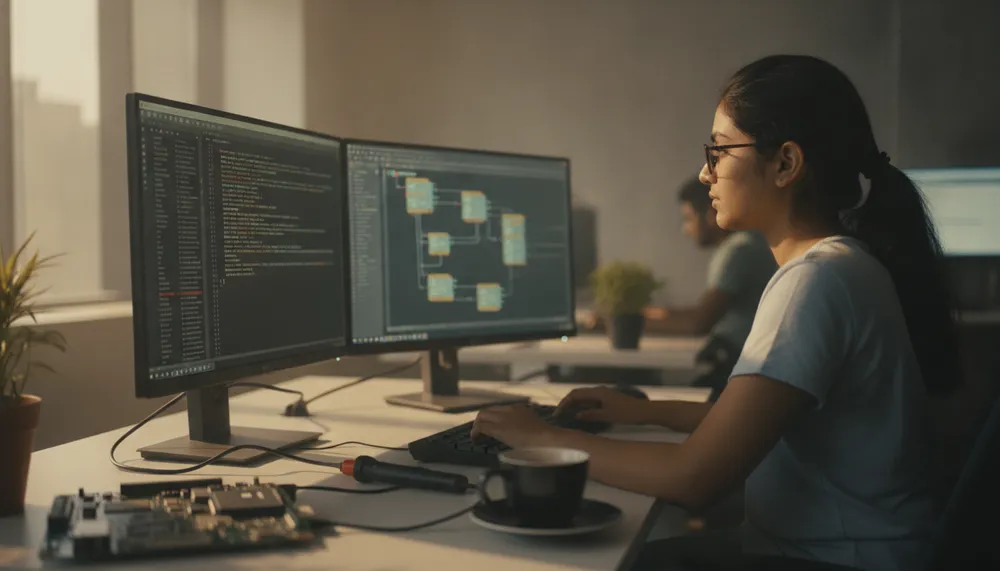
The Complete AUTOSAR Verification Chain: AUTOSAR C++14 Static Analysis with Perforce QAC, SWC and RTE Testing with TESSY 6
31 Jul · 9 min
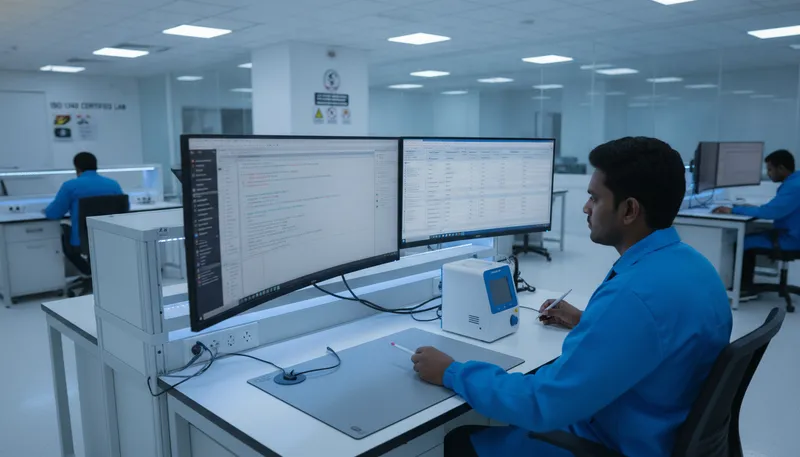
Static Analysis for Medical Device Software: IEC 62304 and FDA Compliance in India
18 Jul · 9 min
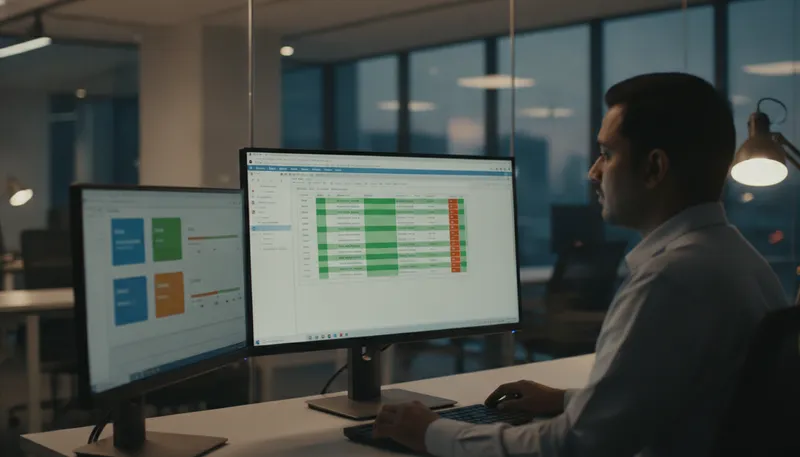
Klocwork vs Perforce QAC: Choosing a Perforce Analyzer in India
17 Jul · 7 min
Emulating Processor Power for Thermal Testing: Why Constant Power
7 Oct · 7 min
CRPS and Rack Power Supply Testing: The Six Tests That Matter
7 Oct · 7 min