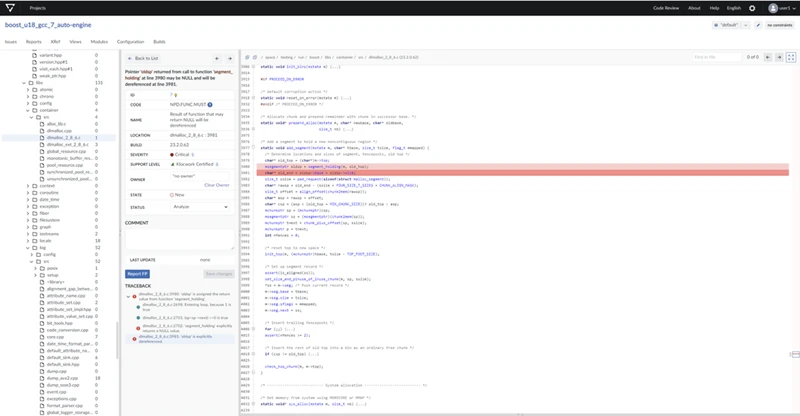
Static analysis has never had a detection problem. Run Perforce QAC or Klocwork against a mature embedded codebase for the first time and it will hand you thousands of findings. The problem has always been what happens next: an engineer opens each finding, works out which of several valid corrections preserves the behaviour, writes it, and re-runs the analysis. That backlog, not the scan, is where MISRA and ISO 26262 programs lose their schedule.
Automated code remediation is the step after detection: taking a defect the analysis engine has already found and producing the corrected code for it. Perforce’s framing for the feature is “Go Beyond Detection. Remediate at the Speed of Modern Development.” This post covers what it actually does, what it deliberately does not do, and the two properties that decide whether an Indian safety-critical team can use it at all.
It covers Perforce QAC as well as Klocwork
The first thing to correct, including in an earlier version of this article, is scope. AI-assisted remediation is not a Klocwork-only feature.
Perforce describes the assistant as one that “analyzes each found defect using deep contextual data from QAC or Klocwork and suggests highly accurate, compliant code corrections”, and describes the solution as combining “the deep, inter-procedural analysis of Perforce QAC and Perforce Klocwork with AI-powered fix suggestions.” Perforce lists both Perforce Klocwork and Perforce QAC as the products the feature belongs to.
That matters for a compliance audience. Perforce QAC is the engine Indian automotive and medical teams reach for when they need MISRA and AUTOSAR evidence, so remediation support landing on QAC rather than only on the DevSecOps-facing engine is what makes the feature relevant to a certification program.
How the workflow runs
Perforce documents three steps. Quoting them directly, because the wording is precise about where control sits:
- Write and Analyze. “As you code, our tools run incremental analysis in the background”, “instantly surfacing coding errors, standards violations, and security vulnerabilities.”
- Receive Intelligent Fixes. “Instead of spending hours researching a resolution, the integrated AI assistant analyzes each found defect using deep contextual data from QAC or Klocwork and suggests highly accurate, compliant code corrections that are grounded in a precise understanding of how your code actually behaves.”
- Review, Refine, Approve. “Every fix requires explicit developer approval before it is applied. Use interactive chat features available in GitHub Copilot or other conversational assistants to fine-tune suggestions as needed. Human-in-the-loop oversight is built-in.”
The important structural detail is in step 2. The assistant is not reading your repository and forming its own opinion about what is wrong. It is being handed a specific finding, with the dataflow context that produced it, and asked to write the correction. Perforce puts it as “Recommendations are not generic”, they are “tailored to your specific code, your compliance standards, and the exact nature of each finding.”
Perforce also states that “Automated re-analysis runs after each proposed fix is generated”, so the loop closes without the engineer manually re-scanning to confirm the finding is gone.
See the workflow end to end
Perforce publishes an interactive walkthrough of the assistant inside the IDE. It runs in the browser, no signup:
If the embedded demo does not load in your browser, open it directly at demo.perforce.com.
The architecture: an MCP server, your LLM, your IDE
The delivery mechanism is the part worth understanding, because it determines what you have to get approved internally.
Perforce states: “Delivered via the Perforce Static Analysis MCP server, any MCP-compatible host can connect and apply remediations using its own configured LLM.” The company summarises the design as “Your LLM. Your IDE. Your Environment.”
On IDE support, Perforce is specific: “While there is an out-of-the-box plugin for use with VS Code (across development platforms), the feature is MCP-based and therefore designed as an IDE-agnostic and Code-Assist tool-agnostic solution. It works with any AI code assist agent supporting MCP.”
Read that carefully. The architecture is agnostic. The shipping, out-of-the-box integration today is VS Code, and in practice the assistant pairing most teams will start with is GitHub Copilot. The Model Context Protocol server, which Perforce lists under Klocwork 2026.1, is what gives other IDEs and chat assistants a standardized way in later. If a vendor tells you every IDE works today, ask which plugin they mean.
There is a procurement consequence to MCP delivery that is easy to miss: because the host supplies its own LLM, you are not being asked to approve a new model vendor. Perforce’s own words are “Use your already approved AI solution”, “no additional approvals required.” For an organisation that spent nine months getting one AI assistant through security review, that is the difference between a pilot this quarter and a pilot next year.
Air-gapped deployment is the India-relevant property
Of everything on the Perforce page, one sentence matters most to the Indian market: “Support for private, air-gapped environments means no data leaves your network.”
Indian defence, aerospace and space programs routinely develop on networks with no egress. So do a growing number of automotive and semiconductor customers with contractual source-code controls written by their European or Japanese principals. For those teams the question about AI coding tools has never been “is it accurate enough”, it has been “does any of my source code leave this building”. A cloud-only remediation service fails that test before accuracy is even discussed.
Perforce also limits what crosses the boundary even when there is one. The page states that AI-assisted code remediation “only sends the information necessary to make the fix”, listing the focused issue, the source code required, fix instructions, documentation and trace info, and that consequently “you’ll use fewer tokens and only use AI tokens when needed”, keeping costs low. Narrow context is a cost argument for Perforce. For a regulated team it is also a data-minimisation argument you can put in front of your security function.
What the AI is not deciding
This is the part that keeps the feature compatible with a compliance program, and it is worth being exact rather than enthusiastic about it.
The compliance finding is produced by the analysis engine, not by the language model. Perforce is explicit that fix suggestions are “Powered by QAC and Klocwork’s inter-procedural dataflow analysis” and grounded in the analysis data for a specific defect. Both engines carry TUV SUD certified tool qualification for ISO 26262, IEC 61508 and IEC 62304. The LLM carries no such qualification and is not being asked to rule on whether your code conforms to MISRA C:2025.
Nor is the AI the final authority on its own output. Perforce: “it is still only a proposed solution and therefore maintains the developer-in-the-loop review and approval step”, and “Code reviews are still a key (and often mandatory) part of development best practices for any safety-and security-critical software project.”
So the honest description of the value is narrow and real: the qualified tool still decides what is wrong, a human still decides what is merged, and the AI removes the research time in between. If you are building an evidence pack for an assessor, nothing in your tool qualification argument changes. That is a feature, not a limitation.
On the accuracy figure
Perforce headlines the feature with “Boost Remediation Accuracy from 20% to over 70%”, and cites Carnegie Mellon University research finding “vulnerability resolution accuracy from 20-30% when AI operates alone to 72-90% when enriched with static analysis data about the defect.”
Treat that as a vendor-cited figure. Perforce names no paper, authors or year for the underlying research, and we were unable to locate the primary source, so it should not be carried into an internal business case as an independently verified benchmark. The directional claim, that an LLM handed precise dataflow context about a specific defect fixes it more reliably than an LLM guessing from the surrounding file, is architecturally plausible. The specific percentages are Perforce’s to defend.
Where this fits an Indian MISRA or ISO 26262 program
If your team already runs Perforce QAC or Klocwork, the practical question is not whether to adopt AI remediation but where to point it first. The highest-value target is usually the first-run baseline: the large block of findings a legacy codebase produces when a coding standard is applied to it for the first time. That backlog is mechanical, repetitive and exactly the shape of work where a context-grounded fix suggestion earns its keep, and it is the phase that most often stalls a MISRA and AUTOSAR adoption program.
What it does not replace is the other half of the evidence. Static analysis reads code without running it, so it cannot show an assessor that a requirement is covered by a test. That remains the job of dynamic unit testing with structural coverage, which is why ISO 26262 and IEC 62304 programs pair a static tool with Razorcat TESSY for MC/DC evidence.
GSAS Micro Systems is the authorized India engineering partner for Perforce static analysis. Our field application engineers handle MCP server setup, IDE integration, CI/CD wiring for Jenkins, GitLab and GitHub, checker-pack configuration for the standard you certify against, and baseline establishment for teams adopting MISRA for the first time, across Bengaluru, Hyderabad, Chennai, Pune, Mumbai and Delhi NCR.
For a walkthrough from the product team, see the Perforce webinar Beyond Static Analysis: Turning Detection into Immediate Remediation with AI.
Request an AI remediation demo on your own codebase →
References: perforce.com/products/sca/ai-assisted-code-remediation · perforce.com/products/static-analysis
Also appears in:
Interested in Perforce tools?
Talk to our application engineers for personalized tool recommendations.
More from Perforce
View all →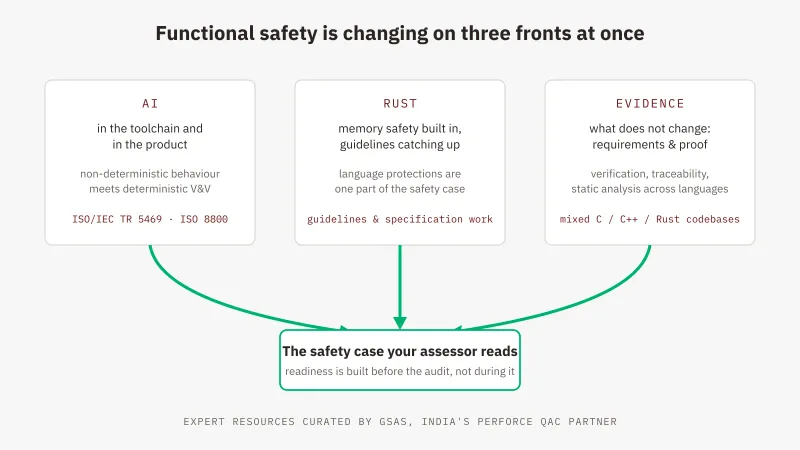
AI, Rust and the New Functional Safety Standards
2 Sept · 9 min
The Complete AUTOSAR Verification Chain: AUTOSAR C++14 Static Analysis with Perforce QAC, SWC and RTE Testing with TESSY 6
31 Jul · 9 min
DevSecOps Tools and Practices for Embedded Teams in India
18 Jul · 8 min
Static Analysis for Medical Device Software: IEC 62304 and FDA Compliance in India
18 Jul · 9 min
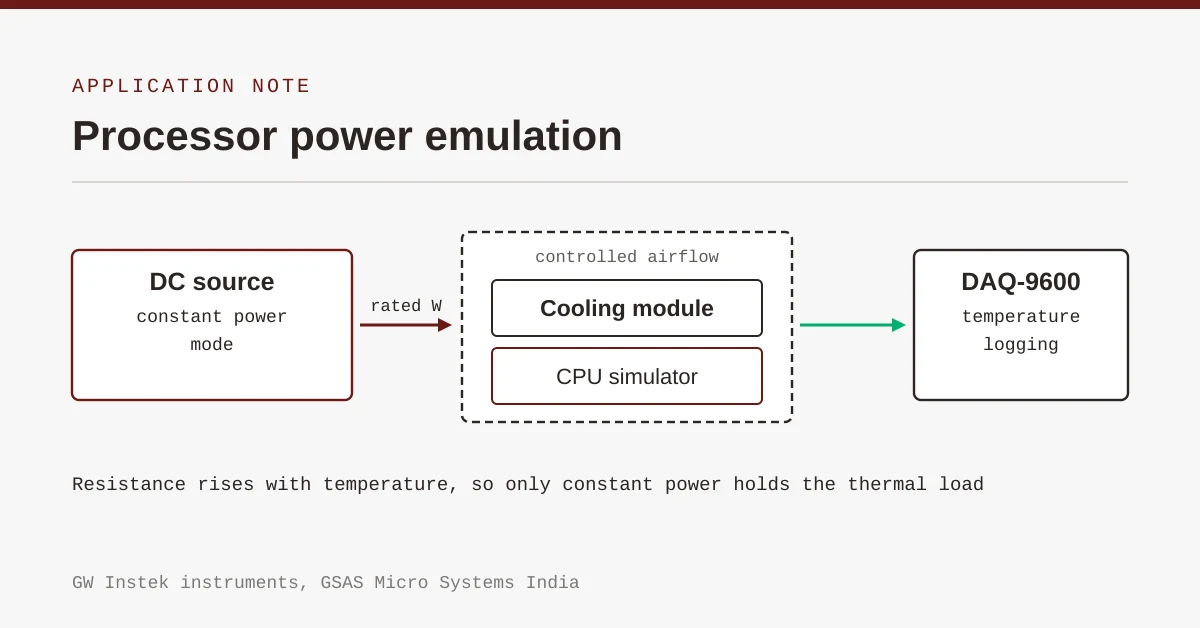
Emulating Processor Power for Thermal Testing: Why Constant Power
7 Oct · 7 min
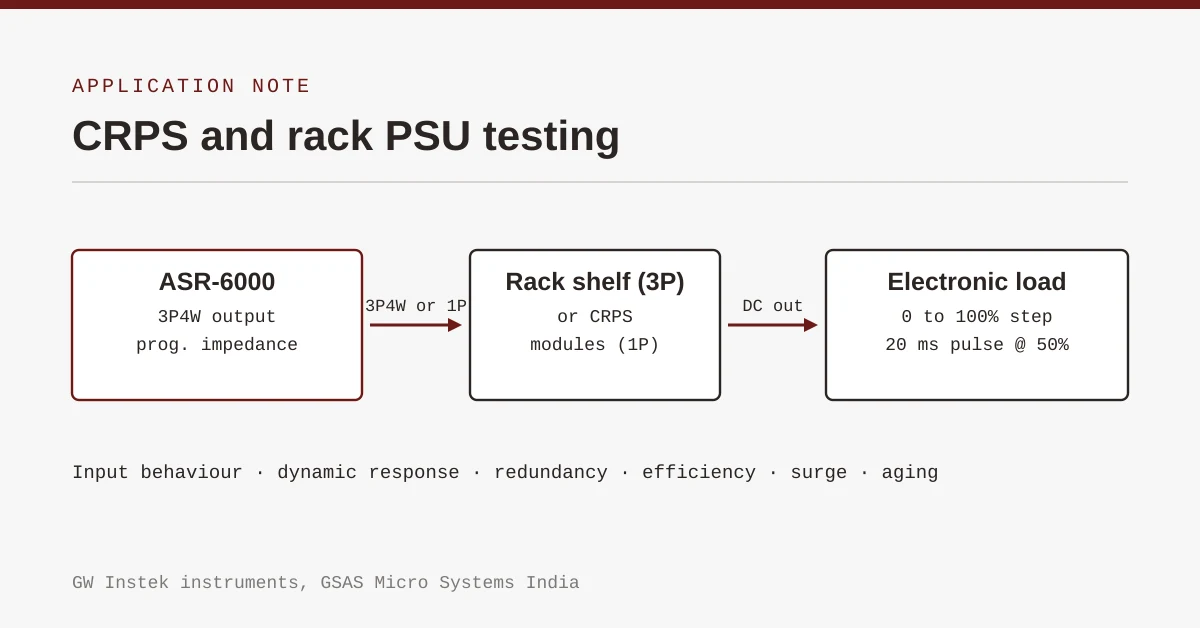
CRPS and Rack Power Supply Testing: The Six Tests That Matter
7 Oct · 7 min