
 Arm
Arm Arm Compiler 6
Compilers & IDEsProduction C/C++ compiler for Cortex-M/R/A, LLVM-based with Arm-specific optimisations, the same engine that powers the safety-certified Arm Compiler for Embedded FuSa variant. Buy in India from GSAS.
Architecture
Cortex-M, R, A
Based on
LLVM with Arm optimizations
FuSa variant
Arm Compiler for Embedded FuSa (separate product)
Status
Latest LTS supported by Arm; succeeded by Arm Toolchain for Embedded
Source for cert claims
developer.arm.com Arm Compiler for Embedded FuSa product page
Overview
About Arm Compiler 6
Arm Compiler 6 is the production LLVM-based C/C++ compiler from Arm for Cortex-M, Cortex-R, and Cortex-A targets. It generates well-optimised code with Arm-specific optimisation passes layered on top of upstream LLVM. The same compiler engine powers the safety-qualified Arm Compiler for Embedded FuSa variant, see that product for the certification list and TUV SUD evidence package.
Safety qualification: see the FuSa variant
Arm Compiler 6 standard is the production compiler. For safety-critical projects (automotive ECUs, industrial controllers, railway signalling, medical devices) Arm publishes a separately licensed and qualified variant: Arm Compiler for Embedded FuSa. Per Arm’s published AC6 FuSa product page, AC6 FuSa is qualified to ISO 26262 (Automotive) ASIL D, IEC 61508 (Industrial) SIL 3, EN 50716 (Railways) SIL 4, and IEC 62304 (Medical) Class C. Certification attaches to specific qualified releases of AC6 FuSa rather than to every release, so talk to GSAS for the certificate scope that applies to the release you plan to certify against. The standard AC6 product is not itself qualified, teams using AC6 in safety projects either move to AC6 FuSa or perform their own tool qualification with assessor sign-off.
Distribution and successor
Arm Compiler 6 is included in Keil MDK and Arm Development Studio, and is also available as a standalone product for integration into custom build systems and CI/CD pipelines. The successor for standard (non-FuSa) work is the LLVM-based Arm Toolchain for Embedded (ATfE): Arm’s long-term replacement for AC6. ATfE Professional is enabled by a User-based Licence rather than sold separately. Arm states that using it “requires a suitable User-based License (UBL)”, and gives the entitlement list as Keil MDK 6, Arm Development Studio UBL Gold, and Arm Success Kits. One condition to check first: Arm Development Studio 2025.0 was the first release to include ATfE Professional, so an Arm DS team on an earlier release needs to move to 2025.x or later before it is available to them. AC6.22 LTS is the current maintenance branch for teams not yet ready to migrate, and remains the Arm-supported path for FuSa-qualified safety work today. For the AC6 FuSa → ATfE FuSa roadmap, talk to your Arm contact via GSAS. For the standard AC6 vs ATfE decision framework, see Arm Toolchain for Embedded vs Arm Compiler 6, Buyer’s Guide for Indian Cortex-M Teams.
Migrating from Arm Compiler 5 or GCC
Teams moving from Arm Compiler 5 (armcc) benefit from Arm Compiler 6’s LLVM-based architecture, which delivers measurably better code density and performance on Cortex-M and Cortex-R targets. Arm provides a migration guide covering pragma differences, inline assembly syntax changes, and linker script adjustments. For GCC-based projects, Arm Compiler 6 accepts most GNU extensions and GCC-compatible command-line options, which keeps the source-side transition manageable. Teams typically evaluate AC6 against their current toolchain on their own criteria, Arm-specific optimization passes, vendor support, and the availability of the separately licensed AC6 FuSa variant for safety projects are common reasons to move. In both cases, the compiler’s link-time optimization (LTO) and whole-program analysis passes often recover additional code size savings over the previous toolchain.
Why GSAS for Arm Compiler 6
GSAS provides Arm Compiler 6 licensing with local support for Indian engineering teams. Our services include migration consulting from legacy Arm Compiler 5 or GCC toolchains, safety qualification guidance aligned with your specific certification standard, and CI/CD integration for automated builds. Whether you need a standalone compiler license for a custom build system or are deploying Arm Compiler 6 as part of Keil MDK or Development Studio, GSAS handles procurement, license activation, and ongoing renewal management.
Blog
Arm Insights

Meet the GSAS Team at electronica India 2026, Stall H3.I45
electronica India 2026 opens on 16 September at BIEC Bengaluru. The GSAS team is on the floor all three days at Stall H3.I45, and this is who you will be talking to and what they can show you.
Arm's Agentic AI Push: What Indian Embedded Teams Can Actually Use Today
Arm has set out its platform strategy for the agentic era, putting inference everywhere it has compute. Indian embedded teams can start on that direction this quarter with the Cortex-M toolchain they already own: Helium, CMSIS-NN, Ethos-U and Vela, on boards you can order today.

Arm User-Based Licensing in CI/CD: armlm, Proxy Activation and What Breaks
A licensing failure in an Arm pipeline blocks the release branch and puts a firmware engineer on armlm output instead of driver code, up to seven days after the change that caused it. The reason: a UBL licence is a cached certificate valid for 7 days, not a checkout. Here is what that changes about pipeline design, and what to fix first.
Related products
More from Arm
All Arm products →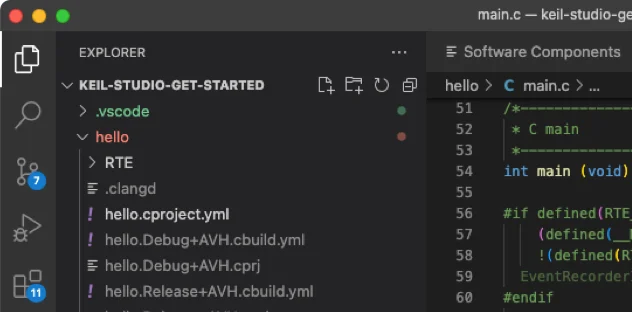
Keil MDK
A productivity, debugging, and reliability platform for professional Cortex-M development, MDK v6 brings dual IDE workflows, safety-certified compilers, Arm Fixed Virtual Platforms, and subscription licensing. Buy in India from GSAS.
View Keil MDK →
Keil MDK Community
Keil MDK Community is Arm's no-cost MDK v6 edition, licensed for students and non-commercial use only. For any commercial Cortex-M product work in India, GSAS supplies the licensed MDK Essential tier with INR procurement and local Arm engineering support.
View Keil MDK Community →
Keil MDK Essential
Entry commercial tier of Arm Keil MDK v6 for Cortex-M product teams in India, full Cortex-M toolchain, Arm Compiler 6, Keil Studio + µVision dual-IDE, MDK-Middleware free, and Arm support entitlement under User-Based Licensing. Buy in India from GSAS.
View Keil MDK Essential →Interested in Arm Compiler 6?
Get pricing, an evaluation unit, or a technical consultation from our application engineers.