
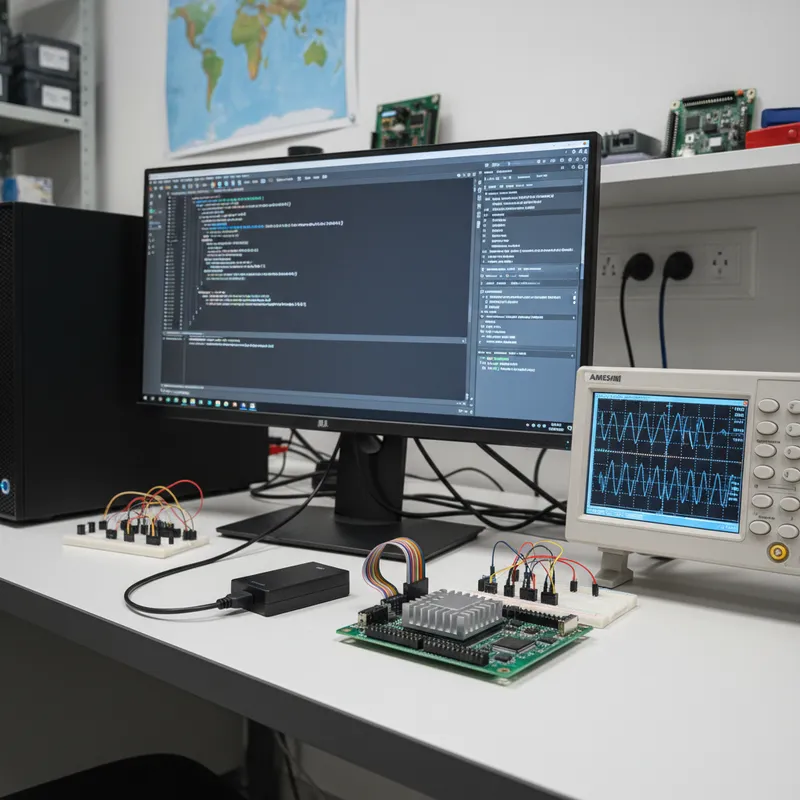
Indian product teams, wearable OEMs in Bengaluru, smart-home camera makers in Hyderabad, agritech hardware teams in Pune, industrial-automation companies in Chennai, are reaching for edge AI that actually runs on a coin cell or a single USB-C charge. For that class of product, the right Arm answer is an Ethos-U microNPU paired with a Cortex-M host. This post is a practical walkthrough of the Ethos-U family, the Vela-based toolchain, the commercial silicon Indian teams can actually buy today, and the product use cases we see most often at GSAS, Arm’s authorized partner in India for Arm Development Tools, where you can also explore the broader Arm product portfolio we support.
What Ethos-U Is (and What It Isn’t)
The Ethos-U family is Arm’s microNPU: a small, power-efficient neural network accelerator designed to sit next to a Cortex-M CPU and offload the inner loops of a quantised neural network. It is the “U” (as in micro) family, and it lives firmly in the Cortex-M world: battery-powered devices, always-on sensing, deeply embedded control, and tight BOM budgets.
Ethos-U is not Ethos-N. Ethos-N is Arm’s application-class NPU, paired with Cortex-A systems running Android or Linux. They share a name prefix but they are different silicon, different software stacks, and different product categories. If your target runs Android, you want Ethos-N, and we have a separate post on that. If your target is a Cortex-M device with a handful of megabytes of flash and a battery budget measured in milliamp-hours, you want Ethos-U.
The family today covers three members:
- Ethos-U55: the entry member. Cortex-M host pairing. Designed for always-on voice wake-word, sensor fusion, gesture recognition, and simple vision. This is the first microNPU most Indian teams encounter because it is the most widely licensed and the most widely available in commercial silicon.
- Ethos-U65: higher throughput than U55. Pairs with Cortex-M, Cortex-R, Cortex-A, or Neoverse hosts per Arm’s product brief, which makes it useful in mid-range SoCs that blur the line between MCU- and MPU-class products.
- Ethos-U85: the newest and highest-throughput member. Per Arm’s published product brief, Ethos-U85 raises the maximum MAC count per cycle, adds support for transformer operators (critical for small language and vision transformer models at the edge), and extends the addressable model set further into image classification and detection. Ethos-U85 is explicitly positioned by Arm for both Cortex-M and Cortex-A pairing, including the edge-server class workloads that previously routed through Ethos-N silicon.
All three are microNPUs: they are accelerators, not standalone CPUs. The most common pairing in Indian product designs is a Cortex-M host that runs the application, handles RTOS scheduling, drives peripherals, and dispatches inference jobs to the NPU, but per Arm, U65 supports Cortex-A pairing too, and U85 is positioned for Cortex-A (and Neoverse) as well as Cortex-M.
The Software Path: TFLite Micro, Vela, CMSIS-NN
The Ethos-U deployment flow is one of the reasons Indian teams like this family, it is deterministic, offline, and does not depend on a runtime graph compiler shipping on the device. The flow:
- Train and quantise. You train your model in TensorFlow (or any framework that can export to TFLite) and quantise it to int8. Ethos-U is designed around int8; mixed-precision and float models either will not accelerate or will fall back to the CPU.
- Run Vela. The Vela compiler is Arm’s offline compiler that takes a quantised TFLite Micro model and produces (a) an Ethos-U binary, the stream of commands the NPU actually executes, and (b) a set of CPU-side fallback operators for any layers that Vela cannot map to the NPU.
- Link into the firmware. The output from Vela links into your Cortex-M firmware alongside CMSIS-NN, Arm’s optimised neural network kernel library. CMSIS-NN handles any layers that fall back to the Cortex-M CPU, using Helium (MVE) where the host is a Cortex-M55 or Cortex-M85, or DSP extensions on older Cortex-M parts.
- Deploy. The firmware, application code, RTOS, TFLite Micro runtime, Vela-compiled NPU binary, CMSIS-NN fallback, builds as a single image and flashes to the target.
The important consequence: all the model-to-hardware work happens offline on your developer workstation. There is no JIT compiler burning flash and RAM on a coin-cell device. Your inference latency and memory footprint are fully determined at build time, which is exactly the guarantee that embedded product teams need.
Silicon You Can Actually Buy: Corstone and Commercial Parts
A common frustration for Indian teams a couple of years ago was that Ethos-U was real in the architecture but hard to buy in silicon. That has changed.
- Arm Corstone-300, Corstone-310, Corstone-315: reference subsystems from Arm that pair a Cortex-M host (commonly Cortex-M55 or Cortex-M85) with an Ethos-U55 or Ethos-U65. Corstone is what most silicon vendors start from; it is also how you run Arm Virtual Hardware models for pre-silicon work.
- Alif Semiconductor Ensemble (E1, E3, E5, E7): the Ensemble family pairs Cortex-M55 (sometimes with Cortex-A32 on the larger parts) with an integrated Ethos-U55. Alif Ensemble is one of the most popular commercial Cortex-M55 + Ethos-U55 parts Indian teams evaluate because the family is available in a range of BGA/WLCSP packages and covers wearable, industrial, and vision endpoints from the same toolchain.
- Nuvoton M55M1: Nuvoton’s Cortex-M55 + Ethos-U55 part that lands in industrial and consumer sockets where a familiar Nuvoton ecosystem is already in use. (Note: Nuvoton’s earlier M467 is a Cortex-M4F part, not a Cortex-M55 + Ethos-U part, verify the specific Nuvoton MCU against the Nuvoton datasheet before designing in.)
- NXP i.MX RT700: NXP’s crossover MCU with Ethos-U that brings microNPU inference into the i.MX RT ecosystem Indian industrial and audio teams already know.
New parts are being announced regularly; if you are doing silicon selection, ask the GSAS team for the current shortlist, we track what is actually sampling in India versus what is only on roadmaps.
Indian Use Cases We See Every Week
Wearable OEMs. Indian wearable and medical-wearable teams use Ethos-U55 for on-device ECG rhythm analysis, heart-rate arrhythmia detection, fall detection, and activity classification. The appeal is simple: everything happens on the device, no audio or biometric data ever touches the cloud, and battery life measured in days is achievable because inference is running on dedicated silicon rather than waking up a cellular radio. Alif Ensemble is a common silicon choice in this segment.
Smart-home and smart-building cameras. Indian camera makers building doorbell cameras, indoor cameras, and smart-building sensors use Ethos-U to run on-device person detection, package detection, and pet-versus-person classification. Running inference locally means the cloud bill scales with alerts, not with frames, which is decisive economics for mid-priced consumer products in the Indian market.
Agritech. Indian agritech hardware teams building in-field crop and pest identification devices, spray-rig weed detection, and livestock monitoring use Ethos-U so the device can work in the field where 4G is unreliable and cloud round-trips are expensive. A solar-charged device doing on-device inference and uploading only labelled events per day is far more practical than a device that streams video to the cloud.
Industrial predictive maintenance. Industrial automation teams deploy Ethos-U55 based nodes to watch vibration, current, and acoustic signals on pumps, compressors, and CNC machines, and flag anomalies on-device. This is a classic “always-on listener” workload: the device does nothing most of the time, then classifies a window of sensor data when a trigger condition hits. Cortex-M55 plus Ethos-U55 is well matched to it.
Smart-home voice and wake-word. Indian consumer-electronics teams use Ethos-U for always-on keyword spotting, the “wake word” that lets a device sleep the main application processor until a user actually speaks. This has been the canonical Ethos-U55 demo workload since the family launched, and it remains the fastest way for a new team to get a working Ethos-U example running end-to-end.
Why Cortex-M55 and Cortex-M85 Matter: Even Without the NPU
Two Cortex-M cores deserve a specific mention: Cortex-M55 and Cortex-M85. Both include Helium, Arm’s M-profile vector extension (MVE), which gives the CPU its own SIMD path for neural network kernels. This matters for two reasons. First, it lets CMSIS-NN accelerate the fallback layers, the ones Vela cannot map to the Ethos-U, so the overall model runs substantially faster than it would on a plain Cortex-M4. Second, for teams whose model is small enough or whose BOM cannot justify the NPU at all, Helium alone may be enough, and you can still use the same Keil MDK / Arm Compiler / CMSIS-NN toolchain you would use for an Ethos-U target. Teams often start on a Cortex-M55-only board, prove the workload, and then move to a Cortex-M55 + Ethos-U55 part like Alif Ensemble to claw back battery life.
Arm Virtual Hardware: Start Before the Board Arrives
Arm Virtual Hardware (AVH) supports pre-silicon Ethos-U development. AVH runs a model of a Corstone subsystem, Cortex-M host, Ethos-U NPU, memories, peripherals, on a cloud or local machine, and the same firmware image you will eventually flash to the board runs on AVH first. For an Indian team building a new product, the value is immediate: the firmware engineers can start, the ML engineers can iterate on Vela-compiled models, and the first real board becomes a validation step rather than a bring-up bottleneck. Our customers across Bengaluru and Pune use AVH heavily during the first half of a programme and then switch to real silicon once their Alif or Nuvoton or NXP board arrives.
Development Flow: Keil MDK, Keil Studio, and DS
Most Indian Ethos-U product teams use Arm Keil MDK or Keil Studio for day-to-day Cortex-M development. Both integrate the Arm Compiler for Embedded, CMSIS-NN, TFLite Micro, and the Vela output flow. Teams who already use MDK for MCU development find the Ethos-U onboarding essentially incremental, they add Vela to the build, add the NPU target to their CMSIS pack, and keep the rest of their workflow.
Teams building heterogeneous parts, where an Ethos-U subsystem lives alongside a Cortex-A application processor, sometimes also use Arm Development Studio for cross-cluster debug. DS is the right tool when you need to attach to the Cortex-A side and the Cortex-M side of the same SoC in one session.
How to Get Started in India
A typical path we recommend to Indian product teams:
- Decide the class of workload. Always-on keyword spotting? Person detection? Vibration anomaly? This determines whether Ethos-U55 is enough or whether you should plan for Ethos-U65 or the newer Ethos-U85.
- Pick a commercial silicon starting point. Alif Ensemble is the most common first choice for Cortex-M55 + Ethos-U55. Nuvoton and NXP i.MX RT700 are also in play. We can help you narrow this down based on your product’s power, package, and peripheral needs.
- Start on Arm Virtual Hardware. Do not wait for a board. Get Vela producing a binary and AVH running it while you close out the board design.
- Plan for Keil MDK. Budget the Keil MDK licence early, Vela, CMSIS-NN, TFLite Micro, and the Arm Compiler for Embedded all slot cleanly into an MDK project.
- Talk to GSAS on benchmarks honestly. Every team asks “how fast will my model run on Ethos-U55”. The correct answer is “let us run Vela on your model and tell you”, not a made-up number. We can do this in a short engagement.
Further Reading
- Arm Ethos-U55 on developer.arm.com
- Arm Ethos-U65 on developer.arm.com
- Arm Ethos-U85 on developer.arm.com
- Vela compiler, Arm developer site
- Arm Keil MDK, product page at GSAS
- Arm Development Studio, for heterogeneous debug
- Arm partner page at GSAS
- Arm Cortex processor family, the complete list and comparison guide
Talk to GSAS: the Authorized Arm Development Tools Partner for India
GSAS Micro Systems supports Ethos-U product teams in India from silicon selection to Vela tuning to Keil MDK licensing and on-device debug. We are Arm’s authorized partner in India for Arm Development Tools, and our teams work on the ground with customers in Bengaluru, Chennai, Hyderabad, Delhi NCR, Mumbai, and Pune. If your team is evaluating Ethos-U55, Ethos-U65, or Ethos-U85, on Alif Ensemble, Nuvoton M55M1, NXP i.MX RT700, or a Corstone-based reference, talk to GSAS. We will help you pick the right silicon, get Vela running on your model, and ship an edge-AI product that actually meets the battery target on the back of the datasheet.
Also appears in:
Interested in Arm tools?
Talk to our application engineers for personalized tool recommendations.
More from Arm
View all →
Meet the GSAS Team at electronica India 2026, Stall H3.I45
15 Sept · 3 min
Arm's Agentic AI Push: What Indian Embedded Teams Can Actually Use Today
13 Sept · 7 min
Arm User-Based Licensing in CI/CD: armlm, Proxy Activation and What Breaks
28 Jul · 11 min
Two Arm Keil MDK Webinars This Summer: DevOps and Edge AI for Indian Cortex-M Teams
17 Jun · 4 min
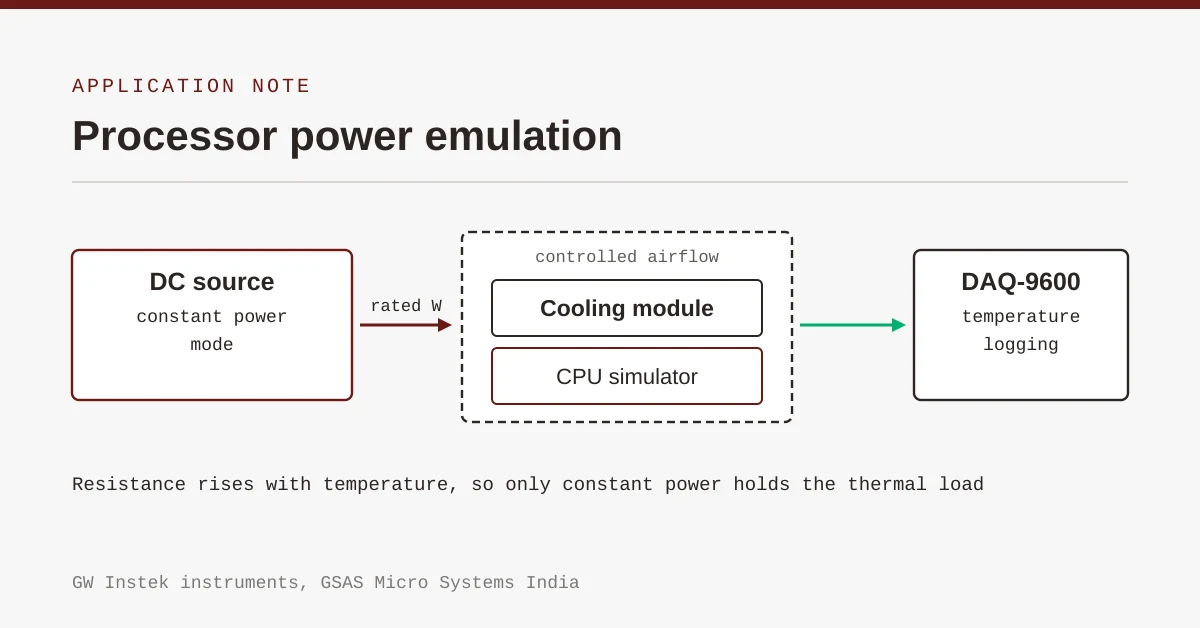
Emulating Processor Power for Thermal Testing: Why Constant Power
7 Oct · 7 min
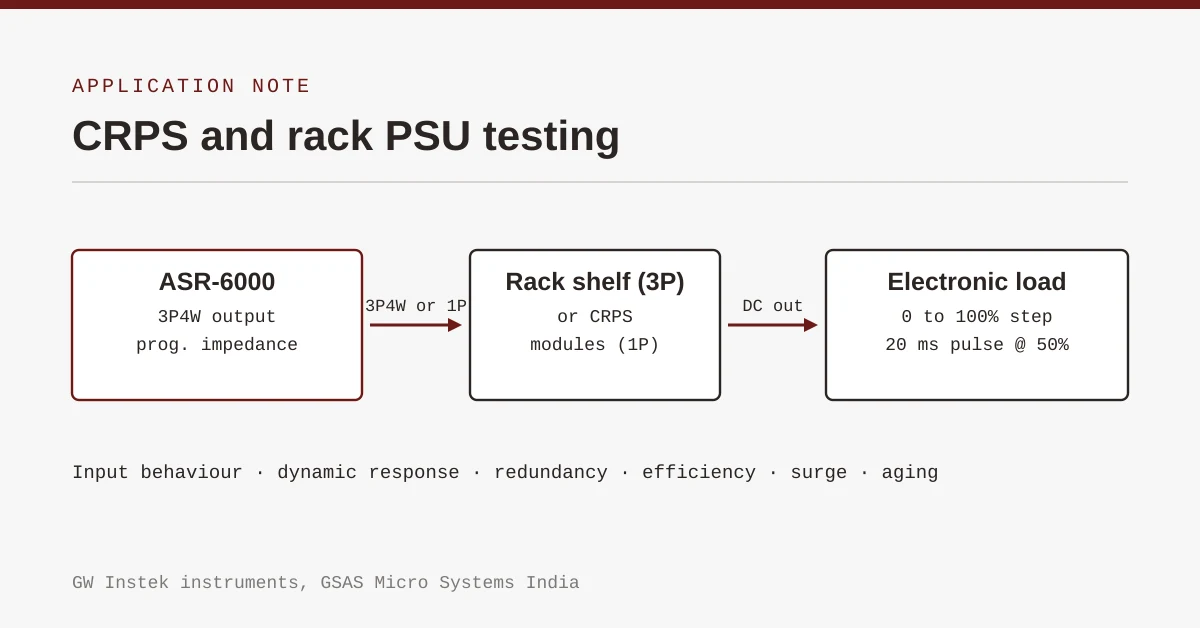
CRPS and Rack Power Supply Testing: The Six Tests That Matter
7 Oct · 7 min