In short
The Arm Cortex processor family replaces the older ARM7, ARM9 and ARM11 classic cores and is split into three profiles: Cortex-A for application-class silicon that runs a rich OS, Cortex-R for hard real-time silicon, and Cortex-M for microcontroller-class silicon. Every Cortex core, from the Cortex-M0+ to the Cortex-X4, implements exactly one of the corresponding Armv architecture profiles: A-profile, R-profile or M-profile.
If you have tried to draw the Arm Cortex processor family on a whiteboard, you have probably ended up with three branches, two dozen part numbers, and at least one engineer arguing about whether Cortex-X counts as Cortex-A. This guide is the single reference page for every Arm Cortex core, grouped by profile, with enough architectural context that a system engineer can build a short list. GSAS is Arm’s authorized partner in India for Arm Development Tools, and this page is maintained by the same team that supports Arm Development Studio, Keil MDK and the Arm Cortex tooling stack on Indian product benches.
The Arm Cortex processor family replaces the older ARM7, ARM9 and ARM11 classic cores. It is split into three profiles: Cortex-A for application-class silicon (smartphones, Linux SBCs, automotive infotainment), Cortex-R for hard real-time silicon (brake ECUs, storage controllers, 5G baseband), and Cortex-M for microcontroller-class silicon (BLE sensors, motor control, edge AI nodes). Every Cortex core, from the Cortex-M0+ on a Raspberry Pi RP2040 to the Cortex-X4 on a flagship phone SoC, sits in exactly one of those three buckets.
The Arm Cortex Processor Family: What the Three Profiles Actually Mean
The Arm Cortex processor family is organized by the Armv architecture profile letter each core implements: A-profile, R-profile or M-profile. These are not marketing buckets, they are different architecture specifications in the Arm Architecture Reference Manual, with different instruction sets, exception models and memory models.
Cortex-A, Application profile. A-profile cores implement Armv7-A, Armv8-A or Armv9-A. They run a rich OS (Linux, Android, QNX, Windows on Arm), have a memory management unit (MMU) with full virtual memory, support SMP clustering with DynamIQ, and almost always ship with NEON/SVE SIMD and an FPU. If it boots U-Boot and runs a Yocto image, you are on Cortex-A.
Cortex-R, Real-Time profile. R-profile cores implement Armv7-R or Armv8-R. They replace the MMU with a memory protection unit (MPU), giving deterministic address translation, no TLB misses, no page walks, no jitter. Most Cortex-R cores run in dual-core lockstep, where two cores execute the same instruction stream in parallel and compare outputs to detect single-event upsets. That is why Cortex-R dominates ISO 26262 ASIL-D automotive safety islands, HDD/SSD controllers and 5G baseband modems.
Cortex-M, Microcontroller profile. M-profile cores implement Armv6-M, Armv7-M or Armv8-M. They use Thumb-only (M0/M0+/M1) or Thumb-2 (M3 and above) encoding to keep code density high and silicon area low. They boot directly from a vector table in flash, support deterministic interrupt latency through the Nested Vectored Interrupt Controller (NVIC), and are the basis of every modern Arm microcontroller, STM32, NXP LPC/Kinetis, TI Sitara/MSP, Renesas RA, Infineon PSOC, Microchip SAM, Nordic nRF, Alif Ensemble, Raspberry Pi RP2040 and RP2350.
The generation letter tells you how old the architecture is. Armv7 is the 32-bit era. Armv8 introduces 64-bit (AArch64) and, in A-profile, pointer authentication and memory tagging. Armv9 adds SVE2, confidential compute (CCA), and in M-profile, Helium vector extensions.
Cortex-A Complete List: Every Application Processor Arm Has Shipped
Cortex-A is the largest branch of the family, every Android phone, every Linux SBC, and most automotive infotainment and ADAS domain controllers. The complete list of Cortex-A cores, grouped by Armv generation:
| Core | Armv Generation | Cluster Role | Typical Workload |
|---|---|---|---|
| Cortex-A5 | Armv7-A | Single/LITTLE | Low-cost feature phones, early MPU SoCs |
| Cortex-A7 | Armv7-A | LITTLE | Entry-level smartphones, low-power Linux |
| Cortex-A8 | Armv7-A | Single | TI Sitara AM335x, BeagleBone Black era |
| Cortex-A9 | Armv7-A | Single/SMP | Xilinx Zynq-7000, industrial Linux |
| Cortex-A12 | Armv7-A | Mid | Mid-tier Android (short-lived) |
| Cortex-A15 | Armv7-A | big | Early big.LITTLE, Exynos 5, Tegra K1 |
| Cortex-A17 | Armv7-A | Mid/big | Refreshed A12 for mid-tier Android |
| Cortex-A32 | Armv8-A (32-bit only) | LITTLE | AArch32 industrial MCU-plus |
| Cortex-A34 | Armv8-A (64-bit only) | LITTLE | Entry AArch64 for IoT gateways |
| Cortex-A35 | Armv8-A | LITTLE | Entry 64-bit smartphones, smart TV |
| Cortex-A53 | Armv8-A | LITTLE | Raspberry Pi 3, Amlogic S905, NXP i.MX8 |
| Cortex-A55 | Armv8.2-A | LITTLE | Raspberry Pi 5, NXP i.MX9, Rockchip RK3588 |
| Cortex-A57 | Armv8-A | big | Nvidia Tegra X1, Jetson Nano era |
| Cortex-A65 | Armv8.2-A | LITTLE (SMT) | Infrastructure / automotive cockpit |
| Cortex-A72 | Armv8-A | big | Raspberry Pi 4, NXP LS1046, Marvell Armada |
| Cortex-A73 | Armv8-A | big | Kirin 960, Amlogic S922 |
| Cortex-A75 | Armv8.2-A | big | Snapdragon 845, Exynos 9810 |
| Cortex-A76 | Armv8.2-A | big | Kirin 980, Rockchip RK3588 big cluster |
| Cortex-A77 | Armv8.2-A | big | Snapdragon 865 |
| Cortex-A78 | Armv8.2-A | big | Snapdragon 888, MediaTek Dimensity 1200 |
| Cortex-A78AE | Armv8.2-A | big (automotive) | Nvidia Orin, Renesas R-Car V4H |
| Cortex-A510 | Armv9-A | LITTLE | Snapdragon 8 Gen 1, Dimensity 9000 |
| Cortex-A520 | Armv9.2-A | LITTLE | Snapdragon 8 Gen 3, Dimensity 9300 |
| Cortex-A710 | Armv9-A | Mid/big | Snapdragon 8 Gen 1 middle cluster |
| Cortex-A715 | Armv9-A | Mid/big | Snapdragon 8 Gen 2 middle cluster |
| Cortex-A720 | Armv9.2-A | Mid/big | Snapdragon 8 Gen 3 middle cluster |
| Cortex-A725 | Armv9.2-A | Mid/big | Next-gen Android flagship middle |
Cortex-X / C1 premium cluster. Starting with Cortex-X1, Arm added a premium performance tier that sits alongside Cortex-A inside a DynamIQ cluster. X-series cores are not “Cortex-A X”, they are their own product line, optimized for single-thread peak rather than perf-per-watt. The sequence is X1 (Armv8.2-A, paired with A78/A55), X2 (Armv9-A, A710/A510), X3 (Armv9-A, A715/A510), X4 (Armv9.2-A, A720/A520), and Cortex-X925 (Armv9.2-A, codename Blackhawk, Arm’s 2024 X-flagship). In 2025 Arm reorganised the premium CPU brand under the C-series umbrella: C1-Nano / C1-Pro / C1-Premium / C1-Ultra, where C1-Ultra is the successor to X925. (Note: there is no “Cortex-X5”, Arm jumped the X-numbering directly from X4 to X925, then to C1-Ultra.) On an Indian Linux SBC bench you will almost never see a Cortex-X / C1-Ultra, they are largely exclusive to flagship smartphone and high-end automotive SoCs.
Neoverse (N1, V1, N2, V2, N3, V3) is Arm’s infrastructure/server family, sibling to Cortex-A but aimed at datacentre workloads and hyperscale inference. We cover it separately in our Arm Development Studio post on Cortex-A, Cortex-R and Neoverse workflows.
Cortex-R Complete List: Every Real-Time Processor
Cortex-R is the smallest branch by part-number count but the most important one for functional safety. Every Cortex-R core supports dual-core lockstep, which is the basis for ISO 26262 ASIL-B / ASIL-D certification in automotive silicon.
| Core | Armv Generation | Lockstep | Target Workload |
|---|---|---|---|
| Cortex-R4 | Armv7-R | Yes | Early brake and ABS ECUs, HDD controllers |
| Cortex-R5 | Armv7-R | Yes (dual-core lockstep) | TI Hercules, Xilinx Zynq UltraScale+ RPU, storage controllers |
| Cortex-R7 | Armv7-R | Yes | LTE/4G baseband, automotive domain |
| Cortex-R8 | Armv7-R | Yes (quad-core capable) | 5G baseband modems, enterprise SSD controllers |
| Cortex-R52 | Armv8-R (32-bit) | Yes (hard lockstep, hypervisor) | NXP S32Z/S32E, automotive zonal ECUs, Cortex-R safety islands (Infineon AURIX uses TriCore, not Cortex-R) |
| Cortex-R52+ | Armv8-R (32-bit) | Yes | Next-gen automotive domain controllers, vehicle motion ECUs |
| Cortex-R82 | Armv8-R (64-bit) | Yes | Enterprise SSD/NVMe computational storage, first 64-bit real-time core |
The R52 family is the one that matters for Indian automotive Tier-1s right now. It is the first Cortex-R to support an Armv8-R hypervisor, letting multiple safety partitions run on the same physical core without interference, which is why NXP S32Z/S32E and newer zonal ECU designs pick it for the ASIL-D safety island. The R82 is the first 64-bit Cortex-R, designed for computational storage where the SSD controller runs Linux on one set of cores and handles real-time flash management on another.
Cortex-M Complete List: Every Microcontroller-Class Processor
Cortex-M is the branch that touches the most silicon by volume. Nearly every Arm microcontroller on the market, and every one of the STM32, NXP, TI, Renesas, Infineon, Microchip and Nordic devices we see on Indian product benches, is built around a Cortex-M core. Here is the complete list.
| Core | Armv Generation | ISA | FPU | DSP | Helium MVE | TrustZone | Typical Workload |
|---|---|---|---|---|---|---|---|
| Cortex-M0 | Armv6-M | Thumb (subset) | No | No | No | No | 32-bit replacement for 8-bit MCUs |
| Cortex-M0+ | Armv6-M | Thumb (subset) | No | No | No | No | RP2040, low-power BLE, coin-cell sensors |
| Cortex-M1 | Armv6-M | Thumb (subset) | No | No | No | No | FPGA soft-core (Xilinx Artix/Kintex, Intel/Altera) |
| Cortex-M3 | Armv7-M | Thumb-2 | No | No (basic SIMD instr.) | No | No | STM32F1/F2, LPC17xx, industrial control |
| Cortex-M4 | Armv7E-M | Thumb-2 | Optional (single-precision) | Yes | No | No | STM32F4, motor control, audio DSP |
| Cortex-M4F | Armv7E-M | Thumb-2 | Yes (single-precision) | Yes | No | No | nRF52840, STM32F4 with FPU, Kinetis K2x |
| Cortex-M7 | Armv7E-M | Thumb-2 | Optional (single or double) | Yes | No | No | STM32H7, i.MX RT10xx, NXP LPC54/55 |
| Cortex-M23 | Armv8-M Baseline | Thumb | No | No | No | Yes | Secure low-power IoT (SAM L11) |
| Cortex-M33 | Armv8-M Mainline | Thumb-2 | Optional | Optional | No | Yes | STM32L5/U5, nRF53/54, RP2350, PSOC 6 |
| Cortex-M35P | Armv8-M Mainline | Thumb-2 | Optional | Optional | No | Yes (+ anti-tamper) | Secure elements, payment MCUs |
| Cortex-M52 | Armv8.1-M | Thumb-2 | Yes | Yes | Yes (single-beat Helium) | Yes | Entry-level Armv8.1-M with Helium (newer Cortex-M52-based MCUs) |
| Cortex-M55 | Armv8.1-M | Thumb-2 | Yes | Yes | Yes (Helium) | Yes | Alif Ensemble, Himax, edge-AI MCUs |
| Cortex-M85 | Armv8.1-M | Thumb-2 | Yes | Yes | Yes (Helium) | Yes | Renesas RA8, high-end audio/ML MCUs |
FPU distinction. M0/M0+/M1/M23 and the base M3 have no FPU, floating-point is software-emulated, fine for control loops but painful for DSP. Cortex-M4 has an optional single-precision FPU (the version with FPU is M4F). Cortex-M7 has an optional single- or double-precision FPU and is the first Cortex-M with a proper cache and dual-issue pipeline. M33, M35P, M55 and M85 all ship with FPU and DSP extensions.
Helium / M-Profile Vector Extension (MVE). The Cortex-M SIMD engine. Only on M55 and M85. It is what makes an MCU-class part capable of running a small neural network or audio pipeline without a dedicated NPU. Our Arm Cortex-M4 architecture deep dive covers the pre-Helium DSP extension.
TrustZone for Armv8-M. Every Armv8-M core, M23, M33, M35P, M55, M85, supports a hardware-enforced split between Secure and Non-Secure worlds on the same core. This is the basis for PSA Level 2/3 certification and for secure-boot on most new IoT silicon.
M1 is special. It is delivered as RTL soft-core, not a hard macro. Customers synthesize it into FPGA fabric, typically Xilinx Artix-7 or Kintex-7, when they need a Cortex-M inside a larger FPGA design.
Arm Cortex Family Comparison Table: One View of Every Core
The table engineers are actually searching for when they type “arm cortex processor list” into Google is a single unified view. Here it is, condensed.
| Profile | Core | Armv | Signature Feature | Where You See It |
|---|---|---|---|---|
| M | M0 / M0+ / M1 | v6-M | Tiny, Thumb-only | STM32C0, RP2040, FPGA soft-core |
| M | M3 | v7-M | First Thumb-2 Cortex-M | STM32F1, LPC17xx |
| M | M4 / M4F | v7E-M | DSP extension + optional FPU | STM32F4, nRF52840, Kinetis K2x |
| M | M7 | v7E-M | Dual-issue + cache | STM32H7, i.MX RT1060 |
| M | M23 | v8-M Baseline | TrustZone, low-power | SAM L11 |
| M | M33 | v8-M Mainline | TrustZone + FPU/DSP | STM32U5, nRF5340, RP2350 |
| M | M35P | v8-M Mainline | Anti-tamper secure element | Payment/secure MCUs |
| M | M52 | v8.1-M | Entry-level Helium MVE (single-beat) | Newer Cortex-M52 MCUs |
| M | M55 | v8.1-M | Helium MVE | Alif Ensemble E1/E3 |
| M | M85 | v8.1-M | Highest perf Cortex-M | Renesas RA8 |
| R | R4 / R5 / R7 / R8 | v7-R | Lockstep, MPU | Storage controllers, baseband |
| R | R52 / R52+ | v8-R | Hypervisor, hard lockstep | Automotive ASIL-D |
| R | R82 | v8-R (64-bit) | First 64-bit Cortex-R | Computational storage |
| A | A5 / A7 / A8 / A9 / A12 / A15 / A17 | v7-A | 32-bit Linux-class | Zynq-7000, BeagleBone, old Android |
| A | A32 / A34 / A35 / A53 / A57 / A72 / A73 | v8-A | First 64-bit Cortex-A | Raspberry Pi 3/4, NXP i.MX8 |
| A | A55 / A65 / A75 / A76 / A77 / A78 | v8.2-A | Mainstream Armv8.2 | Snapdragon 8xx, RK3588 |
| A | A510 / A710 / A715 / X1 / X2 / X3 | v9-A | SVE2, confidential compute | Flagship Android 2022-2024 |
| A | A520 / A720 / A725 / X4 / X925 / C1-Ultra | v9.2-A | Latest Armv9.2 generation (X925 = 2024 flagship; C1-Ultra = 2025 successor) | Flagship Android 2024-2025 |
Difference Between Arm and Cortex: Cleared Up
One of the most searched questions on this topic is “difference between arm and cortex”, so let us state it plainly. Arm is the company (Arm Holdings, formerly Arm Ltd) and the name of the instruction set architecture (the Arm ISA, across Armv1 through Armv9). Cortex is the current generation of Arm’s own processor cores. Before Cortex, Arm shipped ARM7TDMI (Game Boy Advance, Nokia 3310), ARM9 (early smartphones, industrial MCUs) and ARM11 (first iPhone, original Raspberry Pi). When Arm introduced Armv7 in the mid-2000s, they renamed the product line from “ARMx” to “Cortex” and split it into the three profiles we have been discussing.
“Cortex” is not a separate company and not a separate architecture, it is the marketing name for Arm’s own reference cores from Armv6-M and Armv7 onward. Other companies can license the Arm ISA and build their own cores, Apple, Qualcomm Nuvia, Ampere, Nvidia Denver, Marvell ThunderX, and those are “Arm processors” but not “Cortex processors”. Cortex is Arm-designed; custom Arm ISA cores from third parties are not. Legacy ARM7/9/11 silicon still exists in fielded products, those are Arm processors, just not Cortex ones.
How to Pick the Right Cortex Processor: A Short Decision Tree
When a customer walks in with a block diagram asking “which Cortex”, we run this decision tree in the first ten minutes.
Start with the OS question. If your product needs Linux, Android, QNX or Windows on Arm, anything with an MMU and virtual memory, you are on Cortex-A. Within Cortex-A:
- Entry Linux SBC, cost-sensitive industrial: Cortex-A35, A53 or A55. Think Raspberry Pi 3/4/5, NXP i.MX 8M Mini/Plus, Rockchip RK3566.
- Mainstream Linux / Android mid-tier: Cortex-A72, A76, A78. Think Raspberry Pi 4’s A72, RK3588’s A76 big cluster, automotive cockpit domain controllers.
- Automotive safety-aware application class: Cortex-A78AE or the older A65AE. The “AE” stands for “Automotive Enhanced” and adds split-lock support so the same core can run in lockstep when a safety-critical workload demands it.
- Flagship smartphone or high-end ADAS: Cortex-A720 / A725 + Cortex-X4 / X925 (or the 2025 successor C1-Ultra) in a DynamIQ cluster. This is the Snapdragon / Dimensity / Nvidia Orin territory.
If the workload is hard real-time with no OS or an RTOS that cannot tolerate jitter: brake ECUs, steering, storage controllers, 5G baseband, you are on Cortex-R. Within Cortex-R:
- Legacy 32-bit real-time with MPU: Cortex-R4/R5 on TI Hercules, Xilinx Zynq UltraScale+ RPU.
- Modern automotive ASIL-D with hypervisor: Cortex-R52 / R52+ on NXP S32Z/S32E, Infineon zonal ECUs.
- 64-bit computational storage or high-bandwidth real-time: Cortex-R82.
If you are building an MCU-class product: BLE sensor, motor drive, smart lock, wearable, small edge-AI node, you are on Cortex-M. Within Cortex-M:
- Absolute lowest power / lowest cost: Cortex-M0+ (STM32C0, RP2040, nRF52810).
- Classic industrial control / motor / audio: Cortex-M4F (nRF52840, STM32F4) or Cortex-M7 (STM32H7, i.MX RT1060).
- Secure IoT with TrustZone: Cortex-M33 (STM32U5, nRF5340/nRF54, RP2350).
- Edge AI and small ML inference on MCU: Cortex-M55 or M85 with Helium (Alif Ensemble, Renesas RA8, Himax WE2).
Silicon Vendors and Indian Availability: Who Ships Which Cortex Core
On an Indian embedded bench, the Cortex cores you actually see are the ones that ship in silicon from the vendors who dominate our distribution channel. The practical map:
- STMicroelectronics: STM32C0 (M0+), STM32F0 (M0), STM32F1/F2 (M3), STM32F4/F7/L4 (M4/M4F), STM32H7 (M7 + M4), STM32U5/L5 (M33), STM32MP1/MP2 (Cortex-A7/A35/A53 + M4/M33 companion).
- NXP: LPC (M0/M3/M4/M33), Kinetis K (M4F), i.MX RT crossover (M7 on RT10xx, M33 on RT11xx), i.MX 8/9 (A53/A55/A72/A75 + M7/M33 companion), S32 automotive (R52/R52+ lockstep, A53 Linux).
- Texas Instruments: Sitara AM335x (A8), AM57xx/AM65xx (A15/A53 + R5F lockstep), TMS570 Hercules (R4/R5 lockstep).
- Renesas: RA (M4/M23/M33/M85), RZ (A9/A53/A55), R-Car V3/V4 (A57/A76 for ADAS).
- Infineon: PSOC 6 (M4F + M0+), TRAVEO T2G automotive (M4F / M7 / R52+).
- Microchip: SAM D/L/E (M0+/M4F), SAM L11 (M23), PIC32CM (M0+/M23).
- Nordic Semiconductor: nRF52810/32/40 (M4F), nRF5340 (dual M33, app + network), nRF54L/H (M33).
- Alif Semiconductor: Ensemble E1/E3/E5/E7 (M55 + M55 + A32, edge AI).
- Raspberry Pi: RP2040 is dual Cortex-M0+; RP2350 is dual Cortex-M33 (with optional Hazard3 RISC-V cores for the Pico 2); Raspberry Pi 5 uses BCM2712 with quad Cortex-A76; Pi 4 uses quad Cortex-A72; Pi 3 uses quad Cortex-A53.
All of these vendors are represented in the Indian distribution channel. The good news is that the Arm tooling stack, Keil MDK for Cortex-M, Arm Development Studio for Cortex-A/R/Neoverse, DSTREAM/ULINKpro for JTAG/SWD hardware debug, covers every core in this guide from a single vendor.
Further Reading
External canonical references:
- Arm Cortex-A processors overview on developer.arm.com
- Arm Cortex-M processors overview on developer.arm.com
- Arm Cortex-R processors overview on developer.arm.com
Deeper dives on gsasindia.com:
- Arm Cortex-M4 architecture deep dive for Indian engineers
- How to choose an Arm Cortex processor, a selection guide for Indian teams
- Arm Development Studio for Cortex-A, Cortex-R and Neoverse Indian teams
- Arm Keil MDK Professional for Indian Cortex-M commercial development
- Arm partner page on GSAS
If you are trying to pick a Cortex core for a new product and want a second pair of eyes on the short list, the GSAS application engineering team runs architecture sessions with customers across Bengaluru, Chennai, Hyderabad, Delhi NCR, Mumbai and Pune. We are Arm’s authorized partner in India for Arm Development Tools, we carry Keil MDK, Arm Development Studio, DSTREAM and ULINKpro on bench, and we have seen most of the Cortex-A, Cortex-R and Cortex-M silicon in this guide come through a customer project at least once. If you are stuck between a Cortex-M33 and a Cortex-M55, or between a Cortex-A55 and a Cortex-A76 for your next Linux SBC, that is exactly the conversation we have with Indian product teams every week.
Also appears in:
Interested in Arm tools?
Talk to our application engineers for personalized tool recommendations.
More from Arm
View all →
Meet the GSAS Team at electronica India 2026, Stall H3.I45
15 Sept · 3 min
Arm's Agentic AI Push: What Indian Embedded Teams Can Actually Use Today
13 Sept · 7 min
Arm User-Based Licensing in CI/CD: armlm, Proxy Activation and What Breaks
28 Jul · 11 min
Two Arm Keil MDK Webinars This Summer: DevOps and Edge AI for Indian Cortex-M Teams
17 Jun · 4 min
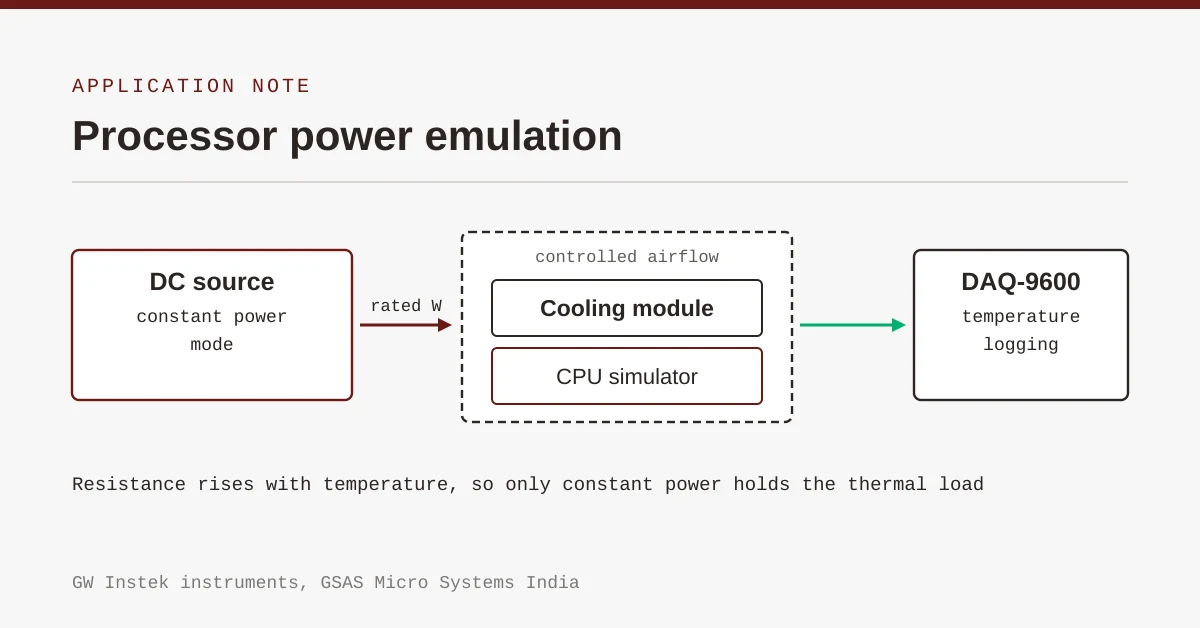
Emulating Processor Power for Thermal Testing: Why Constant Power
7 Oct · 7 min
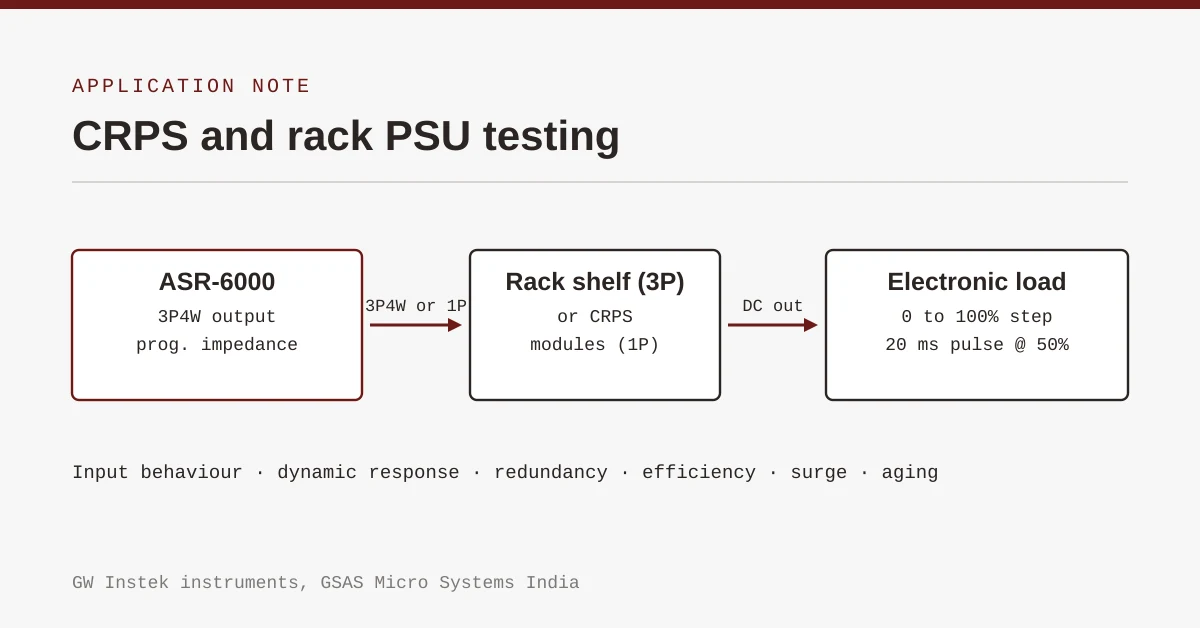
CRPS and Rack Power Supply Testing: The Six Tests That Matter
7 Oct · 7 min