
 Arm
Arm DSTREAM Family Comparison
Debug & TraceSide-by-side comparison of the two Arm DSTREAM debug & trace probes (ST vs PT) for Indian semiconductor design and embedded firmware teams, pick the right probe for 4-bit streaming or wide parallel trace capture. Buy in India from GSAS.
Compares
DSTREAM-ST, DSTREAM-PT
Architectures
Cortex-M, Cortex-R, Cortex-A
IDE
Arm Development Studio
Use cases
Streaming trace (ST), wide parallel trace with on-probe buffer (PT)
Overview
About DSTREAM Family Comparison
Arm’s DSTREAM family is the high-end debug-and-trace probe line for Cortex-M, Cortex-R, and Cortex-A SoCs. Per Arm’s DSTREAM product page, the family spans four probes: DSTREAM-ST (the second-generation streaming-trace probe) and DSTREAM-PT (the wide-parallel-trace probe with on-probe buffer), which this comparison covers, plus the specialised DSTREAM-HT (high-speed serial trace) and DSTREAM-XT (PCIe trace) for application-class and server-class silicon. For Indian semiconductor design centres in Bengaluru, Hyderabad, Chennai, and Pune evaluating which probe to standardise on for an SoC bring-up, this is the GSAS Micro Systems decision matrix.
GSAS is Arm’s authorized partner in India for Arm Development Tools. We quote each in INR with the standard Indian procurement options (GeM, SAP Ariba, Coupa, TReDS) and provide on-site application engineering for ETM trace setup and CoreSight configuration. For very high-bandwidth use cases beyond what ST and PT cover, Arm offers the specialised DSTREAM-HT (HSSTP serial trace) and DSTREAM-XT (PCIe trace on Neoverse-class designs); talk to GSAS and we will quote the right probe for your programme.
At-a-glance comparison
| Property | DSTREAM-ST | DSTREAM-PT |
|---|---|---|
| Generation | Second-generation streaming-trace probe (supersedes the original DSTREAM Debug Adapter) | Second-generation wide-parallel-trace probe |
| Trace topology | 4-bit TPIU streamed to host | 4 / 8 / 16 / 32-bit TPIU into on-probe buffer |
| On-probe buffer | None, streams to host | On-probe capture (Arm publishes no capacity figure) |
| Trace bandwidth | Up to 2.4 Gbps streamed to host | Up to 19.2 Gbps captured into on-probe buffer |
| Targets | Cortex-M / Cortex-R / Cortex-A | Cortex-M / Cortex-R / Cortex-A |
| CoreSight | ETM, PTM, ITM, STM | ETM, PTM, ITM, STM |
| Run-control | JTAG / SWD / cJTAG | JTAG / SWD / cJTAG |
| Best for | Long-duration captures from a 4-bit TPIU | Wide-TPIU bring-up where on-probe capture is required |
| GSAS quote | INR | INR |
Pick the right probe by use case
Your target exposes a 4-bit TPIU and you need long captures
→ DSTREAM-ST. ST streams 4-bit TPIU trace continuously to the host at up to 2.4 Gbps, so total capture duration is bounded by host storage rather than an on-probe buffer. For Cortex-M / Cortex-R firmware bugs that surface only after minutes of operation, ST captures enough trace to walk back from the failure point through the contributing call sequence. Indian motor-control, automotive-ECU, and industrial-controls teams chasing intermittent bugs on 4-bit TPIU targets typically standardise on ST.
Your target SoC has a wide parallel trace port (8-bit / 16-bit / 32-bit TPIU)
→ DSTREAM-PT. When the target exposes a wide parallel TPIU, typical of modern Cortex-M / Cortex-R chip designs from major silicon vendors, DSTREAM-PT captures the parallel trace at full port width into an on-probe buffer (up to 19.2 Gbps captured). This is the right probe for next-generation MCU bring-ups in Indian Tier-1 ECU programmes where the silicon team has spec’d the wider trace port specifically.
Your SoC needs higher-bandwidth trace than PT can handle
For application-class SoCs that move trace off-chip via High-Speed Serial Trace Port (HSSTP) or PCIe-based debug, high-end Cortex-A application processors and Neoverse-class server platforms, Arm offers two specialised probes beyond ST and PT: DSTREAM-HT for HSSTP serial trace and DSTREAM-XT for PCIe-based trace. GSAS supplies DSTREAM-ST and DSTREAM-PT from stock in India and can quote DSTREAM-HT or DSTREAM-XT on request.
Common Indian customer scenarios
| Scenario | Recommended probe |
|---|---|
| Tier-1 automotive ECU bring-up (Cortex-M / Cortex-R), long capture on 4-bit TPIU | DSTREAM-ST |
| Industrial motor-control firmware (Cortex-M4/M7), intermittent fault chase | DSTREAM-ST |
| Next-gen Cortex-M chip-vendor reference design with 16/32-bit TPIU | DSTREAM-PT |
| Cortex-A SoC for automotive HPC without HSSTP, JTAG-only | DSTREAM-ST (4-bit TPIU) or DSTREAM-PT (wider TPIU) depending on port width |
| High-end application-class SoC bring-up needing HSSTP or PCIe debug | DSTREAM-HT (HSSTP) or DSTREAM-XT (PCIe), quoted via GSAS on request |
What’s the same across ST and PT
- IDE integration: both probes are first-class Arm Development Studio devices. Switching between probes is configuration, not migration.
- CoreSight support: ETM (instruction trace), STM (system trace), and the broader CoreSight infrastructure are universal across the family.
- JTAG / SWD / cJTAG target connection on both probes, standard Arm debug protocols.
- Host platform: Windows and Linux through Arm Development Studio.
- Indian procurement: INR via GSAS, GeM / Ariba / Coupa / TReDS supported.
When you don’t need a DSTREAM at all
For lower-end Cortex-M debugging, single-developer firmware projects, small-team Cortex-M0+ / M3 / M4 work, training and education, the ULINK family (ULINK2, ULINKplus, ULINKpro, ULINKpro D) is the right choice. ULINKplus adds power measurement; ULINKpro adds ETM streaming. The DSTREAM family is the right answer when you are bringing up an SoC, not iterating on a single Cortex-M product.
Why Indian teams buy DSTREAM probes from GSAS
- INR procurement: GeM, SAP Ariba, Coupa, TReDS supported. GST-compliant invoicing.
- On-site application engineering: ETM trace setup, CoreSight component selection, parallel-TPIU buffer sizing. Reachable from Bengaluru, Hyderabad, Chennai, Pune, Mumbai, Delhi NCR, and Visakhapatnam.
- Cross-probe compare: we run DSTREAM-ST vs PT side-by-side on your target during the pre-sales evaluation when the right answer isn’t obvious from the spec sheet.
- Authorized Arm engineering partner since 2018: a long-standing Arm tools partner across India.
Talk to GSAS about the right DSTREAM probe for your project →
Blog
Arm Insights

Meet the GSAS Team at electronica India 2026, Stall H3.I45
electronica India 2026 opens on 16 September at BIEC Bengaluru. The GSAS team is on the floor all three days at Stall H3.I45, and this is who you will be talking to and what they can show you.
Arm's Agentic AI Push: What Indian Embedded Teams Can Actually Use Today
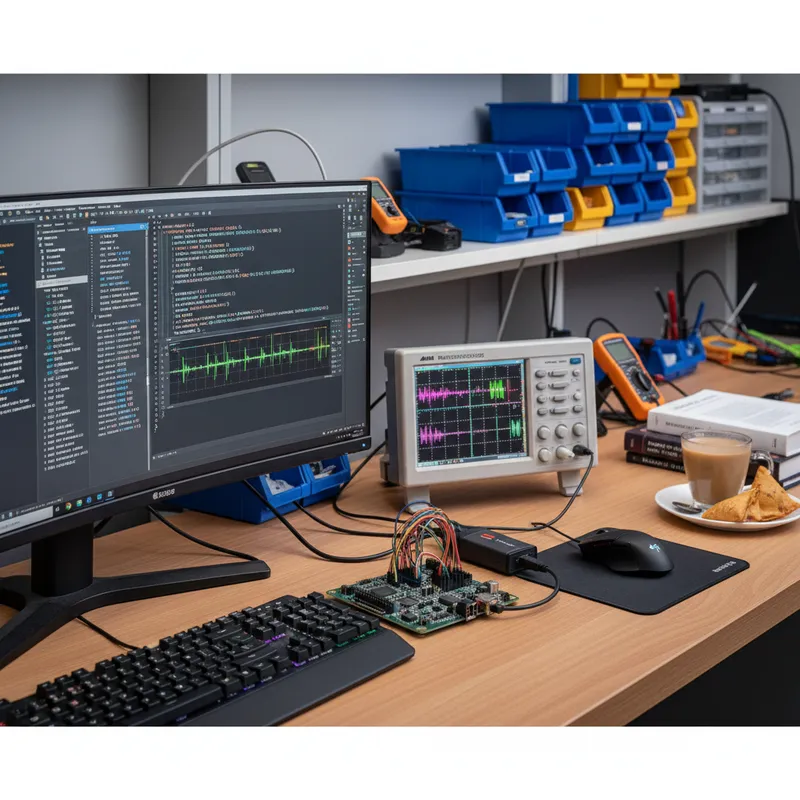
Arm has set out its platform strategy for the agentic era, putting inference everywhere it has compute. Indian embedded teams can start on that direction this quarter with the Cortex-M toolchain they already own: Helium, CMSIS-NN, Ethos-U and Vela, on boards you can order today.
Arm User-Based Licensing in CI/CD: armlm, Proxy Activation and What Breaks
A licensing failure in an Arm pipeline blocks the release branch and puts a firmware engineer on armlm output instead of driver code, up to seven days after the change that caused it. The reason: a UBL licence is a cached certificate valid for 7 days, not a checkout. Here is what that changes about pipeline design, and what to fix first.
Related products
More from Arm
All Arm products →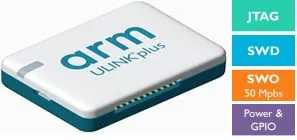
ULINKplus
Advanced debug adapter with power measurement, test I/O, and SWV trace for Arm Cortex-M development and testing. Available in India from GSAS with hands-on application engineering and local support.
View ULINKplus →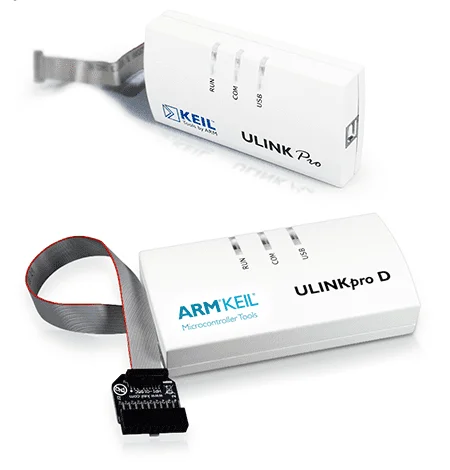
ULINKpro
High-speed debug and trace probe with ETM streaming trace and code-coverage support for Arm Cortex-M, JTAG up to 50 MHz, SWV up to 100 Mbit/s (Manchester), ETM up to 800 Mbit/s, memory R/W up to 1 MB/s, per Arm's published ULINKpro specifications. Local stock and support across India, GSAS.
View ULINKpro →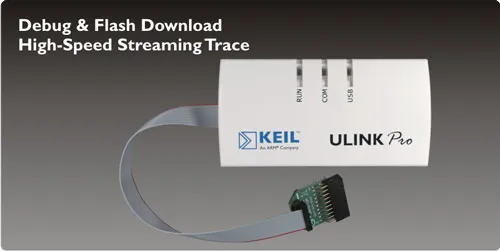
ULINKpro D
Debug variant of ULINKpro for Cortex-M, JTAG up to 50 MHz, SWV up to 100 Mbit/s (Manchester), memory R/W up to 1 MB/s, per Arm's published Keil ULINKpro specifications. No ETM trace (use ULINKpro for ETM). India pricing and local support from GSAS.
View ULINKpro D →FAQ
Common questions about DSTREAM Family Comparison
DSTREAM-ST vs DSTREAM-PT?
Does DSTREAM-ST have an on-probe buffer?
Is DSTREAM-XT a real Arm product?
Which DSTREAM for high-bandwidth parallel trace?
Interested in DSTREAM Family Comparison?
Get pricing, an evaluation unit, or a technical consultation from our application engineers.