
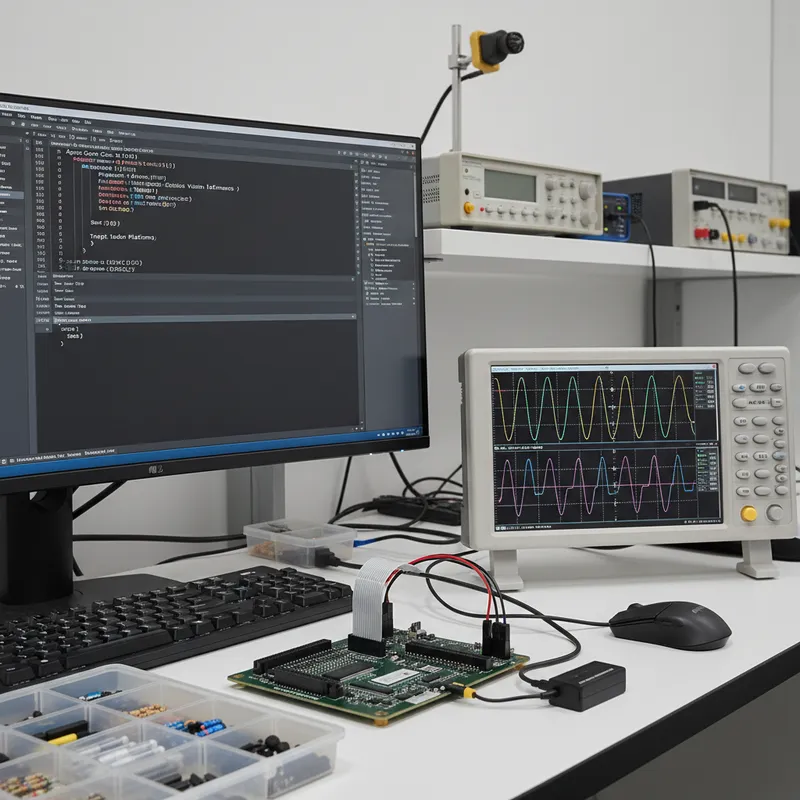
Indian vision and AI platform teams, smart city integrators in Bengaluru, camera SoC architects in Hyderabad, defence ISR teams across Delhi NCR and Chennai, and automotive ADAS Tier-2s in Pune, increasingly need multi-TOPS class inference on application processors, not on microcontrollers. For that class of workload, the right Arm answer is usually an Ethos-N NPU integrated alongside Cortex-A CPUs and a Mali GPU in a licensee SoC. This post is a practical walkthrough of the Ethos-N family, its software stack, where it actually shows up in silicon, and the use cases we support at GSAS, Arm’s authorized partner in India for Arm Development Tools. You can also explore the broader Arm stack we represent on the Arm Development Studio product page.
What Ethos-N Is (and Why It Is Not Ethos-U)
Ethos-N is Arm’s application-class neural network processor. It is designed to pair with Cortex-A class CPU clusters, sit on a high-bandwidth SoC interconnect, and run the heavy inference workloads of smart cameras, Android devices, and vision-rich embedded platforms. Practical throughput lands in the multi-TOPS range depending on the specific Ethos-N variant and the SoC it is integrated into.
It is important to keep Ethos-N and Ethos-U cleanly separated in your head:
- Ethos-U is the microNPU. It pairs with Cortex-M microcontrollers. It is a battery-budget, always-on, int8-only accelerator. Think wearables, voice wake-word, and industrial sensors.
- Ethos-N is the application NPU. It pairs with Cortex-A CPUs and typically a Mali GPU. It targets vision classification, detection, segmentation, and higher-throughput inference on Linux or Android class systems.
Same name prefix, very different products. Mixing them up during silicon selection costs programmes weeks, we see it happen.
The Ethos-N Family
Current Arm positioning note (2026-05-12): Arm’s current public Ethos product overview at
arm.com/products/silicon-ip-cpu/ethosconsolidates the family around Ethos-U85 / U65 / U55 (the micro-NPU line), and explicitly positions Ethos-U85 as supporting Cortex-A pairing for the workloads the N-series previously addressed. The Ethos-N family (N37 / N57 / N77 / N78) below is historical IP that still lives in deployed silicon; for new SoC designs Arm currently steers customers to the Ethos-U85 + Cortex-A path. The rest of this post covers Ethos-N for the substantial installed base; for new designs, see also our Ethos-U microNPU post.
The Ethos-N family has grown through several members, each targeting a different performance and area point for silicon licensees:
- Ethos-N77: the first high-performance member, positioned for higher-end smart camera and Android SoCs.
- Ethos-N57: a mid-range point, trading throughput for area and power so licensees can land it in mainstream application processors.
- Ethos-N37: the smaller, lower-cost variant for entry smart cameras and cost-sensitive Android devices.
- Ethos-N78: an evolution of the N77 positioning with architectural improvements and extended model support.
Indian teams almost never select an Ethos-N variant directly, you select a silicon vendor’s SoC, and the silicon vendor has already decided which Ethos-N member to integrate (or not to integrate). More on that in a moment.
The Software Stack: Arm NN, ACL, and NNAPI
Where Ethos-U gives you a single, deterministic offline compile path (Vela), Ethos-N gives you a richer, runtime-oriented software stack that reflects the fact that your target is running a full OS and multiple models. The pieces:
- Arm NN SDK: Arm’s inference SDK for Cortex-A class systems. Arm NN takes models from common frameworks (TensorFlow Lite, ONNX) and dispatches operators to the best available compute unit, Cortex-A CPU, Mali GPU, or Ethos-N NPU, based on what the SoC actually has.
- TensorFlow Lite delegate and ONNX Runtime integration: for teams who want to stay inside TFLite or ONNX Runtime as their application-level API, Arm ships delegates and execution providers that route supported operators through Arm NN and down to the Ethos-N. Your application code does not change.
- Android NNAPI backend: on Android-class devices, Arm NN plugs in as an NNAPI backend, so Android apps that use the standard NNAPI path automatically get NPU acceleration without the app developer knowing the NPU is there.
- Arm Compute Library (ACL): ACL provides highly optimised kernels for Cortex-A CPUs and Mali GPUs, and it is the layer Arm NN falls back to when an operator is not supported on the NPU or when no NPU is present. ACL is the reason teams can target “Arm NN everywhere” and still get good performance on SoCs without an Ethos-N.
The practical consequence: you write your application against Arm NN (or against TFLite / ONNX Runtime with the Arm delegate), and the same code runs efficiently across SoCs with and without Ethos-N. The NPU is an acceleration bonus, not a hard dependency.
Silicon: Ethos-N Lives in Licensee SoCs
This is the honest, load-bearing point for anyone doing silicon selection: Ethos-N is not a standalone part you can buy. It is Arm IP that silicon vendors license and integrate into their own SoCs, typically Android application processors, smart camera SoCs, and some infrastructure parts. Whether a given SoC has an Ethos-N depends entirely on the silicon vendor’s licensing and integration choices.
This means three things in practice for Indian platform teams:
- You cannot assume every Cortex-A SoC has an Ethos-N. Many do not. Many ship with Cortex-A CPUs and a Mali GPU, and rely on ACL on the GPU for acceleration. Some integrate third-party NPUs instead. Some integrate nothing and leave inference to the CPU.
- Check the vendor’s published datasheet before you commit. If “Ethos-N” or “Arm NPU” is not explicitly in the SoC block diagram, assume it is not there.
- Write to Arm NN anyway. Because Arm NN transparently falls back to the Mali GPU via ACL, writing your application against Arm NN means your code works on SoCs with and without an Ethos-N. You gain the NPU acceleration where the silicon allows it, and you keep portability where it does not.
When you talk to GSAS about silicon selection, we will help you separate “SoCs that market themselves as AI-capable” from “SoCs that actually integrate Ethos-N or another first-class NPU”. These are not always the same list.
Indian Use Cases We See Every Week
Smart city and traffic. Indian smart city integrators doing traffic analytics, Automatic Number Plate Recognition (ANPR), junction incident detection, and crowd density estimation push more and more of this inference to the edge, onto the pole, onto the cabinet, away from central video management systems. Ethos-N-enabled SoCs in smart camera reference designs are what make this economically viable: instead of streaming 200 cameras into a central rack, you run detection on each camera and stream only events.
Defence ISR (Intelligence, Surveillance, Reconnaissance). Defence and aerospace teams in India building electro-optical payloads, ground stations, and unmanned system sensor heads use application-class NPU silicon for on-sensor detection and classification. The value is bandwidth discipline, an airborne sensor running detection locally only downlinks the hits, not the full video, and latency, because the control loop does not depend on a ground station round-trip.
Retail analytics and footfall. Indian retail analytics vendors building in-store sensors and queue-length monitors use Ethos-N-enabled smart camera SoCs to run on-device people counting, dwell-time estimation, and queue detection, and upload aggregated data rather than raw video. This is both a privacy story (no faces leaving the store) and a cost story (no video egress bill).
Automotive Tier-2, driver and occupant monitoring. Indian automotive Tier-2s building Driver Monitoring Systems (DMS) and Occupant Monitoring Systems (OMS) are moving from “NPU is a nice-to-have” to “NPU is the only way to hit the latency and power budget”. DMS inference has tight latency targets (the car must react within a small number of frames) and tight thermal budgets (cabin electronics cannot add a fan). Ethos-N-class silicon is one of the ways to meet both. We are seeing this specifically in Pune and Chennai among suppliers shipping into Indian OEMs and export programmes.
Industrial vision and inspection. Manufacturing quality inspection, defect detection on a line, assembly verification, safety PPE detection, is another Indian industrial workload moving from classical CV pipelines to learned models on the edge. A Cortex-A + Mali + Ethos-N SoC sits well in a smart-camera form factor and avoids the cost and complexity of a discrete GPU.
Debugging Heterogeneous Cortex-A + Mali + Ethos-N Systems
On-target debug of a heterogeneous SoC, where the application is spread across Cortex-A CPUs, a Mali GPU running ACL kernels, and an Ethos-N NPU running compiled models, is exactly the kind of problem Arm Development Studio is built for. DS attaches to the Cortex-A cluster, walks the CoreSight topology, and gives your team the cache-coherent multi-core debug, Streamline-based whole-system profiling, and Linux application debug they need to understand what the device is doing end to end.
For trace capture on these SoCs, DS pairs with Arm’s DSTREAM probes. DSTREAM-ST is the streaming trace probe Indian teams use for most modern Cortex-A targets; on silicon families that need a wide parallel trace interface, DSTREAM-PT is the right choice. We help customers pick the correct probe based on the actual trace topology of the SoC, not a guess.
Streamline, the performance analyser inside DS, is especially useful here because it can correlate CPU activity, GPU activity, and user-annotated events into a single timeline. For a vision pipeline that runs capture on the CPU, pre-processing on the GPU via ACL, and inference on the Ethos-N, Streamline is the only practical way to see where the time actually goes.
An Honest Note on Availability
We get asked this every week, so we will put it on the page: not every “AI-capable” Indian smart camera, set-top, or edge-AI reference board has an Ethos-N. Some have first-party NPUs from the silicon vendor. Some use the Mali GPU plus ACL and market themselves as AI-capable on that basis. Some are honestly just Cortex-A with nothing else. If your procurement or RFI language requires “Arm Ethos-N NPU”, we can help you check which specific SoCs actually meet that bar today. Do not take a vendor’s slide deck as a substitute for the silicon datasheet.
How to Get Started in India
A typical path we recommend to Indian vision and AI platform teams:
- Start from the workload. How many cameras, what resolution, what model family, what latency budget. This defines the TOPS range you actually need.
- Shortlist SoCs honestly. Include SoCs with Ethos-N, SoCs with other first-party NPUs, and Cortex-A + Mali + ACL SoCs. Let the workload eliminate the weaker options rather than starting with a brand preference.
- Prototype on Arm NN. Write your application against Arm NN (or against TFLite / ONNX Runtime with the Arm delegate). This keeps your code portable across the shortlist.
- Plan for DS and DSTREAM. If your platform will ever need to be debugged in anger, integration, thermal, certification, regression, budget Arm Development Studio and a DSTREAM-ST probe into the programme up front, not after the fire has started.
- Talk to GSAS on real numbers. Ask us for real measured throughput on your model on the silicon you are considering. We will never invent a TOPS number.
Further Reading
- Arm Ethos-N78 on developer.arm.com
- Arm Ethos-N77 on developer.arm.com
- Arm NN SDK, developer.arm.com
- Arm Development Studio, product page at GSAS
- DSTREAM-ST streaming trace probe at GSAS
- Arm partner page at GSAS
- Arm Cortex processor family, the complete list and comparison guide
Talk to GSAS: the Authorized Arm Development Tools Partner for India
GSAS Micro Systems supports Indian vision and AI platform teams from SoC selection through Arm NN integration, Streamline-based profiling, DSTREAM trace capture, and full programme-level support. We are Arm’s authorized partner in India for Arm Development Tools, and our applications engineers work with customers in Bengaluru, Chennai, Hyderabad, Delhi NCR, Mumbai, and Pune. If your team is shortlisting Ethos-N-enabled silicon for smart city, ADAS, defence ISR, retail analytics, or industrial vision, or if you are trying to separate real Ethos-N availability from marketing slides, talk to GSAS. We will give you an honest silicon shortlist, a working Arm NN prototype, and the debug stack to take the platform from evaluation to deployment in India.
Also appears in:
Interested in Arm tools?
Talk to our application engineers for personalized tool recommendations.
More from Arm
View all →
Meet the GSAS Team at electronica India 2026, Stall H3.I45
15 Sept · 3 min
Arm's Agentic AI Push: What Indian Embedded Teams Can Actually Use Today
13 Sept · 7 min
Arm User-Based Licensing in CI/CD: armlm, Proxy Activation and What Breaks
28 Jul · 11 min
Two Arm Keil MDK Webinars This Summer: DevOps and Edge AI for Indian Cortex-M Teams
17 Jun · 4 min
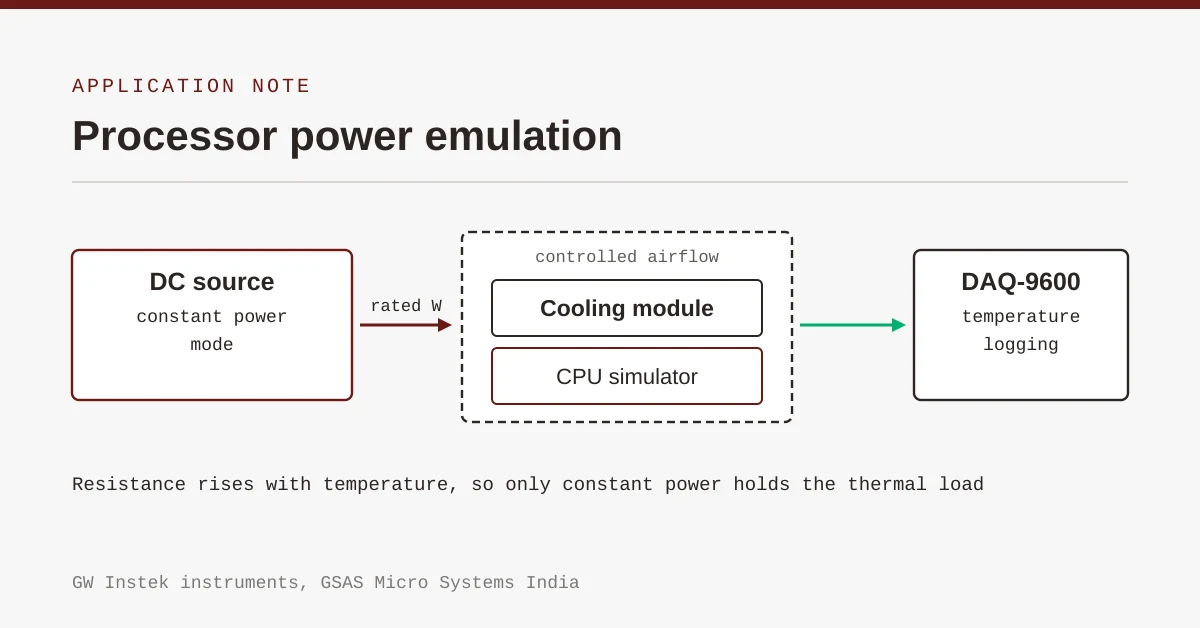
Emulating Processor Power for Thermal Testing: Why Constant Power
7 Oct · 7 min
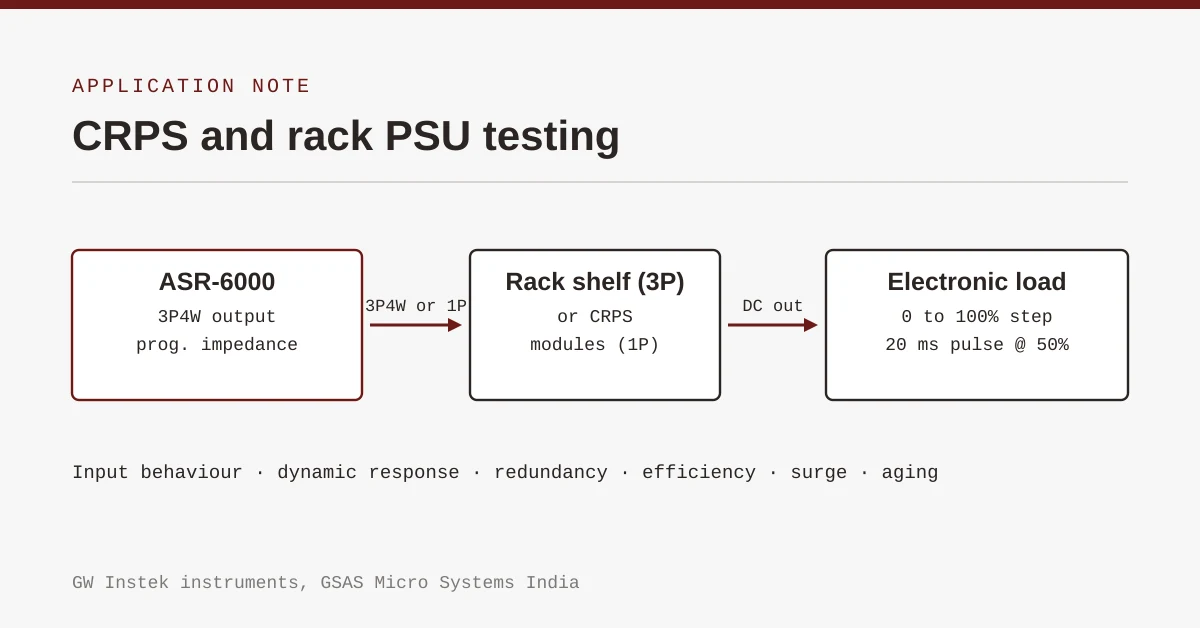
CRPS and Rack Power Supply Testing: The Six Tests That Matter
7 Oct · 7 min