
 Arm
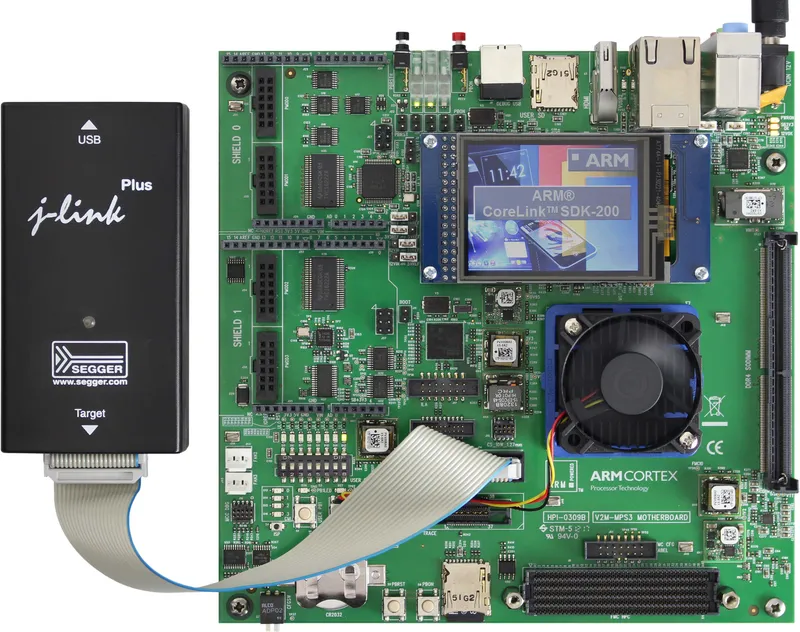
Arm Arm MPS3 FPGA Prototyping Board
FPGA PrototypingKintex UltraScale FPGA prototyping platform for Cortex-M, Cortex-A, and Cortex-R, 4 GB DDR4, FMC-HPC, Arduino, HDMI 1080p, Ethernet, CMSIS-DAP debug. Buy in India from GSAS.
FPGA
Xilinx Kintex UltraScale XCKU115
Processors
Cortex-M, Cortex-A, Cortex-R via FPGA images (incl. Corstone-300, Corstone-310 reference subsystems)
Memory
4 GB DDR4 (up to 8 GB), 8 MB QSPI, 16 GB eMMC
Expansion
FMC-HPC (160 I/O + 10 GBT), 2x Arduino, 4x Pmod
Video/Audio
HDMI 1080p, QVGA touchscreen, AC97 audio
Debug
P-JTAG, F-JTAG, SWD, 16/4-bit trace, CMSIS-DAP
Overview
About Arm MPS3 FPGA Prototyping Board
The Arm MPS3 is a feature-rich FPGA IoT development platform built around the Xilinx Kintex UltraScale XCKU115-1FLVB1760C, one of the largest FPGAs available in a development board form factor. The board supports FPGA implementations of Arm Cortex-M class processors, small to medium Cortex-A and Cortex-R class processors, and dedicated custom designs, making it the go-to platform for pre-silicon software development and SoC prototyping.
With 4 GB DDR4 (expandable to 8 GB), 8 MB QSPI flash, 16 GB eMMC, and up to 8 MB of FPGA BRAM, the MPS3 handles everything from bare-metal Cortex-M firmware to full Linux on Cortex-A class processors. The FMC-HPC expansion port provides up to 160 I/O lines and 10 multi-gigabit transceivers for high-speed interface prototyping, while two Arduino shield slots and four Pmod ports connect sensors, motors, and other design-specific peripherals.
MPS3 Board Revisions: Rev B and Rev C
Two MPS3 revisions are in circulation and they differ in ways that matter when you inherit an existing board or a debug script. Per Arm, a small number of design improvements were made between the earlier Rev B (HBI-0309B) boards and the Rev C (HBI-0309C) boards, which have been available since 2018:
- Debug reset. CMSIS-DAP / DAPLink debug over USB drives
nTRSTon Rev B boards andnSRSTon Rev C boards, so a reset sequence written against one revision may not behave the same on the other. - Serial. Rev C boards implement a DAPLink / CMSIS-DAP CDC virtual COM port that can be routed to the FPGA UART. Rev B boards do not.
- Arduino Shield. The revision upgrade improved the performance of the Arduino Shield interfaces on Rev C boards.
Check the HBI number silkscreened on the board before reusing scripts or expansion hardware across units. GSAS supplies current-revision boards and can confirm the revision on any unit before despatch.
Technical Specifications
| Feature | Specification |
|---|---|
| FPGA | Xilinx Kintex UltraScale XCKU115-1FLVB1760C |
| Processor Support | Cortex-M, Cortex-A, Cortex-R (via FPGA images) |
| DDR4 Memory | 4 GB (expandable to 8 GB) |
| Boot Flash | 8 MB QSPI |
| FPGA BRAM | Up to 8 MB |
| eMMC Storage | 16 GB |
| SD Card | microSD interface |
| Ethernet | 10/100 Mbps |
| Video | HDMI up to 1080p |
| Display | QVGA CLCD with touchscreen |
| Audio | AC97 codec |
| USB | Dual USB-A ports |
| Expansion | FMC-HPC (160 I/O + 10 GBT + clocks) |
| Arduino | 2x Arduino Shield interfaces |
| Pmod | 4x Pmod expansion ports |
| User I/O | 10 LEDs, 8 switches, 2 push buttons |
| Clocks | RTC, 5 programmable clocks, 1 fixed 24 MHz |
| Debug | P-JTAG, F-JTAG (FPGA), SWD, 16-bit trace, 4-bit trace |
| On-board Debug | CMSIS-DAP + 4 serial ports over USB |
| Board Controller | Motherboard Configuration Controller (MCC) |
Corstone reference subsystems on MPS3
The MPS3 is the canonical Arm Cortex-M / Cortex-A bring-up platform for the Corstone-300 and Corstone-310 reference subsystems, Arm’s pre-integrated subsystem IP that combines Cortex-M cores with peripherals, security, and (optionally) Ethos-U NPU support. Per Arm’s published Corstone documentation, MPS3 runs:
- Corstone-300: Cortex-M55 + Ethos-U55 (edge AI reference subsystem)
- Corstone-310: Cortex-M85 + Ethos-U55 (high-performance edge AI variant)
- SSE-200 / SSE-300 legacy subsystem images for Cortex-M family evaluation
For Corstone-315 / Corstone-320 (newer Cortex-M + Ethos-U85 subsystems) the canonical platform is MPS4.
Software Development
The MPS3 enables development across the full Arm software spectrum:
- Linux on Cortex-A or Cortex-R class FPGA images
- Mbed OS / CMSIS-RTOS on Cortex-M class FPGA images
- Zephyr RTOS with board support packages for Corstone subsystems
- Bare metal firmware development and bring-up
- Tool development: compiler, debugger, and RTOS integration
MPS Board Comparison
| Feature | MPS2+ | MPS3 | MPS4 |
|---|---|---|---|
| FPGA | Altera Cyclone V | Xilinx Kintex UltraScale | AMD Virtex UltraScale+ XCVU13P (3.8M LE) |
| Processor Support | Cortex-M (incl. SSE-100/200) | Cortex-M + A + R (incl. Corstone-300/310) | Cortex-A + R + M (incl. Corstone-315/320) |
| Memory | 8 MB SSRAM + 16 MB PSRAM | 4 GB DDR4 + 16 GB eMMC | 16 GB DDR4 + 128 MB QSPI + ~11.8 MB Block RAM |
| Expansion | 3x IDC + SPI | FMC-HPC + 2x Arduino + 4x Pmod | FMC+ HPC + 2x Arduino + 4x Pmod + HAT + 3x ARC6 MGT + PCIe Gen 3 |
| Video | QSVGA touchscreen | HDMI 1080p + QVGA touchscreen | HDMI 1.4a 1080p + MIPI CSI/DSI |
| Debug | JTAG + 16-bit trace | P-JTAG + F-JTAG + SWD + 16-bit trace + CMSIS-DAP | On-board ULINKplus + MIPI 60w + 32-bit trace |
| Best For | Cortex-M evaluation | Complex SoC prototyping (Corstone-300/310) | Next-gen SoC bring-up (Corstone-315/320, AI/ML, high-speed I/O) |
Why GSAS for MPS3
GSAS provides MPS3 FPGA prototyping boards in India with manufacturer warranty and local application engineering support. The MPS3 is the recommended platform for teams prototyping complex SoC designs, running Linux on Cortex-A FPGA images, or evaluating multiple Arm processor variants on a single board. Our team assists with FPGA image selection, DDR4 configuration, FMC-HPC integration, and development toolchain setup with Keil MDK, Arm Development Studio, or Zephyr.
Blog
Arm Insights

Meet the GSAS Team at electronica India 2026, Stall H3.I45
electronica India 2026 opens on 16 September at BIEC Bengaluru. The GSAS team is on the floor all three days at Stall H3.I45, and this is who you will be talking to and what they can show you.
Arm's Agentic AI Push: What Indian Embedded Teams Can Actually Use Today
Arm has set out its platform strategy for the agentic era, putting inference everywhere it has compute. Indian embedded teams can start on that direction this quarter with the Cortex-M toolchain they already own: Helium, CMSIS-NN, Ethos-U and Vela, on boards you can order today.
Arm User-Based Licensing in CI/CD: armlm, Proxy Activation and What Breaks
A licensing failure in an Arm pipeline blocks the release branch and puts a firmware engineer on armlm output instead of driver code, up to seven days after the change that caused it. The reason: a UBL licence is a cached certificate valid for 7 days, not a checkout. Here is what that changes about pipeline design, and what to fix first.
Related products
More from Arm
All Arm products →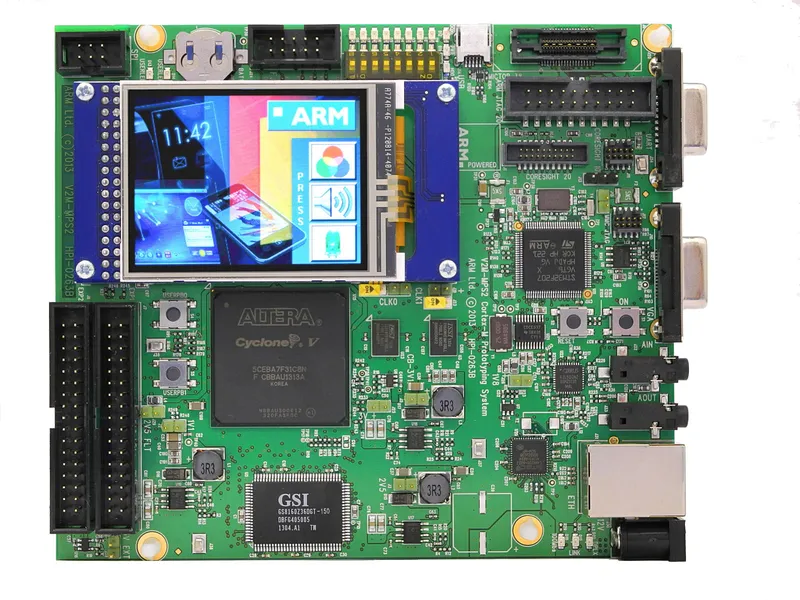
Arm MPS2+ FPGA Prototyping Board
Cortex-M prototyping system with Altera Cyclone V FPGA (300K LE), 8 MB SRAM, 16 MB PSRAM, Ethernet, audio, QSVGA touchscreen, 16-bit trace debug. Buy in India from GSAS.
View Arm MPS2+ FPGA Prototyping Board →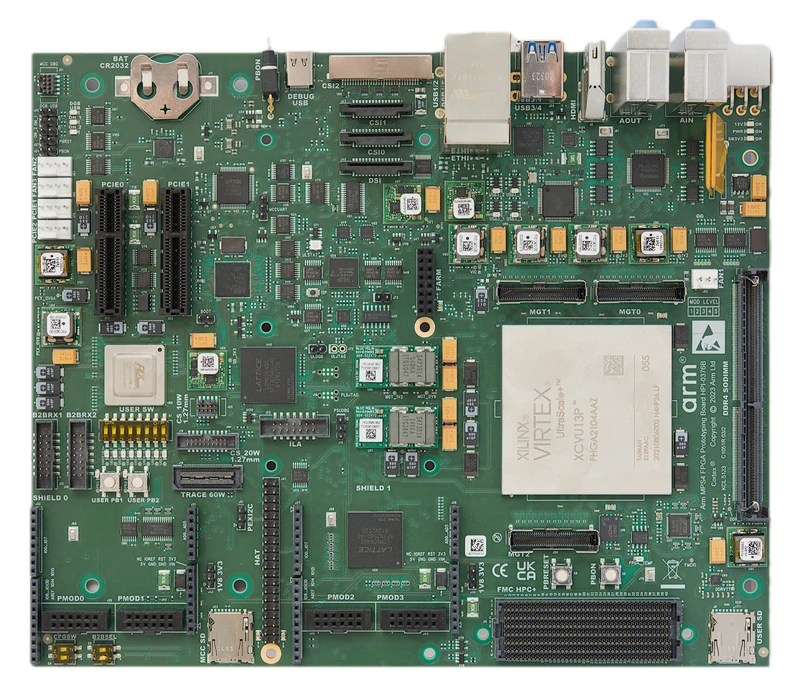
Arm MPS4 FPGA Prototyping Board
AMD Virtex UltraScale+ FPGA prototyping platform (3.8M LE) for Arm Corstone subsystems, Cortex-A/R/M, PCIe Gen 3, DDR4, FMC+, HDMI, MIPI, on-board ULINKplus. Buy in India from GSAS.
View Arm MPS4 FPGA Prototyping Board →Interested in Arm MPS3 FPGA Prototyping Board?
Get pricing, an evaluation unit, or a technical consultation from our application engineers.