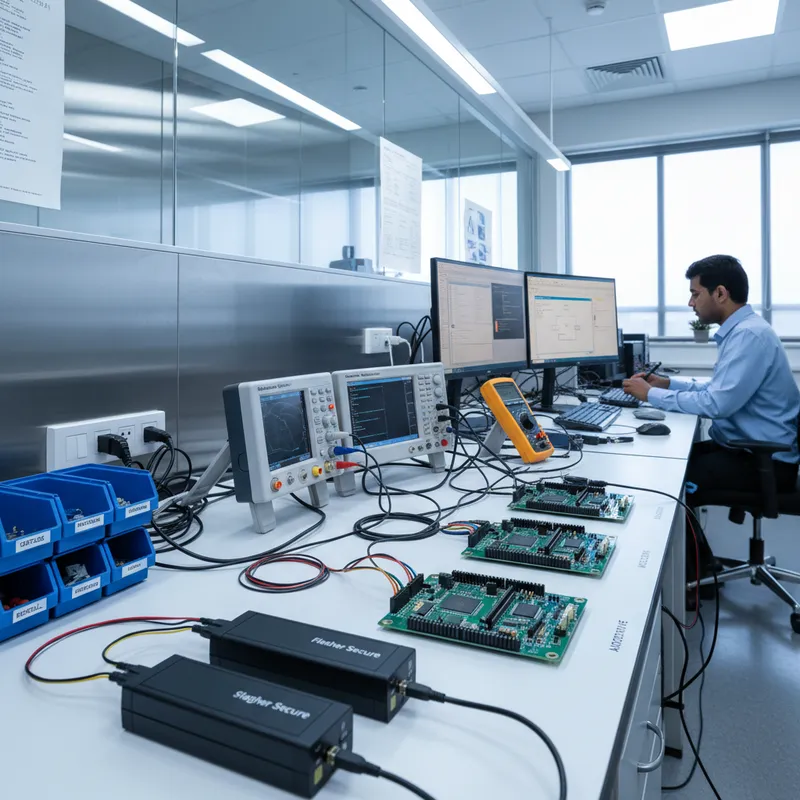
Indian OEMs under BIS IS 15959 for smart metering, CDSCO for medical devices, automotive SecOC and Secure Boot programmes at Tier-1 level, and EV charger compliance regimes all converge on the same engineering requirement: every device must come off the production line with a unique cryptographic identity, signed firmware, and a verifiable chain of trust from the OEM’s key management system all the way down to the silicon’s secure element, and the Electronics Manufacturing Services (EMS) partner running the line must not see, touch, or be able to replay any of the secret material. This is the root-of-trust programming problem, and it is no longer theoretical; it is a procurement checklist item on every serious Indian OEM programme shipping a connected or safety-critical device in 2026. SEGGER Microcontroller GmbH offers the standalone-programmer half of the answer in Flasher Secure; the other half, key custody, signing, per-device key derivation, and audit, lives in a Hardware Security Module (HSM) at the OEM. This post explains how the two pieces fit together for Indian programmes.
A quick framing note: root-of-trust programming is not a shipping problem, it is a custody problem. The question is who holds the private key material, where the signing happens, how the encrypted-image path flows from the OEM to the programmer without a cleartext window, and how per-device keys are derived at the moment of programming with cryptographic evidence for the audit trail. The answer is architectural, a combination of HSM, network, Flasher Secure, and silicon, and the GSAS engagement for an Indian OEM typically spends two weeks on the whiteboard before anyone orders a programmer.
The trust boundary problem, stated plainly
An Indian smart-meter OEM in Bengaluru wins a state utility tender. Production will run at a contracted EMS in Noida. The tender requires BIS IS 15959 compliance and each meter must boot from signed firmware with a per-device unique identity bound to a secure element on the board. The OEM owns the firmware source, the private signing key that backs the root of trust, and the customer relationship. The EMS owns the line, the test fixtures, and the capacity. These are different organisations with different trust postures.
What the OEM cannot allow:
- The EMS must not hold a cleartext copy of the firmware image. If the image ever sits on an EMS file server or a programming-station PC in decrypted form, the OEM has lost control of its IP and has a traceability gap the auditor will flag.
- The EMS must not hold the signing key material. The private keys that sign firmware releases and that seed per-device identity derivation must live inside an HSM under OEM control, never exposed to any host process on the EMS side.
- The EMS must not be able to over-program or replay. Every programmed unit must be counted cryptographically. Attempting unit N+1 on an N-unit authorisation must fail. Replaying an old authorisation must fail. Cloning a Flasher must fail.
- The EMS must not be able to silently substitute firmware. The device, on first boot, must independently verify that the image it received carries an OEM signature chaining to the OEM’s root-of-trust public key, and the silicon’s secure element must refuse to run anything that does not.
- The OEM needs evidence for every programmed unit. Device unique ID, programmer serial, authorisation batch, image hash, timestamp, and attestation from the device back to the OEM’s key management system, per unit, in a format an auditor can review.
The HSM handles custody and signing. Flasher Secure handles encrypted-image delivery, on-device decryption, and per-unit authorisation enforcement. The silicon secure element handles the on-device half of per-device key injection and boot-time verification. The three pieces together, wired correctly, solve the problem.
The trust boundary: described in text
Read this as a diagram in words. The OEM’s HSM sits inside the OEM’s own R&D or production-security facility, physically controlled, tamper-evident, typically certified to FIPS 140-2 Level 3 or equivalent (Thales Luna, Utimaco SecurityServer, Entrust nShield, formerly nCipher, or the smaller-form-factor YubiHSM 2 for lower-assurance programmes). For Indian cloud-forward OEMs, AWS CloudHSM in the ap-south-1 Mumbai region provides the same FIPS 140-2 Level 3 assurance over a managed service, keeping the key material inside Indian data-residency boundaries.
The HSM holds three classes of key material: the image signing key (the OEM’s firmware release private key), the per-device key derivation root (a master secret from which per-device keys are derived, usually by HKDF over a device-unique salt), and the Flasher Secure provisioning key pair (the asymmetric key that encrypts the firmware image in a form only a specific Flasher Secure can decrypt).
The OEM’s firmware release engineer produces a release candidate binary. The binary is signed by the HSM (the signing key never leaves the HSM, the binary’s hash is sent to the HSM, and the HSM returns the signature). The signed binary is then encrypted for the target Flasher Secure by the Flasher Secure Server, using material provisioned from the HSM. The encrypted image is an opaque blob that only the specific Flasher Secure on the EMS line can decrypt, and even then, only into the programmer’s internal programming engine, never into a host-visible buffer.
The encrypted image travels to the Flasher Secure at the EMS line over any channel, corporate VPN, courier, USB stick, whatever is operationally convenient. Flasher Secure lives on the EMS floor, connected to the test fixture. When the EMS operator runs the line, Flasher Secure internally decrypts the image and programmes the target board. For each programmed unit, Flasher Secure:
- Reads the target silicon’s unique device ID. Most modern MCU and SoC families have a read-only factory-burned unique ID accessible over the debug interface.
- Derives a per-device key by asking the OEM-side key derivation service (running against the HSM) for a device-specific key bound to that unique ID.
- Injects the per-device key into the target’s secure element fuses: STMicroelectronics SFI for STM32, NXP HAB for i.MX RT, Renesas Secure Bootloader for RA, Microchip TrustZone for SAM L11 and SAM E54, or the equivalent silicon-vendor secure-provisioning API for the part in question.
- Writes the per-unit attestation record: device unique ID, programmer serial number, authorisation batch ID, signed image hash, timestamp, back through the network to the OEM’s key management system, where it joins the audit log.
The EMS sees none of this in cleartext. The EMS sees “board plugged in, LED turned green, board moves to next station.” The OEM sees the audit record, matched against the authorisation batch, with cryptographic evidence of every programmed unit.
When unit N+1 is attempted on an N-unit authorisation, Flasher Secure refuses. When the EMS attempts to clone a Flasher Secure, the clone lacks the private key material and cannot decrypt anything. When anyone attempts to modify the encrypted image or the authorisation token, signature verification fails and the programmer reports a hard error. The trust boundary holds.
Picking the HSM: Thales, Utimaco, Entrust, YubiHSM, or AWS CloudHSM Mumbai
The HSM choice is an OEM decision; GSAS’s role is to validate that the HSM the OEM selects integrates with Flasher Secure Server over standard key-management interfaces and to help design the key-custody workflow. Typical options Indian OEMs evaluate:
- Thales Luna Network HSM: the enterprise default for high-assurance programmes. FIPS 140-2 Level 3, Indian support presence, mature PKCS#11 interface that integrates cleanly with Flasher Secure Server. Typical fit: large automotive Tier-1s, medical OEMs with global submissions, defence electronics firms.
- Utimaco SecurityServer: the European enterprise HSM, strong in automotive and industrial. FIPS 140-2 Level 3. Good fit for Indian Tier-1s already building into German automotive supply chains and wanting commonality with their customer’s HSM stack.
- Entrust nShield: (formerly branded nCipher, still referenced that way in older documentation). FIPS 140-2 Level 3. Strong in banking and government programmes, relevant for Indian smart-meter OEMs working with state utilities.
- YubiHSM 2: a small-form-factor HSM for lower-assurance programmes or distributed branch-office deployments. FIPS 140-2 Level 3 in recent generations. Good fit for smaller Indian product teams that need proper key custody without a six-figure rack HSM.
- AWS CloudHSM in ap-south-1 (Mumbai): managed FIPS 140-2 Level 3 HSM service in the AWS Mumbai region. Key material stays inside Indian data-residency boundaries, which matters for programmes requiring on-Indian-soil key custody. Integrates via PKCS#11 with Flasher Secure Server. Fit: cloud-native Indian OEMs and programmes where a physical HSM rack is operationally disproportionate.
The right HSM depends on assurance requirements, operational posture, and procurement economics. None of the options above is wrong; all of them integrate with the Flasher Secure workflow through standard interfaces. GSAS engineers will walk through the trade-offs during the pre-deployment design workshop.
Indian programmes where this matters: archetypes
We do not name customers. Here are the archetypes Indian OEMs actually bring to GSAS when they ask for a root-of-trust programming architecture:
Indian smart-meter OEM under BIS IS 15959. A typical Bengaluru-area or Pune smart-meter OEM wins a state utility tender. BIS IS 15959 requires signed firmware, per-device unique identity, and cryptographically verifiable boot. The OEM’s HSM lives in the R&D centre; Flasher Secure deploys at the Noida or Chennai EMS; per-device keys derive at programming time from the HSM’s master secret plus the meter’s unique ID. The audit log supports the utility’s cybersecurity review and the IS 15959 submission.
Indian EV charger OEM under public-charging compliance. An Indian EV charger OEM building AC Type 2 or DC fast-charger hardware for public deployment faces emerging compliance requirements around firmware signing, secure update, and charger-to-grid authentication. The root-of-trust programming workflow ensures every deployed charger boots signed firmware and carries a unique identity the charger network operator can attest.
Indian medical device OEM under CDSCO submission. A Class II or Class III medical device, for the Indian market or for global submission to the US FDA and European MDR, requires firmware integrity verifiable at boot and signed firmware update paths. CDSCO submissions increasingly ask for programming-line evidence: how was the firmware signed, who had access to the signing key, how was per-unit programming audited. Flasher Secure + HSM answers these in one architecture. Our SystemView for IEC 62304 medical device evidence companion post covers the RTOS-level observability layer alongside.
Indian automotive Tier-1 SecOC and Secure Boot under UDS 0x27 / 0x29. A typical Pune-area or Chennai Tier-1 building an ECU for an Indian OEM or a Japanese or German customer must implement Secure Onboard Communication and UDS 0x27 (Security Access) or 0x29 (Authentication). Seed/key pairs, SecOC keys, and diagnostic authentication material all need per-ECU provisioning at the production line, and the customer increasingly asks for HSM-backed evidence that these were programmed correctly.
Per-device keying: the hardest part, and how Flasher Secure handles it
Per-device unique keying is where most in-house attempts at secure production programming fall over. The team gets the image-signing story right, gets the authorised-count story right, and then discovers that injecting per-device unique keys into fuses at line speed, with keys derived from an HSM the EMS cannot see, is an integration problem nobody budgeted for.
Flasher Secure and the Flasher Secure Server handle this by treating per-device key derivation as a service call from the programmer into the OEM’s key management system, over the same network path that carries authorisations. For each board:
- The Flasher Secure reads the target’s unique device ID over debug.
- The Flasher Secure makes a signed request to the OEM side: “I need a per-device key for device ID
X, against authorisation batchY.” - The OEM key management service (backed by the HSM) derives the per-device key using HKDF over the unique ID and the master secret. The master secret never leaves the HSM; only the derived per-device key comes out.
- The derived key is returned to Flasher Secure over the authenticated channel.
- Flasher Secure programmes the derived key into the target’s secure element using the silicon vendor’s secure provisioning API.
- Flasher Secure writes the attestation record (device ID, derived key reference, not the key itself, authorisation batch, timestamp) back to the OEM side.
- The derived key is discarded from Flasher Secure’s memory. It was never persisted to host storage.
The EMS operator sees a board pass/fail LED. The OEM sees an attestation record. The per-device key exists in Flasher Secure for milliseconds and then exists only in the target’s fuses. This is the workflow auditors accept.
Further reading
- SEGGER Flasher Secure product page, authoritative Flasher Secure documentation
- SEGGER Authorized Flashing technology, the cryptographic workflow detail
- Programming encrypted firmware at Indian contract manufacturers, the companion EMS-side walkthrough
- SEGGER Flasher ATE2 for Indian EMS production programming, rack-mount Flasher integration
- SystemView for IEC 62304 medical device evidence, observability layer for medical submissions
- SEGGER at GSAS, commercial licensing and engineering engagement
- Medical electronics solutions, CDSCO-ready Indian medical device programmes
- Automotive solutions, Indian Tier-1 SecOC and Secure Boot context
GSAS Micro Systems is an authorized SEGGER engineering partner for India. We work with Indian smart-meter OEMs, EV charger manufacturers, medical device teams, and automotive Tier-1 suppliers to design root-of-trust programming architectures that pair Flasher Secure with an OEM-controlled HSM, Thales, Utimaco, Entrust, YubiHSM, or AWS CloudHSM in the Mumbai region, and that satisfy BIS, CDSCO, IATF, and customer-specific audit requirements. Our engineers lead the architecture workshop, validate the key-custody design, deploy Flasher Secure at the EMS, and train the programming-line operators on the runbook. Site engagements are available across Bengaluru, Chennai, Hyderabad, Delhi NCR, Mumbai, and Pune, with commercial licensing invoiced in INR under GST and first-year on-site support included.
Also appears in:
Interested in SEGGER tools?
Talk to our application engineers for personalized tool recommendations.
More from SEGGER
View all →
Meet the GSAS Team at electronica India 2026, Stall H3.I45
15 Sept · 3 min
J-Link Is Now Validated by ST for StellarStudio
13 Sept · 2 min
An AI Agent That Drives the Debugger: SEGGER and Embedder Connect J-Link to the Loop
13 Sept · 6 min
SEGGER J-Link and J-Trace Now Support Andes Trace: Why This Matters for RISC-V
21 Jul · 6 min
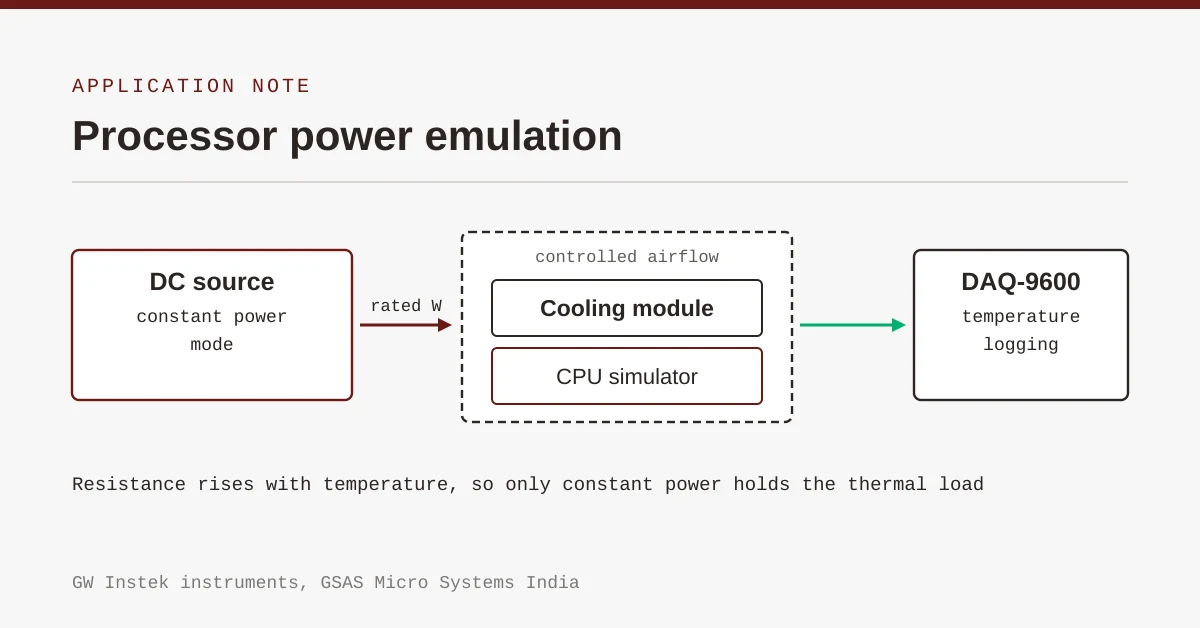
Emulating Processor Power for Thermal Testing: Why Constant Power
7 Oct · 7 min
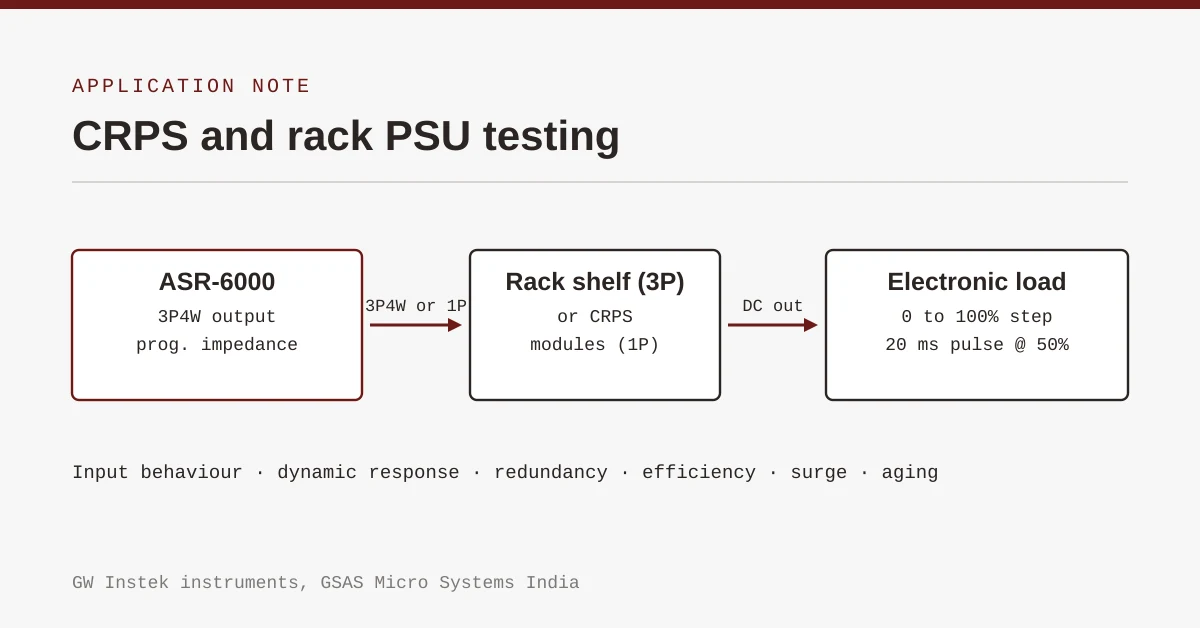
CRPS and Rack Power Supply Testing: The Six Tests That Matter
7 Oct · 7 min