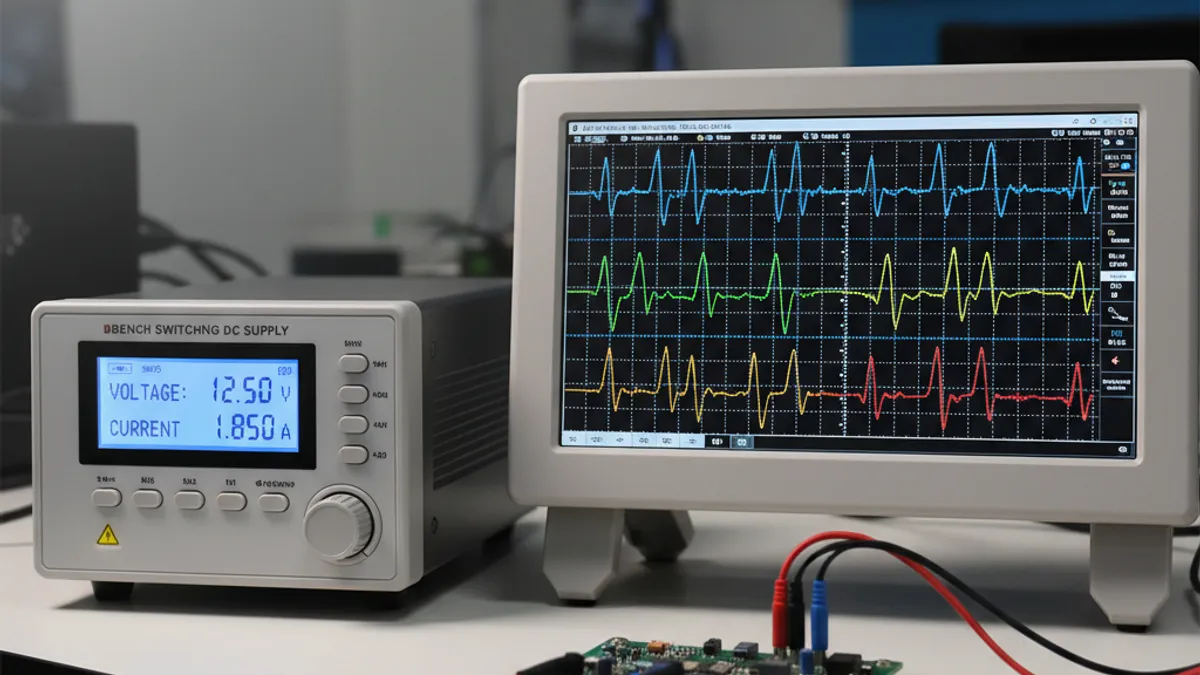
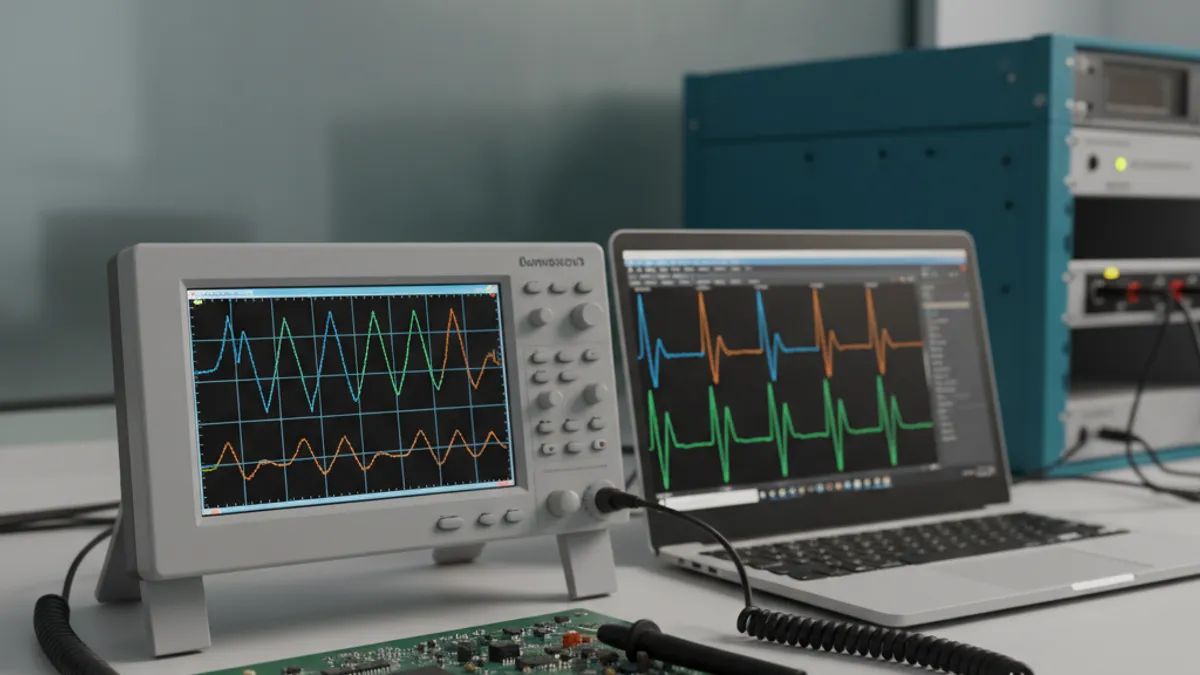
Buying an oscilloscope sounds like it should be a one-number decision, “200 MHz, done”, and then the quotes come in and nothing lines up. One vendor sells you a benchtop box, another a USB pod that runs off your laptop, the bandwidths look the same but the sample rates and memory are wildly different, and the price spread between two “200 MHz” scopes can be two-to-one once probes and GST are in. This guide is the framework our application engineers use on bench visits across India to cut through that: how to size the four numbers that actually matter, when a USB/PC oscilloscope is the right call versus a benchtop, and how oscilloscope price in India really breaks down.
It is deliberately vendor-neutral on the method. Where a concrete example helps, we use instruments GSAS supplies and supports in India, but the heuristics below apply no matter whose logo is on the box.
The four numbers that decide everything
Almost every oscilloscope datasheet leads with a marketing line. Ignore it and look at four specs. Get these right and the rest is refinement.
1. Bandwidth: and the 5× rule
Bandwidth is the frequency at which the scope’s vertical response has dropped by 3 dB (about 30%). A signal at the bandwidth is already attenuated, so bandwidth is not “the fastest thing I can see”, it is “the point where I can no longer trust the amplitude.”
The working rule for digital edges is 5×: pick a bandwidth at least five times the highest significant frequency in your signal, not just its clock rate. A 20 MHz clock with sharp edges has meaningful harmonic energy well past 100 MHz, so a 100–200 MHz scope is the honest minimum, not a 20 MHz one. For clean sine-wave / analog work you can relax toward 3×; for fast digital and signal-integrity work, 5× is the floor.
Practical bands for Indian teams:
- 70–100 MHz: MCU bring-up, power supplies, sensor and analog validation, teaching labs. A 100 MHz benchtop like the GW Instek GDS-2000E Series covers the overwhelming majority of embedded bench work.
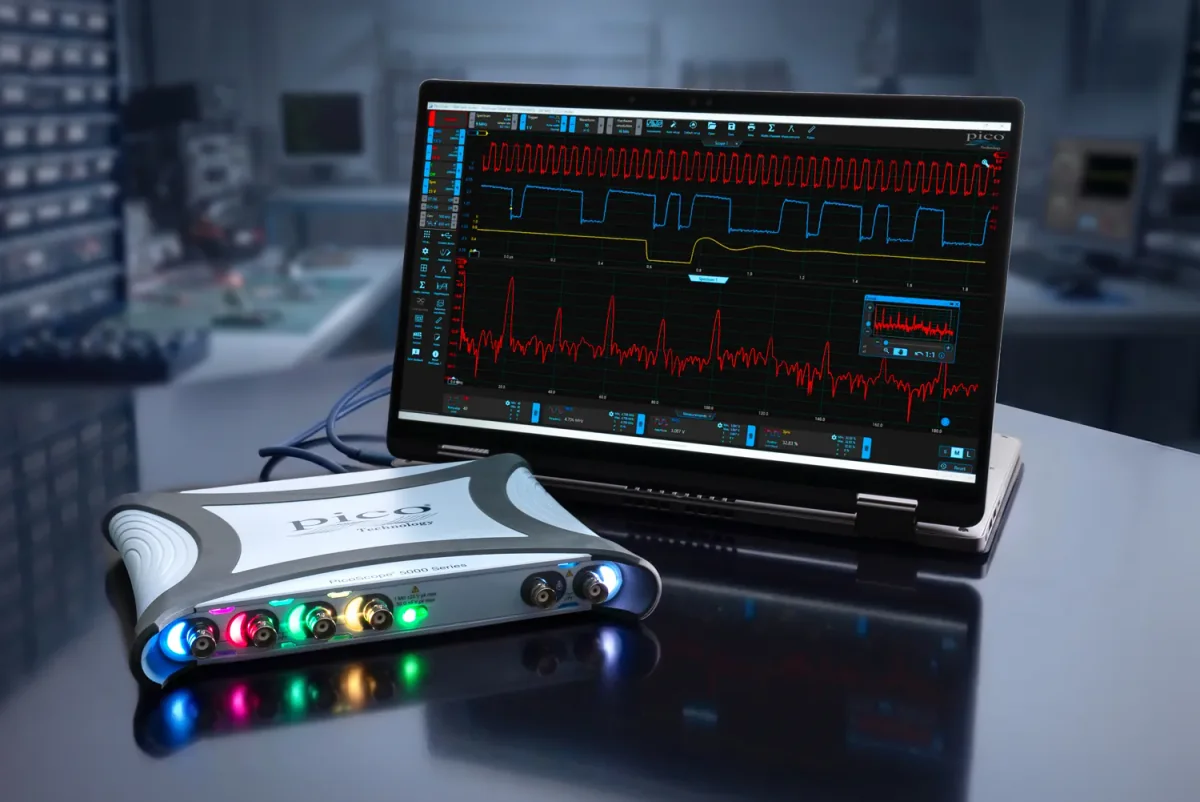
- 200–500 MHz: faster MCUs/FPGAs, switching converters, serial buses with tight edges. The PicoScope 5000E Series reaches up to 500 MHz in its 8-bit mode while still offering 16-bit precision when you slow down.
- 750 MHz–1 GHz and up: high-speed digital interfaces (USB, DDR, HDMI), RF and fast transients. This is where instruments like the PicoScope 6000E (300 MHz to 3 GHz on the top model) come in.
Buying more bandwidth than you need wastes budget; buying less quietly corrupts every edge measurement you make. Size it once, with margin.
2. Sample rate: and why “per channel” matters
Sample rate (GS/s) is how many points per second the ADC captures. The rough guide is to sample at 3–5× your bandwidth so edges are reconstructed faithfully rather than aliased.
The trap is the footnote. Many scopes quote a headline sample rate that is only available on one channel; turn on more channels and the ADC is shared, halving or quartering the effective rate. Always check the per-channel figure at the channel count you will actually use. The GDS-2000E Series, for example, delivers 1 GSa/s per channel on its 2-channel models and 1 GSa/s maximum across the 4-channel models, exactly the kind of distinction that decides whether your fast edge is real or aliased.
3. Channels: count the nodes you watch at once
Two channels are enough to compare an input and an output, or a clock and one data line. Four channels let you watch a clock plus three data lines, or all four legs of a power stage, on one timebase and one trigger. Eight-channel scopes exist for multi-rail power-integrity and complex bus work.
A separate question is mixed-signal (MSO): do you also need digital channels to decode a bus alongside the analog waveform? If you routinely chase “the firmware says the bus is fine but the board still resets,” an MSO variant (analog + 16 digital channels, one trigger) is worth the premium. Both the PicoScope 5000E and the GDS-2000E offer serial-bus decode (I²C, SPI, UART, CAN, LIN and more), with the 5000E MSO models adding 16 digital channels.
4. Bit depth: the spec most buyers skip
Vertical resolution (ADC bit depth) sets how finely the scope can distinguish voltage levels. This is the number most buyers overlook, and it is the one that decides whether you can see a problem at all.
- 8-bit is the long-standing default: 256 vertical levels. Fine for logic, edges and general bench work.
- 12-bit gives 4,096 levels (16× finer), increasingly common and genuinely useful for power and analog measurement.
- 16-bit gives 65,536 levels (256× finer than 8-bit). This is what lets you resolve millivolt-scale ripple riding on a multi-volt rail without it vanishing into quantization noise.
This is where a USB/PC oscilloscope can leapfrog a same-price benchtop. The PicoScope 5000E is, in Pico’s words, the world’s first four-channel oscilloscope to offer true 16-bit resolution, with a noise floor as low as 22 µV RMS, the kind of front end that turns “I think there’s ripple” into a number. If your work touches power integrity, sensor signals or audio-band analog, do not buy 8-bit by default.
USB / PC oscilloscope vs benchtop: the real trade-off
This is the question we are asked most often in India, and the honest answer is “it depends on what you optimise for.” Both are real oscilloscopes; they differ in form factor, not legitimacy.
| Consideration | USB / PC oscilloscope | Benchtop oscilloscope |
|---|---|---|
| Display & UI | Your laptop/PC screen, large and high-res | Built-in fixed display (e.g. 8” on the GDS-2000E) |
| Portability | Pocketable pod + cable; travels to the field | Self-contained box; no PC needed |
| Deep memory | Often very deep (GS-class buffers) at low cost | Deep, but premium for the deepest |
| Bit depth value | High bit depth (16-bit) available affordably | High bit depth costs more in a benchtop |
| Software updates | Free software for the life of the product is common | Firmware updates vary by vendor |
| Works standalone | Needs a host PC | Powers on and works on its own |
| Multi-user labs | One PC per pod | Shareable bench instrument |
| Automation | Native SDK (Python/C/MATLAB/LabVIEW) over USB | SCPI over USB/LAN |
Choose USB/PC when you want maximum bit depth, deep memory and automation for the money, when the bench already has a PC, or when the instrument has to travel (field service, multiple sites). The PicoScope range is built around this model: PicoScope 7 software runs on Windows, macOS and Linux (natively on Arm64, including Apple Silicon and Raspberry Pi), with free updates for the life of the product and a PicoSDK for automated test.
Choose a benchtop when you want a single self-contained instrument that powers on and works without a laptop, when the scope is shared across a teaching lab or a production line, or when you need front-panel knobs for fast manual driving. The GW Instek GDS lines are built for exactly this, an 8-inch display, hardware controls, and a 3-year manufacturer warranty.
There is no “better” here. A power-electronics lab chasing ripple often wants 16-bit USB precision; a college teaching lab or an EMS production floor often wants rugged, shareable benchtops. Many teams in India end up running both, for different jobs.
Oscilloscope price in India: how the number is actually built
The single most common surprise on a quote is that the scope itself is only part of the price. Oscilloscope price in India is built from several line items, and a fair comparison means comparing all of them, not just the headline box price.
- The instrument: driven mostly by bandwidth, channel count and bit depth. A 70 MHz 2-channel benchtop and a 200 MHz 4-channel one are very different prices for the “same” product family.
- Probes: passive probes are often bundled, but high-bandwidth, differential, current or high-voltage probes are separate and can be a meaningful fraction of the total. A “cheaper” scope with no usable probe for your job is not cheaper.
- MSO / options: digital channels, extra decode packages or higher memory may be options rather than standard. Confirm what is included.
- GST: quotes are typically shown ex-GST; the applicable GST is added on the invoice. Always confirm whether a figure is inclusive or exclusive before you compare two vendors.
- Warranty & calibration: a longer manufacturer warranty (for example the GW Instek 3-year warranty, or the Pico 5-year warranty on the 5000E) and traceable calibration are real value that a bare price hides.
- Support & demo: local application support, a hands-on demo before purchase, and someone to call when a measurement looks wrong are part of total cost of ownership, not extras.
Because configuration drives everything, there is no single sticker price, which is exactly why an India quote should be built around your bandwidth, channels and probe needs rather than a generic list price.
A 60-second decision path
- What is the highest significant frequency in your signal? Multiply by 5 → that is your minimum bandwidth.
- How many nodes do you watch at once? 2, 4, or 8 channels, and do you need digital channels too (MSO)?
- Does your work touch power integrity, ripple or low-level analog? If yes, prioritise 16-bit; if it is mostly logic and edges, 8-bit is fine.
- PC always on the bench, or instrument must stand alone / be shared? PC-centric and precision-hungry → USB/PC oscilloscope. Standalone, shared, knob-driven → benchtop.
- Get the quote built around those four answers, GST and probes included.
Run those five and the field narrows to one or two real candidates fast.
Frequently asked questions
What bandwidth oscilloscope do I need? Take the highest significant frequency in your signal, for digital edges that is well above the clock rate, and multiply by about five. A 20 MHz MCU with sharp edges typically wants a 100–200 MHz scope, not a 20 MHz one, because the edges carry energy far above the clock.
Is a USB / PC oscilloscope as good as a benchtop? Yes, it is a full oscilloscope that uses your PC as the display and processor. USB/PC oscilloscopes often lead on bit depth, deep memory, software updates and automation value for the money; benchtops win when you need a standalone, shareable, knob-driven instrument with no laptop. Pick the form factor that matches how the scope is used, not a perceived tier.
What does 16-bit resolution actually buy me over 8-bit? 256× finer vertical detail (65,536 levels vs 256). In practice that means resolving millivolt-scale ripple, distortion and low-level sensor signals that an 8-bit scope loses in its own quantization noise. If your work touches power integrity or precision analog, it is the most consequential spec on the datasheet.
Why do two “200 MHz” oscilloscopes cost so differently? Because bandwidth is only one of several specs. Sample rate per channel, memory depth, bit depth, channel count, bundled probes, MSO/options, warranty length and calibration all move the price, and quotes may or may not include GST. Compare the full configuration, not the headline number.
How much does an oscilloscope cost in India? There is no single price, it depends on bandwidth, channels, bit depth, probes, options and GST. As an authorized India engineering partner for both Pico Technology and GW Instek, GSAS Micro Systems provides current INR pricing, GST-compliant quotations and configuration guidance. Request a quote with your bandwidth and channel requirements for an accurate India price.
Can I see the oscilloscope before I buy it? Yes. GSAS arranges hands-on demonstrations for engineering, education and production teams across Bengaluru, Hyderabad, Chennai, Pune, Mumbai and Delhi NCR, so you can run your own signals on a candidate instrument before committing.
Buy your oscilloscope in India: GSAS Micro Systems
GSAS Micro Systems is an authorized engineering partner in India for Pico Technology (USB/PC oscilloscopes, including the 16-bit PicoScope 5000E and high-bandwidth PicoScope 6000E) and GW Instek (benchtop oscilloscopes, including the deep-memory GDS-2000E Series). Whichever form factor fits your work, we help you size bandwidth, channels and bit depth correctly, recommend the right probes, arrange a demo, and provide GST-compliant quotations with local support across Bengaluru, Hyderabad, Chennai, Pune, Mumbai and Delhi NCR. Request a quote or contact the GSAS team to get the right oscilloscope for your bench, delivered across India.
References: PicoScope 5000E, PicoScope 6000E and GDS-2000E specifications are taken from the respective product pages on this site and the official Pico Technology and GW Instek datasheets. Bandwidth, sample-rate and bit-depth guidance follows standard oscilloscope measurement practice.
Also appears in:
Interested in Pico Technology tools?
Talk to our application engineers for personalized tool recommendations.
More from Pico Technology
View all →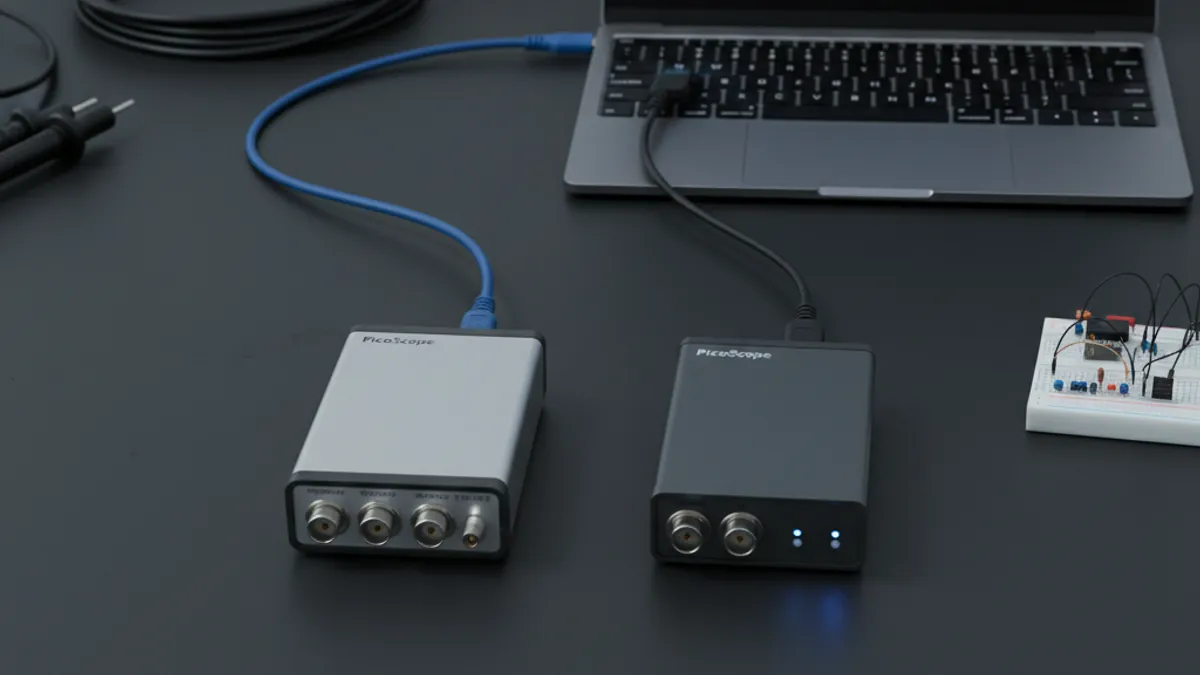
PicoScope 5000D vs 5000E: Native 16-Bit or FlexRes? A Buyer's Guide for Indian Labs
4 Jun · 11 min
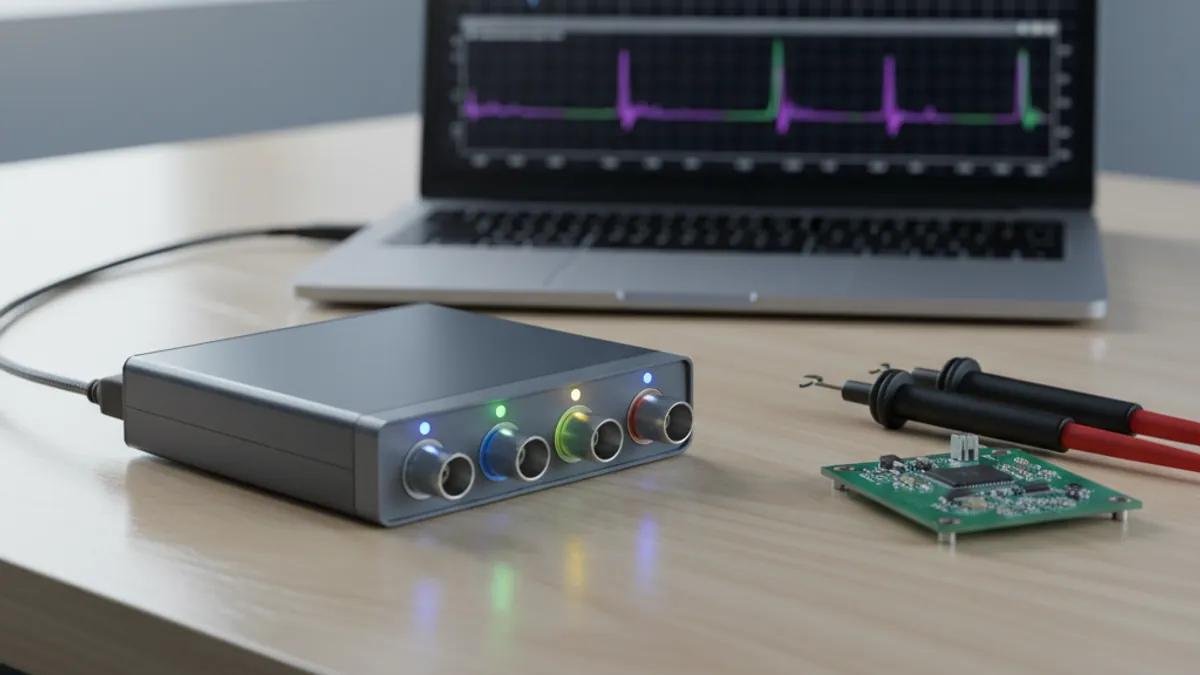
PicoScope 5000E in India: The World's First 4-Channel 16-Bit USB Oscilloscope, Explained
4 Jun · 11 min
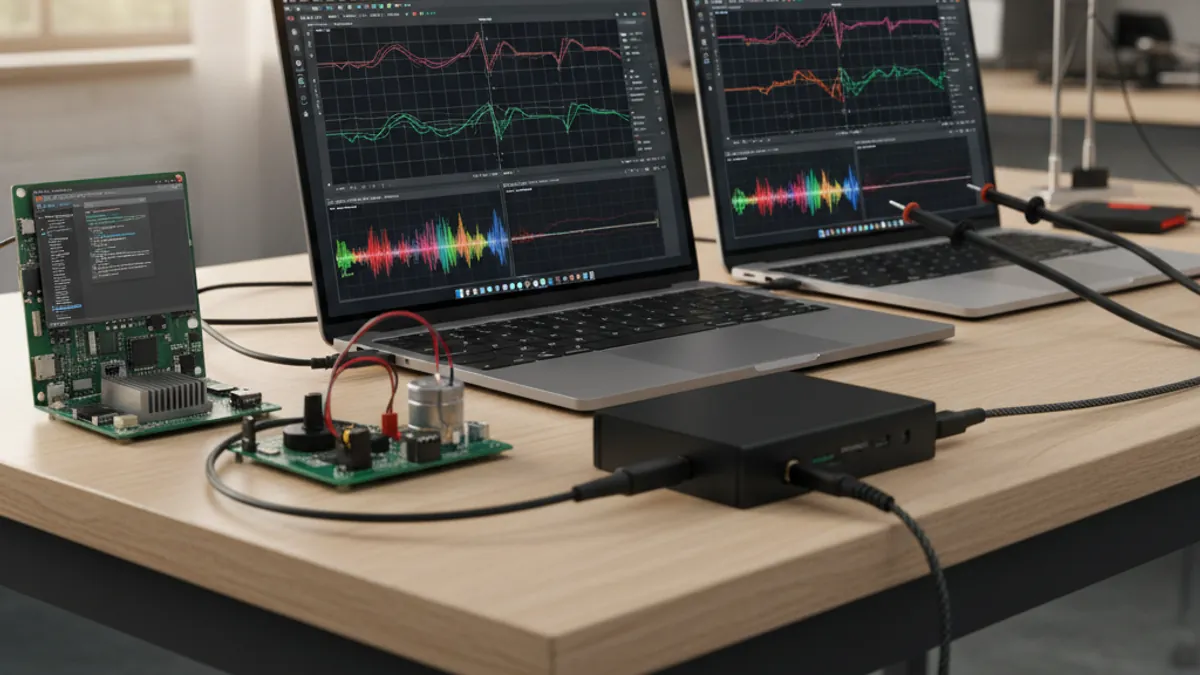
PicoScope 7 Goes Native Arm64: Apple Silicon, Snapdragon Windows and Arm Linux Test Benches in India
4 Jun · 11 min
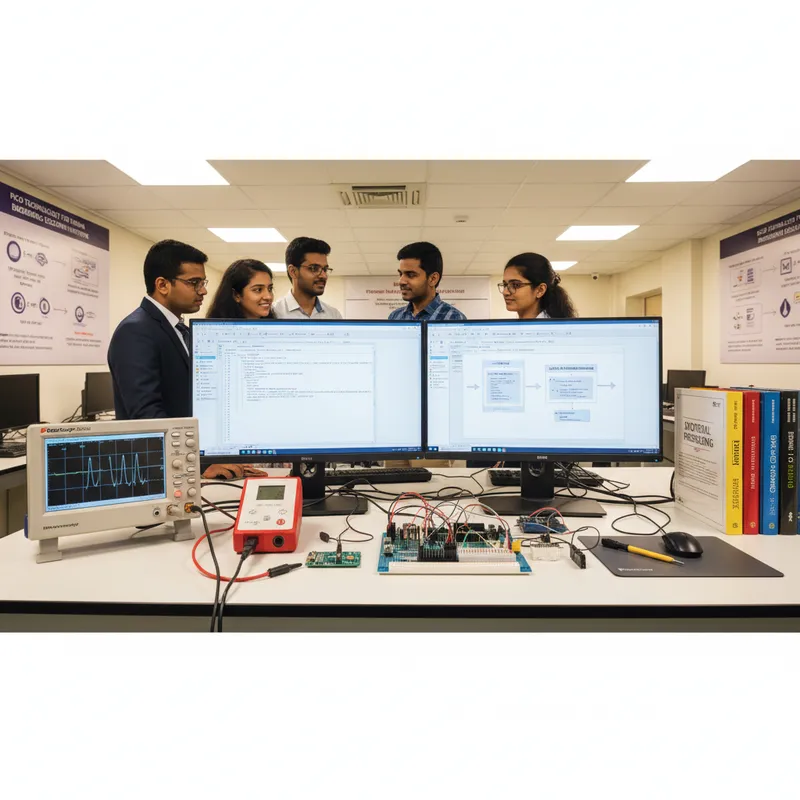
Pico Technology for Indian Engineering Education: Lab Kits, Curriculum, IIT/NIT Programs
15 Apr · 9 min
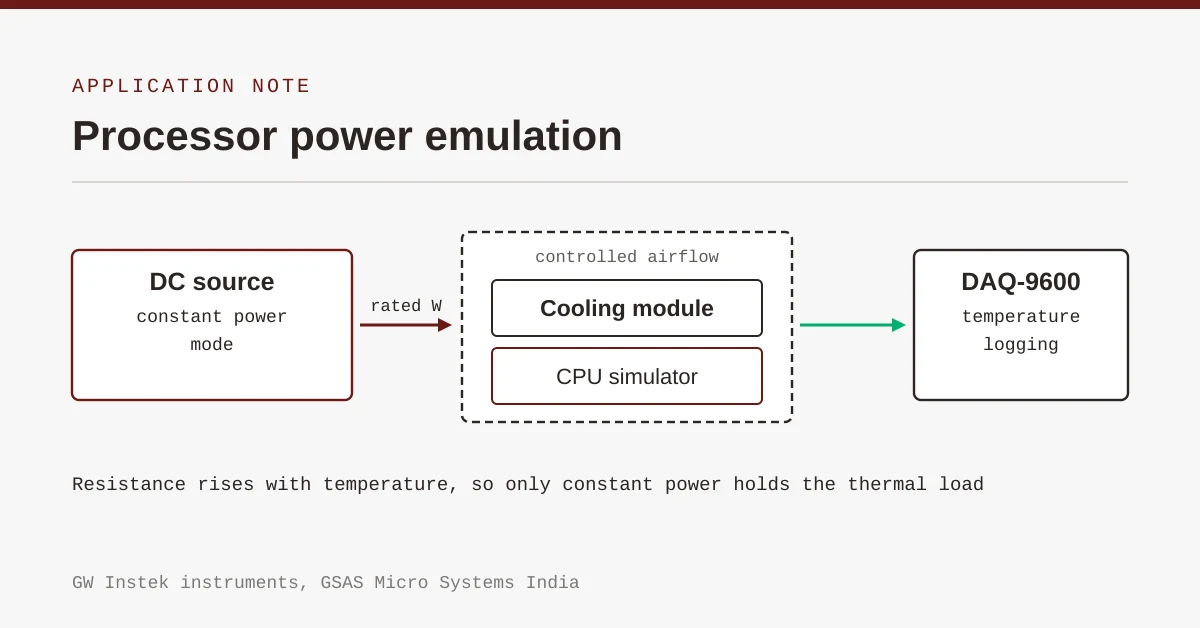
Emulating Processor Power for Thermal Testing: Why Constant Power
7 Oct · 7 min
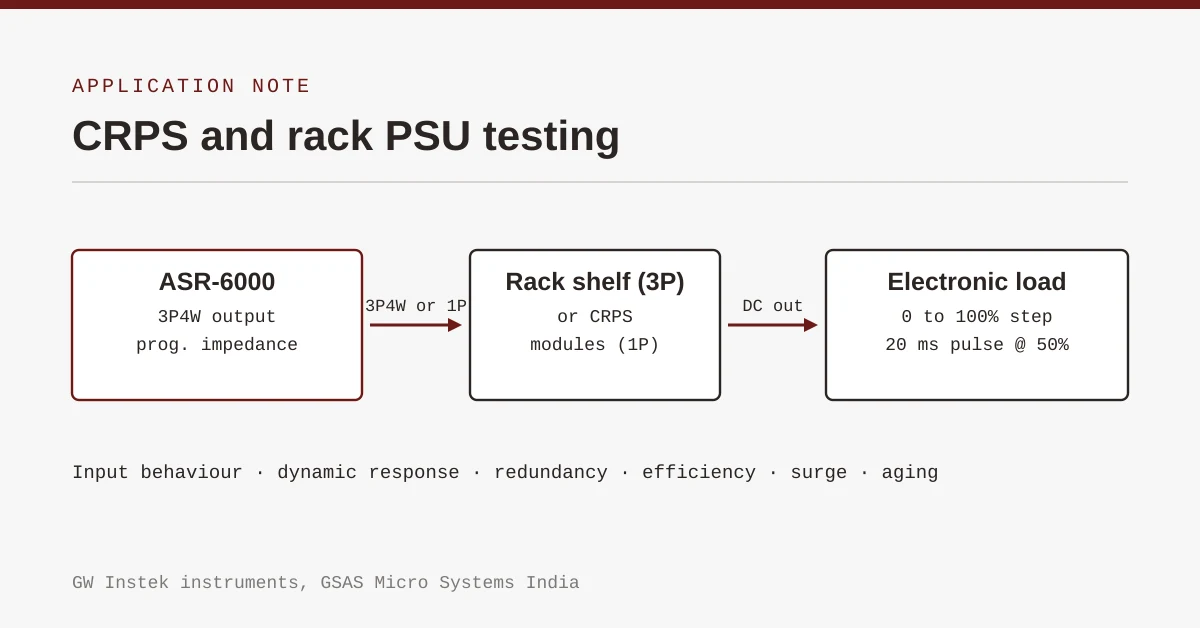
CRPS and Rack Power Supply Testing: The Six Tests That Matter
7 Oct · 7 min