The Indian Engineering Lab Problem
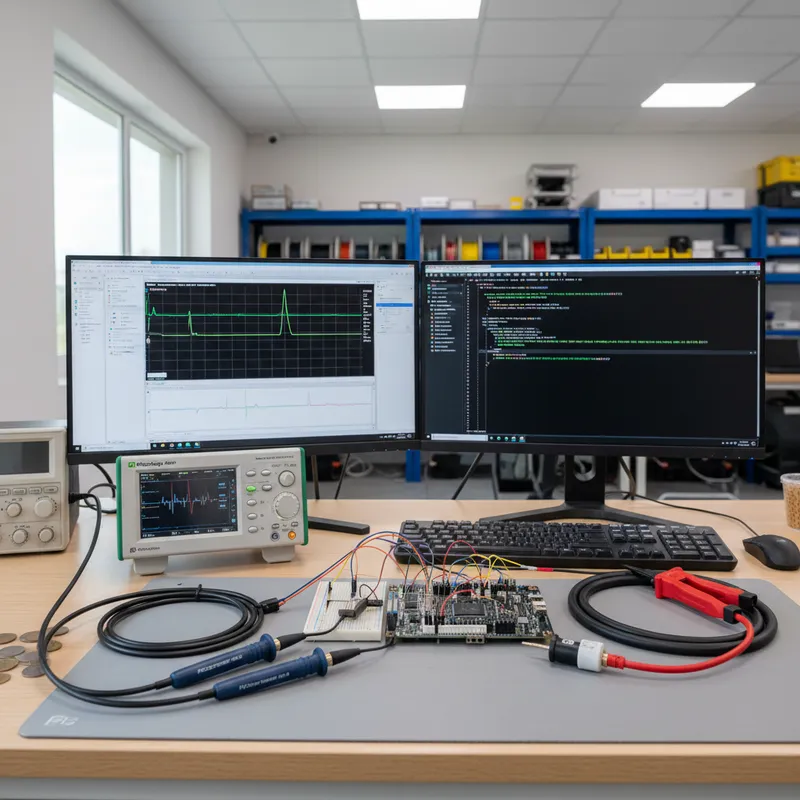
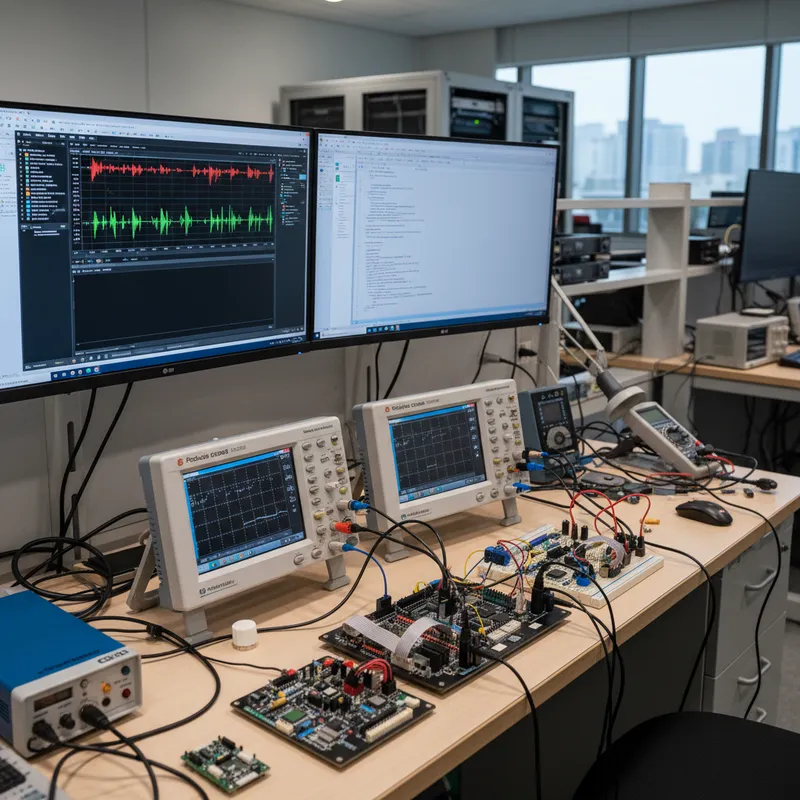
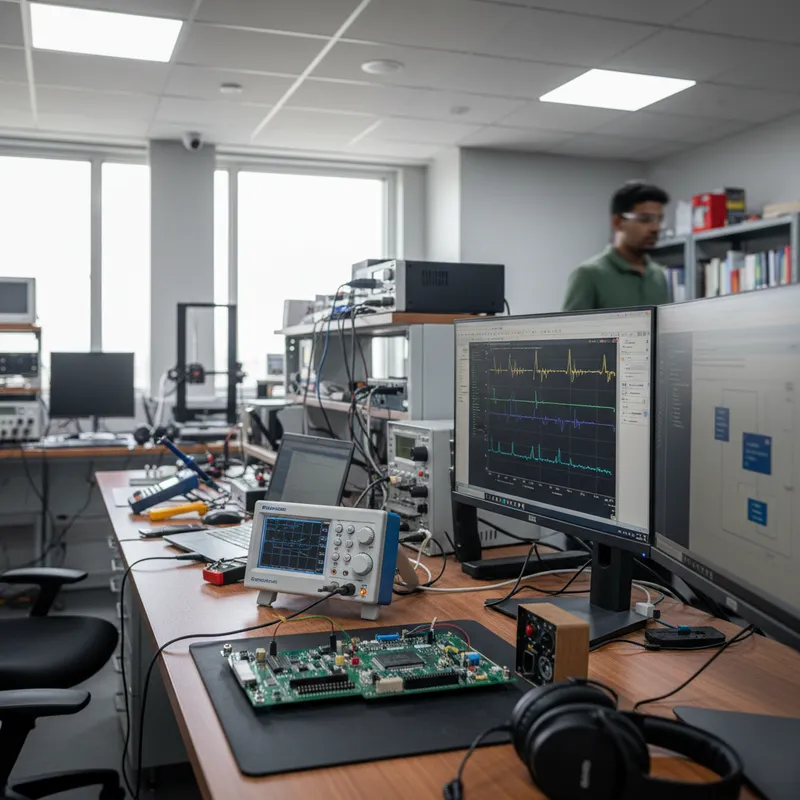
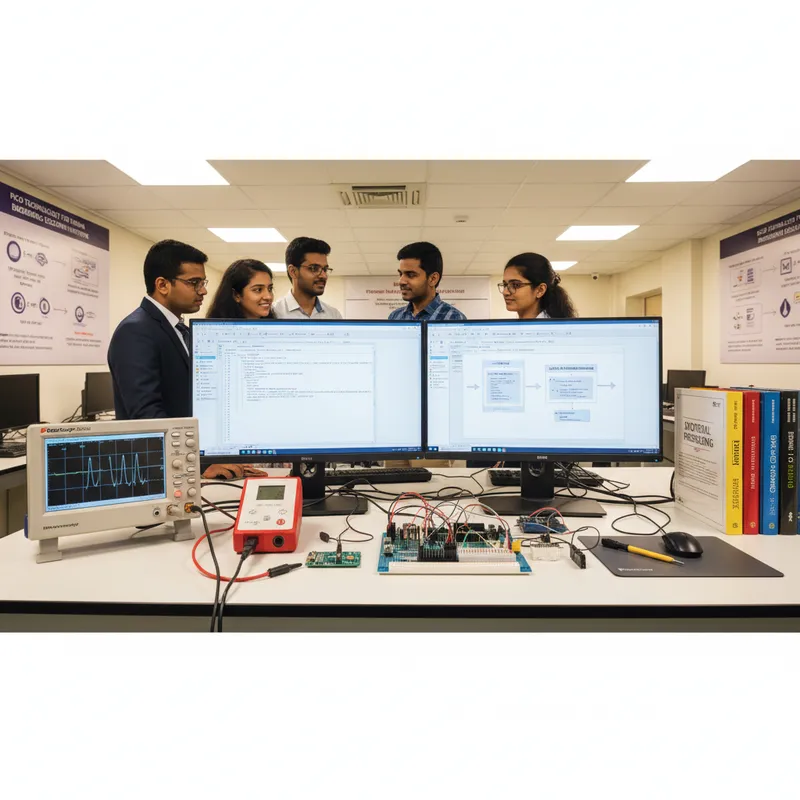
Any faculty member who has run an undergraduate electronics lab at an Indian engineering college knows the setup: thirty students, fifteen benches, one benchtop oscilloscope per bench, and a four-hour lab slot in which half the session is spent waiting for the instrument. The instrument itself is five or ten years old, runs proprietary Windows-only capture software, and offers no path to automated grading or reproducible exercises. This is the reality at IITs, NITs, IIITs, BITS, VIT, SRM, Manipal, COEP, PSG, and every accredited engineering college across India. It is also a problem with a better answer, Pico Technology’s USB oscilloscope and data logger ecosystem, paired with the free PicoScope 7 cross-platform software, rebuilds the lab around the laptop that every student already owns.
This post walks through how Indian engineering education labs can deploy Pico hardware to modernise electronics, communications, power electronics, embedded systems, and instrumentation labs. The pattern is the same at every college, matching instruments to courses, using pyPicoSDK for automated exercise grading, and ensuring students graduate fluent in tools they will actually encounter in Indian product engineering teams. We deliberately frame this at the college category level; we do not name any specific university, faculty member, or program.
The Value Proposition: One PicoScope + One Laptop = One Bench
The core insight is simple. A modern PicoScope is a full-featured oscilloscope plus logic analyzer plus spectrum analyzer plus protocol decoder plus signal generator (on the models that include AWG) in a box smaller than a paperback. When you plug it into a laptop, the laptop becomes the display, the UI, the data-processing engine, and the storage. The combined footprint is a 15-inch laptop plus a pocket-sized USB instrument. Thirty students in a lab do not need fifteen benchtop scopes on fifteen benches, they need thirty Pico instruments that travel in their laptop bags.
The cost structure is different as well. The question “what does it cost to outfit a 30-student lab with modern instruments?” has a completely different answer if each student gets their own PicoScope versus if every two students share a benchtop. More importantly, a PicoScope goes home with the student. A student working on a capstone project on Saturday at home is a student who actually finishes the project; a student whose only access to the instrument is the four-hour Tuesday lab slot is a student who finishes half the project.
Three practical consequences of the USB-scope model for Indian colleges:
- Cross-platform software: PicoScope 7 runs on Windows, macOS, and Linux. There is no Windows-only lock-in. Students on MacBooks, Lenovos, Dells, and ThinkPads all use the same software.
- Free pyPicoSDK: a Python SDK that lets faculty write automated lab exercises, grading harnesses, and reproducible measurement routines. Every exercise can be versioned in Git, every submission can be a Jupyter notebook, every grade can be deterministic.
- Real industry tooling: a student who graduates fluent in PicoScope is a student who walks into their first job at an Indian product company and immediately knows the instruments on the bench. This is not a “school only” tool.
Electronics Fundamentals: PicoScope 2000B
The first lab every EC or EEE student encounters is analog fundamentals: resistors, capacitors, inductors, op-amp circuits, RC and RLC time constants, frequency response, Bode plots, oscillator design. The signal bandwidth is low (hundreds of kHz at most) and the measurement expectations are straightforward, display a waveform, measure amplitude and frequency, compute a ratio.
For this course level, the PicoScope 2000B series is the correct instrument. The 2000B comes in 10 MHz, 70 MHz, and 100 MHz bandwidth tiers; for an undergraduate fundamentals lab, the 10 MHz or 70 MHz model is enough. Two analog channels, 8-bit resolution, USB 2.0, and the full PicoScope 7 software including math channels, persistence display, and FFT. The PicoScope 2205A MSO variant adds 16 digital channels and protocol decoding, which becomes useful in the embedded systems lab later in the curriculum.
A typical lab exercise: build an RC low-pass filter, sweep a sine generator from 1 Hz to 100 kHz, capture input and output on the 2000B, compute the transfer function with a math channel, plot the Bode magnitude and phase, compare against theory. The entire workflow runs inside PicoScope 7.
Communications Lab: PicoScope 5000D FlexRes
The communications theory course is where FlexRes starts to matter. Modulation, demodulation, FSK, PSK, QAM, eye diagrams, FFT-based spectrum analysis, these workflows benefit from higher resolution than 8 bits. The PicoScope 5000D FlexRes series delivers 60 to 200 MHz bandwidth with hardware-selectable 8/12/14/15/16-bit resolution and up to 512 MS buffer memory.
A 12-bit or 14-bit FlexRes mode captures the full dynamic range of a QAM constellation, you can see the constellation points cleanly, not as a noisy blob. A BPSK or QPSK demodulation exercise on the 5000D shows students how a real receiver decodes a signal, not a simulated textbook version. The 5000D’s deep memory also lets students capture long bursts for statistical analysis, symbol error rate over thousands of symbols, not just one or two.
The pattern to teach: capture a modulated signal, run PicoScope 7’s FFT for the spectrum view, overlay theoretical and measured spectra, compute the occupied bandwidth. This is a lab exercise that is actually relevant to what Indian telecommunications and defence electronics engineers do on the job.
Power Electronics Lab: PicoScope 4444 + PicoConnect 442
The power electronics lab is where safety and differential measurement collide. A 3-phase rectifier, an inverter under load, a BLDC motor drive, an SMPS primary side, these are all high-voltage, high-current, galvanically-connected systems where grounding a scope probe the wrong way destroys the scope (and potentially the student).
The correct instrument for a teaching power electronics lab is the PicoScope 4444 with four PicoConnect 442 differential probes. The 442-with-4444 combination delivers 1000 V CAT III isolation per channel, which makes 3-phase mains measurement and DC-link measurement safe for students to handle directly. Four channels means all three phases and the DC link can be captured on a single instrument, and the 14-bit resolution gives enough dynamic range to see both the fundamental and the switching harmonics on the same display.
A power electronics lab exercise: instrument a small three-phase inverter feeding a BLDC motor, capture three gate-drive signals and the DC link on the 4444, compute the instantaneous power as V·I on a math channel, integrate to get energy, and compare inverter efficiency under different switching frequencies. The same setup supports the ripple-measurement lab, the commutation-deadtime lab, and the line-current harmonic lab. One instrument covers the whole course.
Embedded Systems Lab: PicoScope 2205A MSO
The embedded systems lab teaches microcontroller programming, GPIO timing, serial protocols (I2C, SPI, UART, CAN), and real-time debugging. The instrument requirement is mixed-signal: you need analog channels for power rails and reset lines, and digital channels for bus activity, plus protocol decoding.
The PicoScope 2205A MSO is purpose-built for this course. Two analog channels at 25 MHz, 16 digital channels, 8-bit resolution, USB powered, and PicoScope 7’s complete protocol decoder library, I2C, SPI, UART, CAN, CAN FD, LIN, SENT, FlexRay, and 30+ more, all included free. A student can probe an I2C bus with the digital channels, decode the traffic in real time in PicoScope 7, and correlate the decoded packets with a power-rail glitch on an analog channel, all on a single capture.
This is exactly the workflow a junior firmware engineer at an Indian product company will use on day one of their career. Teaching it in the lab is teaching them the tool they will actually use.
Instrumentation Lab: PicoLog TC-08 and PT-104
The instrumentation and measurement course traditionally gets short-changed in Indian engineering curricula because the instruments are expensive and the exercises are “boring”. The PicoLog TC-08 8-channel thermocouple data logger and the PicoLog PT-104 4-channel Class A RTD logger turn this around. Both are USB-powered, both log directly to a laptop, and both are accurate enough to be used as reference instruments for student-built measurement systems.
A typical lab exercise: characterize the transfer function of a Type K thermocouple amplifier circuit that the students have built themselves, using the TC-08 as the reference instrument, published accuracy on Type K is in the ±(0.2% of reading + 0.5 °C) class, which is more than good enough for a teaching bench. The student’s amplifier output is captured on a PicoScope analog channel, the TC-08 provides the reference temperature, and the student computes the transfer function, linearity, and accuracy of their own circuit against a traceable reference. This is what a real sensor-module development workflow looks like, and it is a genuinely useful exercise.
The PicoLog CM3 3-channel AC current logger is the equivalent for energy labs. A simple exercise, log three-phase current drawn by a small induction motor during startup and steady-state, produces a data set that students analyze in Python for inrush, peak, and steady-state current.
Capstone Projects: The Full Pico Bench
The senior-year capstone project is where Indian engineering students build the projects that get them placed: EV sub-assemblies, robotics platforms, IoT products, biomedical sensors, RF front ends. A good capstone lab needs a bench that can handle whatever the students decide to build.
The full Pico bench for capstone projects includes:
- PicoScope 4444 with PicoConnect 442 probes for any project involving motor drives, battery packs, or power conversion
- PicoScope 6000E for any project involving high-speed digital or wideband RF, the 300/500/750/1000 MHz bandwidth options plus the 3 GHz 6428E-D variant cover the vast majority of student RF projects
- PicoScope 5000D for communications and sensor projects that benefit from FlexRes
- PicoLog TC-08 and PicoLog CM3 for thermal and energy logging
- Pico SDK and pyPicoSDK for students who want to build their own automated measurement software as part of the project
One of these benches per capstone group, or one shared between two groups, gives students the instrument portfolio they need for serious final-year work.
pyPicoSDK and Jupyter: Automated Lab Exercise Grading
The single most powerful feature of the Pico ecosystem for engineering education is pyPicoSDK. Faculty can write lab exercises as Jupyter notebooks that acquire real data from the student’s PicoScope, perform the expected analysis, and produce a deterministic pass/fail answer. Students submit the notebook; the grader re-runs it against a reference harness; the grade is objective.
This changes the economics of lab grading entirely. A 300-student freshman electronics lab can be graded in an afternoon instead of a week. More importantly, the grading is reproducible, two graders running the same notebook get the same result, and the exercises themselves become version-controlled, reusable, and shareable across colleges. See the pyPicoSDK pytest framework post for the full pattern.
Important Note on Education Pricing
Unlike some embedded tools that have an “education-only” SKU with reduced features, Pico Technology’s standard hardware is already the education-ready product. There is no reduced-feature education SKU. The same PicoScope 2205A MSO that a Bengaluru product team uses on their bench is the one a student uses in an undergraduate lab. Students learn the real tool, and the instrument they use for coursework is the same instrument they will use on their first job.
Further Reading
- Pico Technology, PicoScope 2000 series
- Pico Technology, PicoScope 5000D FlexRes series
- Pico Technology, PicoSDK and pyPicoSDK
- GSAS, PicoScope 2205A MSO product page
- GSAS, PicoScope 4444 product page
- GSAS, PicoScope 5000D product page
- GSAS, PicoLog TC-08 product page
- GSAS, PicoLog CM3 product page
- GSAS, Pico SDK product page
- GSAS, pyPicoSDK pytest automated test framework in India
- GSAS, Pico Technology partner page
GSAS Micro Systems is an authorized Indian engineering partner for Pico Technology. Engineering college lab kitting, faculty pyPicoSDK training, and curriculum integration advisory are available from our Bengaluru, Chennai, Hyderabad, Delhi NCR, Mumbai, and Pune offices.
Also appears in:
Interested in Pico Technology tools?
Talk to our application engineers for personalized tool recommendations.
More from Pico Technology
View all →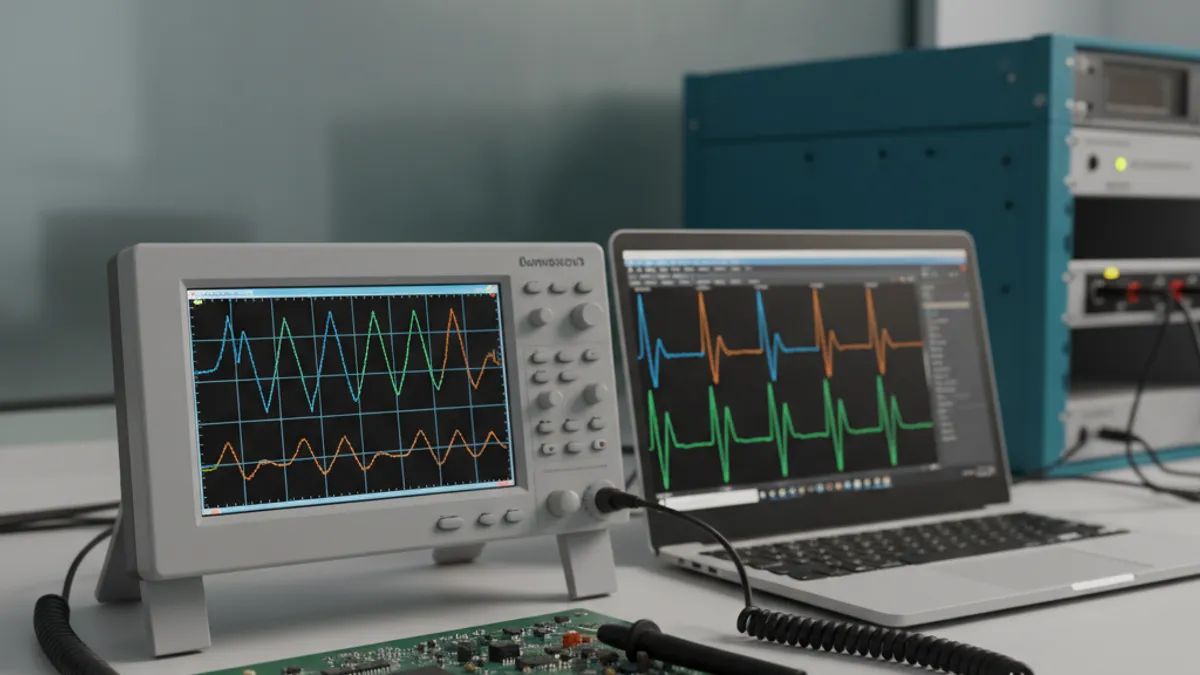
How to Buy an Oscilloscope in India (2026): USB vs Benchtop, Bit Depth, Bandwidth: A Buying Guide
5 Jun · 11 min
PicoScope 5000D vs 5000E: Native 16-Bit or FlexRes? A Buyer's Guide for Indian Labs
4 Jun · 11 min
PicoScope 5000E in India: The World's First 4-Channel 16-Bit USB Oscilloscope, Explained
4 Jun · 11 min
PicoScope 7 Goes Native Arm64: Apple Silicon, Snapdragon Windows and Arm Linux Test Benches in India
4 Jun · 11 min
Emulating Processor Power for Thermal Testing: Why Constant Power
7 Oct · 7 min
CRPS and Rack Power Supply Testing: The Six Tests That Matter
7 Oct · 7 min