
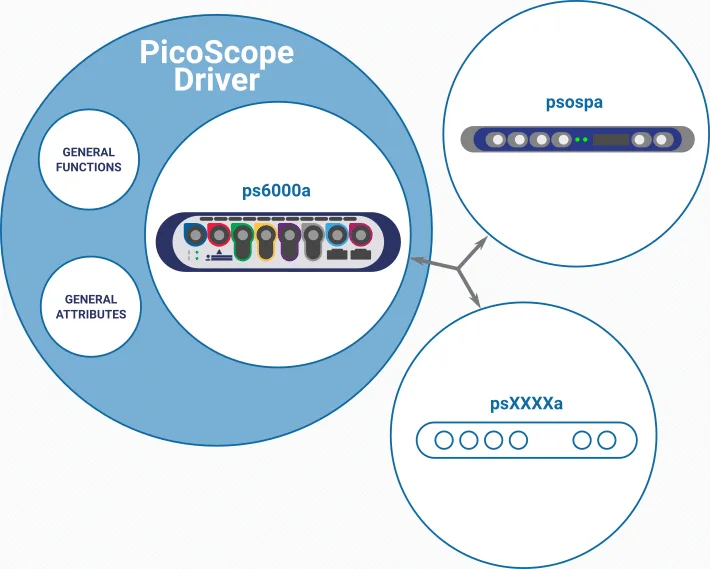
 Pico Technology
 PicoSDK & pypicosdk
Oscilloscopes & AnalyzersCross-platform oscilloscope SDK with drivers for Windows, macOS, and Linux, plus Python wrapper for automated test and data acquisition. Buy in India from GSAS with local support.
Platforms
Windows (32/64-bit), macOS, Linux
Languages
Python, C, C++, C#, MATLAB, LabVIEW, VB.NET
API Type
Native drivers (not SCPI)
Capture Modes
Block, streaming, rapid block
Examples
GitHub (github.com/picotech)
License
Free
Overview
About PicoSDK & pypicosdk
PicoSDK is Pico Technology’s software development kit that provides native driver-level access to the full hardware functionality of all PicoScope oscilloscopes from Windows, macOS, and Linux. Unlike SCPI-based instrument control, PicoSDK communicates directly with the oscilloscope hardware through optimized native APIs, enabling block capture, continuous streaming at rates up to 125 MS/s, rapid block segmented acquisition, and built-in function generator control with minimal latency and maximum throughput. pypicosdk extends this capability to Python developers with a wrapper library that simplifies oscilloscope control for automated test scripts, data acquisition applications, and measurement automation workflows.
PicoSDK Capabilities
| Feature | Detail |
|---|---|
| Platforms | Windows 64-bit, Windows 32-bit, macOS, Linux |
| Languages | Python (pypicosdk), C, C++, C#, VB.NET, MATLAB, LabVIEW |
| API Architecture | Native driver API (non-SCPI, direct hardware access) |
| Block Capture | Single or repeated triggered acquisitions |
| Streaming | Continuous data transfer up to 125 MS/s |
| Rapid Block | Segmented acquisition with minimal re-arm time |
| AWG Control | Full function generator and AWG programming |
| Async Callbacks | C-language asynchronous data callbacks |
| Oscilloscope Support | PicoScope 2000 through 9000 series |
| Example Code | GitHub repository (github.com/picotech) |
| Documentation | Programmer’s Guides per series |
| Community | Technical forum with 20,000+ users |
| License | Free |
The native API architecture is PicoSDK’s key technical differentiator for production test and high-throughput measurement applications. Direct driver communication eliminates the parsing overhead and latency of text-based SCPI command protocols, enabling streaming data rates and acquisition re-arm times that approach the hardware limits of the oscilloscope itself. For C and C++ developers, asynchronous callback interfaces allow continuous streaming of data from PicoScope hardware back to the application without blocking, enabling real-time signal processing and analysis pipelines. For Python developers, pypicosdk abstracts the driver interface into Pythonic function calls while preserving access to the full feature set including block capture, streaming, and function generator control.
Watch the PicoSDK & pypicosdk introduction
PicoSDK supports the full range of PicoScope oscilloscopes from the 2000 Series through the 9000 Series, with per-series Programmer’s Guides documenting every API function, register, and data structure. Example code on GitHub demonstrates common operations in Python, C, C#, and MATLAB, providing working starting points for custom measurement applications. GSAS Micro Systems assists customers with PicoSDK integration into automated test systems, production fixtures, and custom data acquisition applications alongside PicoScope hardware supplied across India.
Videos
PicoSDK & pypicosdk in Action

Introducing pyPicoSDK: Official Python SDK Launch

How to Install and Verify pyPicoSDK with Python

Python and VSCode Setup Guide for pyPicoSDK Automation

Fix VS Code Slowdown: Python Script Speed Hack
Blog
Pico Technology Insights
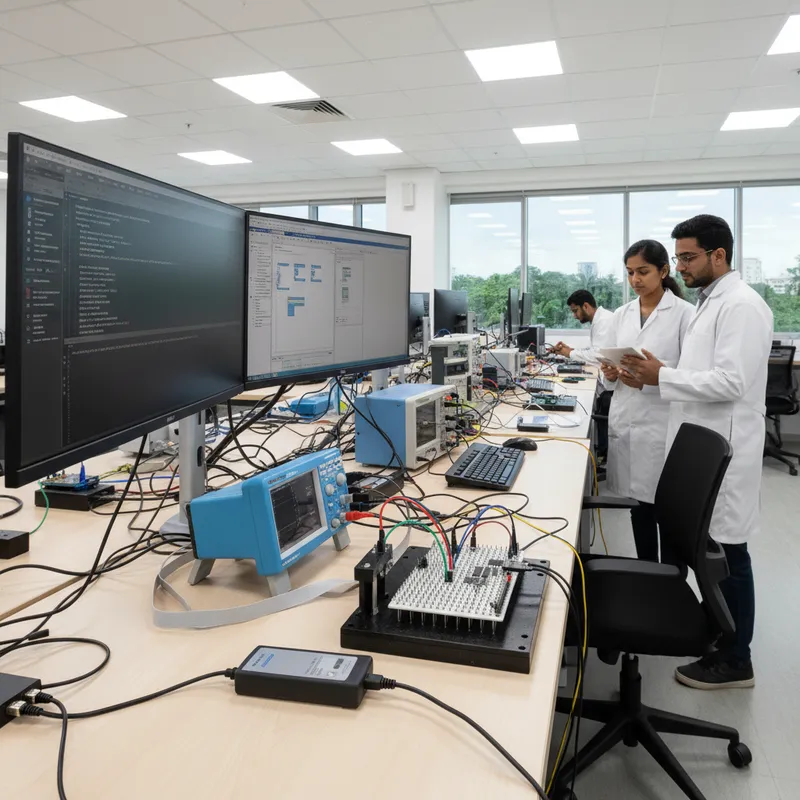
PicoSDK C/C++ for Indian Production Test Rigs: Native API Patterns for ATE and Line Test
How Indian production lines and ATE teams drive PicoScope hardware from native C and C++, PicoSDK API lifecycle, RAII wrappers, multi-unit patterns, and single-binary deployment for fanless industrial PCs.
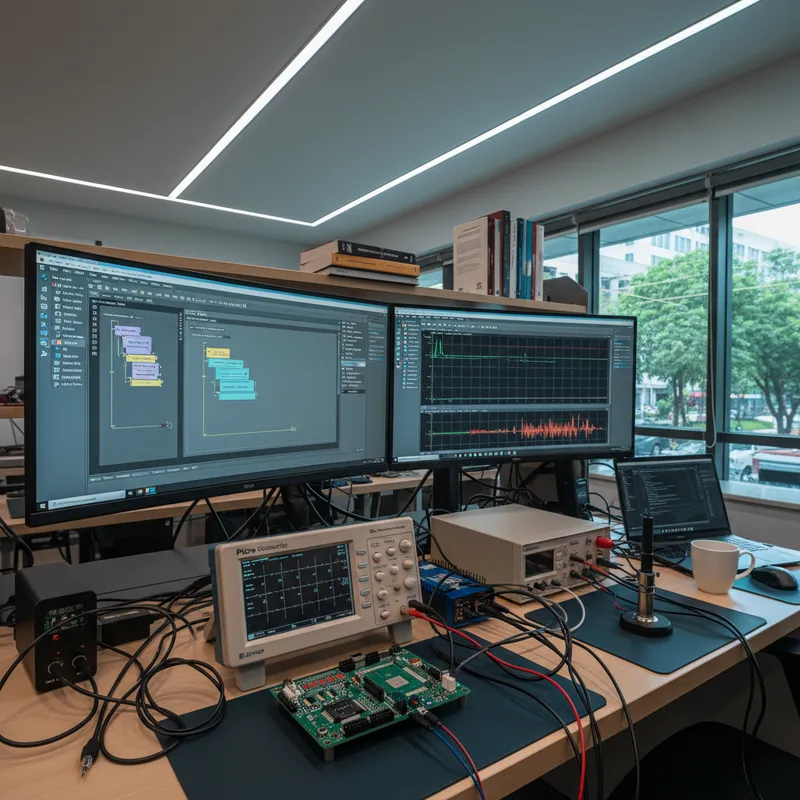
PicoSDK MATLAB Integration for Indian Academic Labs: Instrument Control and Simulink HIL
How Indian engineering colleges, PhD researchers, and research labs drive PicoScope and PicoLog hardware from MATLAB, Instrument Control Toolbox, MEX wrappers, and Simulink hardware-in-the-loop patterns.
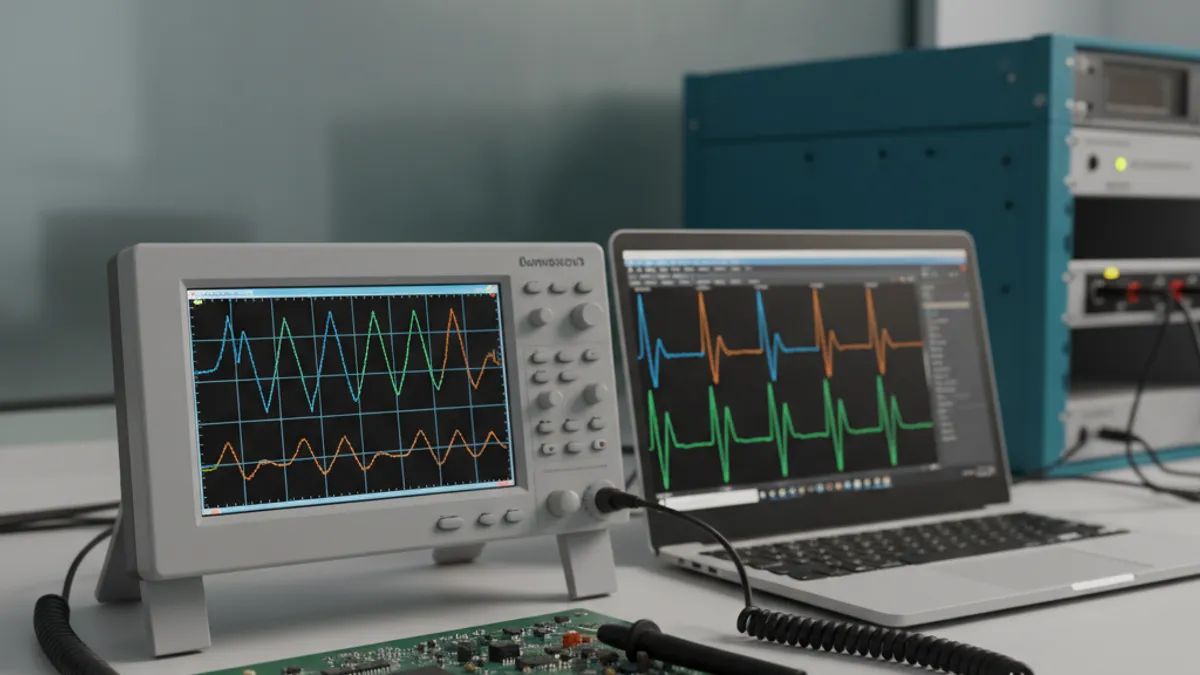
How to Buy an Oscilloscope in India (2026): USB vs Benchtop, Bit Depth, Bandwidth: A Buying Guide
A vendor-neutral buying guide for Indian engineering teams choosing an oscilloscope in 2026. How to size bandwidth, sample rate, channels and bit depth; when a USB/PC oscilloscope beats a benchtop; and how oscilloscope price in India actually breaks down once you add GST, probes and warranty. Written for embedded, power and education teams in Bengaluru, Pune, Chennai, Hyderabad, Mumbai and Delhi NCR.
Related products
More from Pico Technology
All Pico Technology products →
Interested in PicoSDK & pypicosdk?
Get pricing, an evaluation unit, or a technical consultation from our application engineers.