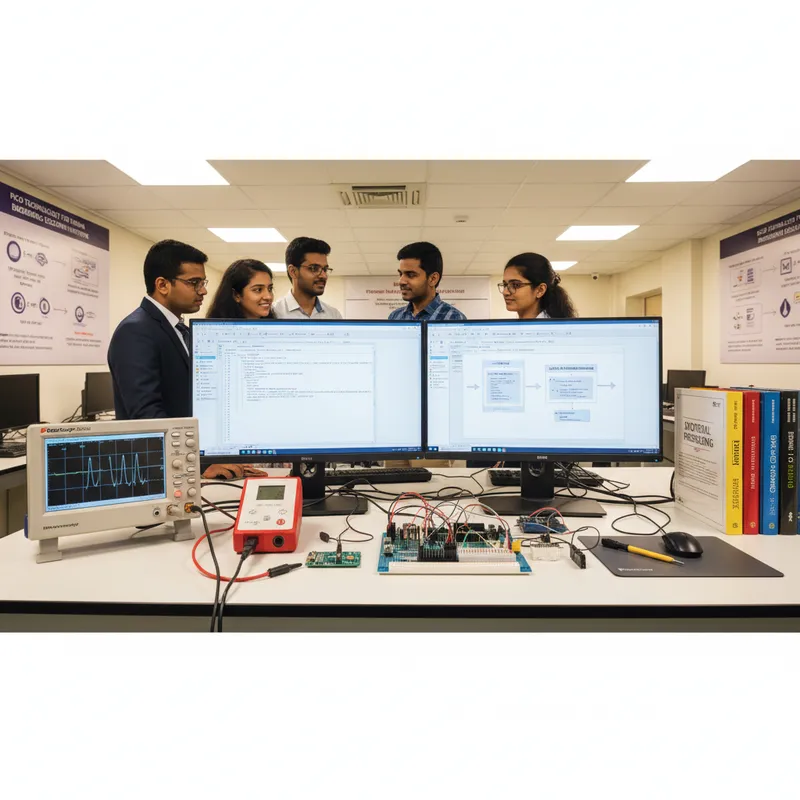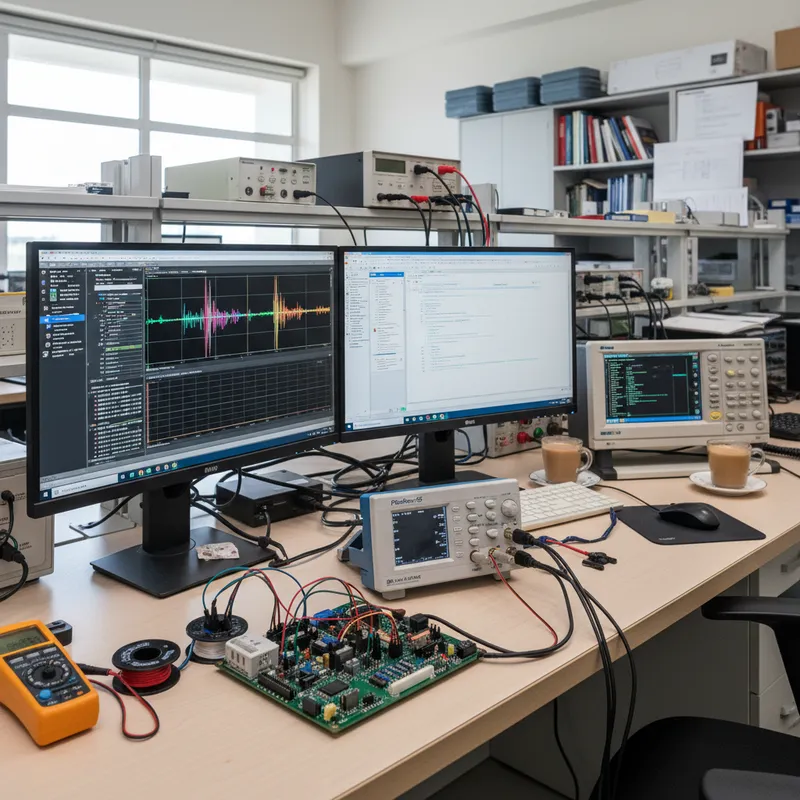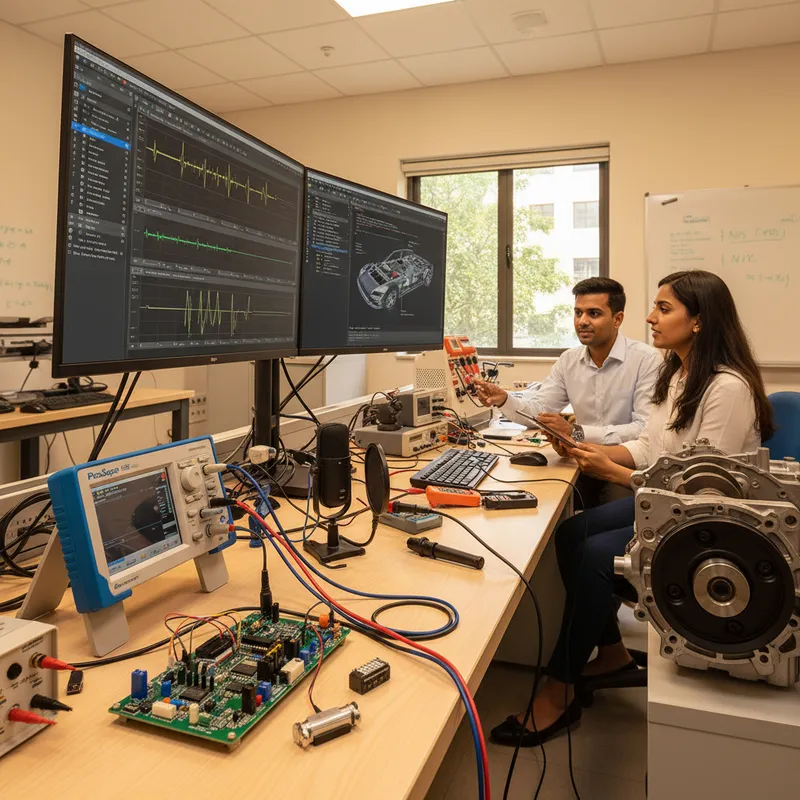
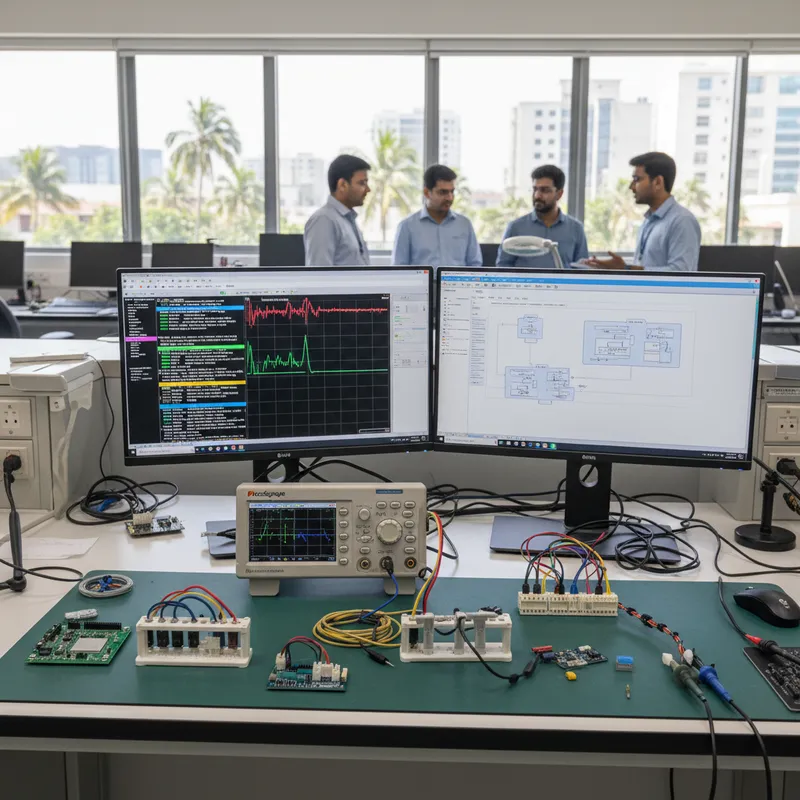
Indian automotive is in the middle of a protocol transition. The Pune automotive belt, the Chennai auto cluster, the Bengaluru EV startup scene, and the NCR commercial vehicle corridor are all moving through the same arc at slightly different speeds, from pure CAN 2.0 on legacy platforms, to CAN-FD as the default on every new design, with FlexRay holding on in a handful of commercial vehicle chassis and powertrain deployments, and Automotive Ethernet (100BASE-T1 and 1000BASE-T1) arriving at the premium end for ADAS sensor fusion and service-oriented architectures. Any Indian Tier-1 ECU validation engineer working today needs fluent protocol-decode capability across at least four and usually six different buses on the same bench. PicoScope 7 software ships with 40+ serial protocol decoders included free, a different model from the Tektronix and Keysight playbook where each protocol decoder is an extra paid option, and that pricing model alone changes the economics of a protocol-capable bench for Indian Tier-1 engineering teams.
GSAS Micro Systems is an authorized Indian engineering partner for Pico Technology, and this post is for Indian automotive Tier-1 validation engineers, ECU integration leads, and commercial vehicle service engineers who want to know exactly what PicoScope can decode, what the trade-offs are between entry-level and flagship hardware for different protocol mixes, and where the edges of Pico’s automotive decode capability are today.
The Indian automotive protocol mix, circa 2026
A rough breakdown of what we see on Indian benches right now:
- CAN 2.0: still dominant on legacy two-wheeler, three-wheeler, and commercial vehicle platforms. The installed base is not going anywhere for at least another decade.
- CAN-FD: the default on every new design. Indian passenger vehicle, EV, two-wheeler, commercial vehicle, and agricultural equipment platforms launching in 2025-2026 are CAN-FD native.
- LIN 1.x / 2.x: body and comfort networks, window controls, seat motors, climate control, mirrors, interior lighting, wiper control. Every Indian passenger vehicle and higher-end two-wheeler has multiple LIN sub-buses.
- FlexRay: niche and shrinking, but still deployed on some Indian commercial vehicle chassis and powertrain platforms from established CV manufacturers. Service bays in Indian CV fleets still see deployed FlexRay and need to decode it.
- Automotive Ethernet (100BASE-T1, 1000BASE-T1): the coming dominant protocol for ADAS camera pipelines, sensor fusion, and high-bandwidth diagnostic messaging. Indian EV platforms at the premium OEM end are being designed directly on 100BASE-T1 rather than migrating through gateway architectures.
- SENT (SAE J2716): short-wire sensor protocol, engine torque sensors, transmission speed sensors, powertrain position sensors
- PSI5: airbag and safety sensor bus
- SAE J1939: heavy commercial vehicle diagnostic and control, the default protocol layer above CAN for Indian CV Tier-1 work
- DALI: lighting bus, commercial vehicle interior and increasingly EV cabin lighting
Indian automotive context, major Indian passenger, commercial, two-wheeler, and EV OEM programs are the industry background against which any protocol decode story is told. None of them are cited here as customers, this is industry framing only.
Walking through PicoScope’s decode coverage protocol by protocol
CAN 2.0 and CAN-FD
PicoScope 7 decodes both CAN 2.0 and CAN-FD automatically. The capture setup is the same on every PicoScope model:
- Probe the CAN_H and CAN_L differential pair with a standard passive probe or an active differential probe if the rig is high-voltage
- Set up one decoder in PicoScope 7 with the correct bit rate (500 kbit/s for classical CAN, 2 Mbit/s or 5 Mbit/s typical for CAN-FD data phase)
- The timeline view shows decoded frames inline with the captured waveform, arbitration ID, data bytes, CRC, ack, and error flags all visible
For Indian Tier-1 engineers hunting bit stuffing errors, arbitration loss events, and data-phase SSP (Secondary Sample Point) drift on CAN-FD, PicoScope’s combined scope-and-decode view is usually enough to pinpoint the root cause in a single capture. The most common Indian bring-up bug on new CAN-FD platforms is data-phase bit timing, PicoScope’s frame-level decode makes the problem visible at the waveform level.
LIN 1.x and LIN 2.x
PicoScope 7 decodes LIN 1.x and LIN 2.x. The common Indian bug-hunting targets:
- LIN slave wake-up timing: whether a LIN slave wakes within the allowed time window after a master wake-up pulse
- Master-slave schedule drift: whether the master’s scheduled frame table is arriving on the wire with the right inter-frame spacing
- Checksum errors: classical vs enhanced checksum mismatches between master and slave
The LIN bus is low-bandwidth (20 kbit/s typical) and low-voltage, any PicoScope from the 2205A up works for LIN capture. Entry-level benches start with the 2205A MSO, which also gives you digital channels for parallel bus state.
FlexRay
PicoScope 7 decodes FlexRay. Indian commercial vehicle service bays and CV Tier-1 validation labs running on heritage FlexRay architectures use PicoScope for frame-level inspection during root-cause analysis of communication faults. FlexRay is shrinking as new platforms migrate directly to automotive Ethernet, but the installed base on deployed Indian CV is still large enough that service and rework engineers need the capability.
Automotive Ethernet (100BASE-T1, 1000BASE-T1)
This is the most nuanced part of the PicoScope automotive decode story. For the physical layer: eye diagrams, rise time, overshoot, impedance mismatch, link-up handshaking, PicoScope 6000E with the right probe captures the signal cleanly. 100BASE-T1 uses PAM-3 signaling on a single twisted pair, and the symbol rate is 66.666 MBaud. PicoScope 6000E at 1 GHz bandwidth captures this with comfortable headroom. 1000BASE-T1 is PAM-3 at 750 MBaud on a single pair, which is tighter, you want the full 1 GHz bandwidth and the FlexRes 10 or 12 bit modes for cleaner eye diagrams.
For higher-layer decode (SOME/IP service calls, DoIP diagnostic messages, AVB/TSN streams), PicoScope’s decode library is less mature than for CAN and LIN. Indian Tier-1 teams doing full-stack Automotive Ethernet validation typically pair PicoScope for the physical-layer eye diagram work with a dedicated automotive Ethernet analyzer or capture module for the upper-layer protocol decode. PicoScope is honest about where it is and is not the right tool, physical layer and link training it handles very well, full service-oriented-architecture decode is not its primary mission today.
SENT (SAE J2716) and PSI5
PicoScope 7 decodes both SENT and PSI5. SENT is the common short-wire sensor protocol for engine torque sensors, transmission speed sensors, and powertrain position sensors on Indian powertrain programs. PSI5 is the airbag sensor bus. Both decoders are free and ship in the standard PicoScope 7 install.
SAE J1939
PicoScope 7 decodes J1939 on top of the underlying CAN 2.0 layer. Indian CV Tier-1 engineers live on J1939, engine management, transmission, brake, and diagnostic traffic all ride on J1939 on Indian commercial vehicle platforms. The frame-level decode is a direct productivity win for fault diagnosis.
DALI
DALI is a lighting bus relevant for commercial vehicle interior lighting and for EV cabin lighting on premium platforms. PicoScope 7 decodes DALI.
Instrument recommendations by bench tier
Entry: Indian student, hobbyist, early-career automotive engineer
PicoScope 2205A MSO or PicoScope 2405A: 25 MHz bandwidth, mixed-signal digital channels on the 2205A MSO for parallel bus state. Decodes CAN 2.0, CAN-FD, LIN, SENT, PSI5, UART, I2C, SPI. Entry price point but the same PicoScope 7 software and the same decoder library as the flagship. This is the right first-scope for an Indian automotive engineering student or a Tier-2 supplier’s first protocol-decode bench.
Mid: Indian Tier-2 supplier validation and small-team Tier-1 work
PicoScope 3406E: 200 MHz, 5 GS/s, 512 MS buffer, 4 channels. Enough bandwidth for CAN-FD data phase at 5 Mbit/s, LIN, FlexRay, SENT, PSI5. Mixed-signal variants available. The sweet spot for an Indian Tier-2 supplier validation bench where the team does not need 1 GHz bandwidth but wants deep buffer for multi-second protocol captures.
High channel count: Indian Tier-1 ECU validation with many parallel buses
PicoScope 4000A / 4824A: 20 MHz, 12-bit, 8 channels. The 8-channel version is the right pick for Indian Tier-1 ECU validation benches that need to capture multiple CAN buses, LIN buses, and power rails simultaneously on the same trigger. 20 MHz is enough for classical CAN, CAN-FD up to 2 Mbit/s data phase, LIN, SENT, and J1939. Not enough for automotive Ethernet physical-layer work, for that you step up to the 6000E.
Flagship: Indian Tier-1 premium work and Automotive Ethernet physical layer
PicoScope 6000E: 300 / 500 / 750 MHz / 1 GHz standard bandwidth options, 3 GHz on the 6428E-D variant, up to 5 GS/s, up to 4 GS buffer, FlexRes 8/10/12-bit hardware. This is the flagship bench for Indian Tier-1 premium ECU work and the only PicoScope bandwidth-class suited to 100BASE-T1 and 1000BASE-T1 Automotive Ethernet physical-layer characterization. The 4 GS buffer is particularly useful for long protocol captures during system-level validation runs.
Further reading
- PicoScope Serial Decoding Software Reference, canonical PicoScope 7 decoder list
- Pico Technology Automotive Oscilloscope Resources, official automotive application notes and decoder references
- GSAS Pico Technology partner page
- PicoScope Automotive Diagnostics, CAN, LIN, FlexRay, the foundational post on Pico automotive decode
- PicoScope Automotive NVH and Drivetrain Diagnostics for Indian Teams
- PicoScope for Power Electronics, IGBT, SiC, GaN on Indian Benches
- PicoScope 7 Software Deep Dive, Math, Masks, and Measurements
Closing: protocol decode as a bench productivity multiplier
Indian automotive Tier-1 validation engineers spend a large fraction of their time in the protocol-decode workflow, set up a bus, trigger on a specific frame, inspect the decoded contents, correlate with the analog waveform, debug. The difference between a bench where every decoder is a paid option and a bench where 40+ decoders ship for free is felt across hundreds of captures per week per engineer. PicoScope’s free-decoder model matters for Indian teams where capital equipment budgets are lean and where the test engineer-to-capital-cost ratio is the metric that matters. GSAS Micro Systems supports Indian automotive engineering teams across Bengaluru, Chennai, Hyderabad, Delhi NCR, Mumbai, and Pune with PicoScope hardware, PicoScope 7 protocol-decode configuration, and on-bench bring-up consulting from our India offices.
Also appears in:
Interested in Pico Technology tools?
Talk to our application engineers for personalized tool recommendations.
More from Pico Technology
View all →
How to Buy an Oscilloscope in India (2026): USB vs Benchtop, Bit Depth, Bandwidth: A Buying Guide
5 Jun · 11 min
PicoScope 5000D vs 5000E: Native 16-Bit or FlexRes? A Buyer's Guide for Indian Labs
4 Jun · 11 min
PicoScope 5000E in India: The World's First 4-Channel 16-Bit USB Oscilloscope, Explained
4 Jun · 11 min
PicoScope 7 Goes Native Arm64: Apple Silicon, Snapdragon Windows and Arm Linux Test Benches in India
4 Jun · 11 min
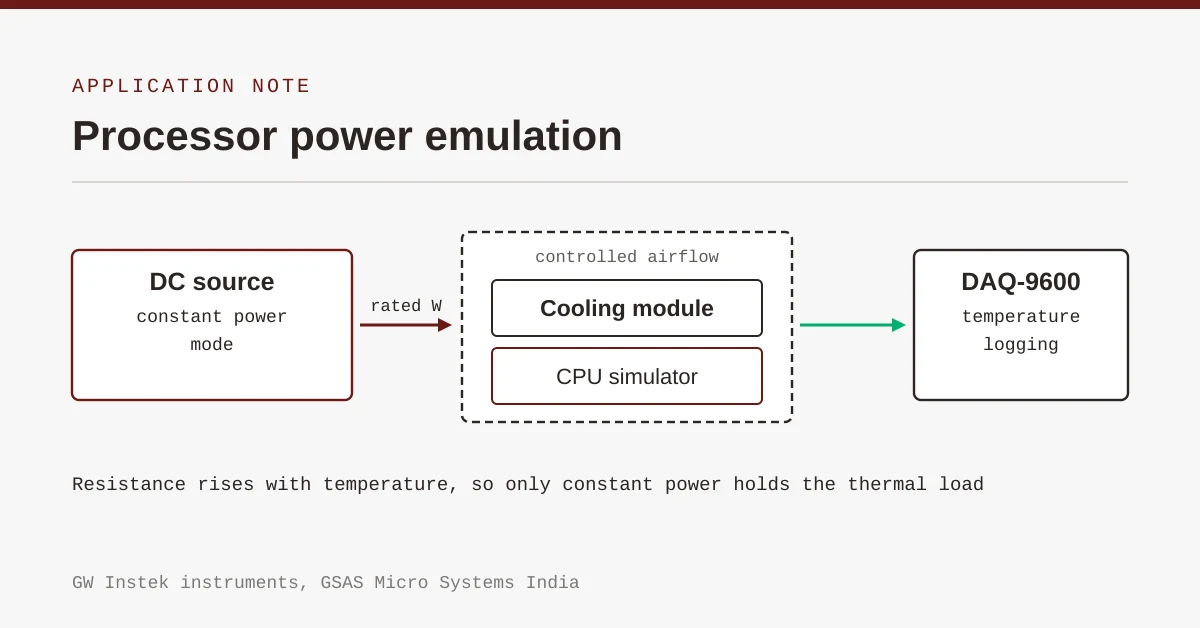
Emulating Processor Power for Thermal Testing: Why Constant Power
7 Oct · 7 min
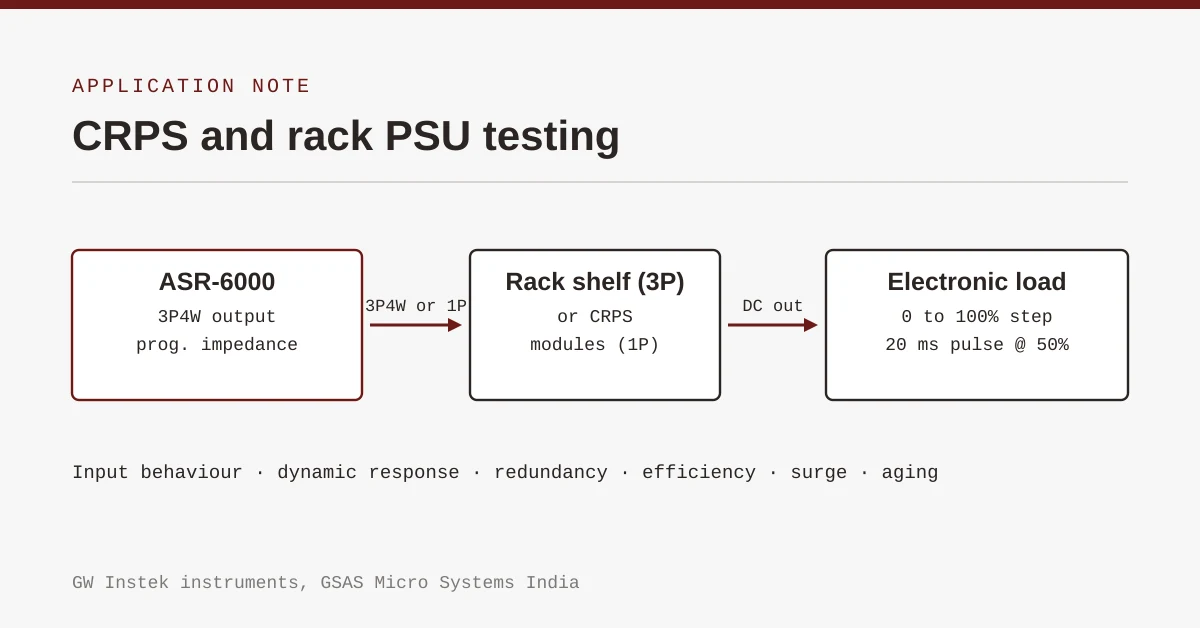
CRPS and Rack Power Supply Testing: The Six Tests That Matter
7 Oct · 7 min