The Feature Gap Between “I Own a PicoScope” and “I Use a PicoScope”
Walk into almost any Indian R&D lab that owns a PicoScope and you will find the same pattern: the scope is used at maybe 20% of its capability. The engineer opens PicoScope 7, sets a trigger, looks at a waveform, and closes the session. All the advanced instrumentation that ships free with every PicoScope, math channels, mask limit testing, DeepMeasure, persistence display, the 40+ serial-protocol decoders, the runt/dropout/interval trigger library, sits unused because nobody walked the engineer through it. This post is that walk-through, aimed at Indian SoC teams in Bengaluru, EV traction teams in Pune, and industrial controller teams in Chennai who already own the hardware but have not yet paid themselves back on the software.
PicoScope 7 is the unified oscilloscope application for every current PicoScope model, from the entry PicoScope 2205A MSO to the flagship PicoScope 6000E and the PicoScope 9400A SXRTO sampler. It runs on Windows, macOS, and Linux. It is not a paid upgrade. It is not tiered. Every feature documented in this post is available to every PicoScope owner today, at no additional cost.
Math Channels: More Than Just A Minus B
The math channel engine in PicoScope 7 is the most under-used feature in the entire product. Most users discover A−B for rough differential measurement and stop there. The full capability is considerably richer:
- Arithmetic between channels: A+B, A−B, A·B, A/B, with full waveform-level evaluation rather than just computed numbers. A·B is the voltage-times-current product that gives you instantaneous power, and once that signal exists as a math channel you can integrate it to get energy or run FFT on it to find the harmonic signature of a switching converter.
- FFT: a full frequency-domain view with selectable windowing (Rectangular, Hann, Hamming, Blackman-Harris, Flat-Top), configurable bin count up to the memory limit, and live dB-referenced display. This is how an Indian audio product team running a PicoScope 4262 measures THD+N and harmonic spectra without buying a dedicated audio analyzer.
- Integrals and derivatives: the integral of channel A over time, the derivative of channel B over time. Derivative is how you extract slew rate from an edge capture; integral is how you sum charge on a current-clamp trace to get total coulombs delivered during an inrush event.
- Filters: low-pass, high-pass, band-pass, and band-stop filters applied to any channel. These are DSP filters, not hardware filters, and they are applied to the entire memory buffer. A typical Bengaluru-area SoC team can strip 50 Hz mains pickup out of a low-level analog capture with a high-pass at 100 Hz without soldering anything.
- Custom equations: a full expression engine that lets you combine any of the above.
sqrt((A*A) + (B*B))to get the vector magnitude of two orthogonal signals,20 * log10(A / 1.0)to scale a linear signal to a dB reference. The custom-equation field accepts standard math functions and is readable by the engineer sitting next to you.
The mental shift here is to stop thinking of math channels as “that A-minus-B thing” and to start thinking of them as a scripting layer on top of your captures. Every math channel is evaluated on every trigger and persists alongside the raw channels, so you can save, reopen, and export them just like any other trace.
Mask Limit Testing: Pass/Fail at Production Speed
Mask limit testing is PicoScope 7’s answer to the production-line go/no-go question. You define an envelope, an upper boundary and a lower boundary, and PicoScope 7 compares every captured waveform against that envelope in real time. Anything that pokes outside the boundary is flagged as a failure, counted, and optionally saved.
The three workflows where mask testing pays for itself on the first day:
- Eye-diagram compliance on serial links. Overlay a TX eye mask on a measured eye diagram from a PicoScope 9400A or a deep-memory 6000E capture of a serial lane, and let the software count mask violations over a million triggers. This is how a Hyderabad board-design team validates a USB 3.x or 2.5GBASE-T link without writing any scripting code.
- Protocol timing margin. Capture an SPI or I2C transaction, draw the mask around the expected setup and hold region, and sweep temperature or supply voltage until you see a violation. You now know your margin precisely rather than by hope.
- Production line screen. A contract manufacturer in Chennai running a final test bench on a switching regulator can set up a mask on the ripple waveform and use a simple GPIO line from the PicoScope to gate the pass/fail light on the bench. No PLC required, no custom test software, just PicoScope 7 in mask mode and a
Save on failaction.
The critical point: mask testing is a software feature on hardware that was probably bought for something else. No separate instrument is needed.
DeepMeasure: Every Cycle, Not Just The Average
DeepMeasure is the feature that separates a PicoScope-fluent engineer from everyone else. A normal oscilloscope’s measurement system gives you statistical summaries, average, minimum, maximum, standard deviation, over the displayed waveform. DeepMeasure performs full parametric measurements on every cycle of every captured waveform and makes the per-cycle results searchable and plottable.
What this lets you do, practically:
- Find the one-in-ten-thousand jitter outlier. A typical Bengaluru-area SoC team debugging a clock recovery issue on a SerDes lane can capture 100 ms of signal on a PicoScope 6000E’s deep memory, run DeepMeasure’s period-jitter measurement across every single cycle, and then sort the results to find the worst offenders. The outlier is plotted, selectable, and seekable back into the waveform view.
- Catch intermittent edge-rate degradation. Capture a long burst of a switching node and ask DeepMeasure for the rise time of every edge. A degrading gate driver that only misbehaves once every few hundred cycles becomes trivially visible.
- Characterize pulse-width drift under thermal load. A thermal chamber sweep with DeepMeasure running captures pulse-width measurements at every trigger point across temperature, giving you a drift curve rather than a single number.
DeepMeasure is the feature that justifies deep memory. A benchtop scope with 10 megasamples of buffer cannot do this work. A PicoScope 6000E with 4 GS of memory can capture hours of signal in streaming mode and let DeepMeasure chew through the results afterward.
Persistence Display: Seeing Noise Distributions and Rare Events
Colour-graded persistence is an old CRT oscilloscope feature that survives in digital scopes because nothing else shows waveform variation as intuitively. PicoScope 7’s persistence display maps the frequency of occurrence of each pixel in the trace to a colour gradient, hot colours for common, cool colours for rare. Turn it on and the character of the signal becomes immediately visible:
- Jitter envelope on a clock signal: the clean rising edge becomes a fan, and the width of the fan is the cycle-to-cycle jitter.
- Noise distribution on a DC rail: the baseline ripple fills out as a histogram and the true peak-to-peak value is visible rather than inferred.
- Rare events on an otherwise clean trace: a glitch that happens once a minute appears as a faint cool-colour ghost on top of the steady hot trace.
Indian engineers used to benchtop scopes often forget persistence exists on PC-based scopes. It does, and on PicoScope 7 it runs on the full deep-memory capture, not just the last visible frame.
Advanced Triggers: Beyond Rising Edge
The PicoScope 7 trigger library covers 12+ trigger types beyond the basic edge trigger, and each one solves a specific debugging problem:
- Runt: triggers on a pulse that crosses one threshold but fails to cross a second, higher threshold. This is exactly what you need to catch I2C bus contention in a Chennai industrial controller debug, two masters driving the bus simultaneously produces runt pulses that look normal on an edge trigger but are obviously broken under a runt trigger.
- Dropout: triggers when a repeating signal stops for longer than a specified interval. Use this to catch a dead heartbeat on a watchdog line or a missing clock edge.
- Interval: triggers when two edges are separated by more than or less than a specified interval. Use this to find glitches where two events that should be a microsecond apart are suddenly nanoseconds apart.
- Pulse-width: triggers on pulses that are wider or narrower than a specified width. Classic glitch-hunting mode.
- Logic-pattern: triggers when a configurable pattern of digital channels matches a specified state. On a PicoScope 2205A MSO with 16 digital channels, this is your microcontroller-debug trigger.
- Serial-protocol triggers: I2C address match, SPI data match, UART character match, CAN identifier match, LIN frame match, and over 40 other protocol-aware triggers that walk through the serial stream and fire only on the specific event you care about.
All 40+ serial-protocol decoders ship free with PicoScope 7. No separate license, no tiered activation.
Resolution Enhancement: Software Oversampling
Resolution Enhancement (RE) is PicoScope 7’s software oversampling engine. It trades bandwidth for bit depth by averaging adjacent samples, adding up to 4 bits beyond the native ADC resolution. RE is a DSP layer, distinct from the hardware FlexRes on the 6000E and 5000D series. Both are legitimate, RE is useful on scopes without FlexRes hardware, FlexRes is genuine bit depth on hardware that supports it.
Indian Use Cases Where This Matters
A Bengaluru SoC clock-recovery team using DeepMeasure to hunt a once-in-10,000-cycles jitter outlier on an 800 MHz internal clock. The 6000E captures 800 ms of signal at full bandwidth, DeepMeasure runs period-jitter over every cycle, and the outlier pops out of the statistics table.
A Pune EV traction team running mask limit testing on an inverter’s PWM dead-time to validate margin across temperature corners. The PicoScope 4444 with PicoConnect 442 differential probes captures three-phase gate-drive signals, a mask defines the minimum allowed dead-time envelope, and a temperature chamber sweep reveals exactly where the margin collapses.
A Chennai industrial controller team catching I2C bus contention with runt triggers. The controller runs for hours without issue, and an edge trigger never sees the problem. A runt trigger set on SDA fires instantly the first time two devices drive the bus at the same time.
An Indian audio product team measuring THD+N on an amplifier output using a 4262’s 16-bit ADC and PicoScope 7’s FFT math channel, with the result exported directly as a CSV for pass/fail reporting. No separate audio analyzer needed.
Instrument Recommendation
If you already own a PicoScope, you already have PicoScope 7 and every feature in this post. The action is to open the software, find the feature, and use it on your next debug session.
For a new purchase where PicoScope 7 software features drive the decision: the PicoScope 6000E series (300 MHz / 500 MHz / 750 MHz / 1 GHz standard, 3 GHz on the 6428E-D) is the flagship and makes DeepMeasure sing because of its 4 GS memory. The PicoScope 5000D FlexRes series is the right pick where hardware resolution matters more than bandwidth. The PicoScope 2205A MSO is the cheapest way into PicoScope 7’s full feature set for embedded debug.
Further Reading
- Pico Technology, PicoScope 7 software
- Pico Technology, DeepMeasure
- Pico Technology, PicoScope serial decoding
- GSAS, PicoScope 7 software product page
- GSAS, PicoScope 6000E product page
- GSAS, PicoScope 6000E deep dive
- GSAS, PicoScope signal integrity for USB, PCIe, DDR and Ethernet
- GSAS, Pico Technology partner page
GSAS Micro Systems is an authorized Indian engineering partner for Pico Technology. PicoScope 7 training, advanced-feature walkthroughs, and on-site debugging advisory are available from our Bengaluru, Chennai, Hyderabad, Delhi NCR, Mumbai, and Pune offices.
Also appears in:
Interested in Pico Technology tools?
Talk to our application engineers for personalized tool recommendations.
More from Pico Technology
View all →
How to Buy an Oscilloscope in India (2026): USB vs Benchtop, Bit Depth, Bandwidth: A Buying Guide
5 Jun · 11 min
PicoScope 5000D vs 5000E: Native 16-Bit or FlexRes? A Buyer's Guide for Indian Labs
4 Jun · 11 min
PicoScope 5000E in India: The World's First 4-Channel 16-Bit USB Oscilloscope, Explained
4 Jun · 11 min
PicoScope 7 Goes Native Arm64: Apple Silicon, Snapdragon Windows and Arm Linux Test Benches in India
4 Jun · 11 min
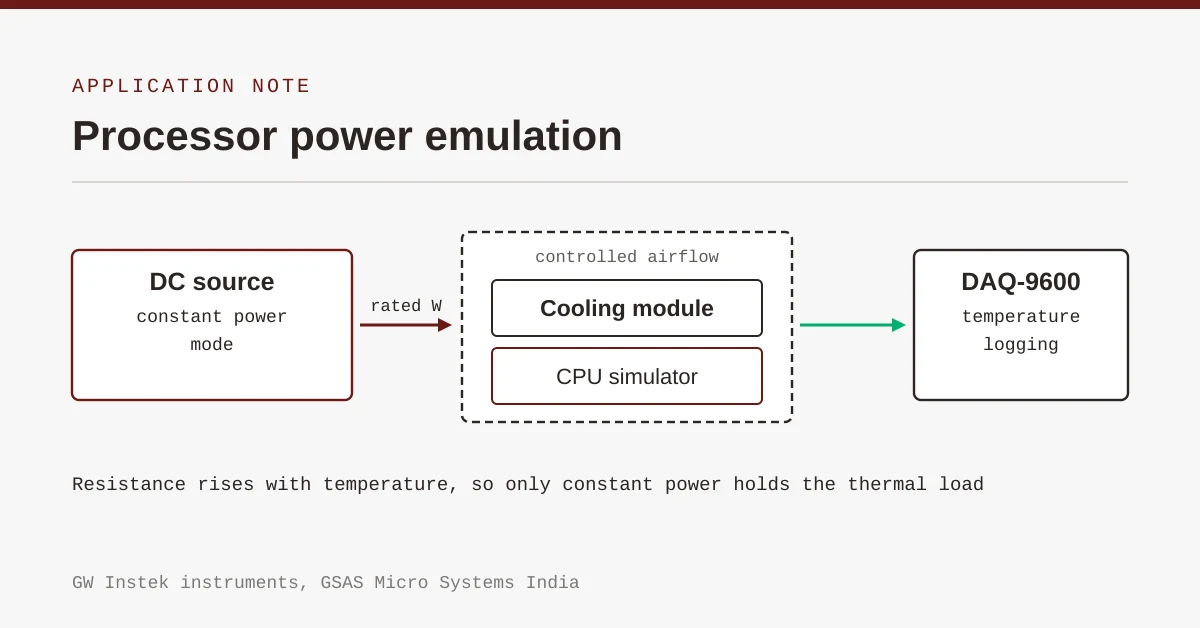
Emulating Processor Power for Thermal Testing: Why Constant Power
7 Oct · 7 min
CRPS and Rack Power Supply Testing: The Six Tests That Matter
7 Oct · 7 min