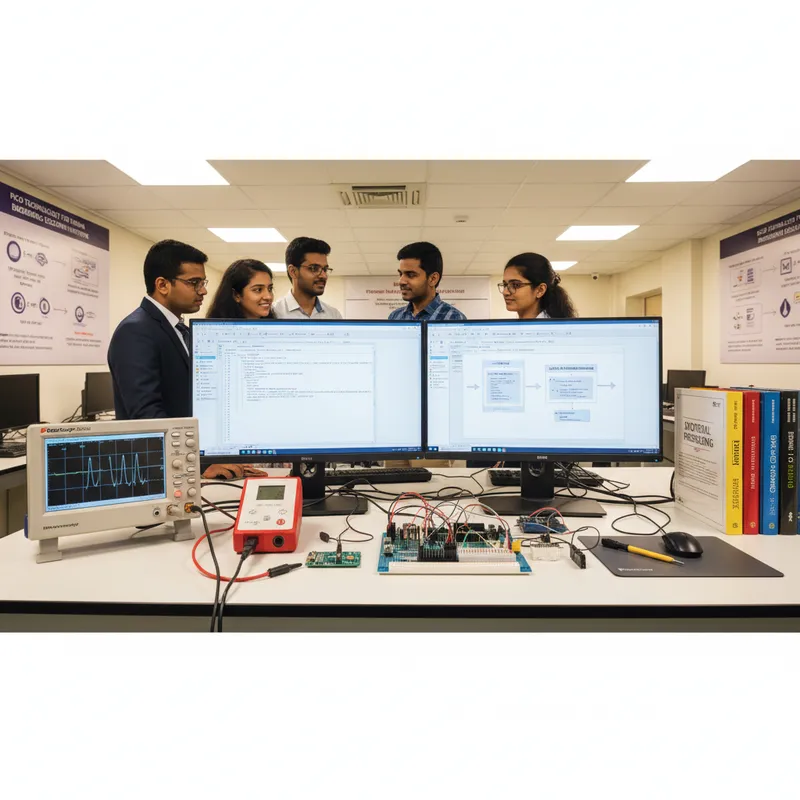
Indian EV infrastructure is scaling into a real industry. Public DC fast-charging is moving from a few hundred CCS-2 stations in 2023 to a national network target in the thousands by the end of the decade. AC slow-charging at Type 2 connectors is standard at office buildings, apartment complexes, and malls across Bengaluru, Chennai, Hyderabad, Delhi NCR, Mumbai, and Pune. Bharat AC-001 and Bharat DC-001 are still deployed at legacy sites. The charger OEMs and charger-controller engineering teams building this infrastructure, generic industry context rather than specific customers, need validation test benches that handle high-voltage DC, AC mains characterization, Control Pilot and Proximity Pilot PWM signaling, Power Line Communication on the CCS-2 pilot line, OCPP back-end protocol validation, and pre-compliance EMC work, all on the same rig. PicoScope 6000E, PicoScope 4444, and the supporting PicoLog thermal and current loggers are the instrumentation backbone we see most frequently on Indian EV charger benches that have to span all of those measurement domains without buying six different point-solution instruments.
GSAS Micro Systems is an authorized Indian engineering partner for Pico Technology, and this post walks through exactly how a PicoScope-based EV charger compliance bench is architected in practice for Indian charger OEMs building 7 kW to 180 kW stations, from the small two-wheeler AC charger in a Pune development lab to the e-bus depot DC fast-charger in a Chennai commercial vehicle rollout.
The instrumentation problem on an Indian EV charger validation bench
A typical Indian EV charger validation bench has to handle six physically distinct measurement domains simultaneously:
- High-voltage DC bus measurement on the charger’s 400-800 V output during load-test runs
- AC mains characterization on the charger input, three-phase 415 V line-to-line typical on Indian installations
- Control Pilot and Proximity Pilot (CP/PP) PWM signals on Type 2, Bharat AC-001, and CCS-2 connectors
- Power Line Communication (HomePlug Green PHY) on the CCS-2 pilot line during digital handshake
- OCPP back-end communication over Ethernet or cellular to the charger network management system
- Thermal measurement on the charger’s power electronics stage during sustained-output load runs
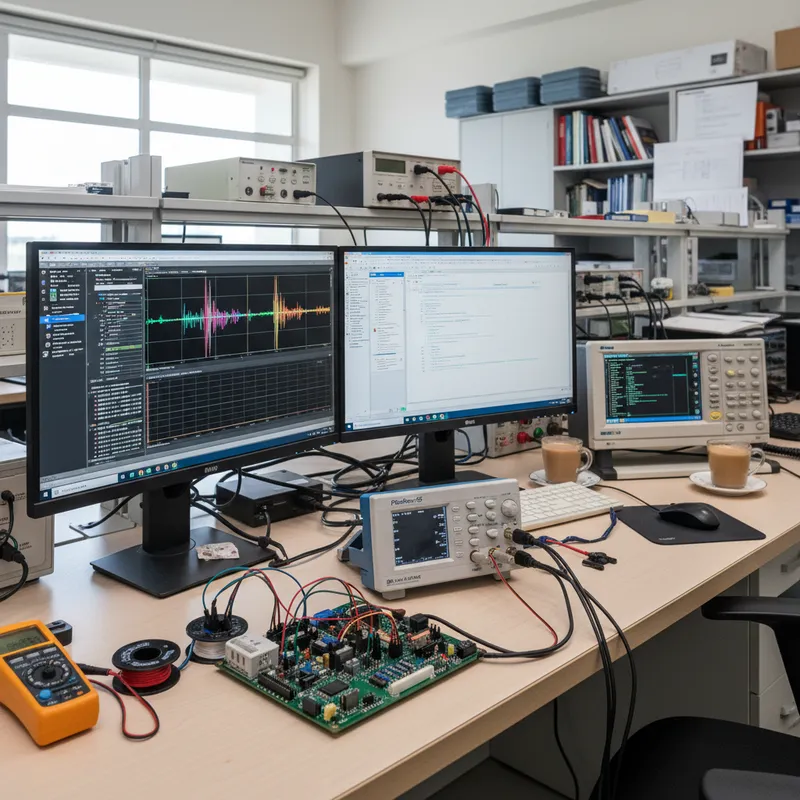
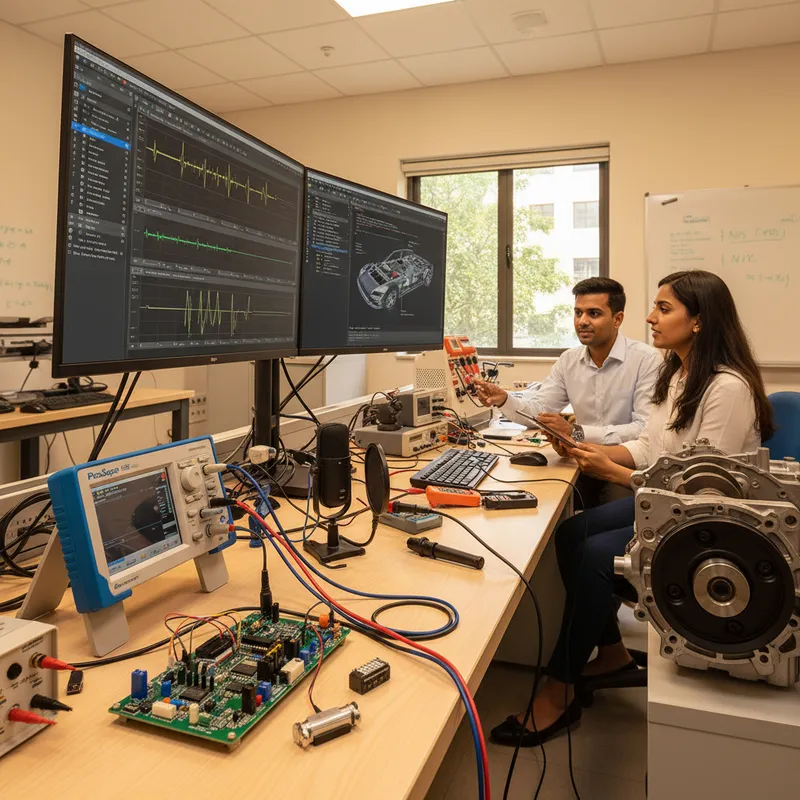
A conventional approach to this would involve five to six separate instruments. Using PicoScope plus the supporting PicoLog loggers, the Indian bench collapses into two or three USB-connected Pico devices driving a single test PC, with PicoScope 7 software on screen showing the combined waveform, protocol decode, and thermal view.
High-voltage DC bus and AC mains: the PicoScope 4444 + PicoConnect 442 topology
For the 400-800 V DC output of a DC fast-charger, and the three-phase 415 V AC input of a grid-connected charger, the isolation requirement is absolute. A bench engineer cannot probe the DC bus or the AC mains with an unprotected single-ended scope input, that is a safety failure waiting to happen.
The correct topology is a PicoScope 4444, 4-channel, 20 MHz, 14-bit, 256 MS buffer, paired with PicoConnect 442 attenuating differential probes. The PicoConnect 442 gives the system a 1000 V CAT III rated measurement front end. That CAT III rating applies only when the PicoScope 4444 is paired with PicoConnect 442, it is not a bare-input rating of the scope itself. Indian charger engineers building CCS-2 DC fast-chargers at 400-600 V nominal DC bus voltage, or measuring the three-phase 415 V AC mains input, use this combined topology because it is the only isolated differential bench-scope measurement path Pico offers at 1000 V CAT III.
The 4-channel capability of the 4444 means you can place the four differential probes on the DC+ and DC- rails, and two of the three AC phases, simultaneously, and correlate the AC-side input with the DC-side output on a single trigger. For an Indian charger engineer debugging front-end PFC behavior or DC output ripple during sudden load changes, this correlated capture is the right measurement.
Control Pilot and Proximity Pilot PWM: the PicoScope 2205A MSO bench
The CP (Control Pilot) and PP (Proximity Pilot) signals on a Type 2 or CCS-2 connector are low-frequency PWM signals, 1 kHz nominal PWM on the CP line, DC level on the PP line. The duty cycle of the CP PWM encodes the maximum available AC current the charger can deliver to the vehicle. The decoding logic is simple enough that almost any oscilloscope will capture it, but Indian AC charger development labs building Type 2 and Bharat AC-001 chargers often standardize on the PicoScope 2205A MSO for this measurement because:
- It is entry-level priced and fits the bench budget of an Indian two-wheeler AC charger OEM
- It has digital channels on the MSO variant, so parallel digital signals from the charger controller can be captured alongside the analog CP PWM
- The PicoScope 7 software is the same as on the flagship 6000E, test engineers train once and move up the range without relearning
A standard Indian two-wheeler AC charger development bench (Pune or Bengaluru) typically runs a 2205A MSO on the CP/PP lines alongside a PicoLog CM3 for AC current measurement through a flexible AC clamp (TA325 or TA326).
Power Line Communication on the CCS-2 pilot line
This is the measurement that separates a serious DC fast-charger validation bench from a hobby rig. On CCS-2, after the initial low-frequency CP PWM handshake, the charger and vehicle switch to HomePlug Green PHY over the same CP pair to negotiate a digital session, current limits, battery state of charge, departure time, session ID, authentication. The HomePlug signal is OFDM modulation in the 1.8-30 MHz band riding on the CP line.
Capturing HomePlug Green PHY on the CP line requires:
- A PicoScope with enough analog bandwidth to see the 30 MHz upper edge of the PLC band, PicoScope 6000E at 300 MHz or higher is the standard choice
- Deep sample memory to capture a complete PLC session without buffer overflow, the 6000E’s up to 4 GS buffer is generous here
- Differential probing on the CP pair to avoid ground loops
For an Indian DC fast-charger OEM validating a 60 kW or 120 kW CCS-2 station, the 6000E captures the full PLC handshake during the digital session and makes it visible at the physical layer. Dedicated HomePlug decode is not a native PicoScope 7 feature today, Indian teams doing deep HomePlug protocol analysis pair the PicoScope physical-layer capture with a dedicated CCS analyzer for frame-level decode.
OCPP back-end: physical layer for Ethernet and serial debug
OCPP (Open Charge Point Protocol) is the back-end communication standard between a charging station and its charge point operator’s management system. OCPP 1.6J and OCPP 2.0.1 are the common versions, both run over WebSocket connections, usually with TLS, usually over Ethernet or cellular data. An Indian charger OEM validating OCPP firmware needs to see the underlying network stack behavior alongside the application-layer WebSocket traffic.
PicoScope 6000E captures the Ethernet physical-layer waveform during OCPP transaction tests. For 100BASE-TX and 1000BASE-T Ethernet, the 6000E’s 1 GHz bandwidth and 5 GS/s sample rate are enough to inspect eye diagrams, check for link-up training, and verify cable integrity on the charger’s uplink. Higher-layer WebSocket, TLS, and OCPP application decode is not a PicoScope native capability, Indian teams pair the physical-layer capture with Wireshark running on the test PC.
During OCPP firmware bring-up, the more common use for PicoScope is the charger controller’s serial debug UART. PicoScope’s UART decoder captures the raw debug log from the charger microcontroller at 115200 baud or higher, and makes internal state transitions visible on the same timeline as the CP PWM, the DC bus waveform, and the thermal log.
Thermal and current logging: PicoLog TC-08 and PicoLog CM3
Sustained-output load testing of an EV charger, running a 60 kW DC fast-charger at 60 kW for 30 minutes continuously, is primarily a thermal test. The power stage is designed for a particular duty cycle, and the validation engineer needs to confirm the temperature rise on the IGBTs or SiC modules, the rectifier diodes, and the inductors over a full load run.
- PicoLog TC-08: 8-channel thermocouple logger, 20-bit, USB. Type K accuracy ±(0.2% of reading + 0.5 °C). Indian charger benches typically instrument the heatsink baseplate, the inductor core, the ambient inlet, the ambient outlet, and three or four spot points on the power stage.
- PicoLog PT-104: 4-channel PT100/PT1000 logger, 24-bit, 0.015 °C instrument accuracy. For higher-precision thermal measurement on critical spots (the SiC module junction, the inductor hot-spot).
- PicoLog CM3: 3-channel AC current clamp logger, 24-bit, USB. Paired with TA325 or TA326 flexible AC clamps for input-side AC current logging during the sustained-output run.
All three PicoLog devices connect to the same test PC over USB and are controlled by the free PicoLog 6 software, which logs to a single timestamped file alongside the PicoScope capture.
Test bench topology summary
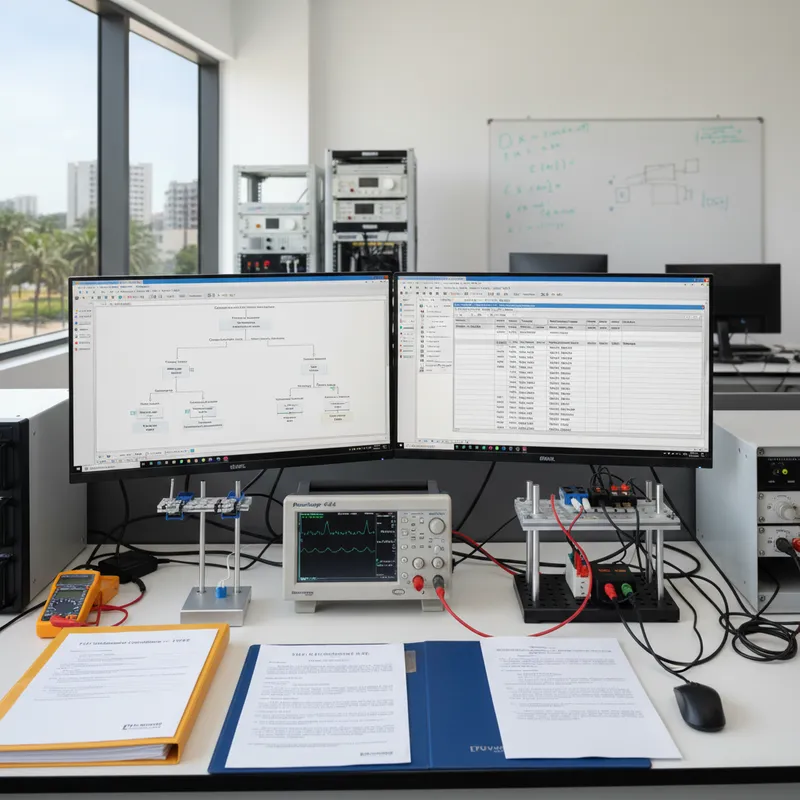
A production-grade Indian EV charger validation bench typically includes:
- DC electronic load bank sized for the charger’s maximum output (60 kW for a mid-range DC fast-charger, 180 kW for an e-bus depot charger)
- Network emulator for OCPP back-end simulation, either a local OCPP central system (like MotoWrap, Maeve, CitrineOS, SteVe) or a cloud service for end-to-end testing
- PicoScope 6000E on HomePlug PLC and Ethernet physical layer
- PicoScope 4444 + PicoConnect 442 on the DC output and AC mains input
- PicoLog TC-08 for heatsink and ambient thermal logging
- PicoLog CM3 or PicoScope 4444 with a PicoConnect 442 probe for mains current measurement
- Test PC running PicoScope 7 and PicoLog 6 in a shared window layout
Indian use cases
- Delhi NCR DC fast-charger OEM building 60 kW CCS-2 stations for a national network rollout, full compliance bench with PicoScope 6000E on the HomePlug PLC line, PicoScope 4444 + PicoConnect 442 on the 400-600 V DC output, PicoLog TC-08 on the power stage
- Bengaluru charger controller team validating OCPP 2.0.1 firmware over Ethernet, PicoScope 6000E capturing Ethernet physical layer alongside a charger UART debug stream, with Wireshark running for upper-layer decode
- Pune two-wheeler EV AC charger OEM building 3.3 kW Bharat AC-001 and 7 kW Type 2 chargers, PicoScope 2205A MSO on CP/PP PWM, PicoLog CM3 with TA325 flexible AC clamp for AC current, PicoLog TC-08 for thermal
- Chennai commercial vehicle e-bus depot charger validation, 180 kW class CCS-2 fast-charger with PicoScope 6000E on PLC, PicoScope 4444 + PicoConnect 442 on the 750 V DC output, extensive PicoLog TC-08 thermal instrumentation on the larger power stage
Hardware recommendation summary
- PicoScope 6000E: flagship for HomePlug PLC, Ethernet physical layer, and general-purpose high-bandwidth EV charger work
- PicoScope 4444 with PicoConnect 442: the isolated 1000 V CAT III differential bench for DC bus and AC mains measurement
- PicoScope 2205A MSO: entry-level for CP/PP PWM and AC Type 2 charger development
- PicoLog TC-08: 8-channel thermocouple logger for thermal duty cycle testing
- PicoLog CM3: 3-channel AC current clamp logger
Further reading
- Pico Technology EV Charging Resources, canonical application note library
- PicoScope 4444 and PicoConnect 442 product reference, official product documentation
- GSAS Pico Technology partner page
- PicoScope for Power Electronics, IGBT, SiC, GaN on Indian Benches
- PicoScope EMC Pre-Compliance, Partial Discharge and Harmonics in India
- pyPicoSDK for EV Battery Characterization on Indian Benches
- PicoConnect 442 Probe, Current Clamp, and HFCT Bundles for India
Closing: Indian EV charging needs Indian-priced precision instrumentation
Indian charger OEMs are building to international safety and communication standards on Indian capital budgets. The test bench instrumentation strategy has to deliver 1000 V CAT III isolated measurement, high-bandwidth PLC capture, precision thermal logging, and protocol decode, without the price tag of a full Keysight or Rohde & Schwarz rack. PicoScope plus PicoLog delivers that envelope for Indian EV charger engineering teams across Bengaluru, Chennai, Hyderabad, Delhi NCR, Mumbai, and Pune, and GSAS Micro Systems supports on-bench bring-up, compliance-bench architecture consulting, and PicoConnect 442 probe integration for teams moving from bench prototype to volume production.
Also appears in:
Interested in Pico Technology tools?
Talk to our application engineers for personalized tool recommendations.
More from Pico Technology
View all →
How to Buy an Oscilloscope in India (2026): USB vs Benchtop, Bit Depth, Bandwidth: A Buying Guide
5 Jun · 11 min
PicoScope 5000D vs 5000E: Native 16-Bit or FlexRes? A Buyer's Guide for Indian Labs
4 Jun · 11 min
PicoScope 5000E in India: The World's First 4-Channel 16-Bit USB Oscilloscope, Explained
4 Jun · 11 min
PicoScope 7 Goes Native Arm64: Apple Silicon, Snapdragon Windows and Arm Linux Test Benches in India
4 Jun · 11 min
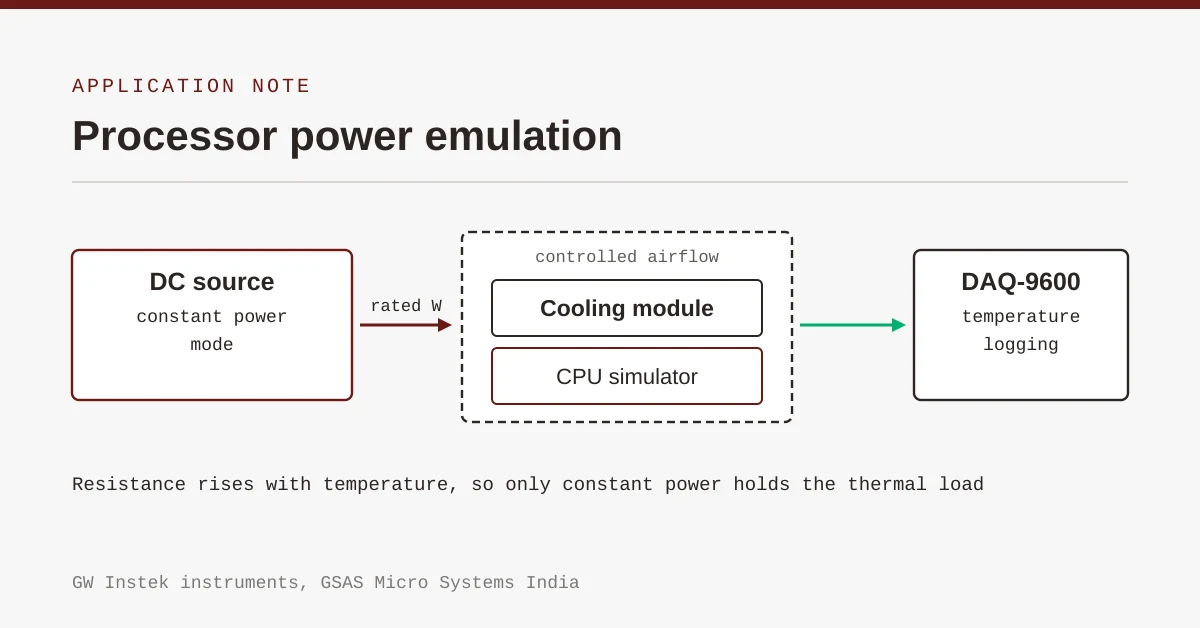
Emulating Processor Power for Thermal Testing: Why Constant Power
7 Oct · 7 min
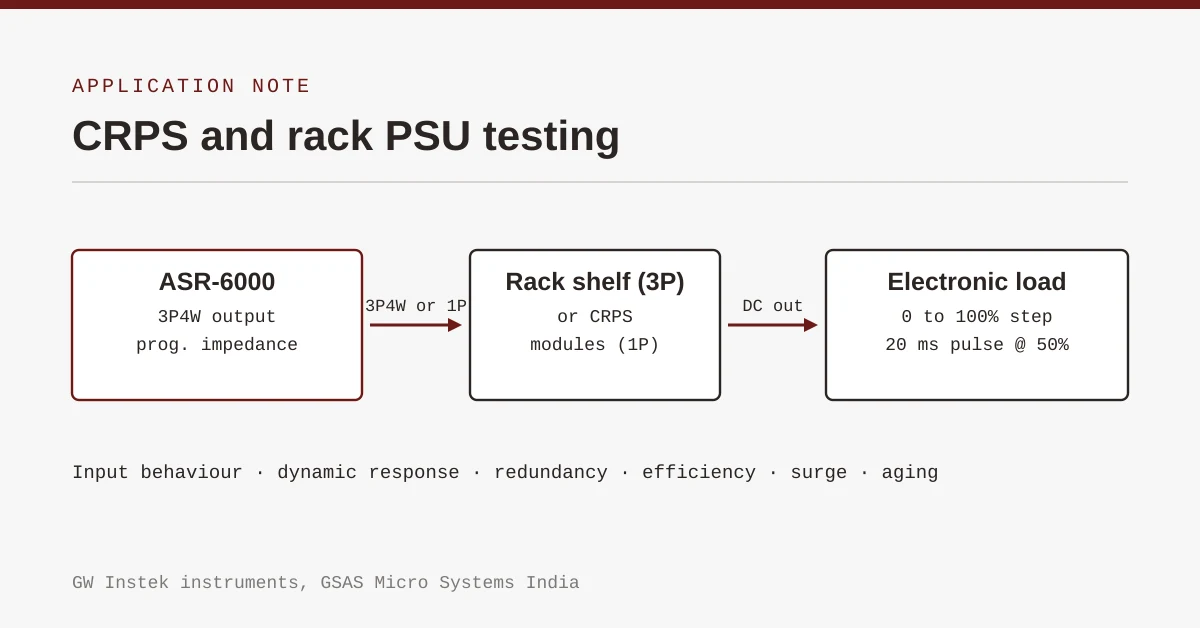
CRPS and Rack Power Supply Testing: The Six Tests That Matter
7 Oct · 7 min