Every IoT project starts with the same question: which wireless technology? The answer depends on four factors, range, power consumption, data rate, and infrastructure requirements, and the right choice is almost never the same across different applications. This guide compares LoRa, Wi-Fi, and Bluetooth Low Energy (BLE) across the dimensions that matter for Indian IoT deployments.
The Comparison at a Glance
| Factor | LoRa | Wi-Fi | BLE 5.0 |
|---|---|---|---|
| Range (outdoor) | 5-16+ km | 50-100 m | 50-100 m |
| Range (indoor) | 1-3 km | 20-50 m | 20-50 m |
| Data Rate | 0.3 - 50 kbps | 1-100+ Mbps | 125 kbps - 2 Mbps |
| Battery Life | Years | Hours to days | Months to years |
| Infrastructure | Own gateway | Existing Wi-Fi | Phone/gateway |
| Licensing | ISM (free) | ISM (free) | ISM (free) |
| Subscription | None | None | None |
| Typical Payload | 10-250 bytes | Unlimited | 20-250 bytes |
| Reyax Module | RYLR998 | RYBW Series | RYB080I |
When to Choose LoRa
LoRa is the right choice when your application needs long range (hundreds of metres to kilometres), battery operation (months to years), and transmits small, infrequent data packets (sensor readings, meter data, GPS coordinates, status reports).
Ideal applications: Smart agriculture sensor networks across Hyderabad and Pune farmlands. Water and gas metering across city municipalities. Industrial monitoring sensors distributed across large factory complexes. Asset tracking with GPS position reporting. Environmental monitoring stations in remote locations.
Not ideal when: You need to transmit images, video, audio, or large files. You need real-time bidirectional communication. You need sub-second latency. You need to connect to existing IP networks directly.
The Reyax RYLR998 (868 MHz) and RYLR498 (433 MHz) provide LoRa connectivity with AT command simplicity. For applications that need both LoRaWAN network management and point-to-point flexibility, the RYLR993 supports both modes.
When to Choose Wi-Fi
Wi-Fi is the right choice when your device is mains-powered (or has a large battery), needs high data throughput (hundreds of kbps to Mbps), and is deployed within range of existing Wi-Fi infrastructure.
Ideal applications: Smart home devices (cameras, displays, speakers). Industrial HMI panels and dashboards. IoT gateways that aggregate sensor data and need a cloud uplink. Point-of-sale systems. Building automation controllers.
Not ideal when: The device is battery-powered and must last months or years. You need to cover an area larger than a building. There is no existing Wi-Fi infrastructure. You need to connect hundreds of devices to a single access point (Wi-Fi AP capacity limits become a factor).
The Reyax RYBW Series combines BLE and Wi-Fi in a single module, ideal for IoT gateways that use BLE to communicate with local sensors and Wi-Fi for the cloud uplink.
When to Choose BLE
BLE is the right choice when your device communicates with a smartphone or nearby gateway, needs low power consumption (coin cell battery life measured in months to years), and transmits small to moderate data (sensor readings, configuration data, firmware updates).
Ideal applications: Wearable health monitors. Proximity beacons for retail and indoor navigation. Smart locks and access control. Sensor tags for equipment monitoring. Smartphone-configurable devices.
Not ideal when: You need range beyond 100 metres. You need to transmit large continuous data streams. There is no smartphone or BLE gateway in range.
The Reyax RYB080I provides BLE 5.0 with sub-microamp standby current on the TI CC2640R2F platform. For projects that need BLE 5.4 with Matter and Thread support for smart home ecosystems, the RYB5510 on the Nordic nRF5340 covers all emerging protocols.
Hybrid Architectures: Combining Technologies
Many real-world IoT systems use multiple wireless technologies at different layers:
LoRa + BLE: Sensor nodes use LoRa for data backhaul to a central gateway, and BLE for local configuration and firmware updates via a technician’s smartphone. The Reyax RYLR999 integrates both radios in a single module with dual UART interfaces.
LoRa + Wi-Fi: LoRa sensor nodes transmit to a gateway, and the gateway uses Wi-Fi to connect to the cloud. This is the standard architecture for smart agriculture, metering, and industrial monitoring deployments across India.
BLE + Wi-Fi: BLE sensors communicate with a Wi-Fi gateway that bridges data to the cloud. Common in building automation and smart home applications where BLE sensors are distributed within a building and a Wi-Fi-connected hub aggregates the data. The RYBW Series handles both radios in one module.
Cost Comparison for Indian Deployments
For a 100-node sensor deployment in Chennai or Bengaluru:
LoRa approach: 100 sensor nodes with RYLR998 modules + 1-3 gateways. No recurring connectivity costs. Total wireless infrastructure cost is dominated by hardware.
Cellular approach: 100 sensor nodes with NB-IoT/LTE-M modules + SIM cards. Monthly per-device subscription fees (typically INR 50-150 per device per month) add INR 60,000-180,000 per year recurring cost for 100 devices.
Wi-Fi approach: 100 sensor nodes + sufficient Wi-Fi access points to cover the deployment area. Requires existing Wi-Fi infrastructure or significant AP deployment cost. Higher power consumption means mains power or frequent battery replacement at each node.
For deployments where range and battery life are the primary requirements and data volumes are small, LoRa’s zero-subscription model provides the most favourable economics at scale.
Making the Decision
The decision framework is straightforward:
- Range > 100 m? → LoRa (or cellular if subscription cost is acceptable)
- Battery life > 1 year? → LoRa or BLE (not Wi-Fi)
- Data rate > 50 kbps? → Wi-Fi or BLE (not LoRa)
- Smartphone interaction required? → BLE
- Existing Wi-Fi infrastructure? → Wi-Fi for mains-powered devices
Why Buy from GSAS
GSAS Micro Systems provides the complete Reyax wireless module portfolio, LoRa, BLE, Wi-Fi, UWB, GNSS, and NFC, from Indian inventory with INR invoicing. Our team helps engineering teams across Bengaluru, Hyderabad, Chennai, Pune, Mumbai, and Delhi NCR select the right wireless technology and module for each application. Contact GSAS for module selection guidance or evaluation samples.
Also appears in:
Interested in REYAX tools?
Talk to our application engineers for personalized tool recommendations.
More from REYAX
View all →
RYB5510 Deep Dive: BLE 5.4, Thread, and Matter on a Single Module
5 Apr · 4 min

RYLR998 Deep Dive: Why This LoRa Module Is the Go-To Choice for IoT Projects in India
5 Apr · 4 min

RYS8830 GNSS Module: Multi-Constellation Positioning for Indian Fleet and Asset Tracking
5 Apr · 4 min
Industrial Condition Monitoring with Wireless Sensors: A Practical Guide for Indian Factories
4 Apr · 4 min
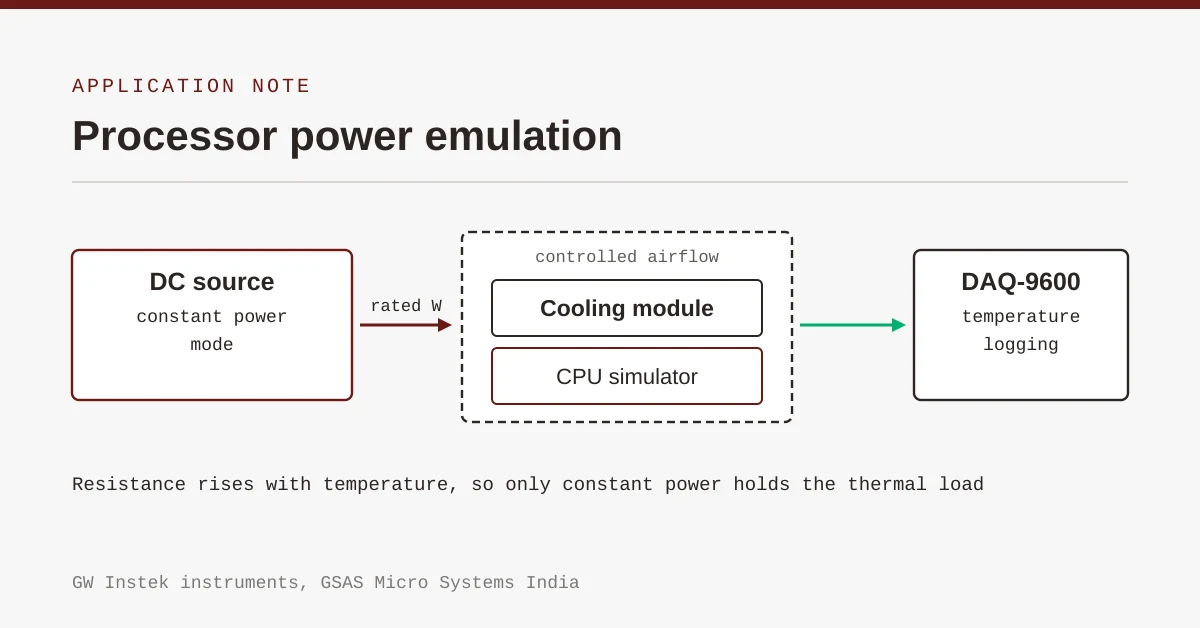
Emulating Processor Power for Thermal Testing: Why Constant Power
7 Oct · 7 min
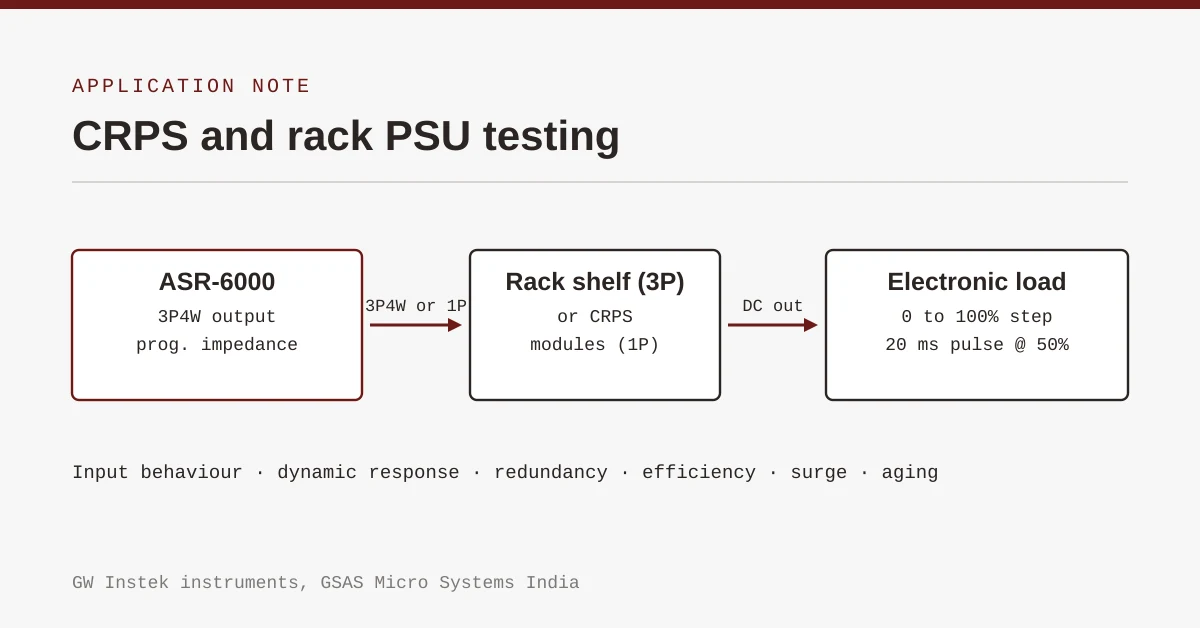
CRPS and Rack Power Supply Testing: The Six Tests That Matter
7 Oct · 7 min