Fleet management and asset tracking are among the fastest-growing embedded application domains in India. Logistics companies, public transport operators, construction equipment owners, and agricultural fleet managers all need reliable position data from devices that are compact, power-efficient, and cost-effective at volume. The Reyax RYS8830 GNSS module delivers on all three requirements.
Sony CXD5605AGF: The Navigation Engine
The RYS8830 is built around the Sony CXD5605AGF, a multi-constellation GNSS receiver that simultaneously tracks GPS, BeiDou, and GLONASS satellites. Concurrent multi-constellation reception is not optional in Indian operating conditions, urban canyons in Mumbai and Delhi NCR block large portions of the sky, and relying on GPS alone results in poor accuracy or complete position loss when buildings obscure the visible satellite constellation. By tracking GPS, BeiDou, and GLONASS simultaneously, the RYS8830 has access to a much larger pool of satellites, maintaining position fixes in environments where a GPS-only receiver would fail.
Specifications That Matter for Tracking Applications
| Parameter | Value | Practical Implication |
|---|---|---|
| Constellations | GPS, BeiDou, GLONASS | Reliable fixes in urban canyons |
| Accuracy | 1 m CEP | Lane-level positioning |
| Hot Start | 1 second | Instant fix after brief signal loss |
| Cold Start | 35 seconds | Reasonable first-fix from power-on |
| Tracking Sensitivity | -161 dBm | Maintains lock under bridges, tree cover |
| Acquisition Current | 16-19 mA | Manageable for battery-powered trackers |
| Tracking Current | 9-13 mA | Efficient for continuous tracking |
| Idle Current | 3.7 mA | Low standby for interval-based logging |
| Interface | UART + I2C | Flexible host MCU integration |
| Dimensions | 11 x 11 x 2.2 mm | Fits compact tracker enclosures |
| Antenna | Embedded | No external antenna needed for many designs |
The 1-second hot start time is particularly important for vehicle tracking. When a fleet vehicle enters a tunnel or underground parking in Bengaluru or Hyderabad and emerges seconds later, the RYS8830 reacquires a position fix almost instantly. Cold start, the time to first fix from a completely cold state, takes 35 seconds, which is competitive for the module’s power class.
Embedded Antenna: Simplifying Hardware Design
The RYS8830 includes an embedded antenna within its 11x11 mm footprint. For many tracker and IoT device designs, this eliminates the need for an external GNSS antenna, reducing BOM cost, assembly complexity, and device size. The embedded antenna performs well when the module is mounted on the PCB with a clear ground plane beneath it and the antenna element faces the sky, typical placement for vehicle-mounted trackers.
For applications requiring higher sensitivity, devices mounted inside metal enclosures or under vehicle dashboards, an external active antenna connected through a U.FL connector on the host PCB provides better sky visibility. The RYS8830 supports this configuration through its RF input pin.
Pairing GNSS with LoRa for Asset Tracking
A common architecture for Indian asset tracking deployments combines the RYS8830 for position data with a Reyax LoRa module for wireless transmission. The GNSS module provides coordinates, and the RYLR998 or RYLR498 (433 MHz, suitable for India’s ISM band) transmits the position to a base station or gateway. This LoRa-based architecture avoids cellular subscription costs, a significant factor when tracking hundreds or thousands of assets across construction sites, agricultural operations, or logistics yards.
For example, a construction equipment fleet spread across sites in Chennai and Pune uses LoRa to transmit GPS coordinates from each machine to a site gateway every few minutes. The gateway aggregates the position data and forwards it to a cloud platform over cellular or Wi-Fi. The per-device operating cost is effectively zero after the hardware investment, since LoRa operates in unlicensed ISM bands.
Power Management for Battery-Operated Devices
The RYS8830’s power profile supports several operating modes for battery-powered trackers. Continuous tracking at 9-13 mA is suitable for vehicle trackers with external power. Interval-based tracking, where the module is powered on, acquires a fix, logs the position, and returns to sleep, extends battery life for portable asset trackers. The 3.7 mA idle current and 1-second hot start make interval-based operation practical, since the module can wake, fix, and sleep in seconds.
The 8 Mbit onboard flash memory provides local storage for position logs when the wireless link is unavailable. A tracker in a warehouse or basement can continue logging positions and upload the stored data when it re-enters wireless coverage, a common requirement for logistics and supply chain tracking.
Indian Market Context
India’s fleet management market spans commercial vehicles, public buses, ride-hailing, construction equipment, agricultural machinery, and two-wheeler logistics. The combination of compact form factor, embedded antenna, low power consumption, and multi-constellation accuracy makes the RYS8830 suitable for the full range of Indian tracking applications, from a motorcycle courier tracker in Mumbai to a combine harvester monitor in rural Hyderabad.
Why Buy from GSAS
GSAS Micro Systems provides Reyax RYS8830 GNSS modules from Indian inventory with INR invoicing. Our engineering team supports antenna placement guidance, power budget analysis for battery-operated trackers, and system architecture consulting for combined GNSS + LoRa asset tracking deployments. Teams across Bengaluru, Hyderabad, Chennai, Pune, Mumbai, and Delhi NCR can access local technical support from prototype through production. Contact GSAS for evaluation samples or to discuss your tracking product requirements.
Also appears in:
Interested in REYAX tools?
Talk to our application engineers for personalized tool recommendations.
More from REYAX
View all →
RYB5510 Deep Dive: BLE 5.4, Thread, and Matter on a Single Module
5 Apr · 4 min

RYLR998 Deep Dive: Why This LoRa Module Is the Go-To Choice for IoT Projects in India
5 Apr · 4 min

Industrial Condition Monitoring with Wireless Sensors: A Practical Guide for Indian Factories
4 Apr · 4 min

LoRa for Smart Agriculture in India: Building Wireless Sensor Networks That Actually Work in the Field
4 Apr · 4 min
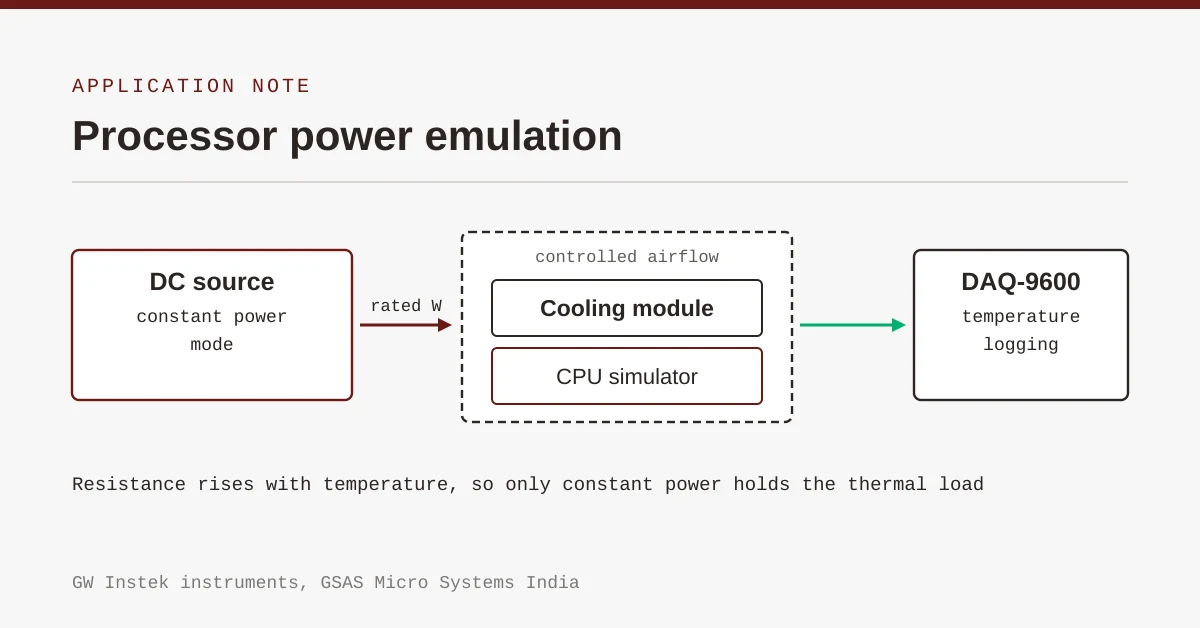
Emulating Processor Power for Thermal Testing: Why Constant Power
7 Oct · 7 min
CRPS and Rack Power Supply Testing: The Six Tests That Matter
7 Oct · 7 min