Three Total Phase USB host adapters solve the same core problem, get a PC talking to an I2C or SPI target, but they are not interchangeable, and picking the wrong one wastes either money or a week of frustration. The Aardvark is the general-purpose workhorse. The Cheetah is a dedicated high-speed SPI engine built for production flash programming. The Promira Serial Platform is a different class of instrument entirely, an FPGA-based platform that adds eSPI, faster I2C, and built-in protocol analysis. This guide breaks down which one fits your workflow, and closes with a short section on matching a Beagle USB protocol analyzer to whichever adapter you choose.
The two-minute decision
- Just need I2C and SPI for everyday bring-up, EEPROM/flash access, or automated test scripting? Start with the Aardvark I2C/SPI Host Adapter. It covers I2C master/slave up to 800 kHz and SPI up to 8 MHz, plus SMBus, PMBus, and other I2C-derived protocols, in a single USB-powered device.
- Programming SPI flash or NOR/NAND in volume, or need gap-free continuous SPI transfers? Get the Cheetah SPI Host Adapter. Its pipelined DMA architecture and 100 kHz to 40+ MHz SPI speed exist specifically to remove the pauses that cause flash-programming timeouts.
- Need eSPI, I2C High-Speed mode, faster SPI with Dual/Quad I/O, or bus sniffing alongside active control? Go straight to the Promira Serial Platform. It is a superset instrument, not an upgraded Aardvark.
- Working specifically with eSPI on a PC platform (PCH to embedded controller, Super I/O, TPM, SPI flash)? Add the Promira eSPI Analysis Application license to the Promira platform.
- Need to see USB traffic itself, not I2C/SPI? That is a different tool category entirely, a Beagle protocol analyzer, covered below.
- Evaluating Binho adapters as an alternative? Binho is a separate vendor from Total Phase; this guide covers the Total Phase Aardvark, Cheetah, and Promira family only.
Aardvark vs Cheetah vs Promira: verified spec comparison
| Spec | Aardvark I2C/SPI | Cheetah SPI | Promira Serial Platform |
|---|---|---|---|
| I2C | Master/Slave, up to 800 kHz | Not supported | Master + Slave, up to 3.4 MHz (HS mode) |
| SPI | Master up to 8 MHz, Slave to 4 MHz | 100 kHz to 40+ MHz, pipelined | Up to 80 MHz, Dual/Quad I/O |
| eSPI | Not supported | Not supported | Up to 66 MHz Quad I/O (with Analysis Application) |
| Bus analysis (sniffing) | Not supported | Not supported | Built-in I2C/SPI/eSPI analysis |
| Host interface | USB 1.1, bus-powered | USB, bus-powered, 64 g | USB 2.0 + Gigabit Ethernet |
| APIs | C/C++/C#, Python, .NET, VB, LabVIEW | C, C++, C#, Python, .NET, LabVIEW | Cross-platform API, GPIO control |
What each instrument means in practice
Aardvark is Total Phase’s most popular product and the default starting point for I2C/SPI development. Because SMBus, PMBus, SBBus, DDC, IPMI, and TWI all run on the I2C two-wire interface, the Aardvark’s I2C engine reaches all of them without extra hardware. It also supplies limited target power (+5 V at up to 25 mA) for small loads or pull-ups, so a single USB cable is often the entire test setup.
Cheetah exists because SPI flash programming punishes any adapter with inter-transaction gaps, a paused SPI clock during programming can register as a timeout on the target device. Cheetah’s pipelined DMA architecture with transaction queuing keeps the SPI clock running continuously, and its three independent slave select outputs let one adapter address up to three SPI devices without external multiplexing hardware. Flash Center software adds one-click read, program, and verify for SPI flash chips without writing code.
Promira is built on a different FPGA-based architecture and is not simply a faster Aardvark. Total Phase describes it as the first instrument to combine I2C/SPI/eSPI master-or-slave control with built-in protocol analysis (bus sniffing) in a single device. Programmable level shifting from 0.9 V to 3.45 V (5 V tolerant) eliminates external level-shifter boards, and the Gigabit Ethernet host interface, alongside USB, supports remote or networked test setups that neither the Aardvark nor Cheetah offer.
Recommendations by team profile
- Firmware bring-up engineer, mixed I2C/SPI sensors and EEPROMs: Aardvark. Cross-platform APIs and low cost of entry make it the right default for a bench that touches many small devices.
- Production test / EMS line programming SPI flash or NOR devices: Cheetah, paired with Flash Center for a no-code programming workflow. If the SPI clock speed and gap-free transfers matter to your throughput target, Cheetah’s pipelined architecture is the reason to step up from Aardvark.
- PC platform / embedded controller team validating eSPI: Promira Serial Platform with the eSPI Analysis Application. This is the only instrument in the family that speaks eSPI at all.
- Automated test or characterization lab needing both control and passive sniffing on the same bus: Promira, since it is the only adapter with built-in analysis alongside active master/slave operation.
- Distributed or networked test rigs: Promira’s Gigabit Ethernet interface fits multi-station labs where a USB-only adapter would require a PC at every bench.
Which Beagle analyzer to pair with your host adapter
A host adapter drives or listens to I2C, SPI, or eSPI. If the question is instead “what is happening on the USB bus itself,” that is a Beagle protocol analyzer, a separate, passive, non-intrusive instrument category. Match the Beagle to the USB speed under test:
| Beagle model | USB speeds covered | Best fit |
|---|---|---|
| Beagle USB 12 | Full Speed (12 Mbps), Low Speed (1.5 Mbps) | Legacy USB peripherals, HID devices, low-speed debugging |
| Beagle USB 480 | High (480 Mbps), Full (12 Mbps), Low (1.5 Mbps) | USB 2.0 High-Speed devices with real-time class decoding (HID, MSC, CDC, Audio, Video) |
| Beagle USB 480 Power | Same as USB 480, plus VBus voltage/current graphing | Correlating USB power draw with protocol activity, suspend/resume and power-rail debugging |
| Beagle USB 5000 v2 | USB 3.0 SuperSpeed (5 Gbps) simultaneous with USB 2.0 | SuperSpeed device validation, deep buffer and multi-analyzer sync needs |
A team validating a USB-C peripheral that also draws variable power, for instance, would pair a Cheetah or Promira for the device’s internal I2C/SPI configuration bus with a Beagle USB 480 Power on the host-facing USB link, to see both sides of the design during the same debug session.
Buy Total Phase in India from GSAS
GSAS Micro Systems is an authorized Total Phase engineering partner in India, offering the full Aardvark, Cheetah, Promira, and Beagle line-up with competitive pricing and short lead times. Whichever instrument fits your workflow, GSAS provides GST-compliant invoicing, application engineering to confirm the right model for your protocol and speed requirement, and support from offices across Bengaluru, Chennai, Hyderabad, Delhi NCR, Mumbai, and Pune.
Explore the Total Phase partner page for the full product catalog, or request a quote for the Aardvark, Cheetah, Promira, or a Beagle protocol analyzer for delivery anywhere in India.
Further reading
Also appears in:
Interested in Total Phase tools?
Talk to our application engineers for personalized tool recommendations.
More from Total Phase
View all →
Automated EV Charger Test Bench in India: GW Instek AC Source, DC Load and Battery Emulator
6 Jun · 16 min
Best Logic Analyzer in India (2026): A Vendor-Neutral Buying Guide for Embedded Teams
5 Jun · 10 min
Capturing I²C/SPI Data to Train Edge AI: A Protocol-Analyzer Workflow for Indian Embedded Teams
4 Jun · 9 min
Analyzing CAN Bus Frames and Timing with the Komodo CAN Duo
23 Mar · 3 min
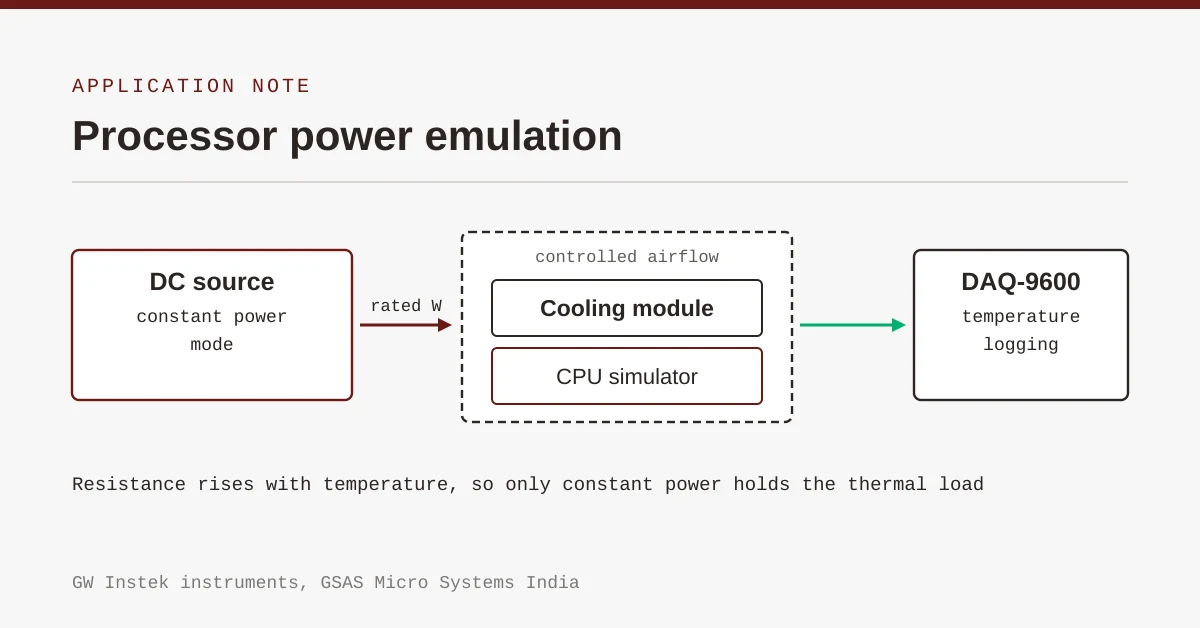
Emulating Processor Power for Thermal Testing: Why Constant Power
7 Oct · 7 min
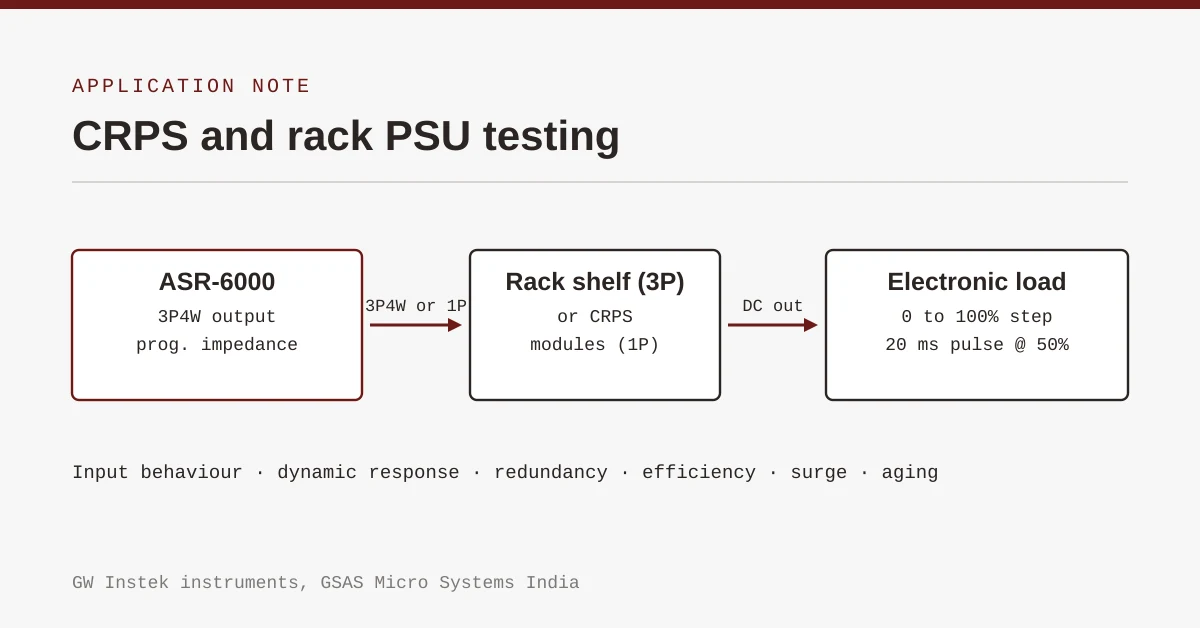
CRPS and Rack Power Supply Testing: The Six Tests That Matter
7 Oct · 7 min