Choosing a professional PCB design tool in 2026 is harder than it looks. Indian engineering teams across automotive, aerospace, defence, telecom, IoT, and medical devices have more options than ever, and more pressure to pick the right one the first time. Tool migration is expensive, retraining is slow, and the wrong choice locks a team into workflows that fight back at every layer count, every constraint, every signal-integrity sign-off.
This post is a balanced, honest comparison of the four PCB design platforms most Indian product teams shortlist: Siemens Xpedition Standard, Altium Designer, Cadence OrCAD PCB Designer, and the entry-level Siemens PADS Essentials. We’re transparent up front: GSAS Micro Systems is an authorized Siemens EDA engineering partner in India, so we sell Xpedition and PADS, not Altium, not OrCAD. The recommendation matrix below favours Xpedition where it genuinely fits, but the strengths and limitations sections for each tool are sourced from each vendor’s public documentation, not from sales decks.
Disclosure: All technical claims about Altium Designer and Cadence OrCAD in this article are sourced from each vendor’s publicly available product pages, datasheets, and documentation. If you find an inaccuracy, email us at sales@gsasindia.com and we’ll correct it.
What to Optimise For When Choosing a PCB Design Tool
Before comparing tools head-to-head, it’s worth being explicit about what your team actually needs to optimise for. Picking a PCB design tool is not a single-axis decision, it’s a multi-criteria fit problem where the right answer depends on:
- Team size: solo engineer vs 5-person workgroup vs 50-person enterprise team. Concurrent multi-user editing matters above ~10 engineers; below that it’s overhead.
- Board complexity: 4-layer IoT module vs 24-layer DDR5 server motherboard. High-speed designs need integrated SI/PI; basic boards do not.
- Compliance burden: IEC 60601 (medical), IEC 62368 (consumer), ISO 26262 (automotive), DO-254 (avionics) all have documentation requirements that affect tool choice.
- Licensing model: annual subscription vs token-based pay-as-you-use. Most commercial PCB tools have moved to subscription-only in recent years; the remaining variation is whether advanced features are permanent add-ons or pay-as-you-go tokens.
- Vendor lock-in risk: what happens if you outgrow the tool? Can you scale up without a painful migration?
- Indian local support: application engineering, training, and INR invoicing availability. Tools without local FAE coverage put your team on a slow international ticket queue when production schedules are slipping.
A good PCB design tool decision matches your team’s real constraints to a tool’s actual strengths, not its marketing positioning.
Quick Comparison Matrix
| Capability | Xpedition Standard | Altium Designer | OrCAD PCB Designer | PADS Essentials |
|---|---|---|---|---|
| Vendor | Siemens EDA | Altium | Cadence | Siemens EDA |
| Target team size | 1-10 engineers | 1-15 engineers | 1-10 engineers | 1-3 engineers |
| Pricing model | Annual subscription | Annual subscription (perpetual discontinued for new customers) | Annual subscription | Annual subscription |
| Schematic capture | Hierarchical with DxDesigner | Integrated unified editor | Capture CIS | Integrated |
| Constraint-driven design | Yes, schematic-to-layout flow | Yes | Yes (with constraint manager) | Limited |
| AI-infused design | Yes, copilot, command prediction, smart datasheets | Limited (component search) | Limited | Limited |
| Cloud DFM | Yes, Valor NPI cloud (12 free runs/year included) | Limited | Limited | No |
| Signal integrity | HyperLynx pre/post-layout via tokens | Built-in SI analyser | Sigrity SI add-on | Limited |
| Power integrity | HyperLynx PI via tokens | Limited | Sigrity PI add-on | No |
| Rigid-flex support | Token-based VBL with bend modelling | Yes (built-in) | Add-on module | Limited |
| 3D ECAD-MCAD | IDX exchange + NX deep integration via tokens | STEP export + bidirectional MCAD | STEP export | Limited |
| Concurrent multi-user | Via Xpedition Enterprise upgrade | PCB CoDesign via Altium 365 / Altium Develop (up to 5 concurrent Authors) | OrCAD X Symphony (Standard and Professional tiers) | No |
| Scale path | Standard → Enterprise (no data translation) | Designer → Altium Develop / 365 / Enterprise Server | OrCAD X Standard → Professional → Allegro X (database compatible) | Standard → Xpedition (no data translation) |
| India support | GSAS, engineering, training, INR invoicing | EDS Technologies, Entuple | Cadence India direct + partners | GSAS |
| Free trial | 30 days | 15 days | Limited eval | 30 days |
Sources: vendor public product pages, Siemens EDA, Altium Designer, Cadence OrCAD, retrieved 2026-04.
Siemens Xpedition Standard: Adaptable PCB Design with AI and Tokens
Xpedition Standard is Siemens EDA’s professional PCB design tool aimed at individual engineers and small workgroups (1-10 engineers) who want enterprise-grade technology without enterprise-grade cost. The defining characteristic is the token-based add-on system: instead of paying upfront for signal integrity, power integrity, rigid-flex, and ECAD-MCAD capabilities, teams buy a shared token pool (25 or 50 tokens) and consume tokens only when those advanced features are actually needed.
Strengths (per Siemens EDA public documentation):
- AI-infused design support: copilot, command prediction, sketch routing, and smart datasheets reduce routine tasks and accelerate component evaluation
- Cloud DFM via Valor NPI (PCBflow): Valor-powered PCBflow cloud DFM is bundled with every Xpedition Standard licence; catches manufacturability issues before Gerber handoff (quota per current Siemens release, check your licence)
- Token economics: pay-as-you-use HyperLynx SI/PI, rigid-flex, and advanced ECAD-MCAD instead of permanent licence sunk cost
- Scale path to Xpedition Enterprise: same file format, same libraries, same UI; no data translation when teams grow
- Constraint-driven correct-by-construction: schematic constraints automatically enforced during layout
- Cloud-connected collaboration: Connect cloud provides 500GB secure storage with version management
Limitations (honest assessment):
- Concurrent multi-user editing is not available in Standard, that’s an Xpedition Enterprise feature. Teams above ~10 engineers should evaluate Enterprise instead.
- Token consumption requires planning, running out mid-project means buying more tokens or waiting for the next pack.
- HyperLynx SI/PI tokens are powerful but require basic SI knowledge to interpret eye diagrams and impedance plots.
Best fit: Indian SMB teams designing high-speed digital, mixed-signal, IoT, or wearable products who need professional verification capabilities on demand without locking up budget in unused permanent licences.
Altium Designer: Unified, Popular, Single-Tier
Altium Designer is among the most widely recognised PCB design tools globally, with strong adoption in startups and mid-size electronics companies. Its defining characteristic is the unified design environment: schematic capture, layout, library management, and 3D visualisation all in a single application.
Strengths (per Altium public documentation):
- Unified, integrated environment, single application for schematic, layout, 3D, and library management
- Active user community and large library of free + paid component data via Altium 365
- Bidirectional MCAD integration (STEP export, native CAD round-trip)
- PCB CoDesign / PCB Co-Authoring in Altium 365 and Altium Develop, multiple engineers can work on the same board simultaneously (up to 5 concurrent Authors on current Develop plans), with collaborator visualization and conflict prevention
- Signal integrity available through extensions, the legacy Signal Integrity Analyzer is free, and SI Analyzer by Keysight is a paid extension for deeper analysis
- Extensive third-party plugin ecosystem
- Annual subscription pricing (perpetual licences have been discontinued for new customers; existing perpetual holders can continue on annual maintenance)
Limitations (honest assessment):
- Signal integrity runs through extensions rather than a deeply integrated first-party SI toolchain comparable to HyperLynx SI/PI, suitable for routine high-speed work but less established for DDR5 / PCIe Gen5 sign-off at scale
- Concurrent co-design is seat-capped at 5 Authors in current Altium Develop plans; enterprise teams above that threshold need higher-tier Altium licensing
- DFM checking is more limited than Valor NPI / PCBflow; teams typically rely on the fabricator to flag manufacturability issues
- India support comes through reseller/partner channels, coverage and FAE depth varies
- Perpetual licensing has been discontinued for new customers (all new purchases are subscription)
Best fit: Solo engineers and small startup teams (1-5 engineers) who want a single integrated tool with a familiar UI and active community, primarily for medium-complexity designs without aggressive high-speed signal integrity requirements.
External link: Altium Designer product page (nofollow){rel=“nofollow noopener” target=“_blank”}
Cadence OrCAD X: Standard, Professional, and the Allegro Scale Path
Cadence OrCAD has been a fixture in PCB design for decades, particularly in academic and entry-level industrial settings. The OrCAD X platform is Cadence’s current packaging, offered in two tiers, OrCAD X Standard and OrCAD X Professional: with the Presto layout engine, OrCAD Capture (schematic), and cloud-connected features. Cadence positions OrCAD X as the small-team entry tier that scales up to Allegro X for enterprise programmes.
Strengths (per Cadence public documentation):
- Long-established product with strong academic adoption, many Indian engineering graduates have used OrCAD during university
- OrCAD X Professional includes real-time signal integrity analysis, rigid-flex design, and advanced routing, features that were previously Sigrity/Allegro upgrades
- OrCAD X Symphony provides real-time concurrent multi-user PCB co-design, multiple engineers can work on the same board database simultaneously with collaborator cursors and shared cloud data (per Cadence’s OrCAD X datasheet)
- OrCAD Capture is widely used as a standalone schematic tool even in shops that route in other layout tools
- OrCAD X PCB layout database is fully compatible with Allegro X according to the Cadence OrCAD X datasheet, libraries, rules, and design data scale into Allegro without translation
- Cadence India has direct presence in major Indian cities
Limitations (honest assessment):
- Total cost of ownership for OrCAD X Professional plus Sigrity add-ons can approach Xpedition Standard with HyperLynx tokens, with less flexibility on pay-as-you-go add-ons
- AI-infused design support (command prediction, smart datasheets) is narrower than Xpedition Standard’s equivalent
- Symphony concurrent co-design is newer than Xpedition Enterprise’s established multi-user flow; best-practice documentation is still building
- For the deepest high-speed SI/PI work (advanced DDR5, 112G SerDes sign-off), Sigrity at the Allegro tier is typically where serious teams land, Xpedition + HyperLynx reaches the same territory with a different cost structure
Best fit: Teams already invested in the Cadence ecosystem (e.g., using Allegro for layout and OrCAD for schematic), academic/research settings where the tool is taught, shops standardising on OrCAD X Professional for small-team co-design, or any team committed to the OrCAD X → Allegro X scale path.
External link: Cadence OrCAD X product page (nofollow){rel=“nofollow noopener” target=“_blank”}
Siemens PADS Essentials: Entry-Level, Same Family as Xpedition
PADS Essentials (and the entry-level PADS Pro Essentials) sit below Xpedition in the Siemens EDA portfolio. PADS targets independent engineers and very small teams (1-3 engineers) who need professional-grade PCB design without Xpedition’s full feature set or price point.
Strengths (per Siemens EDA public documentation):
- Affordable entry point into the Siemens EDA ecosystem, significantly lower cost than Xpedition Standard
- Same data format compatibility with Xpedition, when a team grows from PADS to Xpedition, libraries and designs migrate without translation
- Cloud-connected collaboration via Connect
- Modern UI redesign in recent releases
- Community-driven support monitored by Siemens experts
Limitations:
- Lighter feature set than Xpedition Standard, no AI copilot, more limited constraint management, fewer add-on options
- Token-based add-on system is more limited compared to Xpedition Standard
- Built for solo engineers and very small workgroups; not suitable for team-based concurrent design
Best fit: Independent engineers, hobbyist-to-pro transitioners, university spin-offs, and very small startups (1-3 engineers) who need professional-grade design without the cost of full Xpedition Standard.
Pricing Model Comparison
Pricing across professional EDA tools moves frequently, vendors typically don’t publish list prices, and Indian list prices include local taxes and partner margins. Treat the relative positioning below as directional:
| Tool | Licensing model | Approximate positioning |
|---|---|---|
| PADS Pro Essentials | Annual subscription | Entry tier, most affordable professional option |
| Siemens PADS Essentials | Annual subscription | Lower-mid tier |
| Cadence OrCAD PCB Designer | Annual subscription | Mid tier |
| Altium Designer | Annual subscription (perpetual discontinued for new customers) | Mid-to-upper tier |
| Xpedition Standard | Annual subscription | Upper tier, but token model lets you pay only for advanced features when used |
| Xpedition Enterprise | Annual subscription with concurrent licensing | Enterprise tier |
For Indian SMB teams, the Xpedition Standard token model often delivers lower total cost of ownership than competing mid-tier tools when SI/PI/rigid-flex are needed only on a subset of projects, instead of paying for permanent SI licences that sit idle 9 months of the year.
For exact INR pricing on Siemens EDA tools (Xpedition, PADS, HyperLynx, Valor, Questa), contact sales@gsasindia.com or call +91 80 6590 1783.
Indian Support Ecosystem
Local support quality is the variable that most affects whether a tool actually delivers in production. A great tool with poor local FAE coverage becomes a frustrating tool. Here’s the honest map of who provides what in India:
| Tool | Indian distribution / partners | FAE coverage |
|---|---|---|
| Siemens EDA (Xpedition, PADS, HyperLynx, Valor, Questa) | GSAS Micro Systems, authorised engineering partner | Bengaluru, Hyderabad, Chennai, Pune, Mumbai, Delhi NCR, Coimbatore, Visakhapatnam, Vadodara, Kolkata |
| Altium Designer | EDS Technologies, Entuple, regional resellers | Variable by partner; primarily metro coverage |
| Cadence OrCAD | Cadence Design Systems India + select partners | Cadence India direct; FAE depth varies |
GSAS provides INR invoicing, GeM/SAP Ariba/Coupa procurement, on-site application engineering, training workshops on real customer designs, and SLA-backed Siemens maintenance support. The same FAE team that handles Xpedition installation also supports HyperLynx SI/PI workshops, Valor DFM rule configuration, and migration from competing tools.
Recommendation Matrix by Team Profile
The right tool depends entirely on your team’s situation. Here’s a profile-based recommendation:
| If your team is… | Recommended starting tool | Why |
|---|---|---|
| Solo engineer or hobbyist-to-pro | PADS Pro Essentials | Lowest cost professional entry; Siemens EDA family compatibility |
| 2-3 engineer startup | Xpedition Standard | AI copilot + token economics + scale path |
| 5-engineer SMB designing high-speed digital | Xpedition Standard + 25-token HyperLynx pack | Pre/post-layout SI on demand; lower TCO than permanent SI licences |
| 5-engineer SMB doing flex/rigid-flex wearables | Xpedition Standard + Rigid-Flex VBL tokens | Bend region modelling and 3D bend visualisation; cloud DFM via Valor |
| 10-engineer mid-size product company | Xpedition Standard with shared 50-token pool | Tokens float across the team; one engineer can pull HyperLynx for an afternoon |
| 20+ engineer aerospace/defence/automotive team | Xpedition Enterprise | Concurrent multi-user editing; Teamcenter PLM; ECAD-MCAD with NX |
| Already on Cadence Allegro | Stay with Cadence ecosystem | Migration cost rarely justifies the tool change |
| Cost is the only criterion | PADS Pro Essentials or free vendor tools | Acknowledge the trade-offs with verification depth |
Compliance and Safety Standards
For Indian teams designing for safety-critical standards, IEC 60601 (medical), IEC 62368 (consumer electronics), IEC 61010 (industrial), ISO 26262 (automotive), DO-254 (avionics), automated electrical creepage and clearance checking is mandatory. The Siemens EDA whitepaper Accelerating Safety Standards Compliance: Automating Creepage Checking walks through the methodology and is required reading for any team designing high-voltage boards for certification.
HyperLynx DRC (available as a token add-on to Xpedition Standard) automates creepage checking against your target standard’s working voltage, pollution degree, material group, and altitude requirements, turning a 2-day manual review into a 5-minute automated run. Altium and OrCAD do not currently include native automated creepage checking at the same depth.
How GSAS Helps Indian Teams Choose and Adopt Xpedition Standard
GSAS Micro Systems is an authorized Siemens EDA engineering partner for India. Our applications engineering team works with Indian PCB design teams across automotive, aerospace, defence, telecom, EV, IoT, and medical sectors. Typical engagements include:
- Tool comparison evaluations: side-by-side proof-of-concept on your actual board with Xpedition Standard against your current tool
- Migration support: converting libraries and design data from Altium, OrCAD, or PADS to Xpedition
- HyperLynx token sizing: choosing 25-token vs 50-token packs based on your verification cadence
- On-site training: Xpedition layout, HyperLynx SI/PI, Valor DFM, and rigid-flex workshops on your real designs
- Compliance setup: HyperLynx DRC configuration for IEC 60601, IEC 62368, IEC 61010, ISO 26262, and DO-254 net classifications
Our engineers have spent years inside Xpedition + HyperLynx + Valor on real customer programmes in Bengaluru, Hyderabad, Chennai, Pune, Mumbai, Delhi NCR, Coimbatore, Visakhapatnam, and Vadodara.
Try Xpedition Standard Free for 30 Days
The Siemens EDA Xpedition Standard 30-day trial includes the base environment, AI copilot features, Connect cloud collaboration, and token allocations for HyperLynx LineSim, BoardSim, rigid-flex, and ECAD-MCAD add-ons. It’s enough to verify a real interface on a real board and decide whether the workflow fits your team.
Further Reading
- Xpedition tokens and HyperLynx signal integrity deep-dive
- Flex and rigid-flex DFM with Valor and HyperLynx
- Scaling PCB design with adaptable add-ons (webinar)
- Choosing the right Siemens EDA tier
- Migration to Xpedition
- Xpedition Standard product page
- Xpedition Enterprise product page
- HyperLynx product page
- Valor NPI cloud DFM product page
- Siemens EDA partnership
All technical claims about Altium Designer and Cadence OrCAD X in this article are sourced from each vendor’s publicly available product pages and datasheets, retrieved April 2026. GSAS Micro Systems is an authorised Siemens EDA engineering partner in India and does not resell Altium or Cadence products. The recommendation matrix favours Xpedition where it genuinely fits Indian SMB and enterprise PCB design needs; the strengths and limitations of competing tools are documented honestly from public sources. If you find an inaccuracy, email sales@gsasindia.com.
Corrections log (2026-04-11): Updated Altium concurrent editing to reflect PCB CoDesign / PCB Co-Authoring in Altium 365 and Altium Develop; updated Altium pricing to reflect the discontinuation of perpetual licences for new customers; updated OrCAD to reflect the OrCAD X Standard / Professional structure, OrCAD X Symphony real-time concurrent co-design, and OrCAD X PCB layout database compatibility with Allegro X per the Cadence OrCAD X datasheet.
Also appears in:
Interested in Siemens EDA tools?
Talk to our application engineers for personalized tool recommendations.
More from Siemens EDA
View all →
India's EDA Moment: Why Design Tool Demand Is Growing, and the Engineering Careers It Creates
21 Sept · 9 min

AI and Complexity Are Redrawing EDA: Siemens on the Trillion-Transistor Era
13 Sept · 6 min
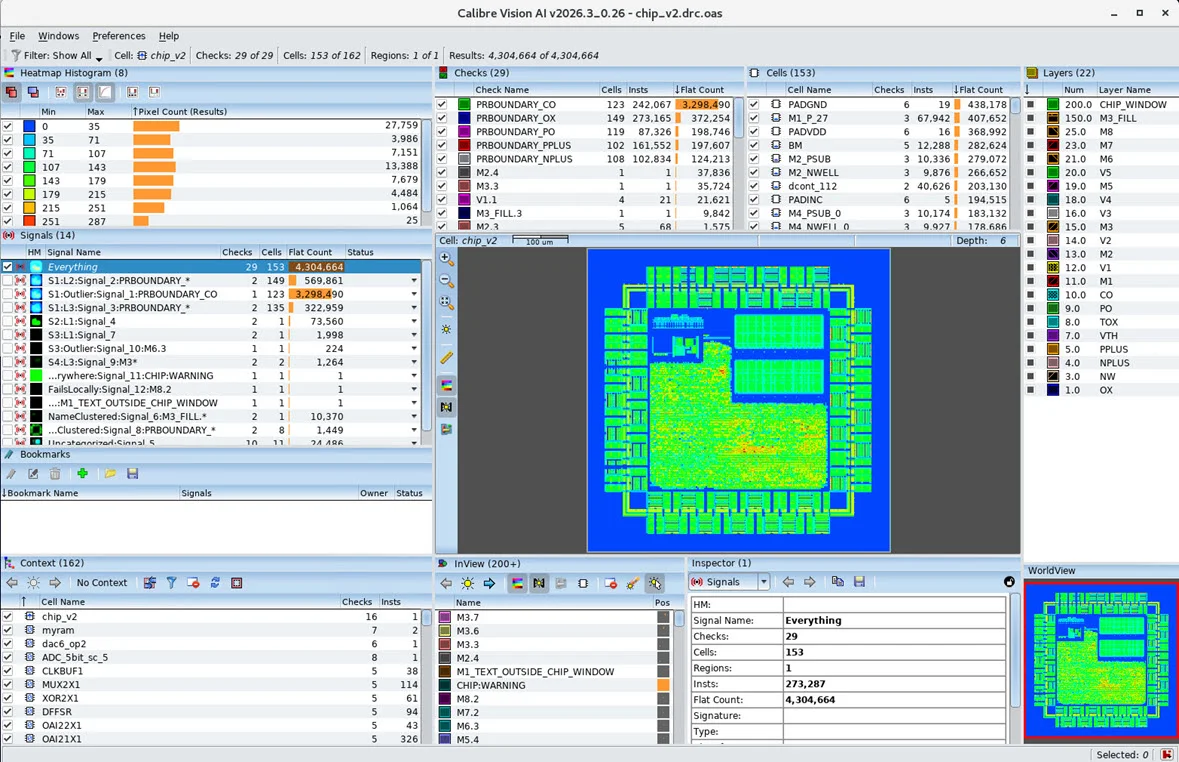
Calibre Vision AI: Bringing Order to DRC Debug at Advanced Nodes
24 Aug · 4 min
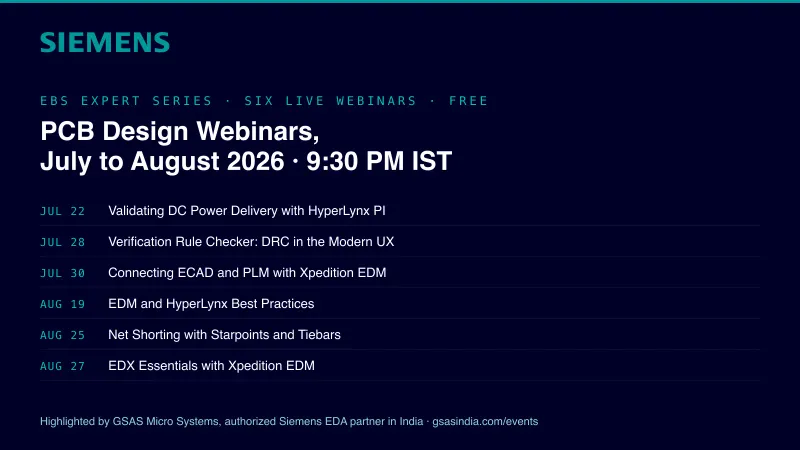
Siemens EDA EBS Expert Series: 6 Free PCB Design Webinars (Jul-Aug 2026)
20 Jul · 8 min
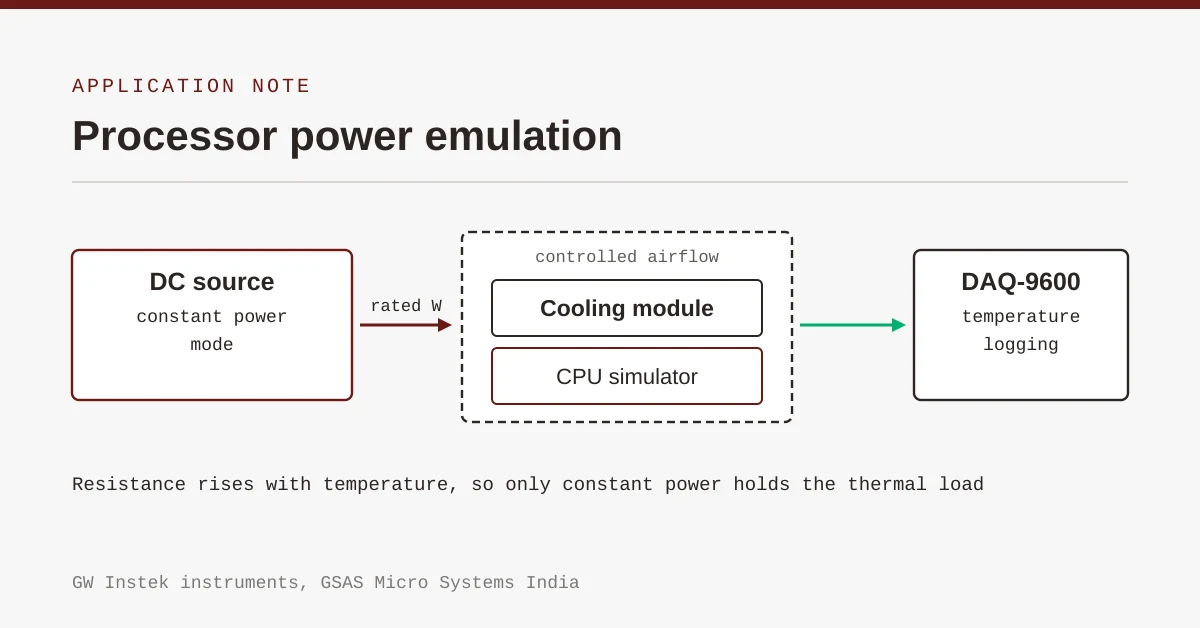
Emulating Processor Power for Thermal Testing: Why Constant Power
7 Oct · 7 min
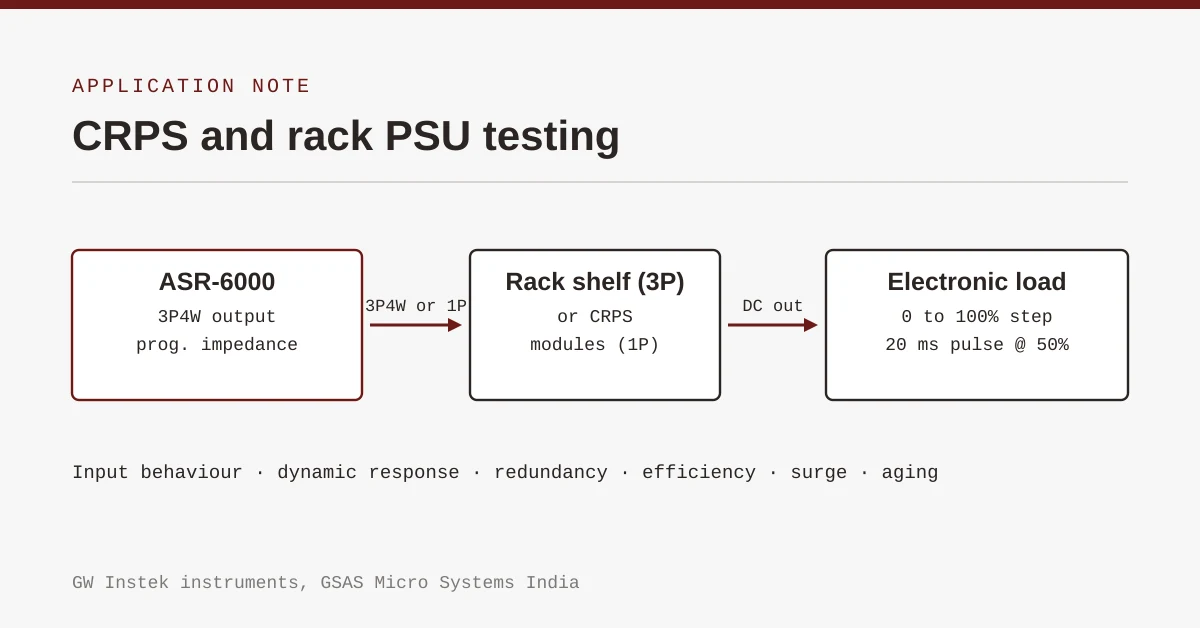
CRPS and Rack Power Supply Testing: The Six Tests That Matter
7 Oct · 7 min