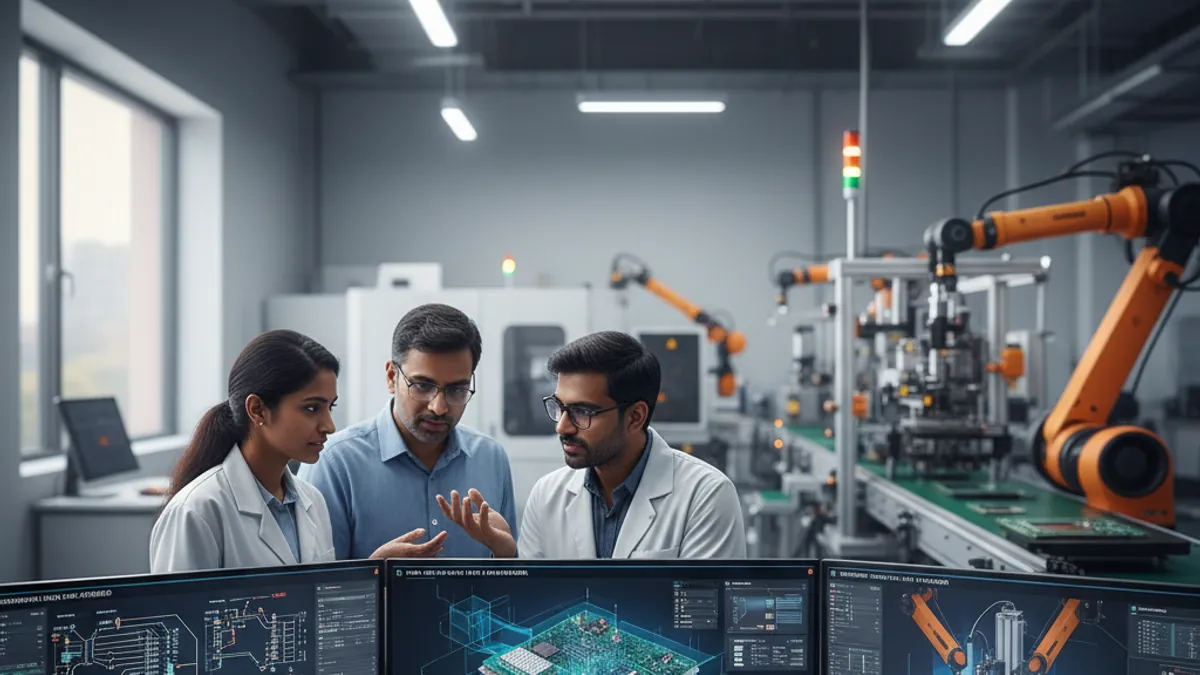
There is a quiet contradiction at the centre of modern PCB design, and Siemens’ own engineering team has put a name to it: the productivity paradox. EDA tools have never been more capable. AI features, cloud simulation, constraint-driven layout, 3D co-design, manufacturing intelligence, every serious platform ships them now. And yet, ask a layout lead in Bengaluru or an automotive design centre in Pune how their week went, and the answer is rarely “we shipped faster.” The capability is in the room. The throughput is not.
The reason, as the Siemens team frames it in their recent piece on PCB design productivity, is that too much engineering time still goes into repetitive, low-value work instead of the things that actually move a product forward, quality, manufacturability, and the design decisions only an experienced engineer can make. The tools got better. The work between the tools did not get smaller.
This post looks at how Siemens has tried to close that gap in Xpedition Standard using three connected ideas, AI applied where it actually helps, intelligent automation in the middle of the flow, and connected data continuity from design entry to release: and what each of them changes for an engineering team in India running real deadlines. We will be deliberately honest about where AI is the answer and where it is not, because that honesty is exactly how Siemens themselves describe it.
The productivity paradox: a process problem wearing a tools costume
The instinct, when a schedule slips, is to reach for a tool. Buy a faster autorouter. Add a simulation seat. License a DFM checker. Each one helps at the margin. None of them addresses the structural issue, which is that the handoffs between phases are where the time leaks out.
Three patterns explain most of the leak, and every PCB team in India will recognise at least two of them:
- Repetitive execution. The team re-routes interfaces it has routed many times before, fan-outs, escape routing, simple buses, the same power tree, because each new project starts more or less from scratch.
- Manual translation. Requirements live in a PDF, constraints in a spreadsheet, physical intent in the layout, the release notes in a drawing template. Reconciling them by hand at every revision is nobody’s idea of engineering, but it is where the hours go.
- Disconnected verification and release. Signal integrity, manufacturability and the fabrication package are treated as separate sub-projects bolted onto the end, rather than checks that run on the same data the design is built from.
The Siemens argument, and it is a sound one, is that you do not fix this with one heroic feature. You fix it by removing the manual work between features. That is what AI, automation and data continuity are meant to do together. Looked at individually they are nice. Looked at as a connected flow, they change the cycle time, not just one phase of it.
Where AI actually belongs in PCB design (and where it does not)
It is worth being precise here, because the market is awash in “AI will design your board” noise that does not survive contact with a real 12-layer DDR5 stack-up.
Siemens is refreshingly clear on this point: not every problem requires AI, and not every productivity gain comes from a generative experience. In Xpedition, AI is applied to the places where it genuinely reduces friction:
- Natural-language interaction: searching menus and commands in plain language, so a new joiner can find the right command without memorising where it lives.
- Data interpretation: surfacing the relevant information from a dense design so the engineer spends less time hunting and more time deciding.
- Assistance early in the design process: helping at concept and entry, where the cold-start cost is highest, rather than trying to automate the senior judgement that happens later.
This is the key distinction for any Indian design manager evaluating “AI in EDA” claims. The valuable application of AI is interpretation and assistance, not autopilot. It removes the cold start and the lookup tax. It does not remove the engineer. On a high-speed board, the senior layout engineer’s judgement on clock distribution, return paths and power integrity is precisely the thing you do not want a generative model improvising.
AI-assisted command prediction and natural-language search
The most immediately useful AI feature for a growing team is the least glamorous one. Xpedition’s AI-assisted command prediction surfaces the next likely action, and natural-language search lets an engineer ask for what they want rather than navigate to it. For a team in Hyderabad onboarding two new layout engineers a quarter, this is the difference between weeks and days to first productivity, and it scales every time the team grows.
Intelligent automation: delegate the mechanical work, keep the judgement
Once a design moves into implementation, productivity is won or lost in placement, routing, and the cleanup that follows every change. This is the part of the flow that is algorithmic, not generative, and Siemens has invested in it for more than a decade.
The intelligent-automation capabilities Siemens names in the current Xpedition generation include:
- Routing execution with rule-aware updates: the router respects the constraint set and re-applies it as the design changes, instead of forcing a manual re-route after every edit.
- Advanced placement and constraint synchronization: physical intent stays aligned with the constraint model rather than drifting away from it.
- Automated constraint management: constraints are managed as data, not hand-maintained across artefacts.
The right mental model for this kind of automation is delegation, not abdication. A good autorouter on a dense board is not a “click and walk away” button. It is a way for the senior engineer to hand off the mechanical majority of routing: the fan-outs, the escape routing, the simple buses, so their attention goes to the part that genuinely needs human judgement: high-speed pairs, clock distribution, power integrity, mechanical conflict.
And automation is only ever as good as the constraints it is given. If constraints arrive late, hand-keyed and incomplete, even a brilliant router can only do so much. If they arrive as part of the same data model that drove the schematic, the automation carries physical intent forward without translation. Which brings us to the feature that makes everything else trustworthy.
Design reuse: turn proven subsystems into building blocks
Reuse is the single highest-leverage productivity lever in PCB design, and it is also the most under-used. Most teams “reuse” by opening the last project, copy-pasting a block, fixing the references by hand and re-running DRC. That is reuse-as-folklore, fragile, lossy, and punishing to the person who does it carefully.
Siemens describes a more disciplined model built on hierarchical design with reusable blocks, validated building blocks and implementation patterns, reusable functional block diagrams, and, crucially, the preservation of physical intent across designs. The phrase Siemens uses is “carry forward validated design structures.” The distinction that matters is that a reuse block is placed, not pasted, and it carries its schematic, layout, constraints and routing patterns together as a managed artefact.
The team practice that enables this is to maintain a small, well-curated reuse library for the circuitry your company actually ships repeatedly, your standard power tree, your standard MCU support, your standard USB-C front end, your standard Ethernet PHY, your standard CAN transceiver. Eight or ten blocks is enough for most product companies. The first project that uses them is slower because you are building the library. Every project after that takes a fraction of the previous schedule. We walk through the discipline of building this library, and how to introduce it without breaking ongoing projects, in our deep dive on design reuse in Xpedition for Indian teams.
Connected data continuity: the invisible feature that makes the rest safe
Notice the thread running through every section above. AI assists at entry. Automation respects the constraints. Reuse blocks carry physical intent. The release package reads the same model. There is no manual translation step at any of those handoffs, and that is the point.
Siemens describes this as connected data continuity across design entry → implementation → release, with synchronized data flowing through schematic, layout, simulation, manufacturing and supply-chain processes. It is the quietest and most under-marketed property of a modern PCB flow, and it is also the most valuable, because every time a team is forced to translate data between phases, three bad things happen:
- Information is lost: tolerances get rounded, notes get dropped, net classes get renamed.
- Errors get introduced: most “manufacturing surprises” trace back to a translation step done by hand and never reconciled.
- Time is wasted: real engineering hours go into rework that does not appear anywhere in the project plan.
Connected data continuity is what makes intelligent automation safe to trust and reuse safe to deploy. Without it, every clever automation is one revision away from being silently wrong.
The practical test for your own team is simple: when your layout engineer changes a constraint in week six, does the change appear in the fabrication drawing automatically, or does someone re-type it? If it is the latter, you are paying a continuity tax on every single project.
Release without a separate documentation project: Blueprint, powered by Valor
The last mile of any board, fabrication drawing, assembly drawing, drill data, stack-up, fab notes, DFM package, is, in most Indian teams, a separate sub-project that begins after layout and is the single most common source of last-minute scrambles before tape-out. Xpedition Standard addresses this with Blueprint, its automated release-documentation environment, powered by Valor manufacturing intelligence. The point is not that it produces fabrication drawings, every tool does. The point is that it produces them from the same data model the design is built on, with Valor’s manufacturing-aware checks running before the package leaves the company. The release becomes part of the design, not an afterthought to it.
What this changes for engineering teams in India
Each of these pieces is useful on its own. The reason to look at them together is that the saving is multiplicative, not additive. A team that adopts only the AI front end saves time at entry but loses it again at release. A team that adopts only reuse saves on familiar subsystems but still hand-builds the manufacturing handoff. A team that adopts all of it, and lets data continuity do its job, sees the cycle time shrink, not just one phase of it.
This matters more in India than in most markets, for a structural reason. Indian product companies, contract design houses and automotive Tier-1s typically run more concurrent projects per engineer than their peers in the US or Europe. The bottleneck is not raw layout skill, Indian PCB engineers are among the best in the world. The bottleneck is how many projects a senior engineer can carry at once without dropping quality. Every hour saved on translation, re-entry, repetitive routing or release drafting is an hour that goes back into capacity.
The teams that get the most leverage from this combination tend to be:
- Hardware-led product companies in Bengaluru scaling from one flagship to a portfolio, where reuse libraries pay back from the second product onward.
- Automotive design centres in Pune and Chennai shipping derivative ECUs and domain controllers, where data continuity is the difference between a clean audit trail and a painful one.
- Semiconductor and reference-design houses in Hyderabad building evaluation boards at high cadence, where AI-assisted entry plus automated release together collapse weeks of schedule.
- Contract design houses in Mumbai and Delhi NCR running concurrent projects for multiple customers, where predictable release packages directly affect margin.
- Medical, defence and aerospace teams in Visakhapatnam and Bengaluru, where reuse plus data continuity is the foundation of any sensible compliance story.
Frequently asked questions
Is AI in Siemens Xpedition an “autopilot” that designs the board for you? No. Siemens is explicit that not every problem requires AI and not every gain comes from a generative experience. In Xpedition, AI is applied to natural-language interaction, data interpretation and assistance early in the design process. It removes the cold start and the lookup tax. It does not replace the engineer’s judgement on high-speed routing, power integrity or mechanical trade-offs.
What is “intelligent automation” in Xpedition, specifically? Siemens names routing execution with rule-aware updates, advanced placement with constraint synchronization, hierarchical design with reusable blocks, and automated constraint management. The model is delegation: hand the mechanical majority of routing to the tool so the senior engineer’s time goes to the part that genuinely needs human judgement.
How is Xpedition’s design reuse different from copy-pasting from the last project? Copy-paste loses constraints, breaks references and silently drifts from the original. A reuse block in Xpedition carries schematic, layout, constraints and routing together as a managed artefact, placed, not pasted, preserving physical intent across designs. Siemens describes this as carrying forward validated design structures.
Where does data continuity usually break in a PCB flow, and how do I diagnose it? Look for the three classic translation points: requirements-to-schematic (PDFs re-keyed), schematic-to-layout (constraints re-entered), and layout-to-release (fab notes re-typed). A manual step at any handoff is a continuity gap, and every gap is a recurring tax on every project.
What does “Blueprint, powered by Valor” replace? It replaces the manual creation of fabrication and assembly drawings, drill tables, fab notes and the DFM package from the design. Instead of a separate post-layout documentation phase, the release package is generated from the same data the design is built on, with Valor manufacturing-aware checks running before handoff.
Does adopting an AI-assisted, reuse-driven flow lock me into Siemens? The data formats remain the industry standards your fabrication partners already use, IPC-2581, ODB++, Gerber X2, IPC-D-356. Your reuse blocks and constraint sets stay inside your project archive. What you are buying is the productivity of the connected flow while you use it, not a permanent dependency.
Where GSAS comes in
GSAS Micro Systems is an authorised Siemens EDA engineering partner for India. GSAS is a value added distributor/reseller for these products. We have a dedicated FAE team ready to help you with custom built solutions matching your needs. Our team includes layout and application engineers who have spent careers inside Xpedition, and our support model is built around how Indian teams actually adopt EDA: structured onboarding, reuse-library setup with your own circuitry, constraint migration from your existing flow, and post-go-live engineering support from offices in Bengaluru, Hyderabad, Chennai, Pune, Mumbai and Delhi NCR.
If you are evaluating Xpedition Standard for a team scaling beyond entry-level EDA, or migrating from PADS, OrCAD or Altium and want a sober technical conversation rather than a sales pitch, there are three concrete next steps:
For related reading on the same flow, see:
- Accelerating PCB Design with AI, Reuse, and Connected Workflows, for India’s Engineering Teams
- Xpedition Standard for Indian PCB Design Teams, A Deep Dive
- Design Reuse in Xpedition: How Indian Teams Can Significantly Reduce Their Design Cycle
- Choosing the Right Siemens EDA Tier for Your Team
The productivity gain in a modern PCB flow is no longer about one feature. It is about removing the manual work between features, and applying AI only where it genuinely earns its place. That is the shift Xpedition Standard is built around, and the conversation we want to have with engineering leaders across India.
Source: Siemens, “Accelerate PCB design productivity with AI and intelligent automation”, Siemens electronic systems design blog. Product and feature names (Xpedition Standard, CELUS, Blueprint, Valor) are Siemens trademarks. GSAS Micro Systems is an authorised Siemens EDA engineering partner in India.
Also appears in:
Interested in Siemens EDA tools?
Talk to our application engineers for personalized tool recommendations.
More from Siemens EDA
View all →
India's EDA Moment: Why Design Tool Demand Is Growing, and the Engineering Careers It Creates
21 Sept · 9 min
AI and Complexity Are Redrawing EDA: Siemens on the Trillion-Transistor Era
13 Sept · 6 min
Calibre Vision AI: Bringing Order to DRC Debug at Advanced Nodes
24 Aug · 4 min
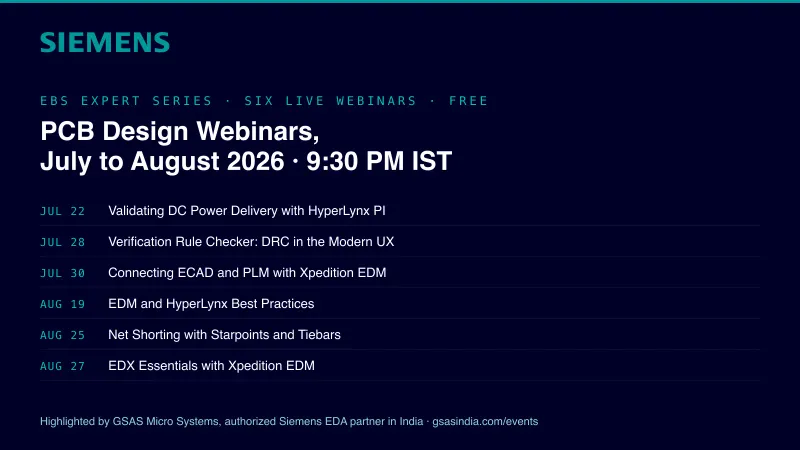
Siemens EDA EBS Expert Series: 6 Free PCB Design Webinars (Jul-Aug 2026)
20 Jul · 8 min
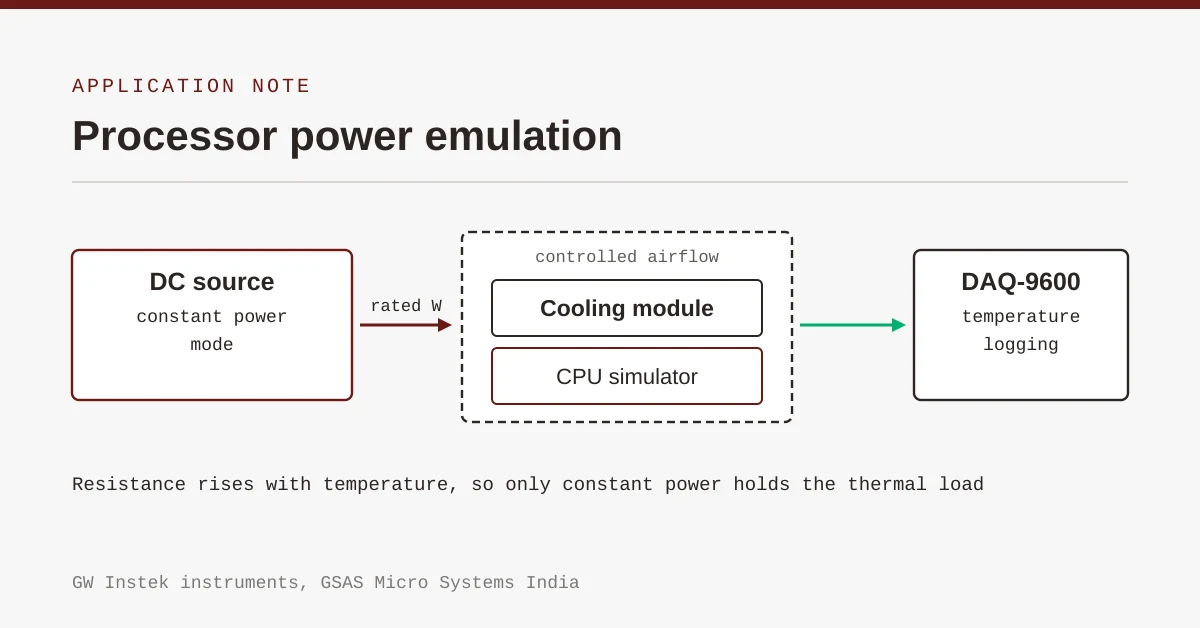
Emulating Processor Power for Thermal Testing: Why Constant Power
7 Oct · 7 min
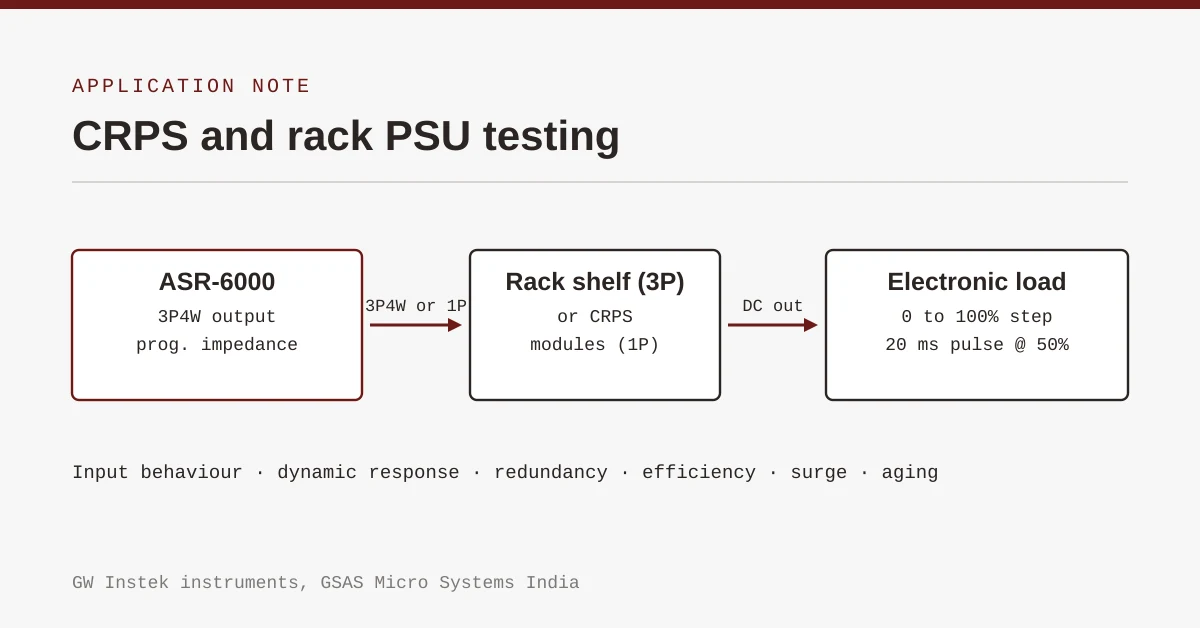
CRPS and Rack Power Supply Testing: The Six Tests That Matter
7 Oct · 7 min