

 Siemens EDA
 Xpedition Enterprise
PCB DesignNext-generation enterprise PCB design platform from Siemens EDA, concurrent multi-user editing, AI-infused design support, cloud-connected collaboration, and Teamcenter PLM integration. Buy in India from GSAS.
Concurrent Design
Multi-user parallel editing
System Design
Multi-board, harness, RF, FPGA
PLM
Teamcenter integration
Analysis
HyperLynx SI/PI, DC Drop thermal, EMC
Manufacturing
Valor NPI, ODB++, IPC-2581
Overview
About Xpedition Enterprise

Xpedition Enterprise provides enterprise-grade electronic systems design for global, multi-disciplinary teams concurrently tackling complex, multi-domain systems that demand high performance, strong security, and deep integration. Built to address the evolving challenges faced by electronics design organisations, the next generation of Xpedition Enterprise helps engineering teams achieve shorter time-to-market, optimise resource management, foster multi-domain collaboration, and prioritise IP and data security across global programmes.
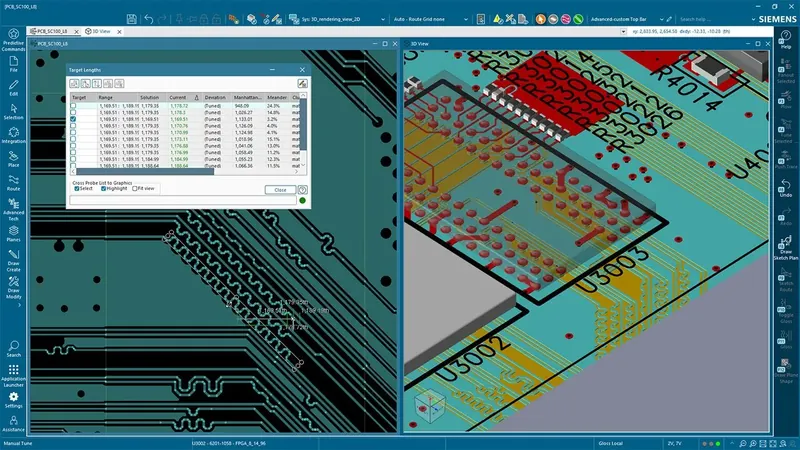
For global teams tackling the most complex, high-performance electronic systems, Xpedition Enterprise is Siemens’ enterprise tier for electronic systems design. With multi-domain integration, concurrent team design, scalable performance, and advanced data management, it is engineered to meet the demands of large organisations working across ECAD, MCAD, RF, simulation, PLM, and manufacturing. Synchronise systems engineering, design, and verification with integrated MBSE, while security and compliance protect intellectual property. From sophisticated design to system integration, Xpedition Enterprise is built for efficiency, collaboration, and traceability so teams can design with confidence at any scale. Xpedition Enterprise is the platform of choice for aerospace and defence, automotive electronics, telecommunications, and medical device organisations where design complexity, regulatory traceability, and cross-domain collaboration are non-negotiable. Concurrent multi-user editing allows multiple engineers to work on the same PCB simultaneously without partitioning, enabling real-time collaboration across global sites. Multi-board system design defines complete electronic systems in a single environment with system-level connectivity verification and integrated connector management.
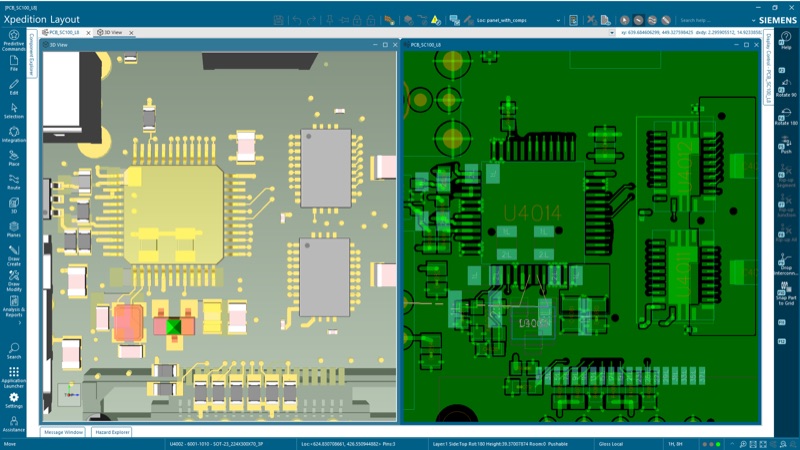
What the Next Generation of Xpedition Delivers
The next generation of Xpedition Enterprise is built around five capabilities that change how PCB design teams work together and ship products:
- Intuitive modern user experience: Xpedition uses modern UI principles to create an adaptive and agile PCB design environment. The redesigned interface enhances user productivity and accelerates the design process for engineers across experience levels.
- AI-infused design support: Using artificial intelligence, the next generation of Xpedition provides design support that boosts productivity, bridging capacity gaps within PCB design teams and enabling them to tackle complex challenges effectively.
- Cloud-connected environment: Xpedition’s cloud-connected environment facilitates collaboration across the entire ecosystem, from PCB component design to manufacturing, ensuring communication and coordination across distributed teams.
- Integrated digital threads: Xpedition supports the digital transformation of electronics system design by integrating digital threads across multiple domains, providing a comprehensive view of the entire electronics design process.
- Managed access within a secure environment: Recognising the importance of compliance with commerce and government regulations, Xpedition offers managed access within a secure environment, ensuring the protection of sensitive IP and design data.
“We need the fastest, most efficient tools that we can have to get our very complex designs to market on time. We get that from the Siemens tools.” Rob Savage, PCB Engineering Manager, Abaco Systems. Source: Siemens case study, Abaco Systems and AMETEK
PCB Design Best Practices: Five Pillars of Digital Transformation
Today, PCB design teams must deliver more complex products on even more compressed schedules. Xpedition Enterprise is structured around the five pillars of digital transformation that Siemens EDA defines for modern PCB design.
1. Digitally Integrated and Optimised
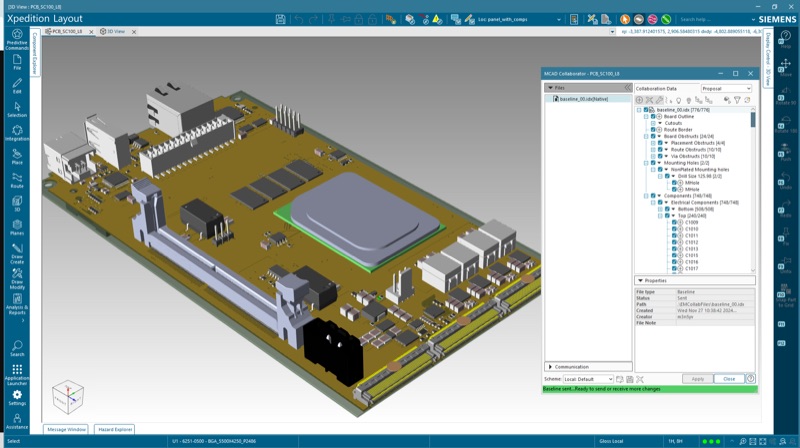
Establishing a digitally integrated solution across multiple domains reduces manual intervention, fosters collaboration, and improves transparency across disciplines. With a digitally integrated and optimised multi-domain environment, all engineering teams, IC, IC packaging, FPGA, PCB, mechanical, and software, can optimise project costs, accelerate design time, manage data integrity, and improve quality of results. Key capabilities include ECAD/MCAD collaboration with Siemens NX, design/manufacturing collaboration via Valor NPI, library and design data management, and secure remote collaboration.
2. Engineering Productivity and Efficiency
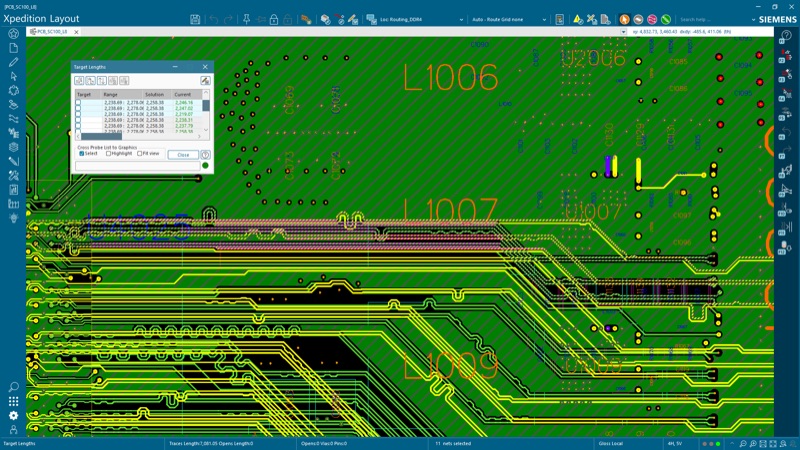
The PCB design process is broadly the same regardless of tool, team, company, or culture, the differentiator is the manner of execution, where engineering productivity and efficiency play a significant role. Xpedition Enterprise enables design teams to predictably and reliably manage complex and high-capacity designs, utilise advanced interactive and automated design support to accelerate routine tasks, design correct-by-construction with a constraint-driven process, and implement concurrent team design for cycle-time reduction. Capabilities span design automation, analog/digital/RF co-design, concurrent design, design reuse, constraint-driven design, and advanced design.
3. Digital-Prototype-Driven Verification
While product and design complexity increases, associated tools and process complexity are also rising. By integrating verification throughout PCB design, starting very early, long before physical prototypes, engineering teams can smooth the entire electronic systems design process and increase design quality through digital-prototype-driven, shift-left verification and cross-domain modelling. Shift-left verification eliminates the specialist bottleneck using automated, integrated tools. Cost and time are saved by finding problems early, during design, minimising design iterations and manufacturing re-spins. Verification capabilities include schematic analysis, thermal analysis, HyperLynx signal integrity, HyperLynx power integrity, analog mixed-signal analysis, and Valor design-for-manufacturability analysis.
4. Model-Based Systems Engineering
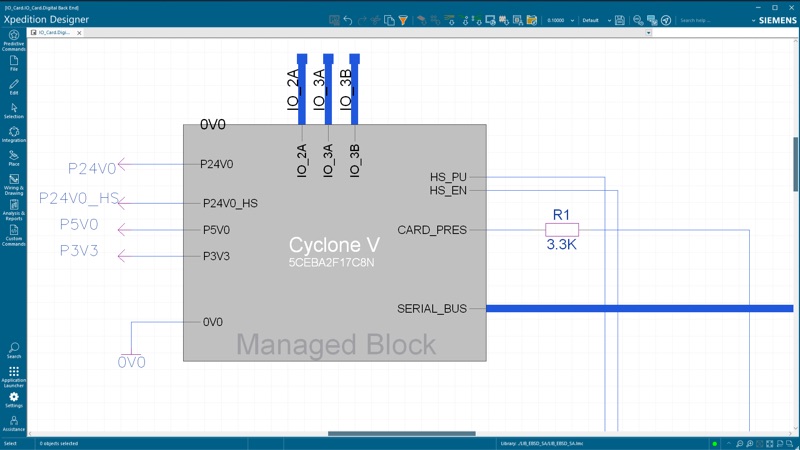
From system requirements to implementation and manufacturing, a model-based systems engineering approach allows team members to view the entire system, electronic, electrical, mechanical, and software, and model pieces, defining and optimising interconnectivity and traceability from one domain to the other. Capabilities include multi-board systems design, electrical/electronic co-design, FPGA/PCB optimisation, and IC/package/PCB co-design.
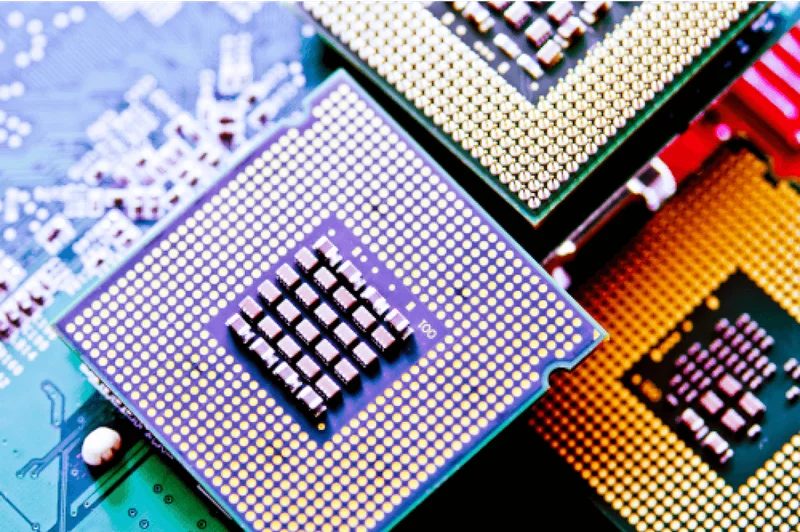
5. Supply Chain Resilience
Electronic systems design companies have always depended on a value chain of suppliers and manufacturing services to bring successful products to market. Connecting the demand for a product with the supply of its necessary parts has never been more complex than it is today. Xpedition Enterprise integrates supply chain resilience into the design flow, helping teams design with parts that are actually available and avoiding the late-stage redesigns that supply disruptions have caused for Indian electronics manufacturers since 2020.
Key Capabilities
- Concurrent Multi-User Design: Multiple engineers work on the same PCB simultaneously without partitioning. Real-time collaboration across global sites with hanger protection ensuring routing integrity during concurrent editing.
- Sketch Planning: Early-stage floor planning and route estimation lets engineers evaluate placement alternatives and assess routing feasibility before committing to detailed layout.
- Multi-Board Systems: Define complete electronic systems in a single environment. System-level connectivity verification and integrated connector management.
- FPGA/PCB Co-Design: Bi-directional pin assignment optimisation between FPGA and PCB. Automated symbol generation reduces layer requirements and shortens iteration cycles.
- RF Co-Design: Integration with industry-standard RF design tools (Keysight ADS/AWR). Bi-directional change control and RF-specific routing automation.
- Advanced Packaging: Outgassing void analysis, embedded passive components, 3D wire bonding, 3D cavities, and 3D die stacking for the most demanding system-in-package requirements.
- PCB/Harness Co-Design: Manage board-to-board cable and connector connections. Integrated schematic and cable design with library integration.
- Advanced ECAD-MCAD with NX: Full bi-directional data sharing with Siemens NX and other MCAD tools. Design within tight form factors for mechanical fit and thermal performance.
- Teamcenter PLM Integration: Bi-directional Teamcenter integration for product lifecycle management. Company-wide collaboration independent of releases and tool databases.
- Managed Design Reuse: Place common circuits under revision control. Reuse known-good complex circuits and accelerate new product development.
- HyperLynx SI/PI/EMC Built In: Full HyperLynx signal integrity, power integrity, and EMC analysis integrated into the layout environment.
- IPC-2581 Manufacturing Output: Standardised, vendor-neutral manufacturing data handoff to fabrication and assembly partners.
Technical Specifications
| Specification | Detail |
|---|---|
| Concurrent Design | Multi-user parallel editing without partitioning |
| System Design | Multi-board, harness, RF, FPGA co-design |
| Schematic | Hierarchical with DxDesigner |
| Constraint System | Comprehensive electrical and physical constraints |
| Data Management | EDM with revision control and workflow |
| PLM | Teamcenter integration |
| Analysis | HyperLynx SI/PI, DC Drop thermal, EMC (integrated) |
| Manufacturing | Valor NPI DFM, ODB++, IPC-2581 output |
| ECAD-MCAD | Siemens NX bi-directional, IDX exchange |
| Security | Managed access for ITAR/export-controlled programmes |
Target Applications
- Aerospace and Defence: Multi-board avionics systems with strict compliance, high-reliability constraints, and full traceability from requirements to manufacturing. Advanced packaging supports mission-critical SiP designs.
- Automotive Electronics: ADAS, infotainment, and powertrain systems requiring concurrent design across ECAD, MCAD, and harness domains. Concurrent editing keeps distributed teams in sync.
- Telecommunications: High-speed networking equipment with RF co-design, SerDes compliance, and signal integrity verification.
- Medical Devices: Compact mixed-signal designs with rigid-flex, thermal analysis, and regulatory traceability. Embedded passive design enables miniaturisation for wearables and implantables.
Digital Twin and Shift-Left Methodology for First-Pass Success
Xpedition Enterprise implements the Siemens shift-left methodology, pushing verification, DFM analysis, and manufacturing sign-off earlier into the design process where issues cost minutes to fix instead of weeks and lakhs of rupees in re-spins. Integrated HyperLynx SI/PI analysis runs directly inside the layout environment, Valor DFM checks designs against your fabricator’s actual manufacturing capabilities, and schematic integrity verification catches connectivity errors before they propagate to layout. The correct-by-construction approach, where constraints defined in the schematic are automatically enforced during layout, eliminates entire categories of errors that plague teams using disconnected point tools. Combined with Engineering Data Management (EDM) that provides a comprehensive digital twin of the design with full version history, traceability, and PLM integration, Xpedition Enterprise delivers the infrastructure that global aerospace, defence, and automotive programmes demand.
Why Teams Choose Xpedition Enterprise over Disconnected Point Tools
Engineering teams across India are replacing disconnected point tool flows with Xpedition Enterprise because:
- Design-to-manufacturing digital thread: standalone PCB layout tools stop at Gerber output. Xpedition Enterprise connects design intent through signal integrity verification, power integrity analysis, DFM sign-off, and manufacturing data handoff in a single integrated data flow, eliminating the manual file translations and version mismatches that cause re-spins.
- Concurrent team design eliminates the single-designer bottleneck: multiple engineers work on the same 20+ layer board simultaneously with conflict resolution and hanger protection. Disconnected point tools are single-user: one designer, one board, one bottleneck, and the layout schedule stretches with board complexity rather than absorbing it.
- Correct-by-construction methodology: constraints defined in the schematic are automatically enforced during layout. Disconnected tools rely on post-layout manual checking, catching errors days or weeks after they were introduced.
- Full HyperLynx SI/PI/EMC integration built into the layout environment without context switching between tools.
- PLM and enterprise integration: bi-directional Teamcenter integration provides change management, revision control, and lifecycle traceability across ECAD, MCAD, and software domains. Standalone tools exist in isolation, creating data silos that enterprise programmes cannot afford.
- Scalable without migration pain: start with Xpedition Standard, then scale to Enterprise. Same file format, same libraries, same learning curve. Disconnected point tools force a painful full migration when you outgrow them.
Xpedition Enterprise vs Other Enterprise PCB Design Platforms
Indian engineering teams evaluating enterprise PCB design software compare Xpedition Enterprise against other EDA platforms for complex multi-board, multi-user projects. The key differentiators centre on concurrent design, PLM integration, and design-to-manufacturing coverage.
Concurrent multi-user editing is Xpedition Enterprise’s defining capability, multiple engineers work on the same PCB simultaneously without partitioning, with conflict resolution and hanger protection. Most competing enterprise EDA platforms require board partitioning or single-designer workflows, creating bottlenecks on high-layer-count designs. For teams designing 20+ layer boards across distributed sites, concurrent editing directly compresses layout schedules.
Teamcenter PLM integration provides bi-directional lifecycle management connecting ECAD, MCAD, and software domains. Teams requiring traceable change management across multi-discipline programmes, aerospace, automotive, defence, benefit from a unified digital thread that standalone PCB tools cannot replicate.
Multi-domain co-design spans FPGA/PCB pin optimisation, RF co-design with Keysight ADS/AWR, harness design, and advanced ECAD-MCAD collaboration with Siemens NX. Competing platforms typically address one or two of these domains, requiring additional point tools and manual data translation for the rest.
High-speed design and DDR5 routing leverage integrated HyperLynx SI/PI analysis directly inside the layout environment, while Valor NPI DFM checks validate against fabricator capabilities before Gerber generation. This shift-left methodology, pushing verification earlier where fixes cost minutes rather than weeks, distinguishes the Xpedition Enterprise workflow from platforms that treat analysis and DFM as post-layout afterthoughts.
GSAS provides side-by-side evaluation engagements so Indian teams can compare Xpedition Enterprise against their current EDA software on their own designs.
Buy Xpedition Enterprise in India: GSAS India-Wide Support
GSAS provides Xpedition Enterprise with INR invoicing, local FAE support, and Siemens maintenance and support across India:
- Bengaluru: semiconductor design centres, aerospace and defence R&D, telecom R&D (5G base station design), and the growing EV startup cluster designing multi-board automotive systems
- Hyderabad: defence electronics organisations designing multi-layer radar and EW processor boards, semiconductor design centres, and telecom infrastructure
- Chennai: automotive electronics OEMs and tier-1 suppliers designing ADAS controllers, BMS boards, and powertrain ECUs requiring concurrent team layout
- Pune: automotive R&D centres needing multi-domain ECAD-MCAD co-design, industrial IoT, and defence electronics
- Mumbai: telecom infrastructure, financial technology hardware, and industrial automation companies designing high-reliability systems
- Delhi NCR: defence establishments, telecom R&D, and automotive OEMs designing complex multi-board electronic systems
- Coimbatore: industrial motor drives, pump controllers, and power electronics requiring robust PDN design and thermal analysis
- Visakhapatnam: naval defence electronics, medical device startups, and industrial engineering
- Vadodara: industrial automation, power electronics for the Gujarat manufacturing corridor, and energy sector electronics
- Kolkata: eastern India defence electronics, IT services companies, and industrial engineering teams
Contact sales@gsasindia.com or call +91 80 6590 1783 for evaluation engagements, volume sizing, and on-site demonstrations.
Blog
Siemens EDA Insights

India's EDA Moment: Why Design Tool Demand Is Growing, and the Engineering Careers It Creates
Electronic design automation is one of the few engineering markets where the global numbers and India's industrial policy are pointing the same direction at the same time. Here is what the published data actually says, which engineering roles the growth creates, and where GSAS Micro Systems fits as an authorized Siemens EDA engineering partner.
AI and Complexity Are Redrawing EDA: Siemens on the Trillion-Transistor Era
Siemens argues that chip complexity has outgrown siloed design and that the lines between chip, package and board can no longer be drawn. GSAS summarises the Industry Forward podcast episode and sets out what it changes for design teams in India: verify across the chip-to-board boundary before layout, not after the prototype.
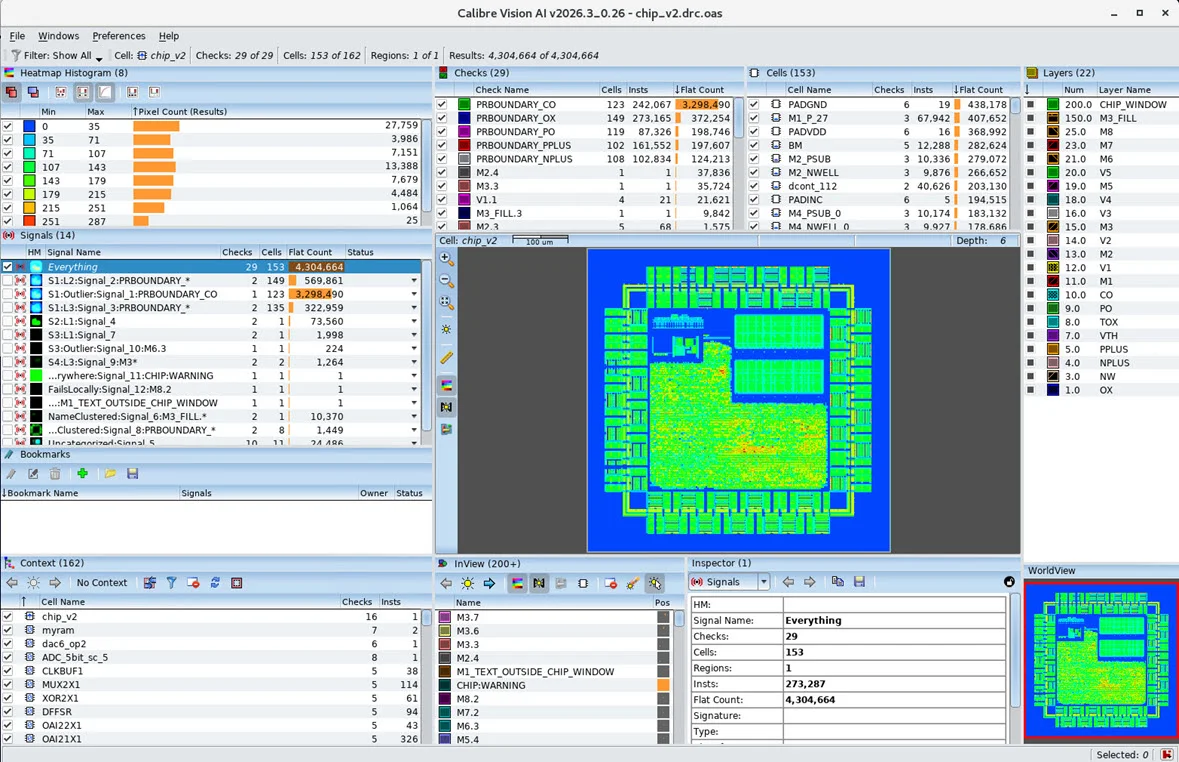
Calibre Vision AI: Bringing Order to DRC Debug at Advanced Nodes
Siemens EDA's Calibre Vision AI turns full-chip DRC debug from an unmanaged flood of violations into a tracked, filtered, hand-off-able workflow. What Signal status tracking, global filters and shareable workspaces mean for Indian SoC teams.
FAQ
Common questions about Xpedition Enterprise
Xpedition Enterprise vs Xpedition Standard, what's the difference?
Does Xpedition Enterprise include signal integrity and power integrity analysis?
Does Xpedition Enterprise support concurrent multi-user PCB design?
How much does Xpedition Enterprise cost in India?
Interested in Xpedition Enterprise?
Get pricing, an evaluation unit, or a technical consultation from our application engineers.