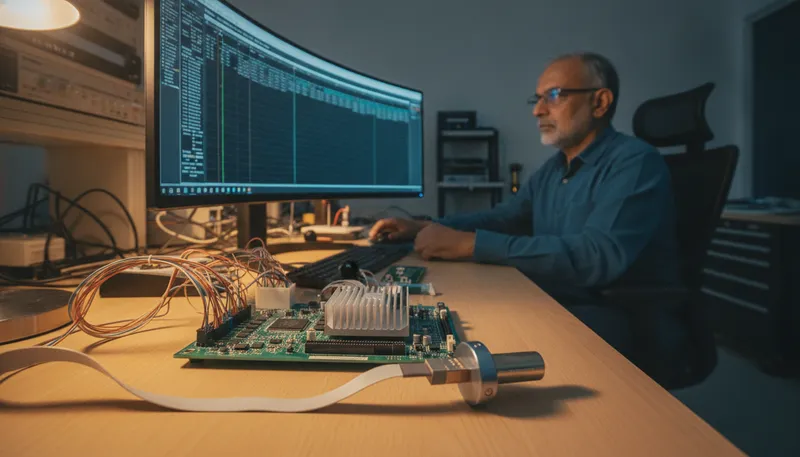

Production flash programming is a different discipline from development. During development, a J-Link connected to a PC flashes firmware in seconds. In production, the same firmware must be programmed into hundreds or thousands of units per day, reliably, without a PC at every station, and often with security requirements that prevent plaintext firmware exposure. SEGGER’s Flasher family addresses these needs with standalone programmers designed for specific production scenarios.
Flasher Compact: Portable Standalone
The Flasher Compact is the entry point for standalone production programming. It stores firmware internally, connects via JTAG or SWD, and programs without a PC. Press a button, wait for the LED to indicate pass or fail.
Its portable form factor suits field programming, repair depots, and low-to-medium volume lines where a rack-mount setup is unnecessary. It supports the same 10,000+ device database as J-Link, any Arm Cortex-M, Cortex-A, or RISC-V target works. Images are loaded via USB from a PC, then the Flasher operates independently.
Flasher Pro: Ethernet and Remote Updates
The Flasher Pro adds what medium-to-high volume lines require: 2 GB internal storage for multiple images, Ethernet for remote updates and production logging, and TCP/IP command support for automation.
Ethernet is the key differentiator. Production engineers update firmware images remotely from a central server, no physical station visits for new releases. Logs (serial numbers, programming times, pass/fail) stream back for traceability. The 2 GB storage holds multiple images for mixed-model lines; operators select the correct one via LCD or automatic target ID detection.
Flasher ATE2: Gang Programming
The Flasher ATE2 handles high-volume production with 8-way gang programming. Eight targets programmed simultaneously, multiplying throughput for lines running thousands of units per shift.
It connects to automated test equipment (ATE) via standard control interfaces for fully automated program-test-sort workflows. Each channel operates independently, one target’s failure does not halt the others. For contract manufacturers in India programming multiple product lines, the ATE2 significantly reduces per-unit cost and floor space requirements.
Flasher Secure: Encrypted Firmware and HSM
The Flasher Secure addresses secure firmware provisioning. Its hardware security module (HSM) stores encryption keys and performs cryptographic operations, ensuring firmware exists in plaintext only inside the Flasher and the target, never on a PC or network.
Firmware is encrypted at the development site using keys provisioned into the HSM. The encrypted image can be transmitted over untrusted channels to production. The Flasher Secure decrypts internally and programs plaintext into the target’s flash. Plaintext never exists outside tamper-resistant hardware.
For Indian OEMs and contract manufacturers handling IP-sensitive firmware, automotive ECU code, payment terminals, defense electronics, the Flasher Secure provides a chain of custody that satisfies OEM requirements and regulatory expectations.
Flasher Hub: Multi-Target Scaling
The Flasher Hub-4 and Flasher Hub-12 connect multiple Flasher Compact units to a single control point. Hub-4 manages four Flashers; Hub-12 manages twelve.
The Hub provides centralized image distribution and logging while each Flasher operates independently. Start with Hub-4 and four Compacts, expand to Hub-12 as volume grows, reusing existing hardware.
Choosing the Right Flasher
| Requirement | Recommended Flasher |
|---|---|
| Field programming, low volume, portable | Flasher Compact |
| Medium-high volume, Ethernet, remote updates | Flasher Pro |
| High volume, 8-way gang, ATE integration | Flasher ATE2 |
| Encrypted firmware, secure provisioning | Flasher Secure |
| Scalable multi-target, modular expansion | Hub-4 / Hub-12 |
Buy SEGGER Flasher in India
GSAS Micro Systems is an authorized SEGGER engineering partner. Every Flasher model is available with INR invoicing, GST-compliant billing, and local support for production line integration. Whether setting up a programming station in Bengaluru, scaling production in Chennai or Pune, or deploying secure provisioning in Hyderabad, Mumbai, or Delhi NCR, GSAS engineers can assist with selection, fixture consultation, and ATE integration.
View All SEGGER Flashers | Request a Quote | Request Volume Quote
Also appears in:
Interested in SEGGER tools?
Talk to our application engineers for personalized tool recommendations.
More from SEGGER
View all →
Meet the GSAS Team at electronica India 2026, Stall H3.I45
15 Sept · 3 min
J-Link Is Now Validated by ST for StellarStudio
13 Sept · 2 min

An AI Agent That Drives the Debugger: SEGGER and Embedder Connect J-Link to the Loop
13 Sept · 6 min
SEGGER J-Link and J-Trace Now Support Andes Trace: Why This Matters for RISC-V
21 Jul · 6 min
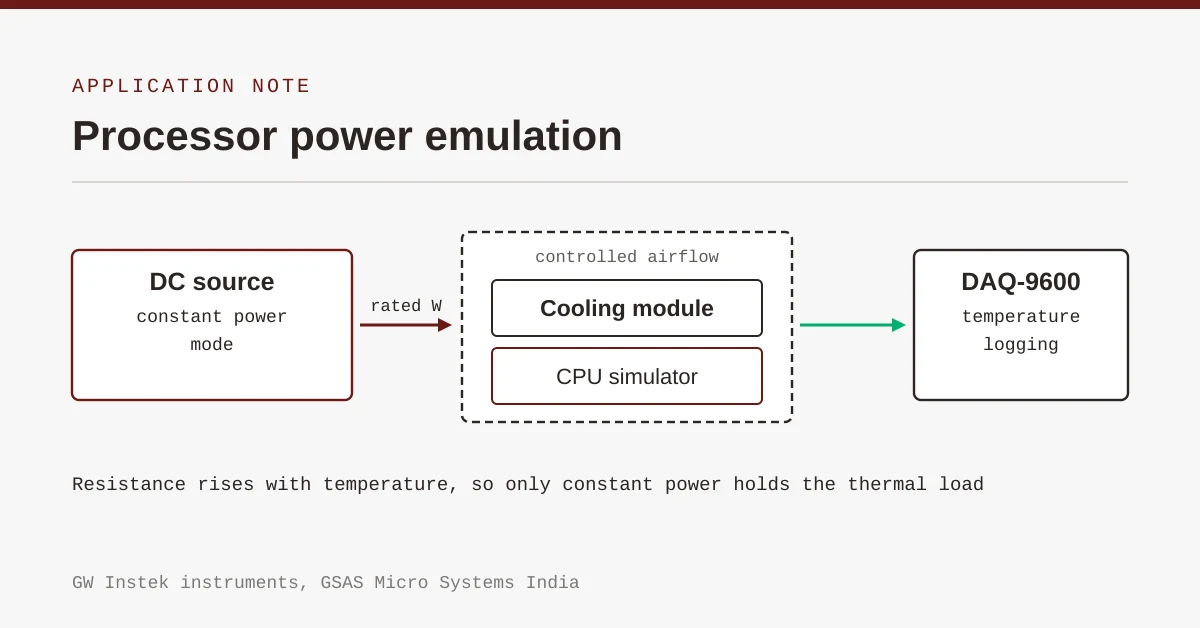
Emulating Processor Power for Thermal Testing: Why Constant Power
7 Oct · 7 min
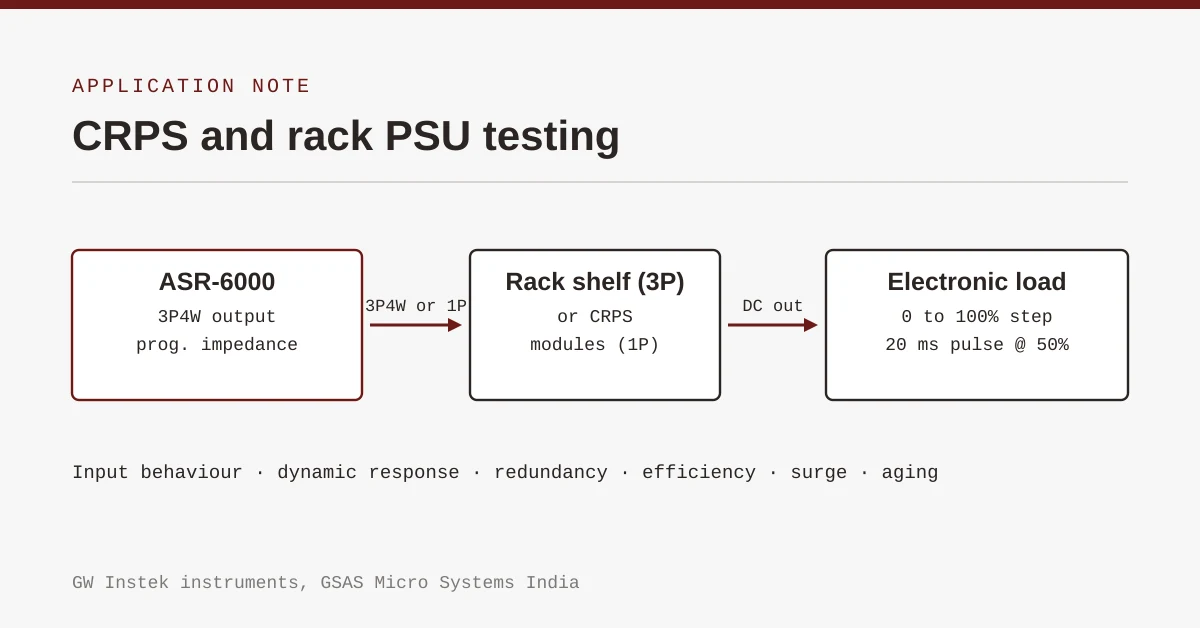
CRPS and Rack Power Supply Testing: The Six Tests That Matter
7 Oct · 7 min