
 Elsyca
 Elsyca EPOS
Surface Finishing SimulationElectropolishing process simulation for uniform metal removal rate prediction and rack design optimization. Available in India from GSAS.
Process
Electropolishing simulation
Prediction
Uniform metal removal rate distribution
Optimization
Rack design and cathode placement
Visualization
3D metal removal and surface finish maps
Industries
Medical devices, aerospace, semiconductor
Overview
About Elsyca EPOS
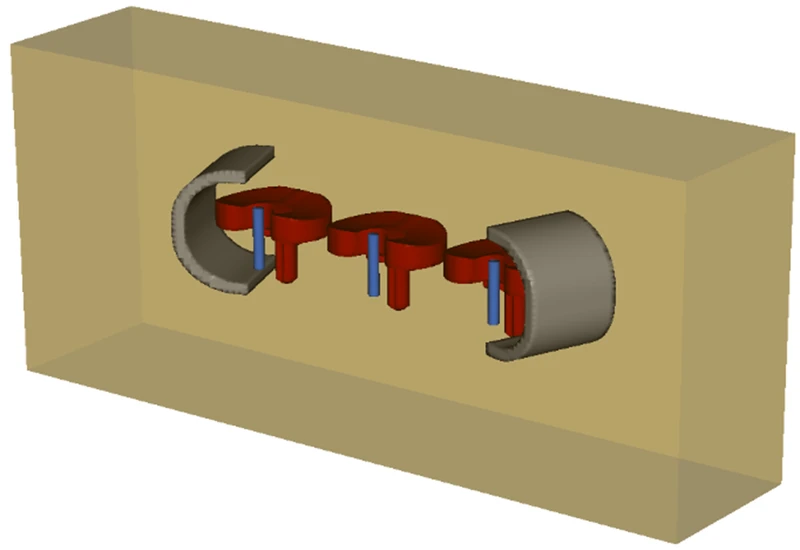
Elsyca EPOS (Electropolishing Simulation) predicts metal removal rate distribution across complex 3D part geometries during the electropolishing process. The software models the anodic dissolution kinetics, current distribution, and mass transport to generate quantitative predictions of material removal at every point on the part surface. Engineers use EPOS to optimize rack design, cathode placement, and process parameters for uniform surface finish quality, reducing scrap rates and eliminating the trial-and-error approach to electropolishing process development.
| Feature | Specification |
|---|---|
| Process | Electropolishing (anodic dissolution) |
| Prediction | Metal removal rate distribution across 3D geometry |
| Geometry Import | STL, STEP, IGES, complex part geometries |
| Materials | Stainless steel, titanium, cobalt-chrome, nickel alloys |
| Rack Optimization | Part placement, spacing, and orientation on fixtures |
| Cathode Design | Cathode geometry, placement, and shielding configuration |
| 3D Visualization | Color-coded metal removal maps and surface finish prediction |
| Process Parameters | Current density, voltage, electrolyte temperature, dwell time |
| Reporting | Automated reports with removal uniformity metrics and KPIs |
| Validation | Correlation with profilometry and mass loss measurements |
Electropolishing is a critical surface finishing process for medical devices, aerospace components, and semiconductor equipment where surface roughness, cleanliness, and corrosion resistance must meet stringent specifications. Unlike mechanical polishing, electropolishing removes material through controlled anodic dissolution in an electrolyte bath, producing a microscopically smooth and passivated surface. However, achieving uniform metal removal across complex geometries is challenging, protruding features, edges, and areas facing the cathode experience higher current densities and faster removal, while recessed zones and shielded areas may be under-polished.
EPOS addresses this fundamental challenge by simulating the electrochemical process in full 3D. Engineers import the part geometry, define the rack configuration and cathode arrangement, and specify the process parameters. The software calculates current distribution and resulting metal removal rates across the entire surface, generating color-coded 3D maps that immediately reveal non-uniform zones. This enables targeted optimization, adjusting cathode placement to improve current distribution in under-polished areas, adding shielding to protect over-polished features, or modifying rack orientation to balance removal across multiple parts.
For medical device applications, EPOS is particularly valuable in optimizing the electropolishing of titanium tibial components, cobalt-chrome femoral heads, and stainless steel surgical instruments where surface finish directly impacts biocompatibility and implant longevity. The ability to predict metal removal ensures that critical dimensional tolerances are maintained while achieving the required surface roughness specification. Aerospace applications include turbine blade finishing, hydraulic component polishing, and fuel system part deburring where surface quality affects fatigue life and fluid flow characteristics.
The rack design optimization capability enables high-volume manufacturers to maximize the number of parts per batch while maintaining finish quality. EPOS predicts part-to-part interactions on the rack, ensuring that neighboring parts do not create shielding effects that compromise polish uniformity. This throughput optimization directly impacts production economics in medical device and aerospace manufacturing where electropolishing is a bottleneck process.
GSAS Micro Systems is an authorized Elsyca partner in India, providing EPOS licensing, electropolishing process simulation consulting, and training for surface finishing teams in medical device, aerospace, and precision manufacturing sectors.
Blog
Elsyca Insights
Elsyca PCBPlate: How Panel Plating Simulation Predicts Copper Thickness Before Fabrication
Elsyca PCBPlate simulates the electrochemical plating process to predict copper thickness distribution across PCB panels with 90%+ validated accuracy. Here is how it works and why Indian PCB manufacturers and designers need it.
Elsyca PlatingManager: Digital Twin Simulation for Industrial Electroplating Lines
Industrial electroplating, decorative chrome, hard chrome, zinc-nickel, copper, nickel, and tin plating of 3D parts, has traditionally been an empiric...
Copper Thieving for PCBs: Why Manual Methods Fail and How Simulation Fixes It
Copper thieving is the standard DFM technique for improving plating uniformity, but manual thieving patterns are crude approximations. Elsyca PCBBalance automates copper balancing using electrochemical simulation, delivering uniform plating that manual methods cannot achieve.
Related products
More from Elsyca
All Elsyca products →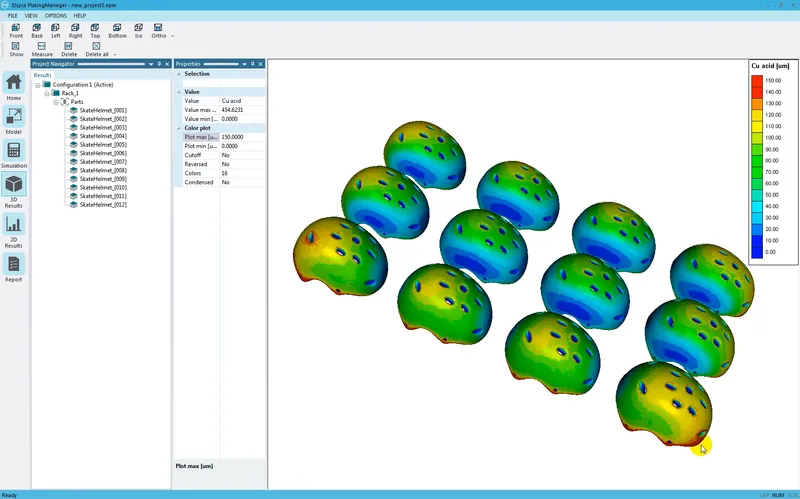
PlatingManager
Electroplating process simulation for predicting coating thickness distribution and optimizing rack layout, anode geometry, and current waveforms. Authorized India partner, GSAS Micro Systems.
View PlatingManager →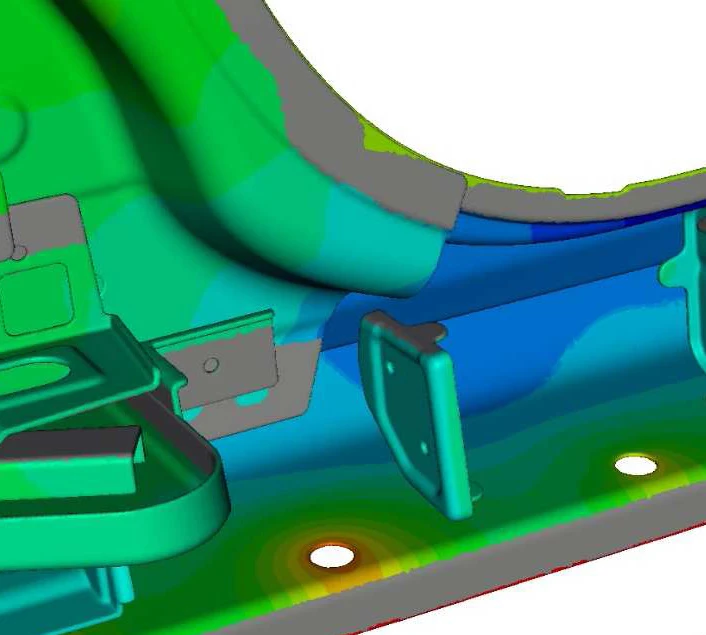
ECoatMaster
E-coating simulation for automotive body-in-white structures, predicting film thickness in complex cavities to eliminate bare spots. India pricing and local support from GSAS.
View ECoatMaster →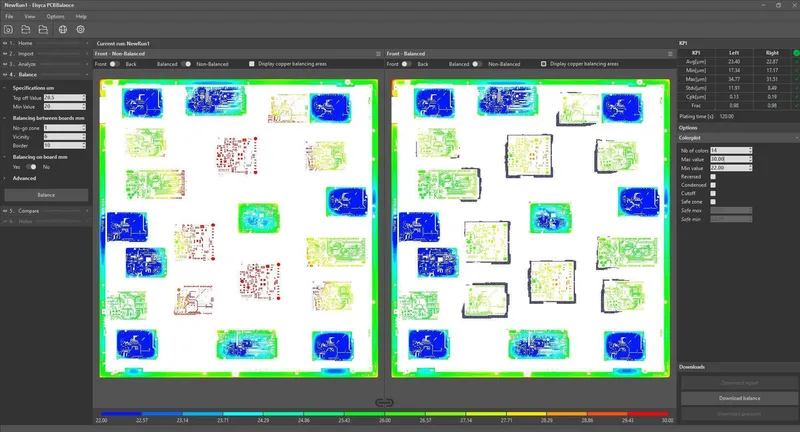
Elsyca PCBBalance
Automated PCB copper balancing DFM software, generates optimized Gerber files with uniform plating thickness. India licensing and support from GSAS.
View Elsyca PCBBalance →Interested in Elsyca EPOS?
Get pricing, an evaluation unit, or a technical consultation from our application engineers.