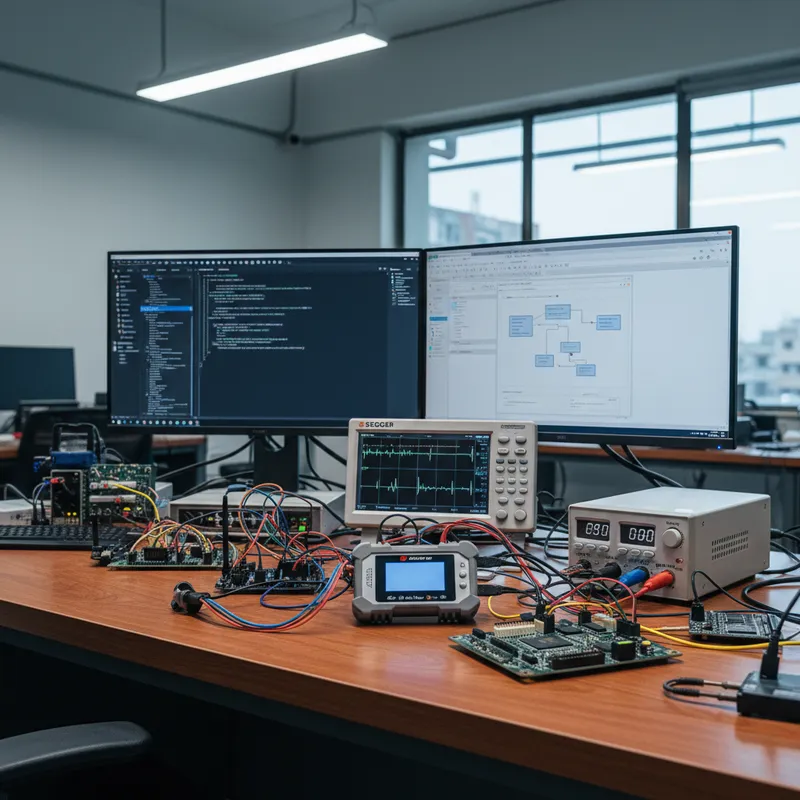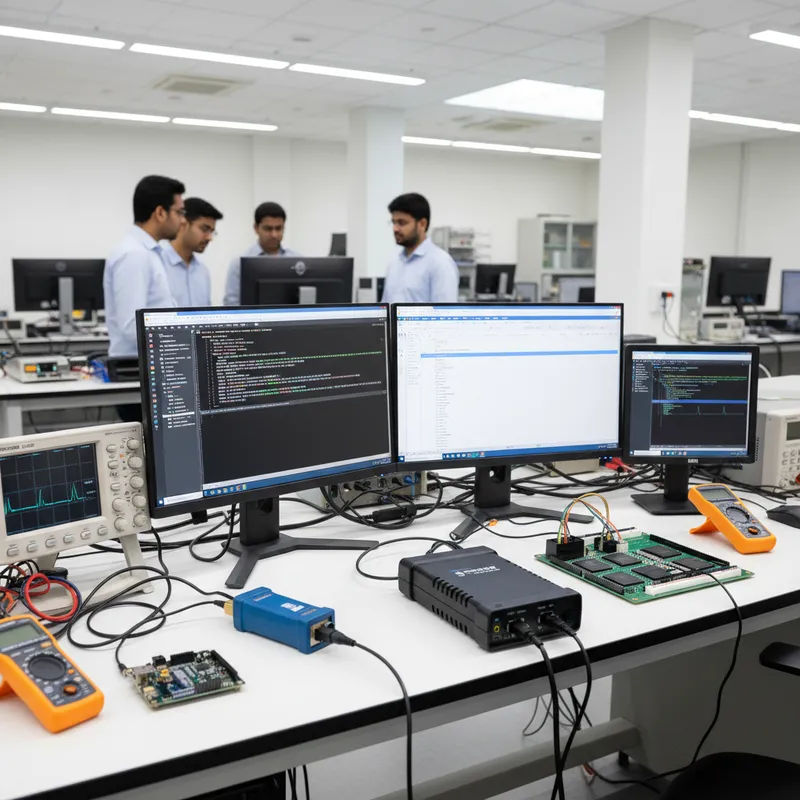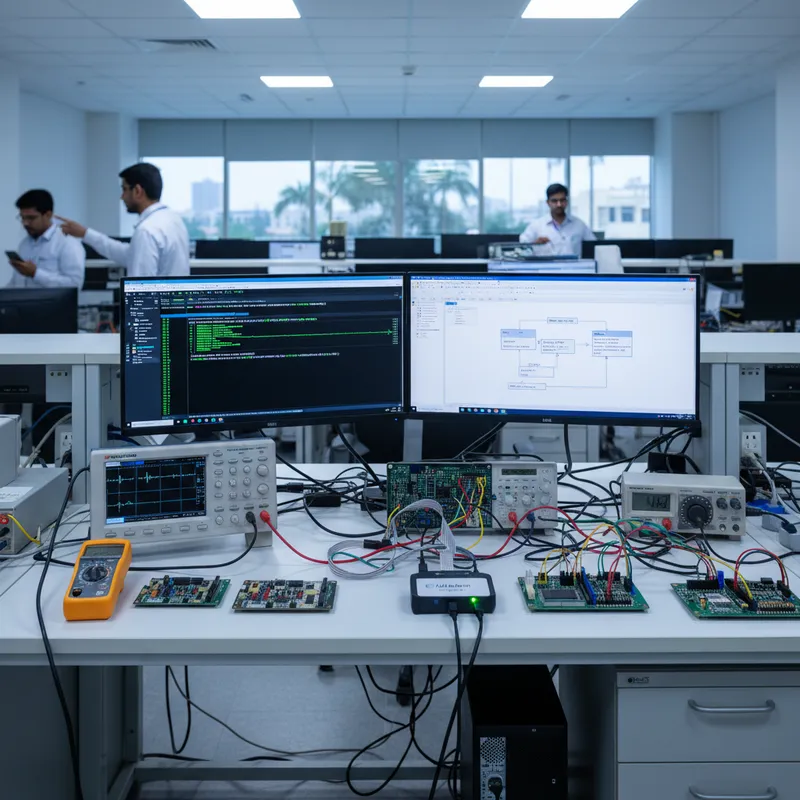
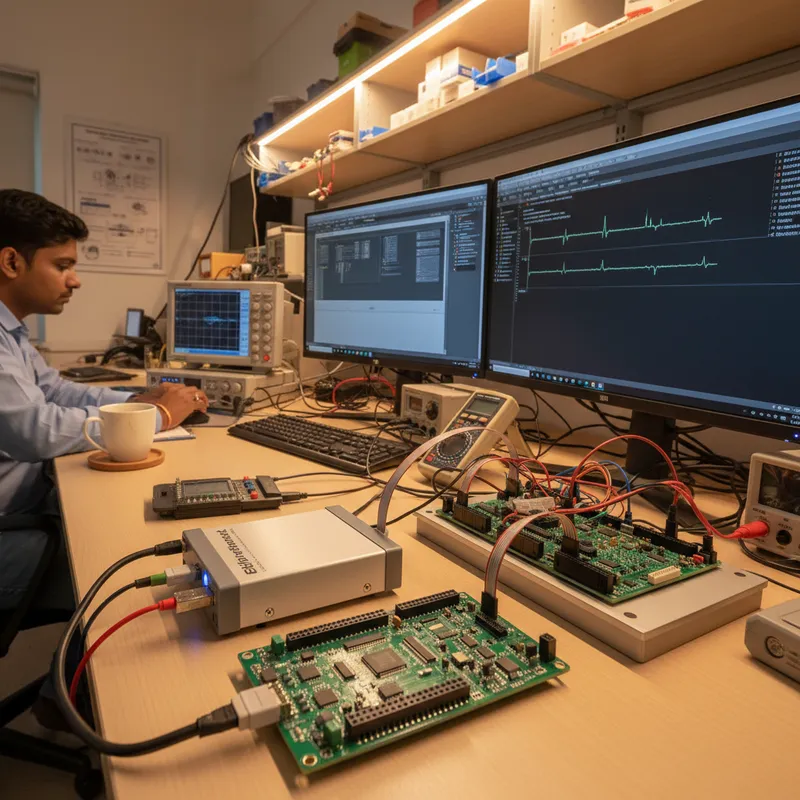
For Indian product teams shipping battery-powered smart meters, medical wearables, industrial sensors, and low-power data loggers built around Texas Instruments MSP430 microcontrollers, the choice of programmer determines line throughput, serialisation integrity, firmware IP protection, and the ability to pass BIS audits. For more than two decades, Elprotronic Inc. of King City, Ontario has built the professional-grade FlashPro family that Indian EMS partners and OEMs rely on when MSP430 volumes move from engineering samples to full production runs. This deep-dive walks through what FlashPro is, how the family has evolved, and how Indian teams integrate it into factory lines from Bengaluru to Pune.
Elprotronic FlashPro for MSP430 Production
Elprotronic FlashPro is a family of professional in-system programmers purpose-built around Texas Instruments’ low-power microcontroller architecture. The first FlashPro 430 units shipped in the early 2000s, and the line has tracked the MSP430 roadmap ever since, from the original MSP430F flash parts through the FRAM-based MSP430FR devices, the metering-optimised MSP430i, the value-line MSP430G, and into the MSP432 Cortex-M4F family. Every shipping MSP430 variant is supported, and the FlashPro-Arm branch extends the same engineering DNA to Arm Cortex-M targets from STMicroelectronics, NXP, Nordic Semiconductor, Silicon Labs, Renesas, and Microchip.
At the interface level, FlashPro speaks every programming protocol TI defined for MSP430: full 4-wire JTAG, 2-wire Spy-Bi-Wire (SBW) for space-constrained boards that cannot fit a full JTAG header, and the MSP430 BSL (bootstrap loader) for secured devices where JTAG has been permanently locked. USB connection to the host, galvanic isolation on the XStream-Iso and XStreamPro-Iso variants, and industrial-grade target drivers mean the same programmer that works on an R&D bench in Hyderabad will also survive 3-shift operation on an EMS floor in Pune or Chennai.
The pairing of FlashPro hardware with Elprotronic’s FET-Pro430 software is what made the platform the de-facto reference for MSP430 factory programming. FET-Pro430 is a Windows-based production control stack with a scriptable CLI, a C/C++ DLL API, and Python, C#, and LabVIEW hooks that Indian factory automation teams wire directly into their Manufacturing Execution Systems.
The Elprotronic FlashPro Product Family
“FlashPro” has grown from a single product into an architectural family. Understanding which variant fits which workflow is the first step for any Indian team evaluating a new line.
FlashPro 430 is the original single-target MSP430 programmer, aimed at teams that need a dedicated MSP430 tool on the bench or on a single-head production fixture. The modern single-target programmers in the catalogue, XStream-Iso and XStreamPro-Iso, carry the FlashPro 430 lineage forward with galvanic target isolation, which matters on smart-meter boards where mains-referenced circuits sit millimetres from the MCU.
FlashPro-Arm extends the same controller and software architecture to Arm Cortex-M targets. Very few Indian OEMs build exclusively around MSP430 any more, most have a multi-architecture portfolio, and FlashPro-Arm lets engineering teams keep the same programmer, software, scripts, and MES integration when a product family migrates from MSP430 to STM32L, Nordic nRF52, or TI SimpleLink wireless MCUs.
S-GANG and C-GANG-X are the multi-site gang programmers built on the FlashPro engine. S-GANG is an 8-site gang, eight targets programmed in parallel from a single host, which is how Indian smart-meter lines scale from hundreds to thousands of units per shift. C-GANG-X is a compact gang variant for tighter fixture footprints and lower-volume cells. Both speak the same FET-Pro430/GangPro software, so a line engineer who has qualified a single-site XStreamPro-Iso can move to a gang without re-qualifying the firmware image or the MES handshake.
S-GANG and C-GANG-X sit at the top of the family for fully automated inline programming, where an ATE or conveyor triggers the S-GANG or C-GANG-X via digital I/O or Ethernet with no PC in the loop, the variants that appear on the highest-volume Indian smart-meter and lighting-control lines. The FlashPro and GangPro software that drives all Elprotronic programmers is included free with every hardware purchase.
Finally, FlashPro-CMSIS-DAP is the development-side companion, a CMSIS-DAP 2.0 debug probe for Arm Cortex-M bench work. One vendor from R&D bring-up through production means one support relationship and one configuration language.
FlashPro 430 vs FlashPro-Arm: Which to Pick
| Capability | FlashPro 430 lineage (XStream-Iso, XStreamPro-Iso) | FlashPro-Arm |
|---|---|---|
| Primary target | TI MSP430, MSP432 | Arm Cortex-M (STM32, nRF52, SimpleLink CC13xx/CC26xx, Kinetis, RA, SAM) |
| Programming interfaces | JTAG, SBW, BSL | SWD, JTAG |
| Security fuse blow | Yes (MSP430 JTAG lockout) | Device-dependent (RDP, APPROTECT, FSEC, etc.) |
| FET-Pro430 / GangPro software | Native | Native |
| Galvanic isolation | Yes (Iso variants) | Device-dependent |
| Typical Indian use case | Smart meter, BIS IS 15959 compliant energy meter, glucose/ECG wearable, industrial data logger | Multi-architecture product portfolio, wireless sensor node, motor-control ECU |
| MES / CLI / DLL scripting | Yes | Yes |
For a pure MSP430 or MSP432 line, the FlashPro 430 lineage, delivered today through the XStream-Iso and XStreamPro-Iso single-target programmers and the S-GANG and C-GANG-X multi-site variants, is the correct default. For teams whose portfolio is mixed, FlashPro-Arm is the bridge that keeps the tool chain consistent. Most Indian EMS partners end up with both, standardised on the same host software and the same scripting conventions.
MSP430 Programmer for Indian Smart Meters and Low-Power Products
MSP430 is deeply entrenched in Indian product engineering in categories where ultra-low power and long battery life matter more than raw compute:
- Smart electricity meters built to BIS IS 15959, where a decade of MSP430i and MSP430FR design experience, a mature metrology library, and compliance test history make architecture migration expensive and risky.
- Battery-operated water and gas meters for Jal Jeevan Mission and city utility rollouts, where FRAM-based MSP430FR devices give the non-volatile data logging that smart-metering audits demand.
- Medical wearables and portable diagnostics: glucose meters, pulse oximeters, ECG patch monitors, thermometers, where ≥5-year battery life on a coin cell defines the product.
- Industrial sensors and data loggers for cold-chain, agriculture, and process monitoring, where MSP430’s ultra-low standby current is the reason the product exists.
- Consumer electronics control subsystems: remote controls, smoke alarms, irrigation timers, where MSP430G and MSP430F value-line parts still ship in enormous volume.
Every one of these categories has two common production requirements: per-unit serialisation into info memory (unique serial number, MAC address, calibration constants, production date) and firmware IP protection via the MSP430 security fuse. FlashPro handles both as first-class operations, not as afterthoughts bolted onto a development tool.
Why Indian Teams Pick FlashPro Over TI MSP-FET for Production
Texas Instruments ships its own MSP-FET programmer-debugger, and it is an excellent bench tool for MSP430 development, compiler integration, breakpoint debugging, energy trace, single-step and watch-window workflows. For engineering bring-up, MSP-FET is fine and often the right choice. Volume programming, however, is a different problem.
Volume programming lines need:
- Throughput at scale. A smart-meter line programming thousands of units per shift cannot afford IDE-driven one-at-a-time programming. Gang-capable FlashPro programmers deliver the parallelism.
- Industrial-grade target drivers and isolation. Mains-referenced smart-meter boards, high-voltage industrial sensors, and patient-isolation medical devices require the galvanic isolation the Iso variants provide.
- Scriptable, headless operation. CLI, DLL API, and Python/C#/LabVIEW bindings let factory automation teams integrate programming into an MES, ATE, or conveyor.
- Secure image loading. Encrypted firmware images, signed updates, and OEM key injection are first-class features in FET-Pro430.
- Serialisation and personalisation. Per-unit info-memory data consumed atomically with the firmware flash, with verification and pass/fail logging.
- Unattended robustness. Three-shift operation across months, with field-replaceable target cables.
MSP-FET is scoped for development. FlashPro is scoped for production. The two are complementary, most Indian OEMs use MSP-FET on the engineering bench and FlashPro on the line, and the same firmware image passes through both.
Programming Workflow for Indian EMS Lines
A typical MSP430 programming cell on an Indian EMS floor looks like this:
- Fixture and connection. The target board drops into a spring-pin bed-of-nails fixture that lands on JTAG or SBW test points. For an 8-site S-GANG cell, eight fixtures share a common mechanical frame and one S-GANG controller.
- Image load. The operator (or the MES, via CLI) selects the firmware build. FET-Pro430 loads the TI-TXT, Intel HEX, or ELF image and verifies the checksum against the expected build ID.
- Per-unit data injection. The MES hands FlashPro a serial number, calibration constants, MAC address, or date-of-manufacture record. FET-Pro430’s scripting API writes these into info memory segments A, B, C, or D atomically with the firmware flash pass.
- Program and verify. All eight targets program in parallel. The MSP430 JTAG/SBW protocol verifies every written byte before the pass moves on.
- Security fuse blow (optional). For OEMs that ship locked devices, FlashPro triggers the MSP430 security fuse, an irreversible blow that removes JTAG access and forces any subsequent field update to go through the BSL with a correct password. This step is usually gated by a supervisor token at the MES level.
- Pass/fail logging. FET-Pro430 writes the result, the serial number, the programmer serial, the firmware checksum, the operator ID, and the timestamp to the MES. Failures are binned and routed to a rework station.
- Next cycle. The fixture releases, eight fresh boards load, and the cell repeats. A well-tuned S-GANG cell on a smart-meter line gives Indian EMS partners comfortable per-shift throughput in the hundreds of boards range. C-GANG-X cells handle the lower-volume industrial and medical products. XStreamPro-Iso singles handle bring-up, first-article, and engineering rework.
The point is not a specific number of boards per hour, that depends on image size, fuse blow, personalisation payload, and fixture mechanics, but the repeatability. FlashPro gives the same programming cycle on board number 1 and board number 10,000.
Security, IP Protection, and BIS Compliance
Indian smart-meter OEMs have a non-negotiable requirement: the firmware that runs on a metering MCU cannot be extracted, cloned, or modified in the field. BIS IS 15959 and the utility commissioning test regimes expect firmware IP to be defended. FlashPro supports the defence in three layers:
- BSL password. The MSP430 BSL can be locked behind a 32-byte password. Only images signed with a correct BSL password can be loaded in the field. FET-Pro430 injects the BSL password during programming.
- JTAG lock (security fuse). The MSP430 security fuse is a one-time blow that permanently disables JTAG access. After the fuse is blown, the device can only be re-programmed through BSL (which is itself password-protected). FlashPro handles the fuse blow as a controlled production step.
- Encrypted image injection. FET-Pro430 supports encrypted production images, so the plain firmware hex file never sits on an EMS floor PC. This matters on third-party manufacturing arrangements where the OEM wants to protect the IP from the manufacturing partner itself.
These three layers together are what an Indian smart-meter audit expects to see in a production traveller.
FET-Pro430 Software: CLI, DLL, and MES Integration
FET-Pro430 is the software reason FlashPro wins the standardisation review. The GUI is there for bench use, but the production hooks are what matter:
- Command-line interface. Every GUI action is available from the CLI, callable from a batch file, PowerShell, Python subprocess, or an MES-triggered task.
- C/C++ DLL API. The programmer can be driven directly from a factory automation application, the way Indian MES integrators wire FlashPro into a line controller.
- Python, C#, LabVIEW bindings. Line automation teams use whatever host language their MES is written in.
- Per-unit serialisation. Info memory personalisation is a first-class API, no manual hex editing, no custom pre-processing.
- Encrypted and signed image handling. Production images are delivered to the line in a form that cannot be extracted, with decryption keys held in the programmer or the MES.
- Pass/fail reporting. Structured output an MES can parse without fragile string matching.
When to Pick Elprotronic FlashPro vs Alternatives
Be honest about the boundaries:
- For MSP430 or MSP432 production at any volume, Elprotronic FlashPro is the right choice. No other tool has the depth of MSP430 support, the security fuse handling, and the FET-Pro430 ecosystem.
- For pure MSP430 bench debugging during R&D bring-up, TI’s own MSP-FET is fine and integrates tightly with Code Composer Studio and IAR Embedded Workbench. Many Indian teams use MSP-FET on the engineering bench and FlashPro on the line.
- For generic multi-silicon production programming across STM32, Nordic, NXP, Renesas, Kinetis, and other Arm Cortex-M families where MSP430 is a minority of the portfolio, Indian teams typically evaluate the SEGGER Flasher ATE2 production programmer and the wider Flasher family, SEGGER is a separate GSAS partner, and the SEGGER Flasher family deep-dive covers where it fits. FlashPro-Arm competes directly in this space for teams that want to keep one vendor across MSP430 and Arm.
- For mixed portfolios where MSP430 is a meaningful share, FlashPro plus FlashPro-Arm keeps the tool chain consistent from MSP430 smart meters to Cortex-M industrial nodes.
These are trade-offs, not a ranking. Good engineering teams pick the right tool per workflow, and GSAS supports both Elprotronic and SEGGER for exactly that reason.
Buying Elprotronic FlashPro in India
GSAS Micro Systems is an authorized Elprotronic engineering partner for India, covering XStreamPro-Iso, XStream-Iso, S-GANG, C-GANG-X, GangPro, FlashPro-CMSIS-DAP, and the wider Elprotronic product catalogue. We supply programmers with INR invoicing and GST, carry local stock of the most-requested models, support GeM, SAP Ariba, Coupa, and TReDS procurement, and run an India-based application engineering team that has configured MSP430 production lines across smart metering, medical electronics, industrial sensing, and consumer electronics.
If your team is evaluating FlashPro for a new MSP430 line, migrating from an older programmer to the modern XStreamPro-Iso or S-GANG, or planning an MES integration, request a quote or engineering consult and we will scope the right configuration against your line volume, fixture topology, and serialisation requirements.
Further Reading
External (canonical Elprotronic sources):
- FlashPro 430 lineage and MSP430 programmers, elprotronic.com/products/fet-pro-430-std
- FlashPro-Arm for Arm Cortex-M programming, elprotronic.com/products/flashpro-arm-xs
- FET-Pro430 and GangPro software downloads, elprotronic.com/pages/downloads
GSAS internal cross-links:
- Elprotronic partner page, full product catalogue, ecosystem columns, and engineering support scope
- SEGGER Flasher production programming in India, complementary multi-silicon production programming family
- SEGGER Flasher ATE2 for Indian EMS production, ATE integration and inline programming
- Industrial automation solutions, where MSP430 and Arm Cortex-M programming sits in the wider Indian industrial stack
- Medical electronics solutions, low-power MSP430 wearables and diagnostics
GSAS Application Engineering in India
GSAS supports Elprotronic FlashPro customers across Bengaluru, Chennai, Hyderabad, Delhi NCR, Mumbai, and Pune: with on-site production line commissioning, FET-Pro430 scripting support, MES integration consulting, and first-article qualification. Whether you are running a single XStreamPro-Iso on a bench in Bengaluru or an S-GANG cell on a smart-meter line in Pune, the same GSAS engineering team is one call away.
Also appears in:
Interested in Elprotronic tools?
Talk to our application engineers for personalized tool recommendations.