

Every Indian factory floor, solar farm, smart meter, HVAC plant room, building-management system, and EV charging station has Modbus traffic crossing its wiring somewhere. Modbus has been “the protocol that refuses to die” for nearly five decades, and the installed base across Indian industrial automation is why it keeps showing up on new product specifications even in 2026, not because it is glamorous, but because interoperability with the existing equipment on the customer’s floor is non-negotiable, and Modbus is the one protocol every PLC, VFD, energy meter, solar inverter, chiller controller, and pump controller in the Indian market actually speaks. The commercial stack Indian product teams converge on for this work is SEGGER emModbus, licensed through GSAS Micro Systems as an authorized SEGGER engineering partner in India.
This post walks through why Modbus still matters for Indian industrial automation, what emModbus ships as a commercial stack, why teams move off open-source alternatives for production programs, and five Indian use cases where the full emModbus + embOS + emNet stack has become the default deployment pattern.
Why Modbus still matters for Indian industrial automation
Modbus is a request-response protocol invented by Modicon in 1979. Nearly five decades later, it is still the default way an Indian factory-floor PLC talks to a motor drive, an energy meter talks to a data concentrator, a solar inverter talks to a plant SCADA, and an HVAC chiller controller talks to a building-management system. The installed base is vast and it is not going away.
Two variants dominate:
- Modbus RTU: binary framing over RS-485 (or, rarely now, RS-232) at 9600 / 19200 / 38400 / 115200 baud. Still the default for in-cabinet wiring in Indian factories and for energy-meter uplinks inside distribution substations. Cheap, simple, well-understood, and interoperable with every Indian-manufactured PLC and VFD.
- Modbus TCP: the same register model, the same function codes, but running over TCP/IP on Ethernet or Wi-Fi. Default for Indian solar plants (inverter-to-SCADA), commercial building BMS (chiller-to-supervisor), and any application where the two endpoints are more than a few metres apart or need to cross an existing Ethernet network.
A new Indian product that ignores Modbus cuts itself out of the existing-customer-floor market. A new product that supports Modbus RTU and Modbus TCP as a native capability, with master (client) and slave (server) modes and the standard function codes (0x01-0x17), slots straight into existing infrastructure and buys its way past the procurement filter at every factory, plant, and building in India.
SEGGER emModbus: what is in the box
emModbus is SEGGER’s commercial Modbus stack, shipped with full source as a royalty-free per-product licence. What it covers:
- Modbus RTU: serial framing, CRC-16 validation, inter-frame timing, slave-address filtering, and the full function-code set. Works on any UART with a GPIO-controlled RS-485 transceiver direction line, which is every Cortex-M4/M7/M33 target Indian teams pick.
- Modbus TCP: same register model wrapped in MBAP framing over TCP port 502. Integrates directly with SEGGER emNet as the TCP/IP stack.
- Master (client) mode: for products that read or write registers on other Modbus devices. A data concentrator reading energy meters; a plant SCADA polling solar inverters; an HVAC supervisor writing setpoints to chiller controllers.
- Slave (server) mode: for products that expose their own registers to other Modbus masters. An energy meter reporting kWh readings to the DCU; a solar inverter reporting DC bus voltage to the SCADA; a pump controller exposing its state to the plant PLC.
- Function codes 0x01-0x17: read coils (
0x01), read discrete inputs (0x02), read holding registers (0x03), read input registers (0x04), write single coil (0x05), write single register (0x06), write multiple coils (0x0F), write multiple registers (0x10), report slave ID (0x11), read/write multiple registers (0x17), and the rest of the standard function-code set that covers 95 percent of real-world Modbus deployments.
The licence is royalty-free per product, with full source, which is what Indian OEMs need for long-life industrial products where the firmware has to be rebuildable a decade into the program.
Why commercial emModbus vs FreeMODBUS or other open-source stacks
FreeMODBUS and its community forks are free, reasonably well-known, and work for small deployments. The reasons Indian OEMs building for production volume move off them:
- Multi-vendor interop testing. SEGGER tests emModbus against a matrix of real Modbus devices across every major PLC, VFD, and energy-meter vendor. The failure modes that come up when a new Indian product has to interoperate with an old Schneider PLC, a Siemens S7 with a Modbus TCP gateway, a Delta VFD, an Indian-manufactured energy meter, or a Chinese solar inverter are exactly the failure modes commercial testing catches. Open-source stacks see these failures only when a user reports them.
- Commercial support when an interop issue surfaces at a customer site. This is the one that matters. When a Chennai Tier-1 auto plant runs trial integration between your new industrial controller and their Siemens PLC, and a Modbus TCP exception response that your stack did not handle cleanly causes the PLC to drop the connection, the difference between a GitHub issue and a support line with an engineer on the other end is the difference between “ship next week” and “ship next quarter.” GSAS escalates Indian customer issues into SEGGER’s commercial support queue.
- Integration with emNet for Modbus TCP. emModbus TCP and emNet are designed as a single commercially-supported unit. Connection management, socket lifecycle, TCP retransmit tuning, and error recovery are validated together. Mix-and-matching an open-source Modbus TCP implementation with an open-source TCP/IP stack puts you in the position of debugging two layers at once when something breaks.
- Integration with embOS for real-time slave response. Modbus RTU has a hard timing requirement: the slave must respond within a vendor-specified turnaround time (typically a few hundred microseconds to a few milliseconds, depending on master expectations). On an RTOS with unbounded task switching, the slave task can miss this window and the master declares the slave dead. emModbus + embOS is a validated deterministic combination; see the embOS watchdog and multi-task post for the RTOS discipline this assumes.
- Long-term support. Commercial emModbus comes with a contractual long-term support commitment, the same kind of commitment Indian procurement departments write into multi-year industrial-product contracts. Open-source stacks do not come with this commitment.
None of this is an argument to rip FreeMODBUS out of a hobby project or a small-volume deployment. It is an argument for why an Indian industrial OEM shipping a product with a 5-10 year production horizon picks the commercial stack.
The full-stack deployment pattern: emModbus + emNet + embOS + emFile
The typical full-stack commercial SEGGER middleware deployment Indian teams assemble for an industrial product:
- embOS as the RTOS, giving the Modbus slave task its deterministic scheduling slot.
- emNet as the TCP/IP stack, handling Ethernet, DHCP, DNS, and the TCP socket that carries Modbus TCP.
- emModbus as the Modbus RTU + Modbus TCP protocol layer, with master and slave modes configured per the product’s role.
- emFile as the FAT / exFAT file system, typically for historical-log persistence, every industrial controller ships with a “save the last 30 days of Modbus register snapshots” requirement, and emFile on SD card or onboard flash is the storage layer.
- emSSL (optional) if the product needs TLS on top of Modbus TCP for cross-network deployments where the Modbus traffic crosses an untrusted segment. Modbus Secure Modbus TCP (Modbus TCP Security) is a specific profile SEGGER’s stack supports.
Every one of these comes from the same vendor, under the same commercial licence, with a single support contract and a single version-compatibility matrix. For an Indian OEM, this is the lowest-friction path to “we have a commercial industrial-middleware stack with commercial accountability.”
Five Indian use cases where emModbus is now the default
Smart energy metering (BIS IS 15959 uplink)
Indian smart electricity meters under BIS IS 15959 use Modbus RTU as one of the standard uplink protocols to DCUs (data concentrator units) sitting at the distribution transformer level. The meter is a Modbus slave; the DCU polls a set of registers on a cycle (energy-imported, energy-exported, voltage, current, power factor, tampering flags). emModbus running on the meter’s Cortex-M part gives the meter vendor a tested stack with deterministic response time and commercial support for the long-life interop problem. This is a Hyderabad and Bengaluru product-design hotspot, with several Indian metering OEMs shipping to state utilities across the country.
Solar inverter monitoring and plant SCADA
Gujarat, Rajasthan, Tamil Nadu, and Karnataka solar farms run Modbus TCP between the inverters and the plant SCADA, and between the plant SCADA and the central operations-monitoring system in Mumbai or Bengaluru. A typical 100 MW solar plant has several hundred Modbus TCP conversations happening simultaneously, and the data-logger product sitting between inverters and SCADA has to be a reliable Modbus master on one side and a reliable Modbus slave on the other. emModbus in master+slave mode on an STM32 or NXP i.MX RT target is the stack Indian solar-monitoring OEMs have standardized on.
Indian automotive Tier-1 factory automation
Indian automotive Tier-1 plants in Pune and Chennai run Modbus between PLCs and machine-level I/O across the factory floor. Every new process-control device, torque controllers, vision-inspection stations, label printers, traceability scanners, has to speak Modbus RTU or Modbus TCP to slot into the existing PLC infrastructure without rewiring. For the Indian design houses building these devices, emModbus is the “add Modbus support in two days, not two months” path.
Commercial building HVAC and BMS
Bengaluru, Hyderabad, and Delhi NCR commercial buildings, IT parks, hospitals, hotels, shopping malls, run BMS over Modbus for chiller, AHU, and cooling-tower control. The BMS supervisor polls Modbus slaves inside each piece of HVAC equipment on a fixed cycle. Indian HVAC equipment vendors shipping new products into these buildings have to expose the standard register set under Modbus TCP (or Modbus RTU with a gateway) and respond reliably under cycle-time pressure. emModbus slave mode on the equipment’s Cortex-M controller is the default.
EV charging stations and charge-management systems
Public EV charging stations being rolled out across Indian cities use Modbus TCP for the station-to-CMS (charge management system) communication link on a subset of deployments, typically alongside OCPP. The Modbus interface exposes station state, per-port energy delivered, and fault registers for the CMS to poll. emModbus on the station controller side is a fast way to add this interface without disturbing the OCPP stack that handles the payment and authentication flow.
Target silicon: what Indian teams actually ship on
emModbus runs on any Cortex-M target Indian teams pick, with specific HAL drivers for the common UART peripherals (STM32, NXP Kinetis and i.MX RT, Renesas RA, Nordic nRF) and the common Ethernet MACs. Typical choices:
- STMicroelectronics STM32F4 / F7 / H7 / U5: the default for Indian industrial controllers because of the wide dev-board ecosystem and the silicon availability in India.
- NXP i.MX RT1060 / RT1170: for high-end HMI-plus-Modbus gateway products where the same part also drives an emWin touchscreen over LTDC.
- Renesas RA6M4 / RA8: for Indian industrial-focused programs specifically targeting Renesas silicon.
- Nordic nRF5340 / nRF54H20: for wireless-to-Modbus gateway products that bridge BLE sensor networks into Modbus-speaking BMS.
On each of these, emModbus ships a tested HAL, embOS runs its deterministic scheduler, emNet handles the TCP stack, and the Indian firmware engineer spends their time on the application-level register map rather than on the protocol mechanics.
Further reading
- SEGGER emModbus product page at segger.com
- SEGGER emNet product page at segger.com
- GSAS, SEGGER emModbus product page
- GSAS, SEGGER embOS product page
- GSAS, SEGGER emNet product page
- GSAS, SEGGER partner page
- GSAS blog, TLS 1.3 from Indian IoT devices to AWS IoT Mumbai with emNet and emSSL
- GSAS blog, embOS watchdog and multi-task RTOS discipline
- GSAS blog, emFile for NAND storage in Indian railway and industrial products
To scope a Modbus RTU or Modbus TCP integration for your Indian industrial-automation, energy-metering, solar-monitoring, BMS, or EV-charging product, or to licence emModbus commercially with embOS and emNet as a full middleware stack, contact GSAS Micro Systems in Bengaluru, Chennai, Hyderabad, Pune, Mumbai, or Delhi NCR and our engineering team will walk you through the interop matrix, the embOS real-time tuning, and the commercial licensing path for your specific Cortex-M target.
Also appears in:
Interested in SEGGER tools?
Talk to our application engineers for personalized tool recommendations.
More from SEGGER
View all →
Meet the GSAS Team at electronica India 2026, Stall H3.I45
15 Sept · 3 min
J-Link Is Now Validated by ST for StellarStudio
13 Sept · 2 min

An AI Agent That Drives the Debugger: SEGGER and Embedder Connect J-Link to the Loop
13 Sept · 6 min
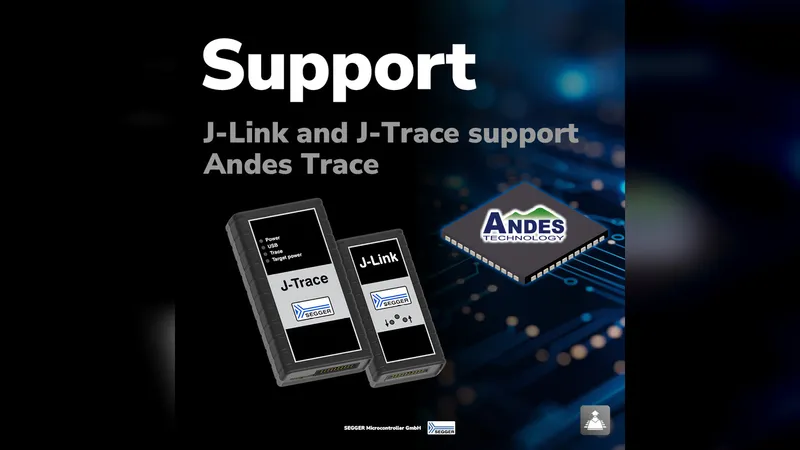
SEGGER J-Link and J-Trace Now Support Andes Trace: Why This Matters for RISC-V
21 Jul · 6 min
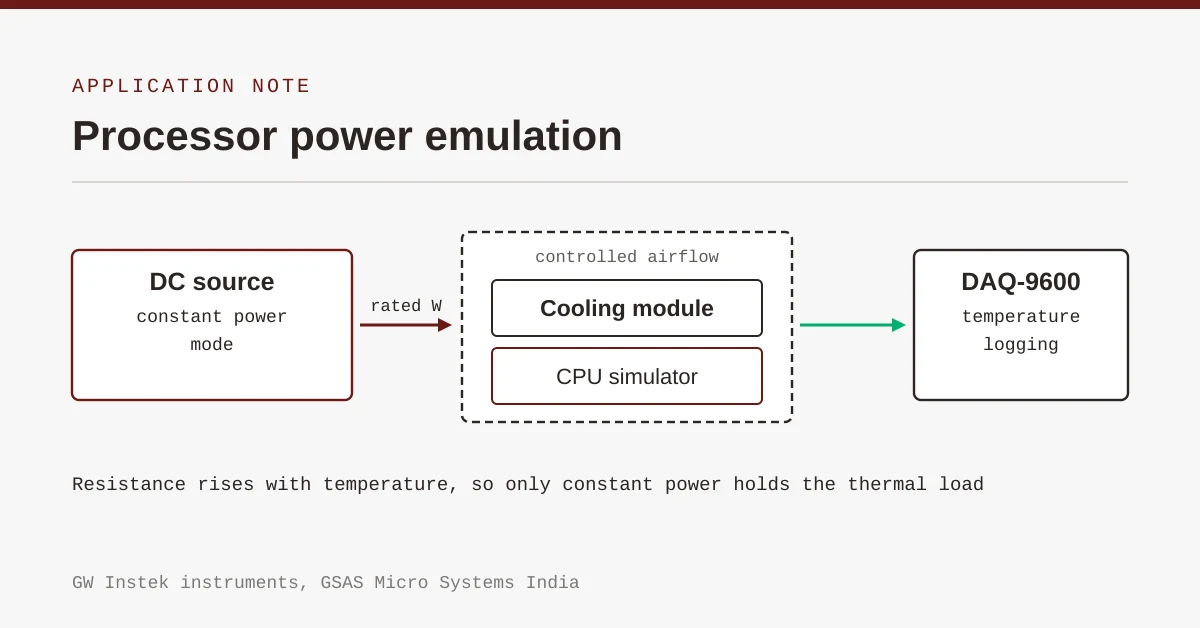
Emulating Processor Power for Thermal Testing: Why Constant Power
7 Oct · 7 min
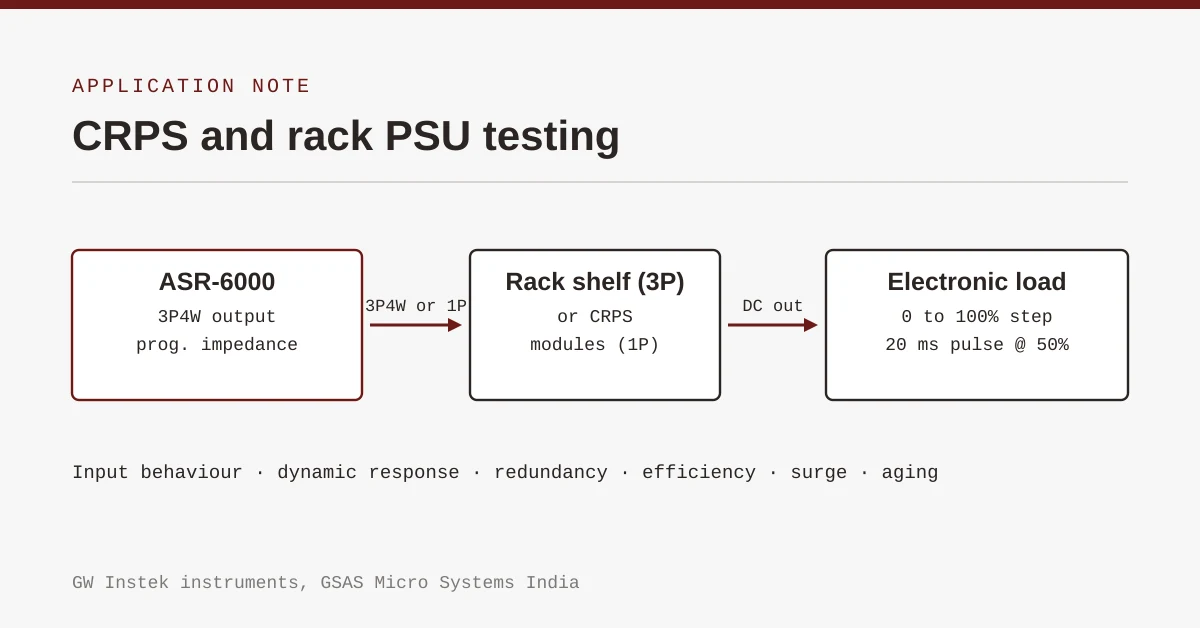
CRPS and Rack Power Supply Testing: The Six Tests That Matter
7 Oct · 7 min