
 Razorcat
 CTE: Classification Tree Editor
Unit TestingGraphical test case design tool using the Classification Tree Method, creates systematic, low-redundancy test specifications for TESSY and other test execution tools. Buy in India from GSAS.
Method
Classification Tree Method (CTM)
Output
Test case specifications exportable to TESSY
Platform
Windows 7/8/10/11 (64-bit)
Availability
Standalone or integrated into TESSY
Interface
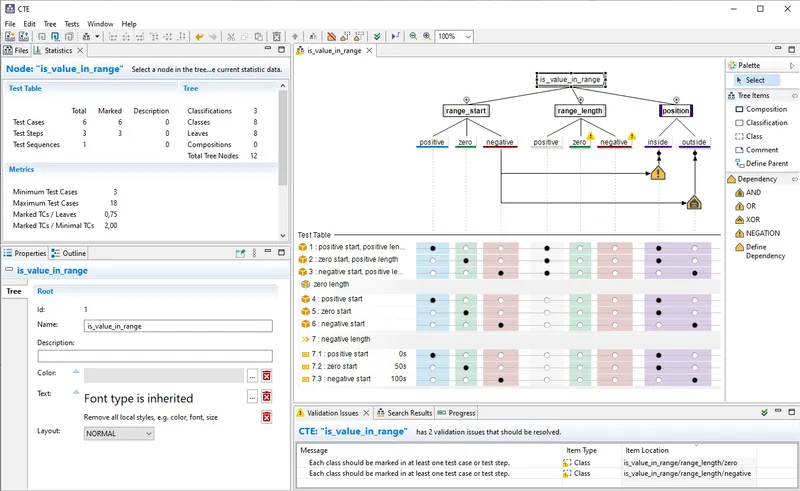
Graphical editor with tree notation
Overview
About CTE: Classification Tree Editor
The CTE (Classification Tree Editor) is Razorcat’s graphical test case design tool. It implements the Classification Tree Method to transform requirements and specifications into systematic, error-sensitive test case specifications with minimal redundancy.
How CTE Works
CTE provides a graphical notation where you decompose test inputs into classifications (parameter categories) and classes (specific values). The tree structure makes complex test spaces visible and manageable. Combinatorial rules then generate test cases that cover the relevant input combinations without exhaustive enumeration.
The resulting test specifications export directly to TESSY for automated execution, or to other test tools via standard formats.
Key Capabilities
| Feature | Detail |
|---|---|
| Method | Classification Tree Method (ISO 29119 referenced) |
| Editor | Graphical tree-based test case design |
| Export | TESSY integration + standard format export |
| Platform | Windows 7/8/10/11 (64-bit) |
| Licensing | Standalone or integrated with TESSY |
When to Use CTE
- Systematic test design: Replace ad-hoc test case selection with a structured method
- Safety-critical projects: ISO 26262 and DO-178C assessors expect systematic test case derivation
- Complex input spaces: When the number of input combinations is too large for exhaustive testing
- Requirements traceability: Link test cases back to requirements through the tree structure
Buy CTE in India from GSAS
GSAS provides CTE licensing with INR invoicing as part of the Razorcat testing ecosystem. Available standalone or bundled with TESSY. Contact our functional safety engineers in Bengaluru, Hyderabad, Chennai, Pune, Mumbai, and Delhi NCR for evaluation licenses.
Blog
Razorcat Insights
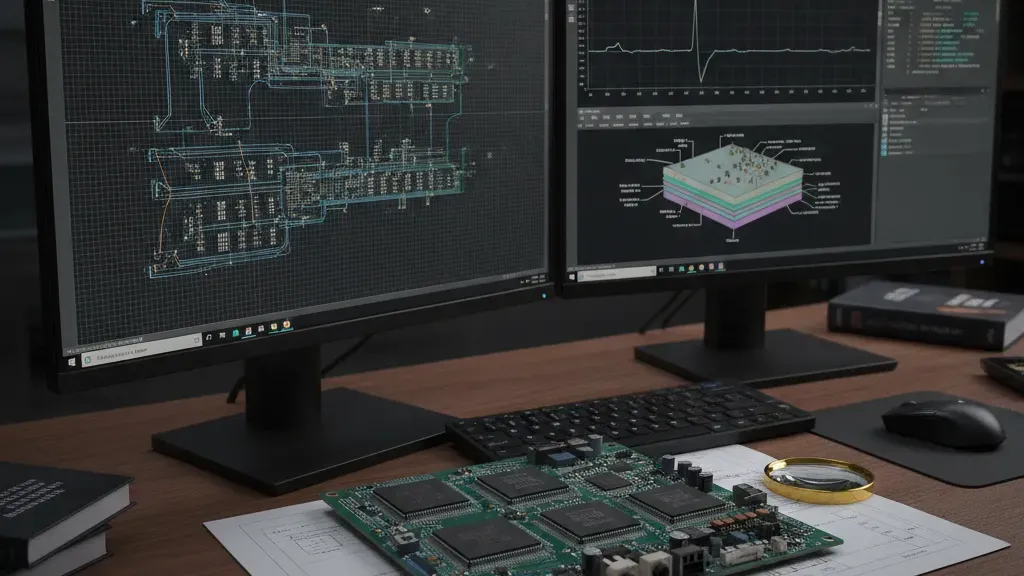
Test Case Design with the Classification Tree Method: Deriving Unit Tests You Can Defend in an Audit
Ad-hoc test cases can be perfectly good tests and still fail an audit, because nothing on file records why that particular set was sufficient. The Classification Tree Method derives test cases from the input space instead: identify the test-relevant aspects as classifications, partition each into equivalence classes, then combine leaf classes in a combination table. Razorcat implements CTM in the Classification Tree Editor, available integrated into TESSY or standalone. GSAS Micro Systems is the authorized Razorcat engineering partner for India, the UAE and Sri Lanka.
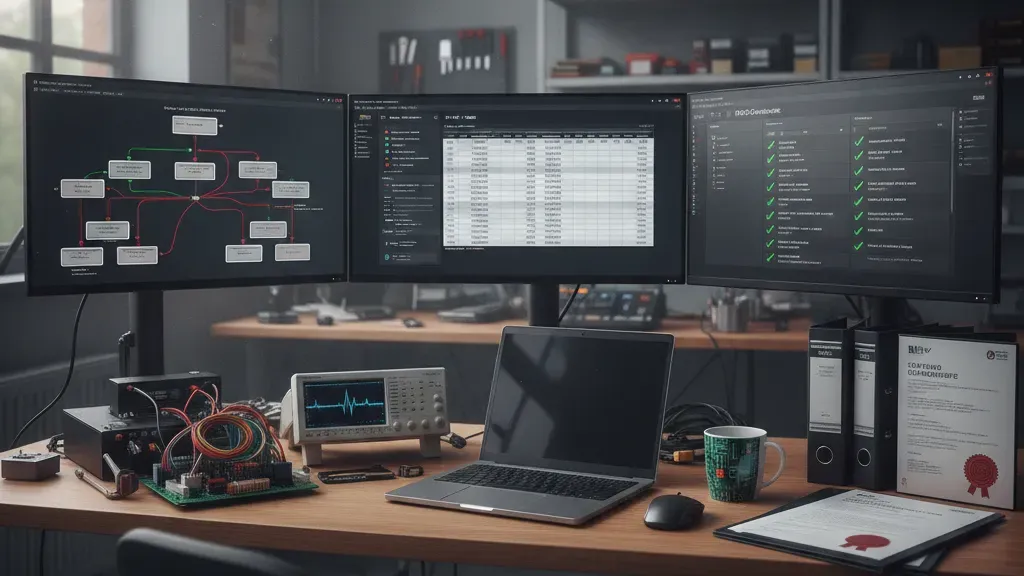
Fault Injection and Robustness Testing for Embedded Software: What ISO 26262, IEC 61508 and DO-178C Actually Ask For
Every safety-related unit contains code that correct inputs never execute: range checks, error returns, timeouts, recovery paths. The functional safety standards require that code to be verified, and they are explicit about how. ISO 26262-6 lists fault injection test as a method for both software unit verification and software integration verification; IEC 61508-3 recommends defensive programming from SIL 2 upward and then concedes that defensive code is exactly what stops teams reaching 100 percent structural coverage. This guide separates robustness testing from fault injection, maps each to the obligation that asks for it, and shows how Razorcat implements automated fault injection in TESSY without leaving instrumentation in production code.
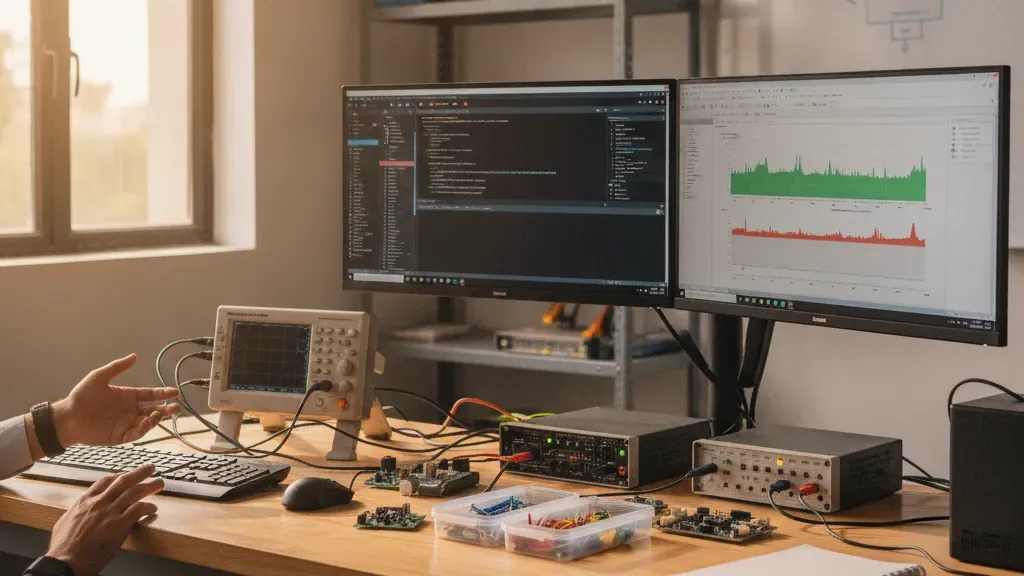
How to Evaluate a Unit Testing Tool for Embedded Software: A Buyer's Framework for Indian Teams
Unit test tool evaluations rarely fail on features. They fail because the tool cannot drive the compiler and debugger the project is already committed to, or because the evidence it produces sits outside the scope of the certificate the assessor asks for. This is a buyer-side framework: six questions, what a credible answer looks like in vendor documentation, and a four-week pilot that measures the answers instead of accepting them.
Related products
More from Razorcat
All Razorcat products →
Interested in CTE: Classification Tree Editor?
Get pricing, an evaluation unit, or a technical consultation from our application engineers.