# AI in PCB Design: What Fuse EDA Actually Does
Every EDA vendor is talking about AI. Press releases promise that artificial intelligence will revolutionise PCB design, automate away tedious tasks, and deliver optimised layouts without human intervention. The reality, as working engineers know, is more nuanced. Some AI capabilities in EDA are genuinely useful today, some are promising but immature, and some are marketing language draped over conventional automation.
Siemens’ Fuse EDA platform integrates AI across the design flow. This article examines what Fuse EDA’s AI capabilities actually do, what works today, what is coming, and, critically, what AI cannot and should not replace in the PCB design process.
Three Types of AI in Fuse EDA
Siemens categorises the AI capabilities in Fuse EDA into three types. Understanding these categories helps separate the real capabilities from the hype.
Analytical AI: Pattern Recognition on Design Data
Analytical AI examines existing design data to identify patterns, anomalies, and opportunities. It works on data you already have, your designs, your design history, your component usage patterns.
AI Command Prediction is the most visible Analytical AI feature. Fuse EDA observes your workflow, the commands you use, the sequences you follow, the contexts in which you perform certain operations, and builds a model of your design behaviour. Over time, it predicts what you are likely to do next and surfaces those commands proactively.
The compound effect is significant. A PCB designer executing a routing workflow uses dozens of commands in sequence. If the tool predicts your next commands correctly even 60% of the time, the reduction in menu navigation accumulates over hours of routing into meaningful time savings. The model improves with use, a designer who primarily works on power electronics develops a different prediction profile than one routing high-speed digital interfaces.
Design Rule Analysis uses pattern recognition to identify design rule violations that conventional DRC might miss or flag differently. By analysing patterns across many designs, the AI can identify configurations that are technically rule-compliant but historically associated with manufacturing issues or field failures.
Predictive AI: Forecasting Supply Chain and Design Outcomes
Predictive AI looks forward, using historical data and current signals to forecast future conditions. In Fuse EDA, the primary application is supply chain intelligence through Supplyframe DSI (Design-to-Source Intelligence).
Supplyframe DSI Integration provides real-time and predictive supply chain data directly within the design environment. This goes beyond simple “in stock / out of stock” status:
- Lifecycle Prediction: DSI predicts remaining active lifecycle based on manufacturer data, market signals, and historical patterns. Parts showing early end-of-life signals get flagged before they become a crisis.
- Availability Forecasting: DSI analyses order patterns, inventory trends, and manufacturer capacity to predict future availability. For Indian teams with 6-to-12-month design cycles, early warning of allocation constraints allows qualifying alternatives during design rather than scrambling during production.
- Alternative Component Recommendation: When a component faces supply risk, DSI recommends alternatives accounting for footprint compatibility, electrical parameter matching, and supply chain health.
For Indian design teams, supply chain predictive AI is arguably the most immediately valuable AI capability. The combination of long design cycles, complex multi-source procurement, and global supply chain volatility makes proactive supply chain intelligence a genuine competitive advantage.
Process Prediction uses historical data from your organisation’s design projects to forecast likely outcomes for new designs. How long will routing take for a board with these characteristics? Which areas of the board are most likely to require manual intervention after autorouting? Where are DRC violations most likely to occur based on the current placement? These predictions help project managers allocate resources and set realistic schedules, particularly valuable in Indian design services companies managing multiple client projects simultaneously.
Generative AI: Design Synthesis and Automation
Generative AI creates new content, in the EDA context, this means generating design elements, scripts, and configurations rather than just analysing or predicting based on existing data.
Natural Language Process Execution allows designers to describe tasks in plain English, and Fuse EDA generates the corresponding automation scripts. Instead of learning a scripting API to automate a repetitive task (e.g., “check all DDR nets for length matching violations and generate a report sorted by violation severity”), you describe the task in natural language and the tool generates and executes the script.
This is particularly powerful for tasks that are performed occasionally, not frequently enough to justify learning the scripting API, but repetitive enough that manual execution is tedious. Custom report generation, batch design rule modifications, and design data extraction are common use cases.
Interactive Datasheets represent an emerging capability where AI enables natural language interaction with component datasheets and application notes. Instead of searching through a 200-page processor datasheet to find the recommended decoupling strategy for a specific power rail, you can query the datasheet conversationally: “What is the recommended decoupling for the VDDQ rail on this DDR5 memory controller?” The AI extracts the relevant information from the datasheet content.
This capability is particularly relevant for Indian teams working with complex ICs from multiple vendors, where each vendor’s datasheet follows different conventions and the relevant information may be buried in different sections.
Generative Design Synthesis is the most ambitious AI capability, using AI to generate design elements (placement suggestions, routing topologies, constraint recommendations) based on the design requirements and historical design data. This capability is in active development. The current state involves AI-assisted suggestions that the designer reviews and accepts or modifies, not autonomous design generation.
What Works Today
To be concrete about the current state of AI in Fuse EDA, here is what Indian design teams can use productively right now:
AI Command Prediction: Fully functional, improves with use, delivers measurable workflow acceleration. Available in Fuse EDA today. Supplyframe DSI Supply Chain Intelligence: Production-ready, real-time supply chain data with predictive capabilities. This is the most mature and immediately impactful AI capability for most teams. Natural Language Scripting: Available for common automation tasks. The quality of generated scripts varies with the complexity of the task, straightforward automation requests produce reliable scripts, while complex multi-step processes may require manual refinement. Cloud DFM with AI-Assisted Analysis: Valor cloud-based DFM checks with AI-enhanced defect classification and root cause analysis. Helps prioritise DFM violations by likely manufacturing impact.
What Is Coming
These capabilities are on the Siemens roadmap and in various stages of development:
Generative Design Synthesis: AI-generated placement suggestions and routing topology recommendations. Expected to serve as a starting point that designers refine, not as a replacement for design engineering. Advanced Interactive Datasheets: Broader datasheet coverage, deeper extraction of design-relevant information, and integration with constraint managers so that datasheet-derived specifications flow directly into design rules. Cross-Design Learning: AI models trained on your organisation’s design history to predict design outcomes, recommend design patterns, and flag departures from established best practices. This requires a critical mass of design data and is most relevant for larger organisations with extensive design archives.
What AI Cannot Replace
This is the section that matters most for engineering teams evaluating AI claims. AI in PCB design is a tool amplifier, not a tool replacement. There are fundamental aspects of PCB design that require human engineering judgment and that AI is not positioned to replace:
Architecture Decisions: Choosing between single-board and multi-board architecture, deciding on power domains, selecting digital vs. analogue implementation, these system-level decisions depend on requirements and tradeoffs AI cannot fully model. Constraint Definition: AI can enforce constraints, but defining the right constraints requires understanding the electrical, thermal, and mechanical requirements of the system. Tradeoff Evaluation: Board area vs. layer count, routing density vs. signal integrity, component cost vs. availability, these tradeoffs involve business context and system-level understanding AI does not possess. Novel Problem Solving: When a design encounters a previously unseen problem, an unexpected resonance, a component behaviour not covered by the datasheet, human engineering analysis is required. Verification Interpretation: AI can flag violations. Understanding whether a violation matters, whether a marginal impedance deviation is acceptable, whether a thermal hot spot is mitigated by enclosure airflow, requires engineering judgment.
AI as a Force Multiplier for Indian Teams
The practical value of AI in PCB design is greatest for small to mid-size teams, which is precisely the profile of most Indian design organisations. A two-to-five person team that uses AI command prediction, supply chain intelligence, and natural language automation effectively can operate with the throughput of a larger team.
Consider the typical Indian design house scenario: three engineers handling four to six board designs per year, with supply chain management consuming significant engineering time. Supplyframe DSI reduces the supply chain research burden. AI command prediction accelerates the layout process. Natural language scripting automates custom reports and design checks that would otherwise require manual execution.
None of these capabilities eliminate the need for engineering skill. They amplify the impact of skilled engineers by handling the repetitive, data-intensive, and prediction-amenable aspects of the work, freeing engineers to focus on the design decisions that require human judgment.
Evaluating AI Claims Critically
When evaluating AI capabilities in any EDA tool, Indian design teams should ask three questions:
1. Is this capability available today, or is it on a roadmap? Roadmap capabilities have uncertain timelines. Make purchasing decisions based on current capabilities.
2. What does this capability actually automate? “AI-powered routing” could mean anything from genuine topology optimisation to a conventional autorouter with a new label. Ask for a demonstration on a design similar to yours.
3. What is the failure mode? When the AI makes a wrong prediction or generates an incorrect script, what happens? A well-designed AI feature fails gracefully, bad predictions are easy to dismiss, incorrect scripts are obvious to identify. Poorly designed AI features can introduce subtle errors that are harder to catch than the manual process they replaced.
Getting Started with Fuse EDA AI
GSAS Micro Systems provides evaluation access to Fuse EDA with its AI capabilities for Indian design teams. We can demonstrate the command prediction workflow, the Supplyframe DSI supply chain integration, and the natural language scripting capabilities using design scenarios relevant to your domain.
Contact GSAS to schedule an AI capability evaluation. We will focus the demonstration on the capabilities that deliver immediate value for your team’s workflow, not on futures and roadmaps. Reach us through gsasindia.com or visit any of our offices in Bengaluru, Hyderabad, Chennai, Coimbatore, Pune, and Delhi NCR.
Also appears in:
Interested in Siemens EDA tools?
Talk to our application engineers for personalized tool recommendations.
More from Siemens EDA
View all →
India's EDA Moment: Why Design Tool Demand Is Growing, and the Engineering Careers It Creates
21 Sept · 9 min
AI and Complexity Are Redrawing EDA: Siemens on the Trillion-Transistor Era
13 Sept · 6 min
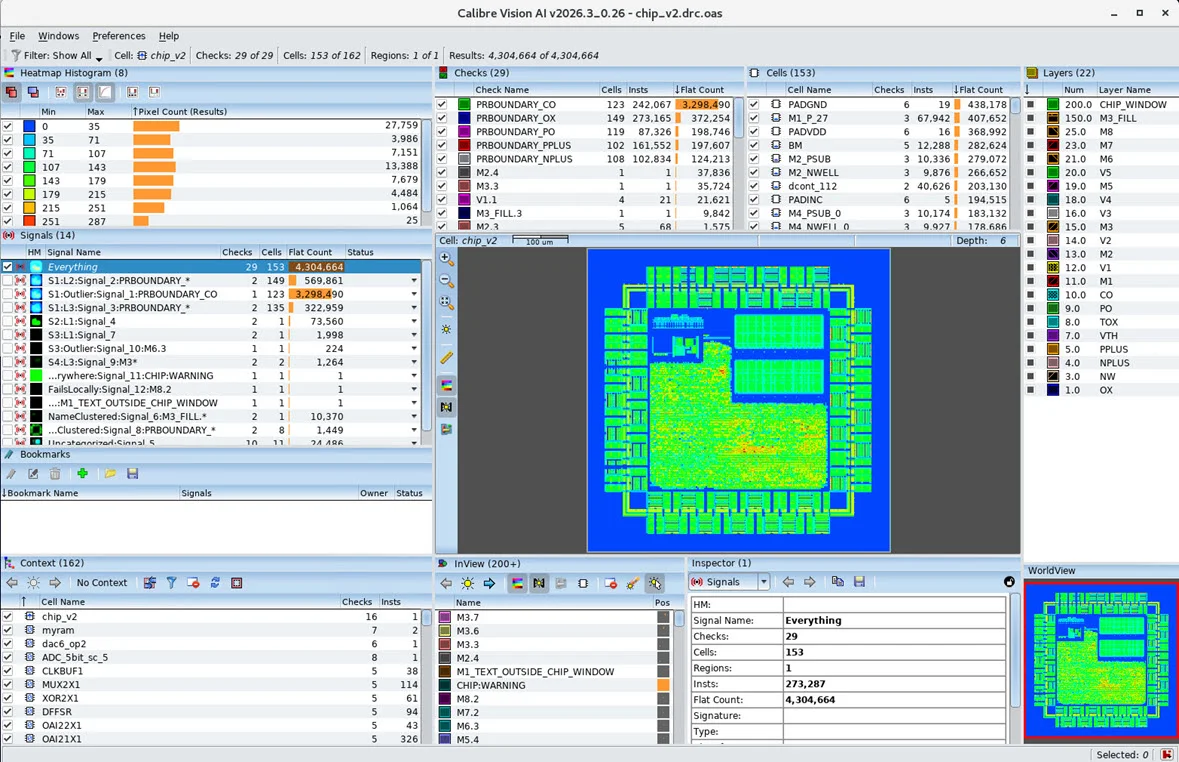
Calibre Vision AI: Bringing Order to DRC Debug at Advanced Nodes
24 Aug · 4 min
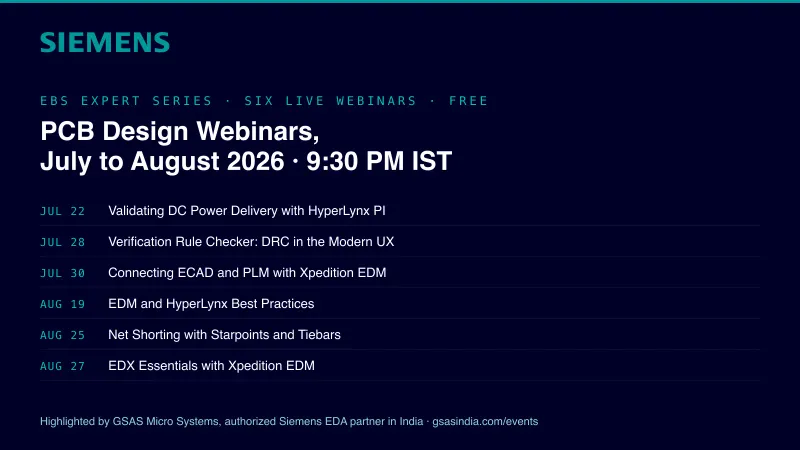
Siemens EDA EBS Expert Series: 6 Free PCB Design Webinars (Jul-Aug 2026)
20 Jul · 8 min
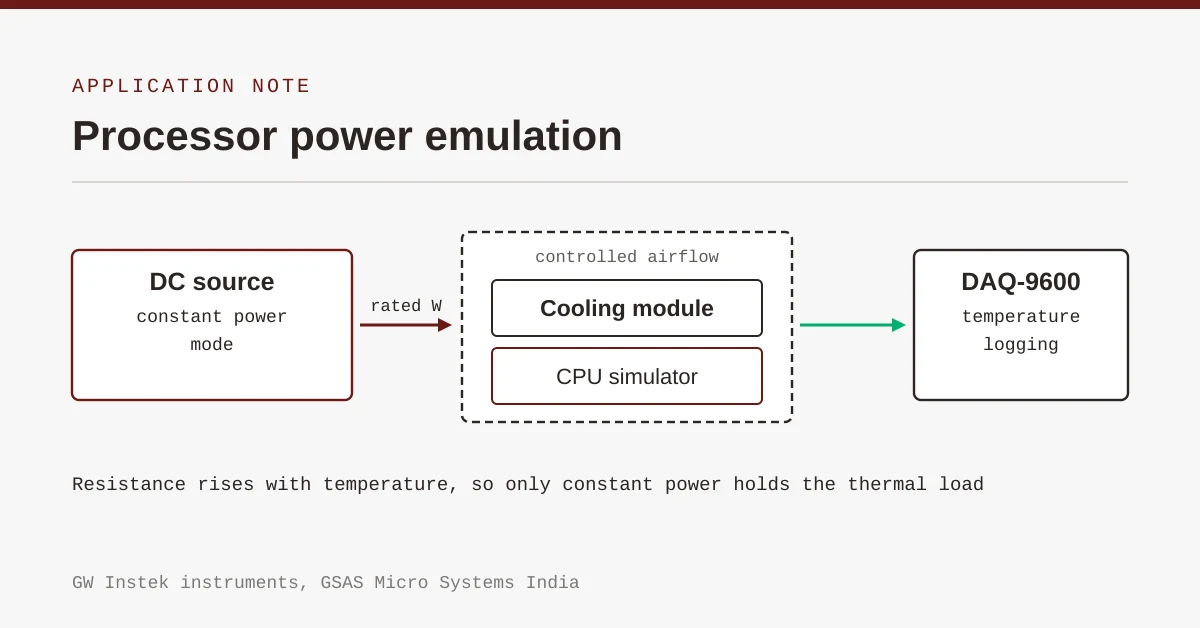
Emulating Processor Power for Thermal Testing: Why Constant Power
7 Oct · 7 min
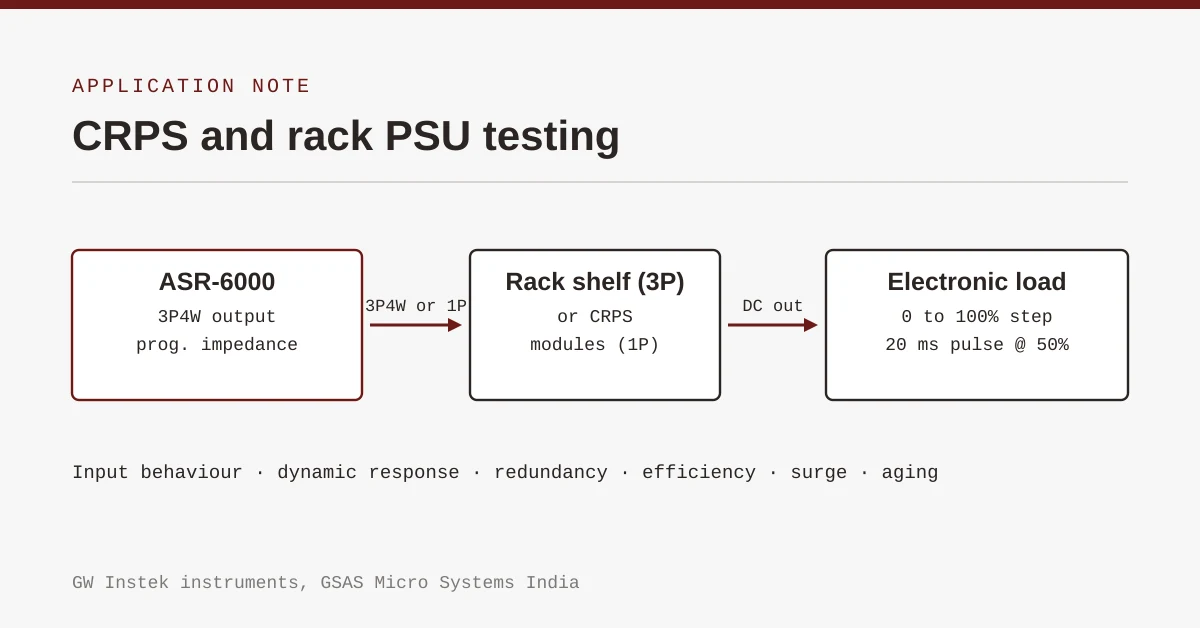
CRPS and Rack Power Supply Testing: The Six Tests That Matter
7 Oct · 7 min