

 Digilent
 PYNQ-Z1
FPGA DevelopmentPython-programmable Zynq SoC board using Jupyter notebooks for FPGA overlay development without HDL expertise. India pricing and local support from GSAS.
SoC
Xilinx Zynq-7020 (Cortex-A9 + FPGA)
Memory
512 MB DDR3
Framework
PYNQ (Python + Jupyter)
Video
HDMI in + HDMI out
I/O
Arduino headers + Pmod
Network
Gigabit Ethernet
Overview
About PYNQ-Z1
The PYNQ-Z1 brings FPGA acceleration to Python developers through the PYNQ framework, enabling hardware overlay design and deployment from Jupyter notebooks running directly on the board’s Arm Cortex-A9 processor. Software engineers can load pre-built FPGA overlays, for image processing, machine learning inference, signal processing, and custom I/O, and control them from Python without writing a single line of Verilog or VHDL.
Python Productivity Features
| Feature | Details |
|---|---|
| Programming Model | Python + Jupyter notebooks |
| FPGA Overlays | Load pre-built hardware from Python |
| No HDL Required | Use overlays without Verilog/VHDL |
| SoC | Zynq-7020 (Cortex-A9 + FPGA fabric) |
| Memory | 512 MB DDR3 |
| Video I/O | HDMI input + HDMI output |
| Network | Gigabit Ethernet |
| Expansion | Arduino headers + Pmod connectors |
| Overlay Library | Image processing, ML inference, audio, DSP |
| Community | Growing repository of shared overlays |
Built on the Xilinx Zynq-7020 SoC with 512 MB DDR3, HDMI input/output, Gigabit Ethernet, and Arduino/Pmod expansion, the PYNQ-Z1 provides a complete platform for hardware-accelerated computing research, embedded AI prototyping, and FPGA education. The growing library of community-contributed overlays covers neural network inference, video processing pipelines, audio synthesis, and sensor fusion, while the Jupyter notebook interface makes experiments reproducible and shareable, lowering the barrier to FPGA-accelerated computing for data scientists and software teams.
The PYNQ-Z1 is especially valuable for teams exploring FPGA acceleration without dedicated hardware engineering resources. Data scientists can prototype hardware-accelerated inference pipelines in familiar Python, university courses can teach heterogeneous computing concepts without requiring students to master HDL languages first, and embedded teams can evaluate FPGA co-processing performance before committing to a full custom hardware design. The Jupyter notebook workflow also makes the PYNQ-Z1 an excellent demonstration and training platform, experiments are self-documenting, reproducible, and easily shared. GSAS Micro Systems provides the PYNQ-Z1 with guidance on overlay selection, Pmod accessory pairing, and integration into academic curricula for institutions adopting FPGA-accelerated computing courses across India.
Blog
Digilent Insights
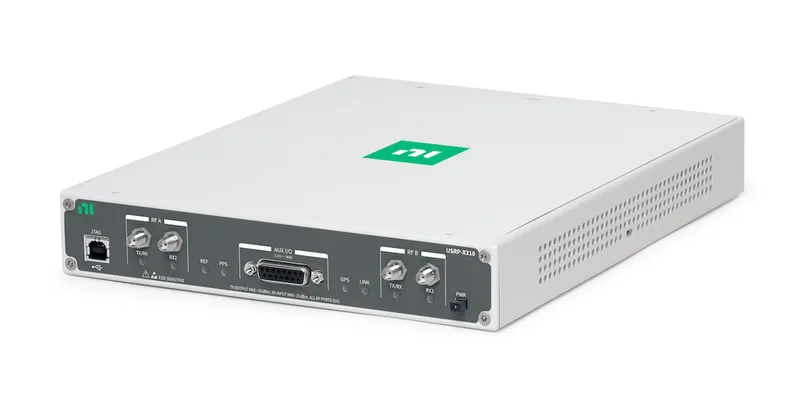
Real-World SDR Applications: 5G Research, Satellites, IoT and ADS-B
Where software defined radio actually earns its place: 5G and 6G waveform research, spectrum monitoring, weather satellite reception, GNSS work, LoRaWAN debugging, aircraft tracking over 1090 MHz, and reconfigurable instrument prototyping. A practical map from GSAS Micro Systems, an authorized Digilent engineering partner in India, with a framework for matching a USRP platform to the job.
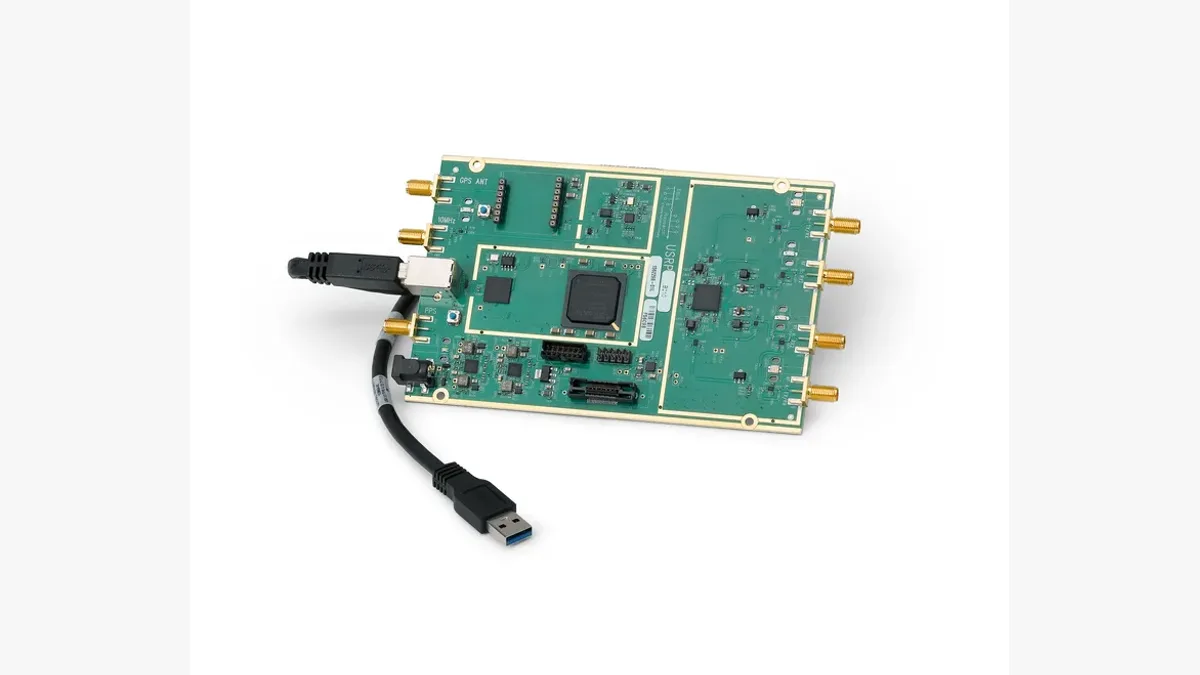
What Is Software Defined Radio (SDR)? A Practical Explainer for Indian Engineering Teams
Software defined radio moves the work of filtering, modulation and demodulation out of fixed hardware and into software running on processors and FPGAs. This explainer from GSAS Micro Systems covers what SDR is, how it differs from a traditional radio, what the signal chain looks like, why the FPGA matters, and how to pick a USRP radio in India.
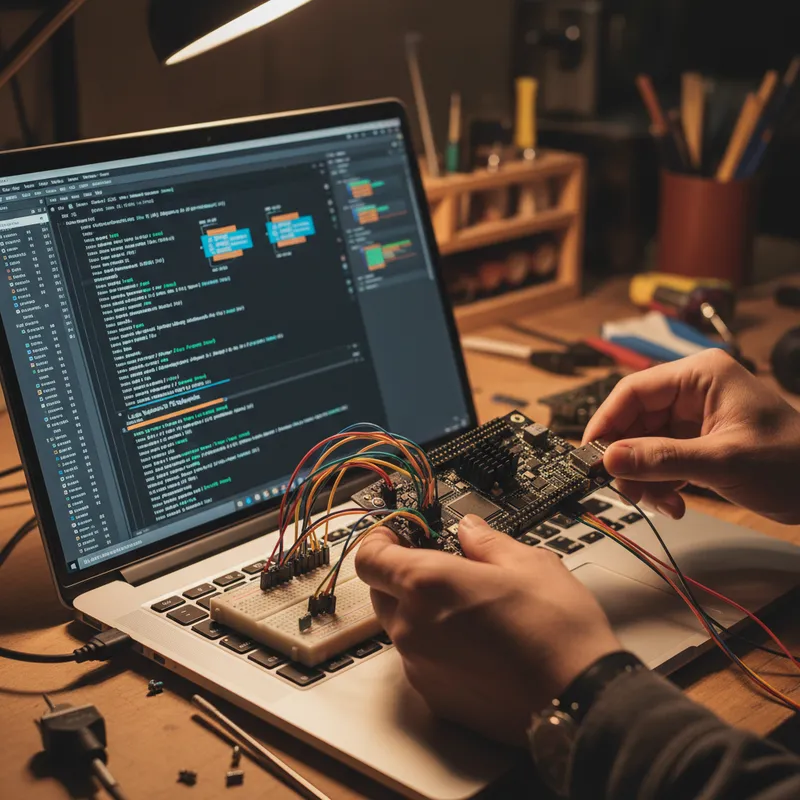
ZedBoard FPGA-in-the-Loop: HDL Verifier vs HDL Coder
Teams asking for FPGA-in-the-Loop on a ZedBoard usually name HDL Coder and SoC Blockset. FIL is actually HDL Verifier. Here is the correct product split, the JTAG versus Ethernet decision, and the 2015-era advice that is still sending Indian teams down the wrong path.
Related products
More from Digilent
All Digilent products →
Arty A7
Xilinx Artix-7 FPGA development board with Arduino shield compatibility, RISC-V soft processor support, and Vivado integration. Authorized India partner, GSAS Micro Systems.
View Arty A7 →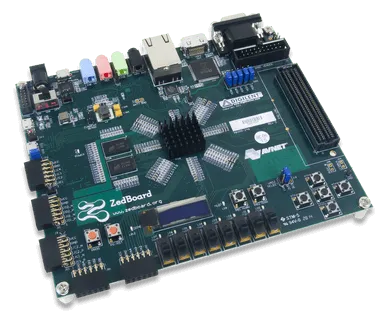
ZedBoard
ZedBoard Zynq-7000 development board (XC7Z020-CLG484-1, dual-core Arm Cortex-A9 at 667 MHz, 512 MB DDR3, FMC LPC, HDMI, 12-bit VGA, ADAU1761 audio). Buy in India from GSAS Micro Systems, an authorized Digilent engineering partner, with Vivado, Vitis and MATLAB FPGA-in-the-Loop bring-up support.
View ZedBoard →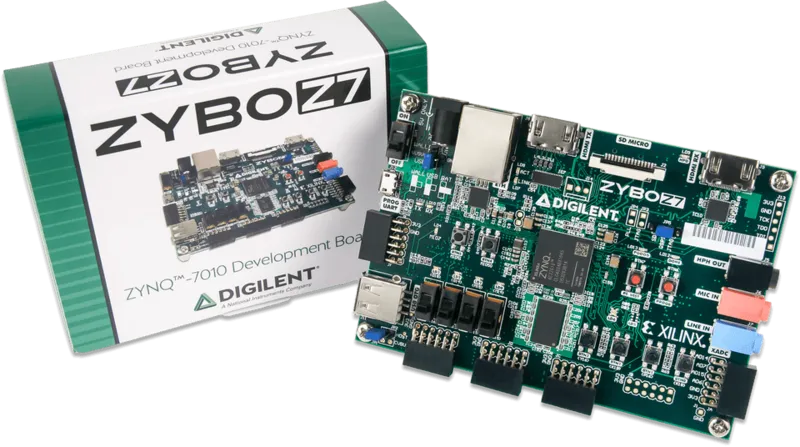
Zybo Z7
Zynq-7020 SoC development board with dual-core Cortex-A9, FPGA fabric, HDMI I/O, audio codec, and Pmod expansion. Available in India from GSAS with hands-on application engineering and local support.
View Zybo Z7 →Interested in PYNQ-Z1?
Get pricing, an evaluation unit, or a technical consultation from our application engineers.