In short
Software defined radio is used for wireless research and 5G/6G prototyping, spectrum monitoring and signal intelligence, satellite and GNSS reception, IoT and LoRaWAN debugging, aircraft and vessel tracking via ADS-B and AIS, and as the reconfigurable signal chain inside scientific and medical instrument prototypes.
Most wireless test tools are built for one job: a spectrum analyzer watches frequencies, a GPS receiver locks satellites, a protocol tester speaks one standard. Software defined radio breaks that model. Because the signal processing lives in software and programmable logic rather than in fixed circuitry, one suitable RF platform can move between jobs that would otherwise each demand their own instrument.
This post maps the application areas where SDR actually earns its keep, then closes with the questions that match a platform to the work. It is adapted from Digilent’s overview of real-world SDR applications, with the platform guidance grounded in the USRP hardware GSAS supplies and supports in India.
Wireless research and 5G/6G prototyping
New wireless systems get tested on real hardware long before anyone commits to custom silicon, and that prototyping stage is where SDR platforms live. A research team can generate an experimental waveform, transmit it, measure how it behaves in a real RF environment, adjust the processing in software, and iterate, all on the same hardware.
NI Ettus USRP devices are widely used in exactly this loop. For 5G and 6G work the signal chain has to carry wide bandwidths with low latency, which is why the FPGA matters: high-bandwidth experiments produce more sample data than a general-purpose CPU can reliably process in real time. The FPGA takes the time-critical work, digital filtering, channelization, up- and downconversion, and the real-time data movement between converters and software.
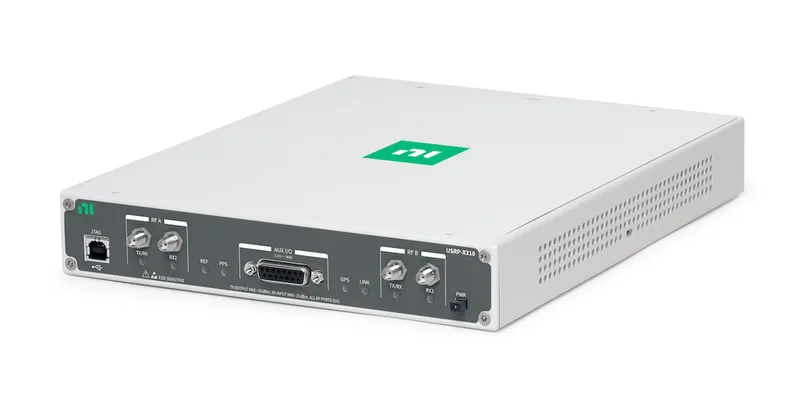
Bandwidth headroom is the practical differentiator. The bus-powered USRP B210 delivers up to 56 MHz of instantaneous bandwidth, enough for a great deal of waveform and protocol work. When the experiment needs more, the USRP X310 pairs a large Kintex-7 FPGA with up to 160 MHz of baseband bandwidth per channel with the right daughterboards.
Spectrum monitoring and signal intelligence
Spectrum is shared and crowded, and SDR suits it because one platform can tune across a wide range, visualize activity over time, and record raw RF for later analysis, tasks that otherwise need separate fixed-function instruments.
In regulatory troubleshooting and field work that means finding interference, identifying transmissions sitting in bands where nothing should be, and inspecting crowded environments without swapping hardware. Signal intelligence work adds classification: scanning a range, measuring bandwidth and power, estimating whether a signal is AM, FM or digital, and recording samples for offline study. Long-running oddities of the shortwave bands, such as the persistent Russian transmission enthusiasts call “The Buzzer”, are studied exactly this way, by watching pattern and modulation behaviour over time. One practical note: that signal sits at 4625 kHz, below the 70 MHz floor of the B-series, so HF listening of this kind needs a platform with a suitable low-frequency daughterboard such as the X310. The SDR does not interpret the signal for you; it makes sustained observation practical.
How much of a band you can watch at once is set by the hardware’s instantaneous bandwidth, which our SDR signal-chain explainer covers in detail.
Satellite reception and GNSS work
Satellites differ enormously in frequency, orbit and protocol, and SDR handles the variety well when the antenna, front end, bandwidth and software match the target.
Navigation constellations, GPS, Galileo, BeiDou and the rest, are a natural starting point: tune the right bands, process the samples, and you have a workbench for navigation research, timing experiments, multi-constellation receiver development, and teaching positioning at the signal level.
Weather satellites are the classic first project, with one important 2025 update: the NOAA APT transmissions that introduced a generation of engineers to satellite reception ended when NOAA-15, NOAA-18 and NOAA-19 were decommissioned that year. The live successor is the Meteor-M series, whose LRPT image transmissions at 137 MHz are received and decoded with the same class of hardware, antenna and free software. The pass itself still teaches the physics: low Earth orbit satellites move at about 7.4 to 7.8 km/s, so the received frequency visibly shifts as the satellite approaches and recedes. The USRP B-series tunes continuously from 70 MHz to 6 GHz, which covers these projects comfortably.
IoT, embedded systems and smart infrastructure
Connected devices use low-power links, region-specific bands and sometimes proprietary behaviour that is hard to evaluate from a datasheet. SDR lets engineers inspect what a device actually does on the air.
LoRaWAN is the common example: its chirp spread spectrum structure is recognizable in a waterfall display, and SDR helps with signal strength studies, interference evaluation, gateway placement and field debugging. Wireless M-Bus matters for utility metering, water, gas, heat and electricity, where receiving and analysing permitted transmissions supports development and troubleshooting.
The embedded angle gets important at the network edge. Remote mining and agricultural sensor networks, oil and gas facilities, and environmental monitoring often need private wireless links in places where connectivity is unreliable, and the analysis has to happen locally rather than shipping raw RF back to a data centre. The USRP E320 is built for that role: a standalone platform on a Xilinx Zynq-7045 SoC with an embedded Arm CPU running Linux, receiving from 70 MHz to 6 GHz and transmitting from 47 MHz, with the FPGA on board for local processing.
Aviation and maritime monitoring
Transport systems broadcast on standard frequencies, which makes them rewarding first SDR projects.
Most commercial aircraft transmit ADS-B messages at 1090 MHz carrying position, altitude, speed, identification and heading. An SDR plus a suitable antenna turns those broadcasts into live aircraft tracks on a map. Ships do the equivalent with AIS on maritime VHF: near coastlines, ports and waterways an SDR receives vessel positions and status the same way. Both projects make invisible RF traffic concrete, which is why they anchor so many university lab courses.
Scientific and medical instrument prototyping
The same signal-chain principles extend past communications. MRI systems, CT scanners and other energy-based instruments are purpose-built machines, but they rest on high-speed conversion, digital signal conditioning, programmable processing and controlled waveform behaviour, exactly the architecture SDR platforms expose for development.
For teams building such instruments, a reconfigurable platform means signal parameters, processing approaches and test infrastructure can evolve in software across design iterations instead of requiring new hardware each time. The distinction to keep straight: SDR hardware does not become a medical instrument; it is the research and prototyping bench for the signal chain inside one.
Matching the platform to the application
Four questions do most of the selection work:
| Question | Why it decides |
|---|---|
| What frequency range? | ADS-B lives at 1090 MHz, AIS on maritime VHF, LoRaWAN in regional ISM bands, GNSS in the navigation bands. If the front end cannot tune there, software cannot help. |
| How much bandwidth? | Narrowband monitoring runs on entry platforms; wideband research needs faster converters and processing headroom. B200/B210: up to 56 MHz. X310: up to 160 MHz per channel. |
| What budget tier? | Receive-only hobbyist devices teach; education platforms make labs repeatable; research-grade USRPs add transmit, wide bandwidth and synchronization. |
| Where should processing happen? | Host-based platforms lean on PC software for visualization and analysis. The business-card-sized B206mini-i streams over USB 3.0 for the bench; the E320 processes at the edge on its own SoC. |
For the systematic version of this decision, our USRP selection guide compares five USRPs side by side, with quote-based India availability.
Getting USRP hardware in India
GSAS Micro Systems is an authorized Digilent engineering partner in India for the NI Ettus USRP range, with application engineering support, INR invoicing and teams in Bengaluru, Hyderabad, Chennai, Pune, Mumbai and Delhi NCR. If you are matching one of the applications above to a platform, talk to our engineers or request a quote, and start with the selection guide if you want to arrive with a shortlist.
Source: Top Real-World Applications of Software Defined Radio (SDR), Digilent Blog
Also appears in:
Interested in Digilent tools?
Talk to our application engineers for personalized tool recommendations.
More from Digilent
View all →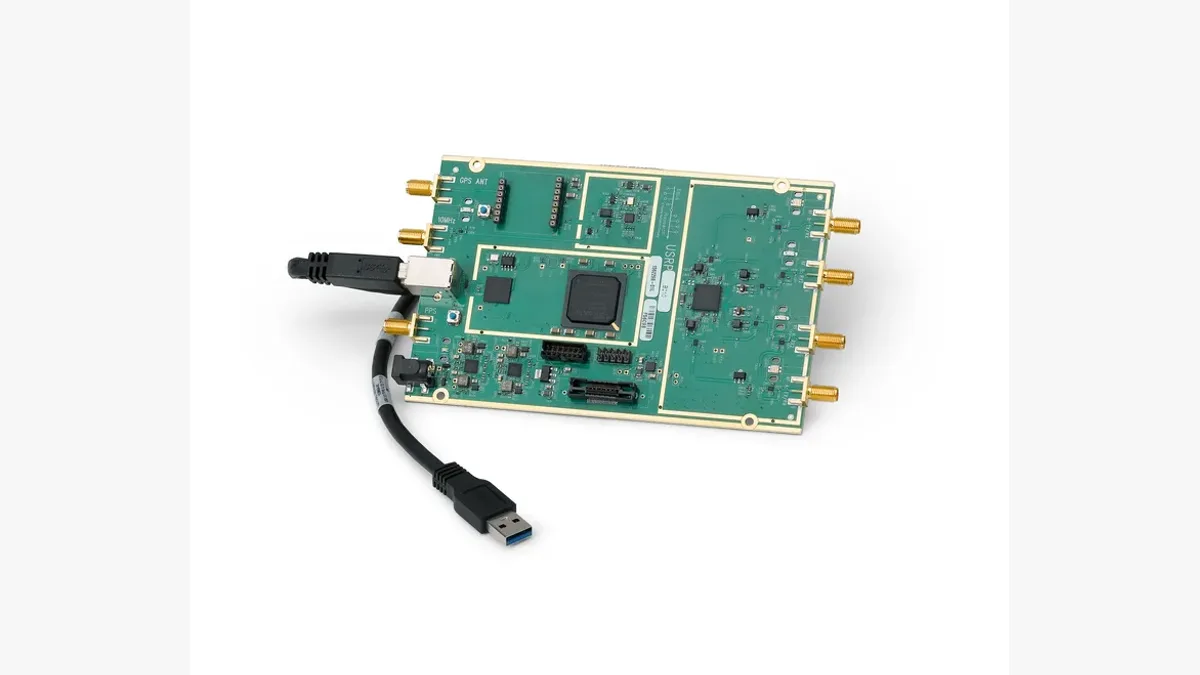
What Is Software Defined Radio (SDR)? A Practical Explainer for Indian Engineering Teams
19 Aug · 9 min
ZedBoard FPGA-in-the-Loop: HDL Verifier vs HDL Coder
5 Aug · 9 min
AI Data Centers in India: Test, Measurement & Memory Boom
4 Jun · 14 min
JTAG-HS3 vs HS2 FPGA Programming Cable: Boundary Scan, Production & Validation in India
4 Jun · 11 min
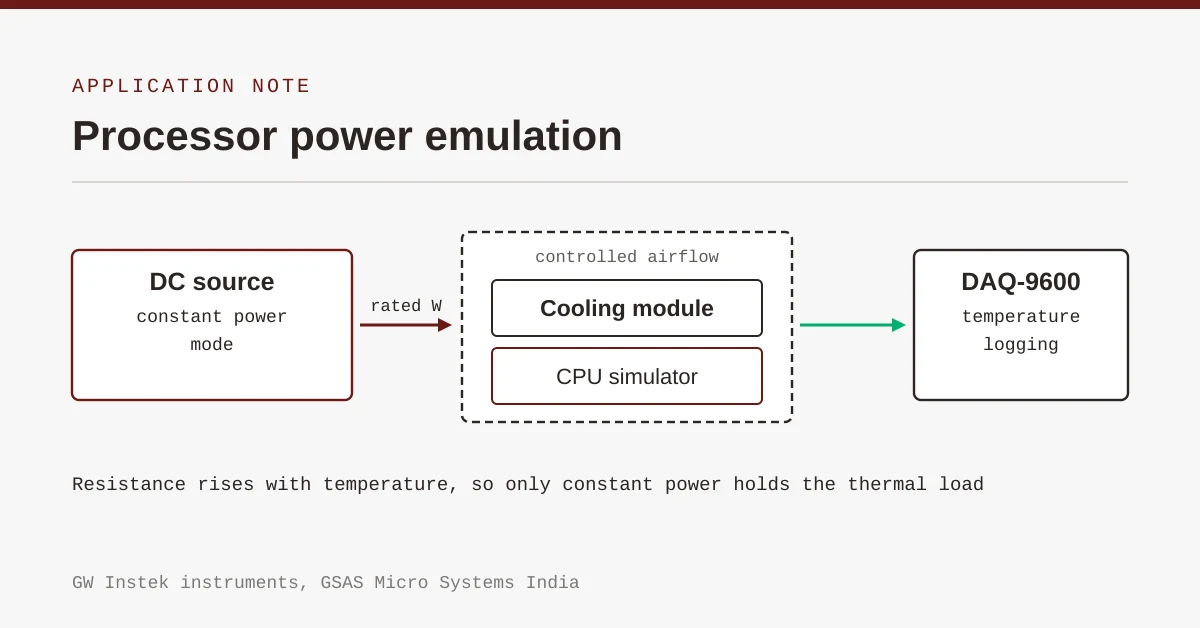
Emulating Processor Power for Thermal Testing: Why Constant Power
7 Oct · 7 min
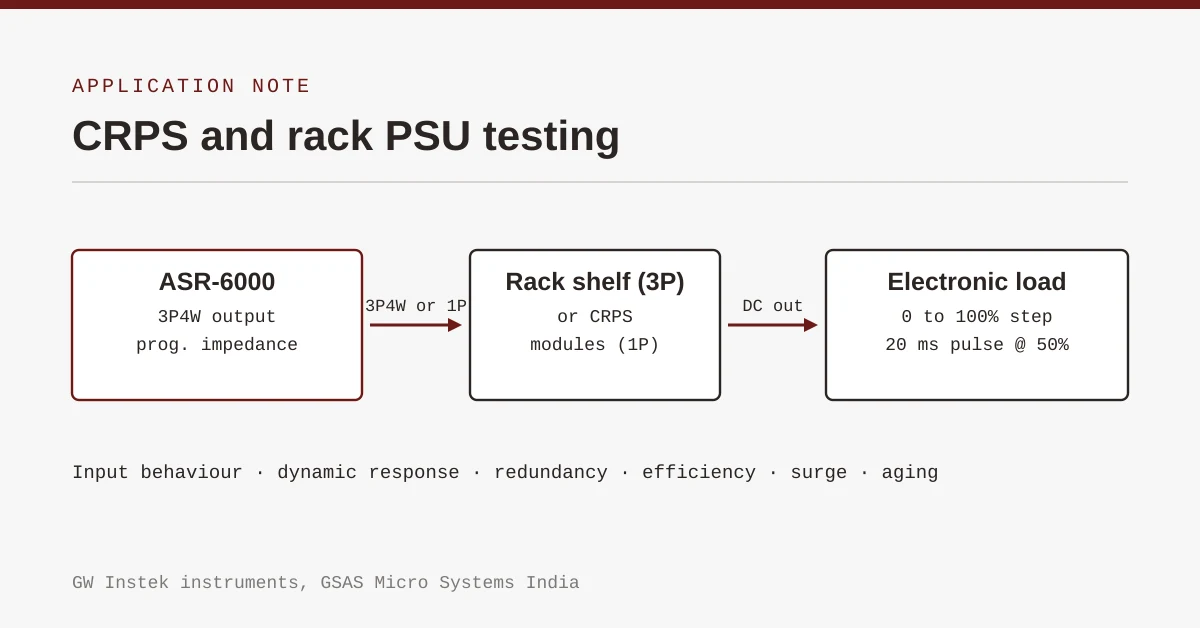
CRPS and Rack Power Supply Testing: The Six Tests That Matter
7 Oct · 7 min