
 GSAS
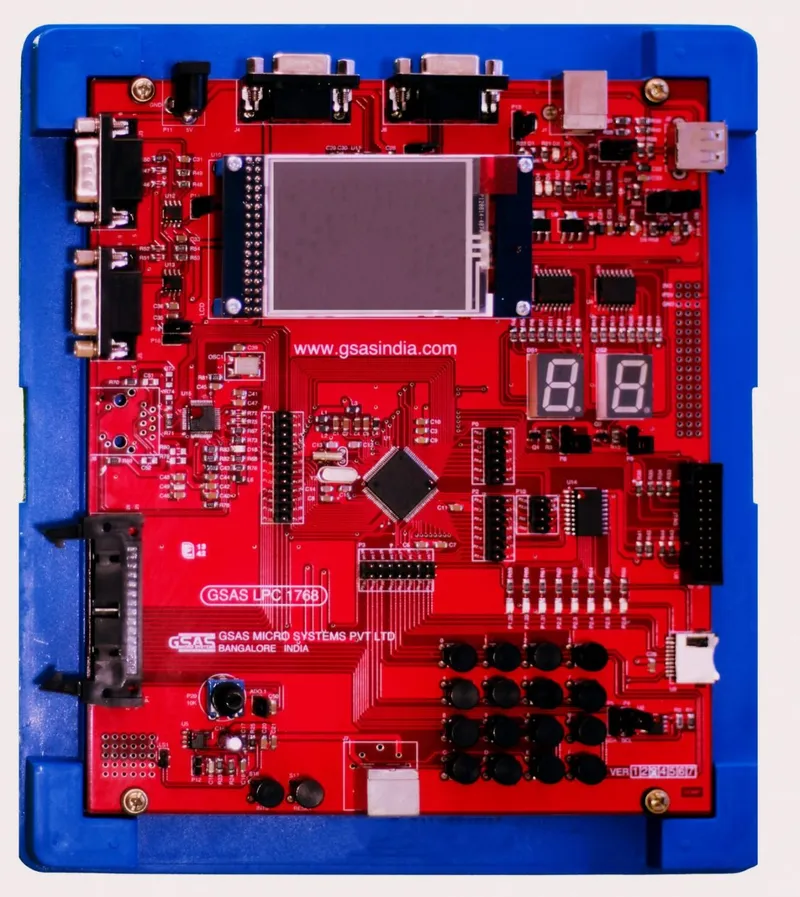
GSAS GSAS LPC 1768 ARM Cortex-M3 Development Board
Development BoardsArm Cortex-M3 evaluation board built around NXP LPC1768, on-board debugger, peripheral headers, and GSAS reference BSP. Designed and assembled in India.
Processor
NXP LPC1768 Cortex-M3 100 MHz
Memory
512 KB Flash, 64 KB SRAM
Onboard Interfaces
USB 2.0, 2× UART, 1× I2C, 2× CAN, Ethernet 10/100, ADC, DAC, 7 Segment Display, GLCD, 4×4 Keypad, Temperature sensor
Optional Interfaces
SPI, LoRa, BLE, Wi-Fi
Analog
8-ch 12-bit ADC, 10-bit DAC, 6× PWM
GPIO
70 GPIO pins via expansion headers
Debug
On-board JTAG/SWD
Overview
About GSAS LPC 1768 ARM Cortex-M3 Development Board
The GSAS LPC 1768 Development Board is a production-grade evaluation platform built around the NXP LPC1768 Arm Cortex-M3 microcontroller running at 100 MHz. Designed and manufactured by GSAS in Bangalore, this board has been deployed across engineering laboratories throughout India for Cortex-M3 firmware development, embedded systems training, and product prototyping. The board provides direct access to all key LPC1768 peripherals through clearly labelled headers, making it straightforward to connect external sensors, actuators, and communication modules.
The on-board JTAG/SWD debug interface allows connection to standard debug probes including Arm ULINKplus, SEGGER J-Link, and CMSIS-DAP compliant adapters, enabling full source-level debugging and real-time trace during firmware development. GSAS provides a reference Board Support Package (BSP) with peripheral driver examples, startup code, and project templates compatible with Keil MDK and other Arm toolchains, giving developers a running start on new projects.
With USB, UART, SPI, I2C, CAN, and Ethernet interfaces available on a single board, the GSAS LPC 1768 covers the full range of connectivity scenarios encountered in industrial and IoT applications. The board is equally suited for academic coursework covering Cortex-M architecture fundamentals and for engineering teams evaluating the LPC1768 for new product designs. Teams ready to move the same peripheral topology to a faster Cortex-M4F can step up to the Genesis Cortex-M4 Bridge, an STM32F407 carrier board designed and manufactured by GSAS in India and open for pre-order.
Peripheral Summary
| Peripheral | Details |
|---|---|
| USB | USB 2.0 Device/Host/OTG |
| UART | Up to 4 UART channels |
| SPI/SSP | 2 SPI/SSP interfaces |
| I2C | 3 I2C bus interfaces |
| CAN | 2 CAN 2.0B channels |
| Ethernet | 10/100 Ethernet MAC |
| ADC | 12-bit, 8-channel ADC |
| DAC | 10-bit DAC output |
| PWM | 6-channel PWM |
| GPIO | Multiple GPIO pins on expansion headers |
Why GSAS
GSAS designs and manufactures the LPC 1768 Development Board in-house at its Bangalore facility, ensuring consistent build quality and local availability. Engineering colleges and training centres benefit from volume pricing, structured lab curriculum support, and direct technical assistance from the GSAS embedded tools team. For product development teams, GSAS provides BSP customisation services and can support the transition from evaluation board to production hardware design.
Products are available for immediate purchase through the GSAS online store (“Buy on Store”) or through direct engagement for institutional and volume orders (“Request Volume Pricing”).
Related products
More from GSAS
All GSAS products →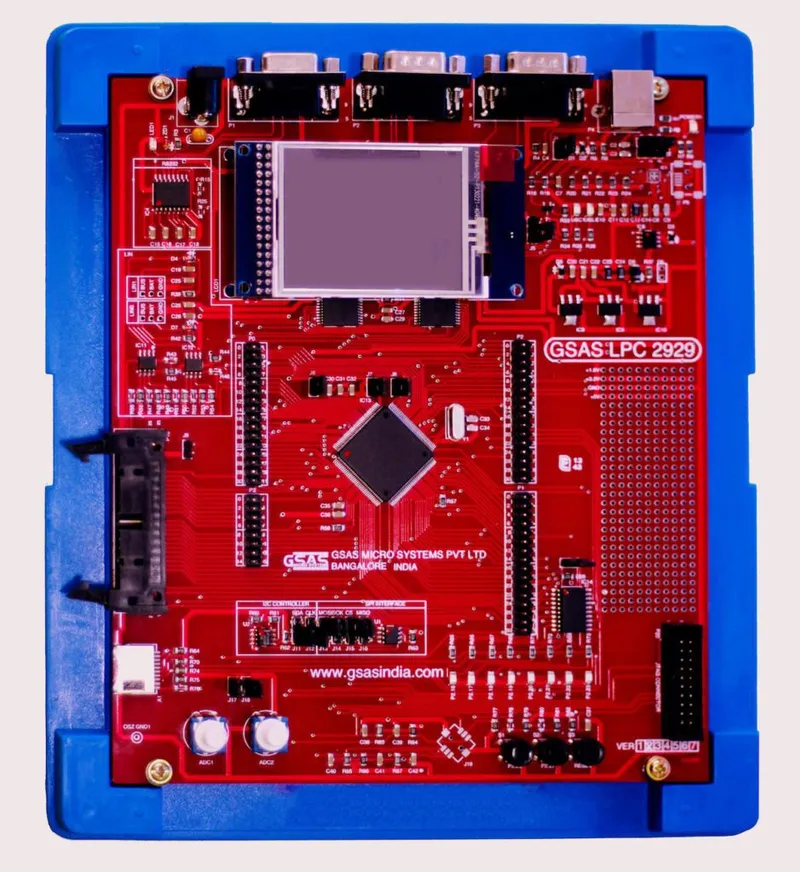
GSAS LPC 2929 ARM9 Development Board
ARM9 evaluation platform built around NXP LPC2929, CAN gateway development, automotive prototyping, and embedded Linux BSP support. Available in India from GSAS with hands-on application engineering and local support.
View GSAS LPC 2929 ARM9 Development Board →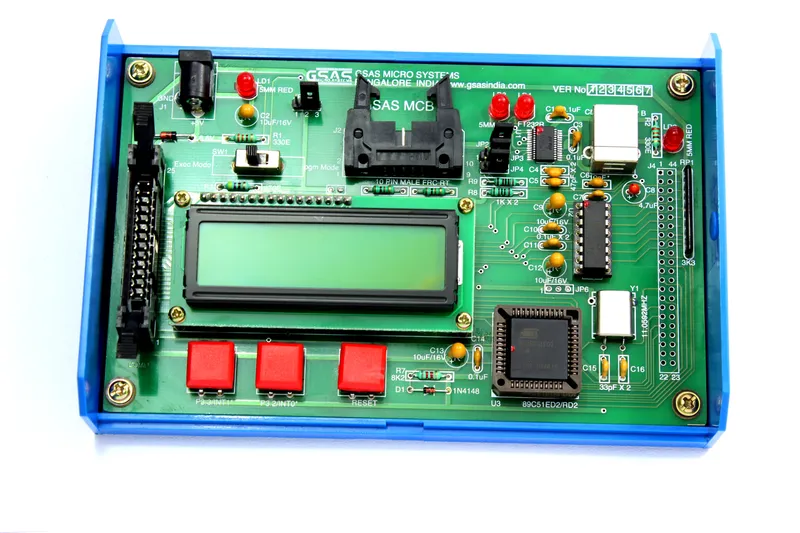
GSAS MCB 51 USB Microcontroller Trainer
Compact USB-native 8051 microcontroller trainer based on the AT89C51ED2 single-chip MCU, ideal for embedded C programming, ISP, and peripheral interfacing labs. Available in India.
View GSAS MCB 51 USB Microcontroller Trainer →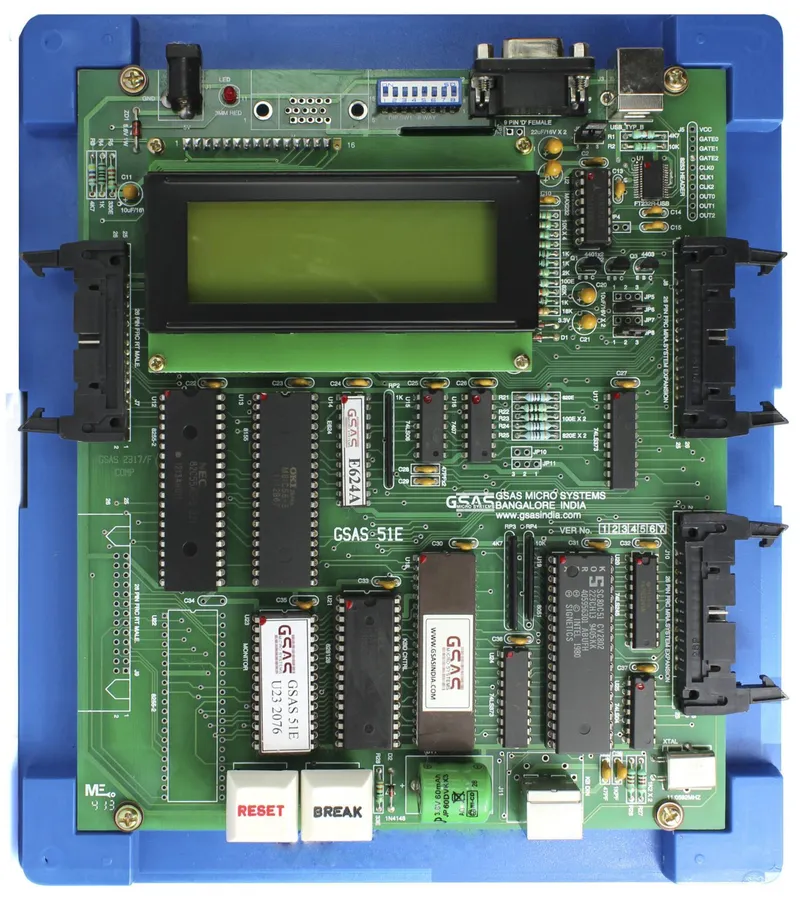
GSAS 51E Microcontroller Trainer
8051 microcontroller training system with peripheral ICs (8155, 8255, 8253, Keyboard Controller UPI), 20x4 LCD, and comprehensive lab manual for embedded systems education. GSAS India partner.
View GSAS 51E Microcontroller Trainer →Interested in GSAS LPC 1768 ARM Cortex-M3 Development Board?
Get pricing, an evaluation unit, or a technical consultation from our application engineers.