

 GW Instek
GSG-2160
Signal Sources16 GHz RF signal generator with I/Q modulation, ultra-low phase noise, and step/list sweep. India pricing and local support from GSAS.
Frequency
9 kHz to 16 GHz
Phase Noise
Ultra-low
Modulation
AM, FM, Phase, Pulse, I/Q
Sweep
Step and list sweep
Display
5-inch color TFT
Overview
About GSG-2160
The GSG-2160 is GW Instek’s flagship RF signal generator covering 9 kHz to 16 GHz with ultra-low phase noise, comprehensive analog modulation (AM, FM, phase, pulse), and optional I/Q modulation for complex waveform generation. Step and list sweep modes support automated frequency response characterization.
| Signal/Modulation Type | Capability |
|---|---|
| CW Signal | 9 kHz to 16 GHz continuous wave |
| AM | Amplitude modulation |
| FM | Frequency modulation |
| Phase Modulation | Analog phase modulation |
| Pulse Modulation | On/off keying with programmable width |
| I/Q Modulation | Optional baseband I/Q inputs |
| Sweep Modes | Step sweep, list sweep |
| Phase Noise | Ultra-low for receiver sensitivity tests |
| Output Level | High accuracy with fine resolution |
| Display | 5-inch color TFT |
High output level accuracy and low harmonics make the GSG-2160 suitable for receiver sensitivity testing, component characterization, and signal simulation across cellular, Wi-Fi, satellite, radar, and microwave frequency bands. The 16 GHz upper frequency range covers Ku-band satellite downlink, 5G millimeter-wave pre-development, and radar system prototyping, while the 9 kHz lower limit addresses audio and low-frequency signal conditioning applications.
RF engineers, wireless device developers, and EMC test labs use the GSG-2160 for local oscillator substitution, blocking and selectivity tests on receivers, antenna pattern measurements, and stimulus generation for amplifier and mixer characterization. The optional I/Q modulation capability enables generation of digitally modulated signals for modern communication system testing.
GSAS Micro Systems provides the GSG-2160 with RF application expertise, cable and accessory selection guidance, and calibration services to maintain output accuracy over the instrument’s lifetime.
Blog
GW Instek Insights
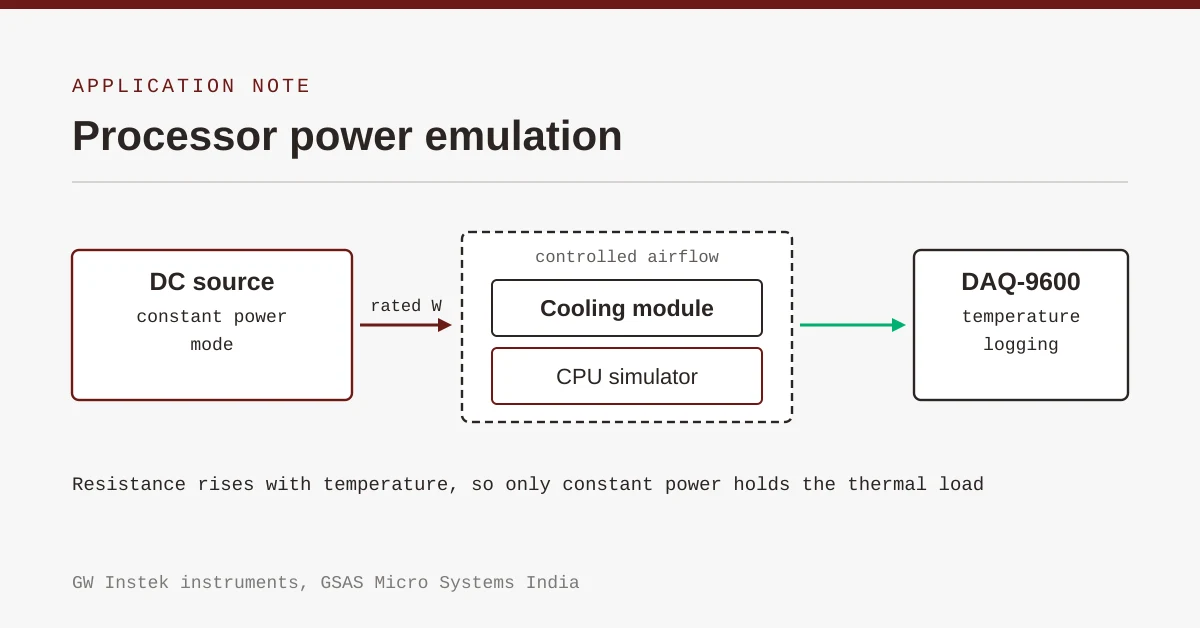
Emulating Processor Power for Thermal Testing: Why Constant Power
A heat sink or a cold plate is qualified against a watt figure, not a volt figure. This application note explains why a thermal load is driven in constant-power mode, how the bench is built for air and for liquid cooling, and what to confirm before you buy.
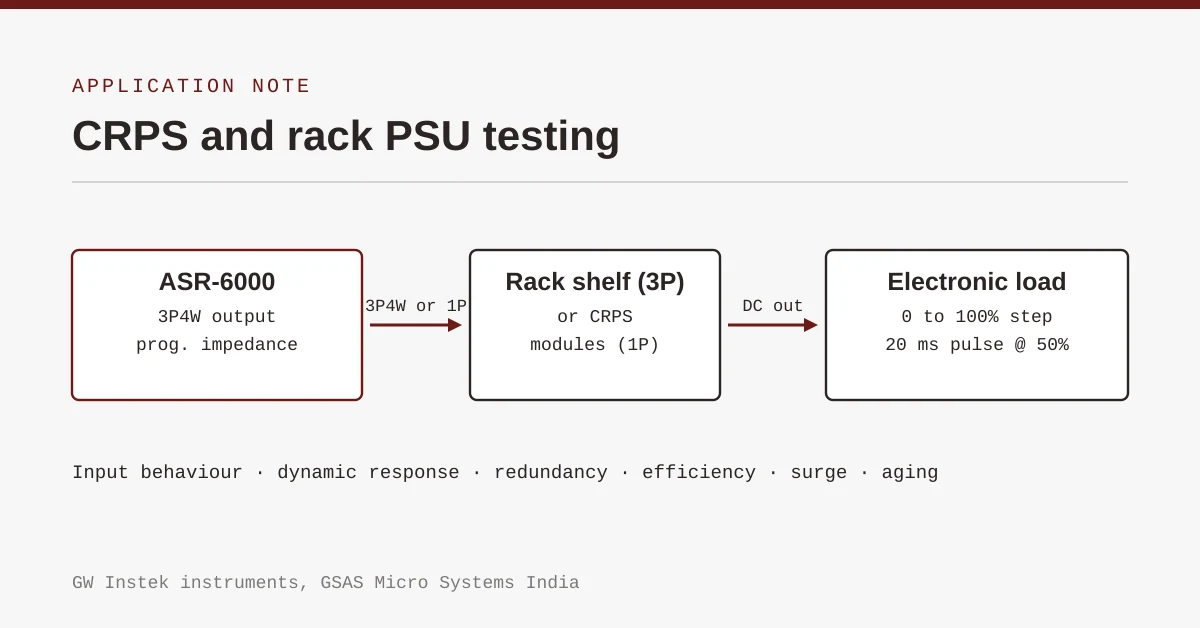
CRPS and Rack Power Supply Testing: The Six Tests That Matter
A CRPS module has to hold up under an unbalanced grid, a 0 to 100 percent load step, a surge on the line and a redundancy handover. This application note sets out the six tests, and the one source capability that makes a long feeder reproducible on the bench.
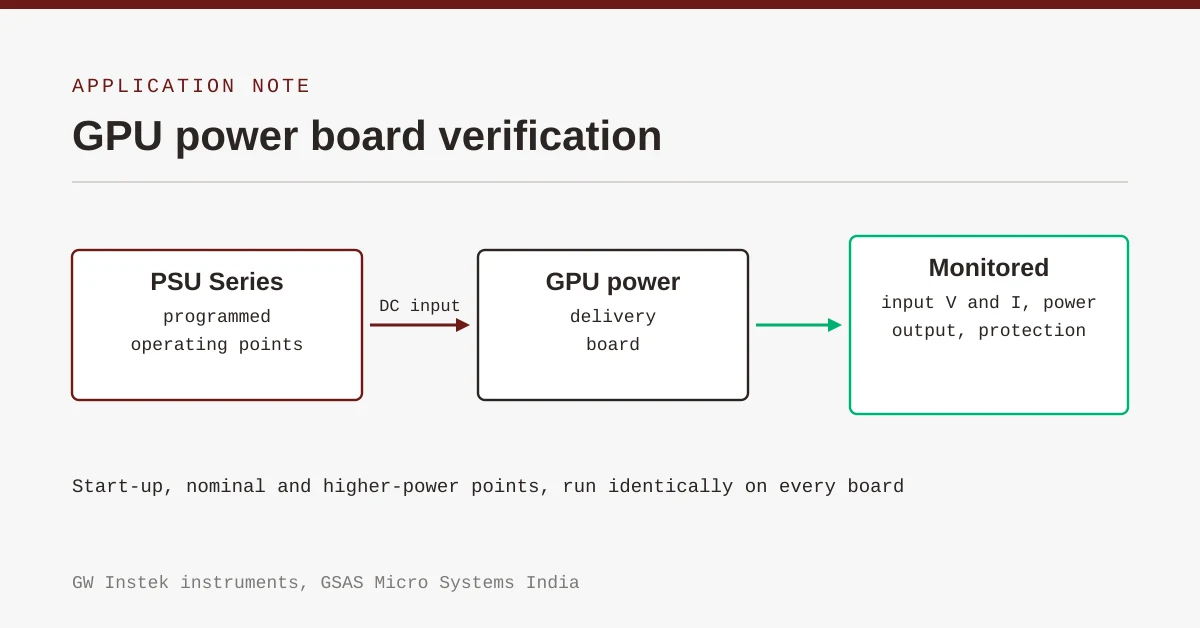
GPU Power Board Testing: DC Input Verification Before Integration
A GPU power delivery board is cheap to reject on a bench and expensive to find in an assembled server. This application note covers the programmable DC input test that screens the board, and the same test applied to incoming server systems.
Related products
More from GW Instek
All GW Instek products →
GSP-8800
8.8 GHz spectrum analyzer with EMC pre-compliance, tracking generator, and -165 dBm/Hz DANL. Authorized India partner, GSAS Micro Systems.
View GSP-8800 →
GSP-9330
GW Instek GSP-9330 spectrum analyzer, a 9 kHz to 3.25 GHz RF spectrum analyzer with 1 Hz minimum RBW, fast 204 µs sweep, built-in EMC pretest (quasi-peak/average detectors), AM/FM/ASK/FSK/2FSK demodulation and an optional tracking generator. Available in India from GSAS Micro Systems, an authorized GW Instek engineering partner, with INR pricing, GST invoicing, calibration and application support.
View GSP-9330 →
GSP-9300B
3 GHz spectrum analyzer with spectrogram, topographic display, and built-in preamplifier. Available in India from GSAS with hands-on application engineering and local support.
View GSP-9300B →Interested in GSG-2160?
Get pricing, an evaluation unit, or a technical consultation from our application engineers.