
 Microtest
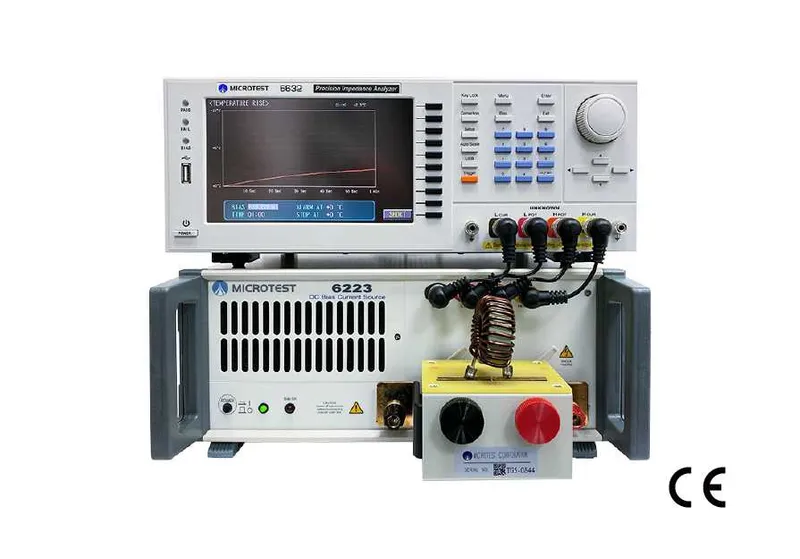
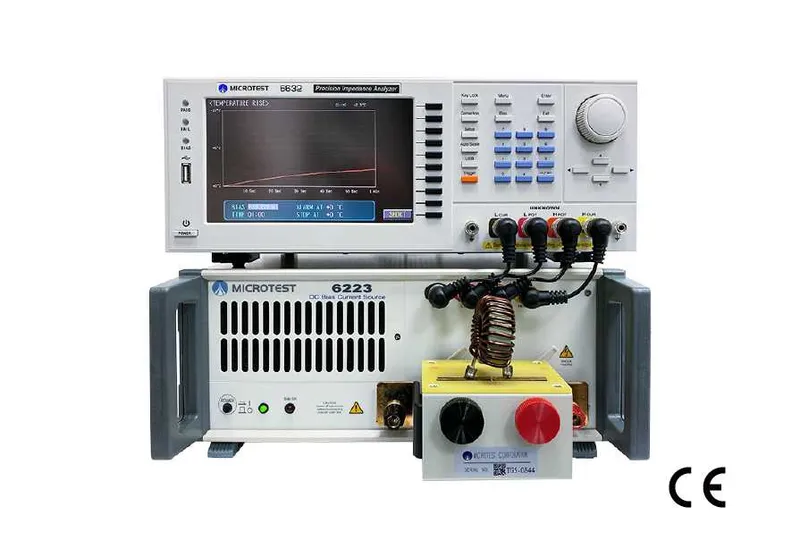
 Microtest 6632S+ DC Bias Current Test System
DC Bias Current SourcesDC bias current test system pairing the Microtest 6632S impedance analyzer with 6243H or 6243 bias sources, 40 A per unit and up to 640 A in parallel, for inductor saturation characterization. Available in India from GSAS.
DC Bias Current
40 A per source unit, up to 640 A with 16x 6243H
Integration
Microtest 6632S impedance analyzer
Application
Inductor saturation, DC bias measurement
Control
Programmable current steps
Measurement
L, Z, Q vs. DC bias current
Safety
Over-current protection, thermal management
Overview
About Microtest 6632S+ DC Bias Current Test System
The Microtest 6632S+ DC Bias Current Test System pairs the 6632S impedance analyzer with 6243H or 6243 DC bias sources for characterizing inductors, transformers, and magnetic components under realistic operating conditions. Each 6243H or 6243 source delivers 40 A, and up to 16 units run in parallel for a 640 A maximum (8 units and 320 A for the 6243). The system superimposes a controlled DC current onto the AC measurement signal, enabling measurement of inductance, impedance, and quality factor as a function of DC bias current, the fundamental data needed to evaluate inductor saturation behavior and select appropriate magnetic components for power converter designs.
Why DC Bias Testing Matters
Inductors used in switch-mode power supplies, DC-DC converters, and motor drives carry significant DC current during normal operation. The inductance of a magnetic component decreases as DC current increases, due to progressive saturation of the core material. An inductor rated at 10 uH at zero current may drop to 5 uH or less at its rated DC current. Without DC bias testing, designers and incoming inspection teams have no way to verify that an inductor will maintain sufficient inductance at its actual operating current, leading to converter instability, increased ripple, thermal runaway, and field failures.
Specifications
| Feature | Specification |
|---|---|
| DC Bias Current, per source unit | 0 to 40 A (programmable) |
| DC Bias Current, system maximum | 640 A (16x 6243H) or 320 A (8x 6243) |
| Current Resolution | Fine step programmability |
| Compatible Instruments | Microtest 6630, 6632 series LCR/impedance analyzers |
| Measurement Parameters | L, Z, Q, ESR vs. DC bias |
| Sweep Mode | Automated DC current sweep with data capture |
| Protection | Over-current, over-temperature, DUT protection |
| Cooling | Active thermal management |
| Interface | Integrated control via host LCR meter |
| Connection | 4-terminal with DC bias superposition |
DC Bias Measurement Workflow
| Step | Action | Data Generated |
|---|---|---|
| 1 | Set DC bias to 0 A | Baseline L, Z, Q at zero current |
| 2 | Increment DC bias in programmed steps | L, Z, Q at each bias point |
| 3 | Sweep to maximum rated current | Complete saturation curve |
| 4 | Analyze L vs. IDC curve | Saturation onset, knee current, rated current inductance |
| 5 | Compare against specification | Pass/fail against minimum inductance at rated current |
The automated sweep mode steps through a programmed sequence of DC bias current values, measuring inductance and impedance at each point and generating the complete L-vs-IDC saturation curve. This curve reveals the saturation characteristics of the core material and air gap design: the current at which inductance begins to roll off (onset of saturation), the rate of inductance decrease (saturation slope), and the inductance remaining at the maximum rated current.
Application Scenarios
Power inductor design validation is the primary engineering application. Magnetics designers use L-vs-IDC curves to verify that prototype inductors meet the saturation specification before committing to production tooling. Comparing measured curves against simulation predictions validates the core material model and air gap design.
Incoming inspection of magnetic components ensures that production inductors from suppliers meet the saturation specification stated on the datasheet. Some inductor manufacturers specify inductance only at zero DC bias, while the actual application requires the inductor to maintain a minimum inductance at full rated current. DC bias testing catches components that meet the zero-bias specification but saturate prematurely at operating current.
Saturation current measurement determines the maximum DC current an inductor can carry before inductance drops below a specified threshold (typically 20% or 30% reduction from the zero-bias value). This is a critical selection parameter for power converter design, directly affecting converter stability and efficiency.
Production-line quality control for inductor and transformer manufacturers integrates DC bias testing into the production test sequence, verifying that every magnetic component leaving the line meets the saturation specification. Statistical process control of saturation current data enables early detection of core material variations, air gap dimensional drift, and winding process changes.
The 4-terminal connection maintains measurement accuracy by separating the DC bias current path from the AC measurement path, preventing DC-induced errors in the impedance measurement. Over-current and over-temperature protection circuits safeguard both the instrument and the device under test.
Watch the 6632S DC Bias Current Source System on YouTube
GSAS Micro Systems provides the Microtest 6632S DC Bias Current Source System with application consulting, fixture design, and integration services for Indian power electronics companies, magnetic component manufacturers, and component evaluation laboratories.
Blog
Microtest Insights

Power Measurement for Server PSUs: Microtest 7140 Power Analyzer
Server power supplies must meet efficiency standards from full load down to standby. The Microtest 7140 measures power from 0.001 W standby to 16 kW full load in a single instrument.

Wireless Charger QC Testing with the Microtest 9901
Wireless charger production requires protocol verification, FOD compliance testing, and statistical quality control. The Microtest 9901 automates the full test sequence for PD, QC, and DC-DC power products up to 150 W.

Motor Stator Testing in EV Manufacturing: Microtest MT-6910 Series
A motor stator is the stationary assembly that generates the rotating magnetic field, the part that makes the motor work.
Related products
More from Microtest
All Microtest products →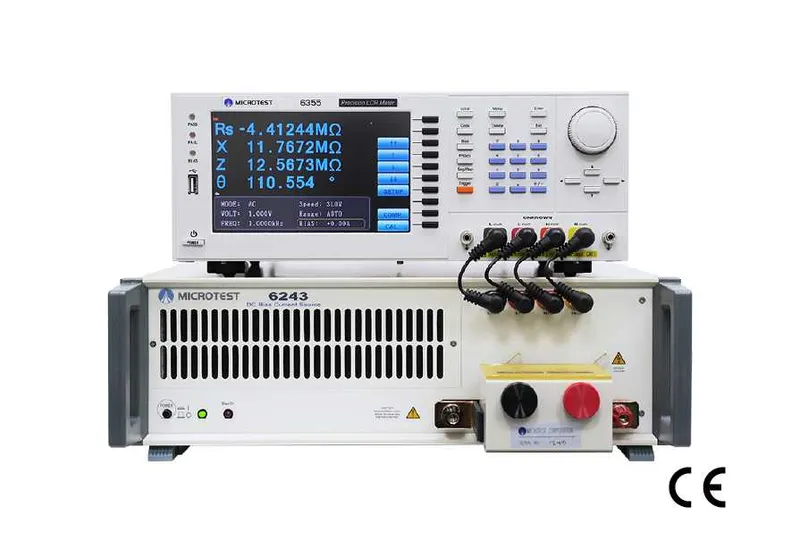
Microtest 6350+ DC Bias Current Test System
Integrated DC bias current test system with 100 Hz to 500 kHz frequency range, up to 640A bias current, and built-in DCR measurement for power inductor characterization. Available in India through GSAS.
View Microtest 6350+ DC Bias Current Test System →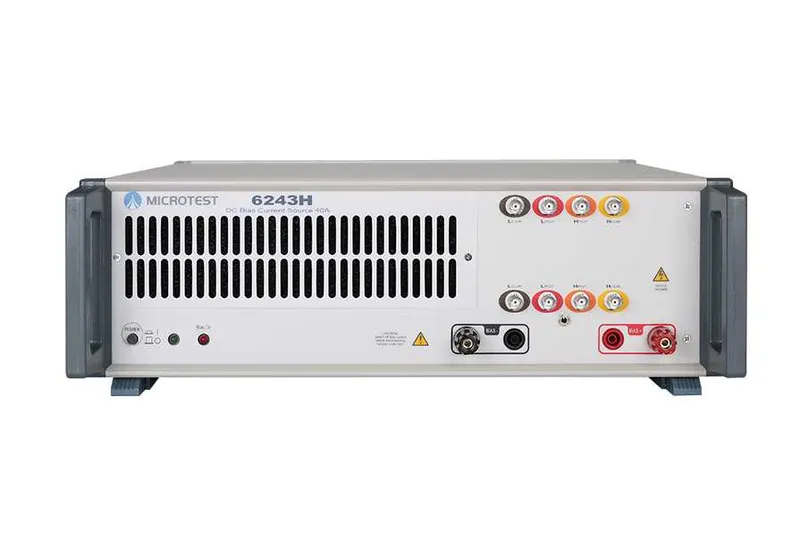
Microtest DC Bias Current Source (6210-6243H)
DC bias current source modules delivering 20 A to 640 A for inductor saturation testing, paired with Microtest LCR meters and impedance analyzers. Buy in India from GSAS Micro Systems.
View Microtest DC Bias Current Source (6210-6243H) →Interested in Microtest 6632S+ DC Bias Current Test System?
Get pricing, an evaluation unit, or a technical consultation from our application engineers.