
 SEGGER
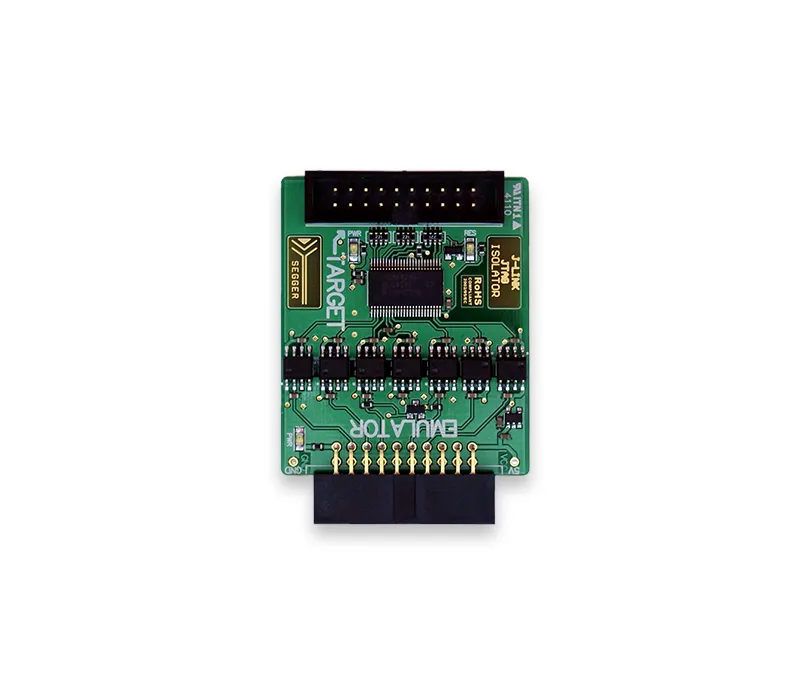
 J-Link Isolators
Adapters & AccessoriesGalvanic isolation adapters for J-Link debug probes, protect host and probe from ground loops and high-voltage target environments. Available in India from GSAS.
Type
Galvanic isolation adapter
Interfaces
JTAG, SWD
Isolation
Basic isolation, 1 kV DC
Compatibility
All J-Link models
Use Case
High-voltage & motor control targets
Overview
About J-Link Isolators
J-Link Isolators provide galvanic isolation between the J-Link debug probe and the target hardware, protecting both the probe and the host PC from ground potential differences, voltage spikes, and electrical noise that are common in motor control, power electronics, industrial automation, and automotive applications. Without isolation, a ground loop between the USB-connected host and a target operating at a different ground potential can damage the debug probe, corrupt debug communication, or, in worst cases, destroy the host PC’s USB controller.
When Isolation Is Essential
Any target that drives inductive loads or sits on a different ground reference than the debug host benefits from an isolation barrier. Motor control boards, inverter designs, and automotive ECUs connected to vehicle ground are common examples. The J-Link Isolator inserts inline between the J-Link probe and the target’s debug connector, providing basic galvanic isolation rated at 1 kV DC while passing JTAG or SWD signals at up to 4 MHz.
The isolators use the standard 20-pin JTAG/SWD connector and come in two separate variants: the JTAG Isolator and the SWD Isolator. The JTAG variant cannot pass SWD (SWD uses a bidirectional data pin), so choose the variant that matches your debug interface. One important safety boundary, stated plainly by SEGGER: these devices provide basic isolation only, which protects your equipment from ground-potential differences and electrical spikes. They are not personnel protection. Wherever hazardous voltages are present, SEGGER requires additional protection measures (double or reinforced isolation) to protect people in case the first insulation barrier fails.
Features
| Feature | Specification |
|---|---|
| Isolation Type | Galvanic, basic isolation (1 kV DC) |
| Variants | JTAG Isolator and SWD Isolator (separate devices; the JTAG variant cannot pass SWD) |
| Connector | 20-pin standard J-Link connector |
| Interface Speed | Up to 4 MHz through the isolation barrier |
| Compatibility | J-Link BASE, PLUS, PRO, ULTRA, WiFi; Flasher production programmers |
| Use Cases | Motor control, power electronics, automotive, industrial |
| Installation | Inline between J-Link and target; the SWD Isolator is powered from the probe side and may require enabling J-Link target power |
| Safety | Basic isolation only; additional protection required for hazardous voltages per SEGGER |
Buy J-Link Isolators in India from GSAS
GSAS Micro Systems, an authorized engineering partner in India, supplies J-Link Isolators with competitive pricing and short lead times. For teams in Bengaluru, Hyderabad, Chennai, Pune, Mumbai, and Delhi NCR working on motor drives, power converters, or any application where the target ground is not shared with the debug host, the isolator is an essential companion to a J-Link BASE, PLUS, or PRO. Our field application engineers advise on isolation requirements for high-voltage benches. Request a quote for single units or lab kits.
Blog
SEGGER Insights

Meet the GSAS Team at electronica India 2026, Stall H3.I45
electronica India 2026 opens on 16 September at BIEC Bengaluru. The GSAS team is on the floor all three days at Stall H3.I45, and this is who you will be talking to and what they can show you.
J-Link Is Now Validated by ST for StellarStudio
STMicroelectronics has fully validated SEGGER J-Link for StellarStudio, the IDE for its Stellar automotive MCU family, and put the probe into continuous validation at Le Mans. What that changes for the toolchain review on a Stellar programme, from GSAS, an authorized engineering partner for SEGGER in India.

An AI Agent That Drives the Debugger: SEGGER and Embedder Connect J-Link to the Loop
SEGGER has given an AI coding agent direct control of J-Link and J-Trace: flash, breakpoints, memory inspection and live RTT on real silicon. The loop only works if the probe can read target RAM while the core runs, and GSAS field engineers know exactly where that breaks first.
Related products
More from SEGGER
All SEGGER products →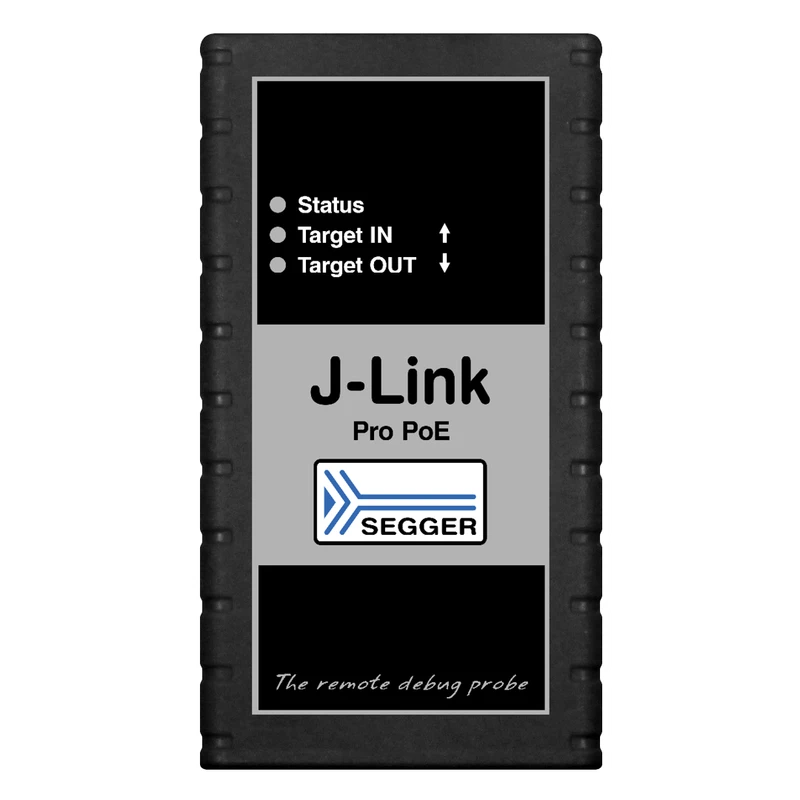
J-Link PRO PoE
Professional JTAG/SWD debug probe with USB, Ethernet, and Power over Ethernet, deploy in labs with a single cable. Available in India from GSAS.
View J-Link PRO PoE →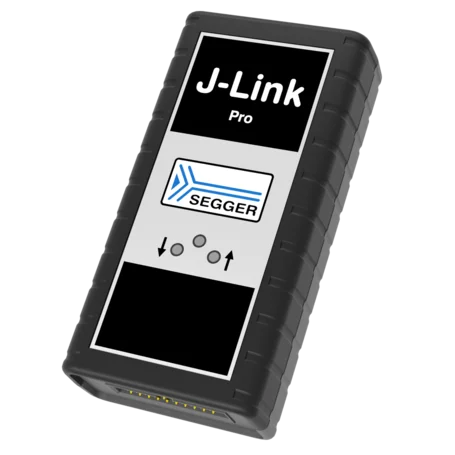
J-Link PRO
Professional JTAG/SWD debug probe with USB and Ethernet connectivity, supporting Arm Cortex-M/A/R and RISC-V architectures. India pricing and local support from GSAS.
View J-Link PRO →
J-Link ULTRA
SEGGER's ultra-fast J-Link debug probe, now redesigned: compact USB-C housing, 4 MB/s download over USB 2.0 Hi-Speed, standard 20-pin JTAG/SWD connector. Buy J-Link ULTRA in India from GSAS Micro Systems.
View J-Link ULTRA →FAQ
Common questions about J-Link Isolators
When do I need a J-Link isolator?
What isolation voltage do J-Link isolators provide?
Does an isolator affect debug speed?
Where can I buy J-Link isolators in India?
Interested in J-Link Isolators?
Get pricing, an evaluation unit, or a technical consultation from our application engineers.