
 SEGGER
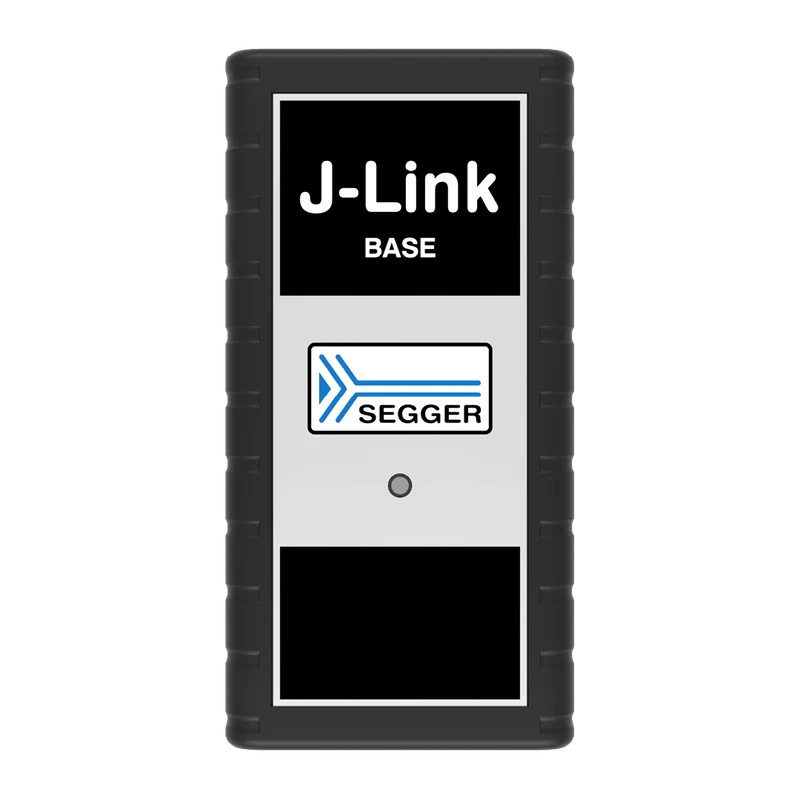
 J-Link BASE
Debug & TraceSEGGER's entry-level JTAG/SWD debug probe with USB Hi-Speed and up to 1 MB/s download speed, supporting Cortex-M/A/R and RISC-V. Buy the J-Link BASE in India from GSAS.
Interface
JTAG, SWD, cJTAG
Speed
Up to 1 MB/s
Host
USB 2.0 Hi-Speed
Connector
20-pin JTAG/SWD
Architectures
Cortex-M/A/R, RISC-V
Overview
About J-Link BASE
The J-Link BASE is the entry point into SEGGER’s J-Link family of professional debug probes. It provides USB 2.0 Hi-Speed connectivity with download speeds up to 1 MB/s and supports Arm Cortex-M, Cortex-A, Cortex-R, and RISC-V architectures through a standard 20-pin JTAG/SWD connector. Like every J-Link model, it runs the same firmware and supports the same device database spanning tens of thousands of devices across hundreds of families. The licensed software add-ons, Unlimited Flash Breakpoints, J-Flash, and the Ozone debugger, come with the J-Link PLUS and above, or via SEGGER’s BASE-to-PLUS upgrade license.
The 20-pin connector is the standard pinout used by the vast majority of evaluation boards, custom PCBs, and production test fixtures. Combined with JTAG, SWD, and cJTAG interface support, the BASE covers virtually every target connection scenario a development team encounters in day-to-day work.
BASE vs. BASE Compact
The J-Link BASE and BASE Compact share the same firmware, device support, and download-speed class. The difference is form factor and enclosure, not throughput:
| J-Link BASE | J-Link BASE Compact | |
|---|---|---|
| Host Interface | USB 2.0 Hi-Speed (USB Type B) | USB 2.0 Hi-Speed (USB-C) |
| Download Speed | Up to 1 MB/s | Up to 1 MB/s |
| Connector | 20-pin JTAG/SWD | 20-pin JTAG/SWD |
| Architectures | Cortex-M/A/R, RISC-V | Cortex-M/A/R, RISC-V |
| Form Factor | Standard enclosure (100 x 53 x 27 mm, 70 g) | Compact housing (46 x 46 x 17 mm, 20 g), mounting holes |
Both probes deliver the same firmware, the same device support, and the same download-speed class. Choose the BASE for the familiar standard enclosure, or the BASE Compact when a smaller footprint matters on a crowded bench or in a portable kit.
Features
| Feature | Specification |
|---|---|
| Download Speed | Up to 1 MB/s |
| Host Interface | USB 2.0 Hi-Speed |
| Debug Interface | JTAG, SWD, cJTAG |
| Target Voltage | 1.2 V to 5 V |
| Architectures | Arm Cortex-M/A/R, RISC-V |
| Device Support | Tens of thousands of devices |
| Included Software | Flash Download, GDB Server, RTT |
| Flash Breakpoints | Via BASE-to-PLUS upgrade license |
| RTT | Real-time terminal, bidirectional |
| SWO | Serial Wire Output capture |
| IDE Compatibility | Embedded Studio, Keil MDK, IAR, Eclipse, VS Code |
| Updates | Free software and firmware updates |
Who It Is For
The J-Link BASE is SEGGER’s cost-effective entry into professional debugging, available in two form factors with identical function: the standard BASE Classic and the space-saving BASE Compact. Developers who need reliable flash download, RTT, and GDB Server debugging on a single workstation will find the BASE covers day-to-day work; teams that want J-Flash production programming, Unlimited Flash Breakpoints, or the Ozone debugger step up to the J-Link PLUS, and teams that need Ethernet remote debug choose the J-Link PRO.
Buy J-Link BASE in India from GSAS
Watch the SEGGER J-Link BASE introduction
GSAS Micro Systems is an authorized engineering partner in India, offering the J-Link BASE with competitive pricing and short lead times, INR invoicing, GST-compliant paperwork, and technical support from engineers with hands-on J-Link experience. Orders ship across India with coverage in Bengaluru, Hyderabad, Chennai, Pune, Mumbai, and Delhi NCR. If your needs grow, the upgrade path leads to the J-Link PLUS for SWO trace workflows and the J-Link ULTRA or J-Link PRO for 4 MB/s downloads. Whether you need a single probe for your bench or a volume order for a test lab, request a quote from the GSAS team.
Blog
SEGGER Insights

Meet the GSAS Team at electronica India 2026, Stall H3.I45
electronica India 2026 opens on 16 September at BIEC Bengaluru. The GSAS team is on the floor all three days at Stall H3.I45, and this is who you will be talking to and what they can show you.
J-Link Is Now Validated by ST for StellarStudio
STMicroelectronics has fully validated SEGGER J-Link for StellarStudio, the IDE for its Stellar automotive MCU family, and put the probe into continuous validation at Le Mans. What that changes for the toolchain review on a Stellar programme, from GSAS, an authorized engineering partner for SEGGER in India.
An AI Agent That Drives the Debugger: SEGGER and Embedder Connect J-Link to the Loop
SEGGER has given an AI coding agent direct control of J-Link and J-Trace: flash, breakpoints, memory inspection and live RTT on real silicon. The loop only works if the probe can read target RAM while the core runs, and GSAS field engineers know exactly where that breaks first.
Related products
More from SEGGER
All SEGGER products →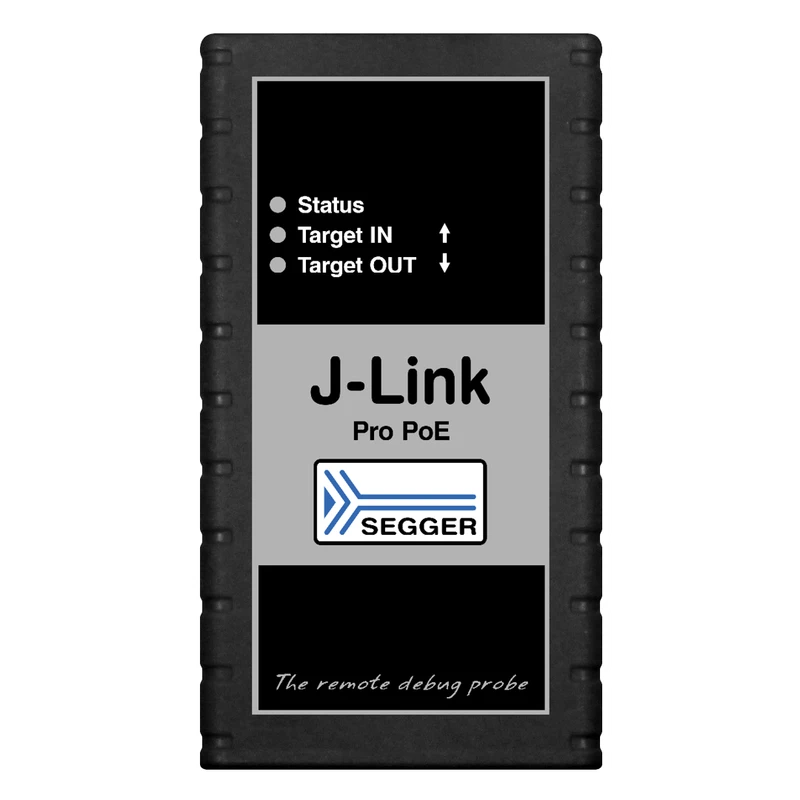
J-Link PRO PoE
Professional JTAG/SWD debug probe with USB, Ethernet, and Power over Ethernet, deploy in labs with a single cable. Available in India from GSAS.
View J-Link PRO PoE →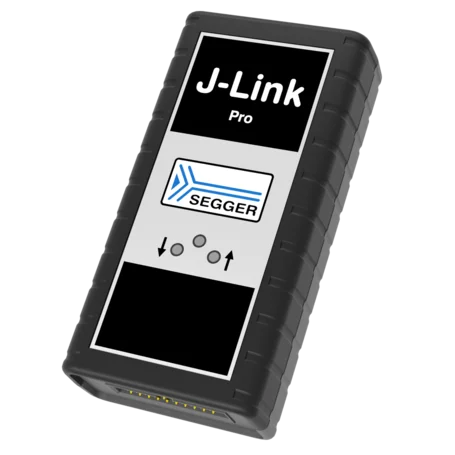
J-Link PRO
Professional JTAG/SWD debug probe with USB and Ethernet connectivity, supporting Arm Cortex-M/A/R and RISC-V architectures. India pricing and local support from GSAS.
View J-Link PRO →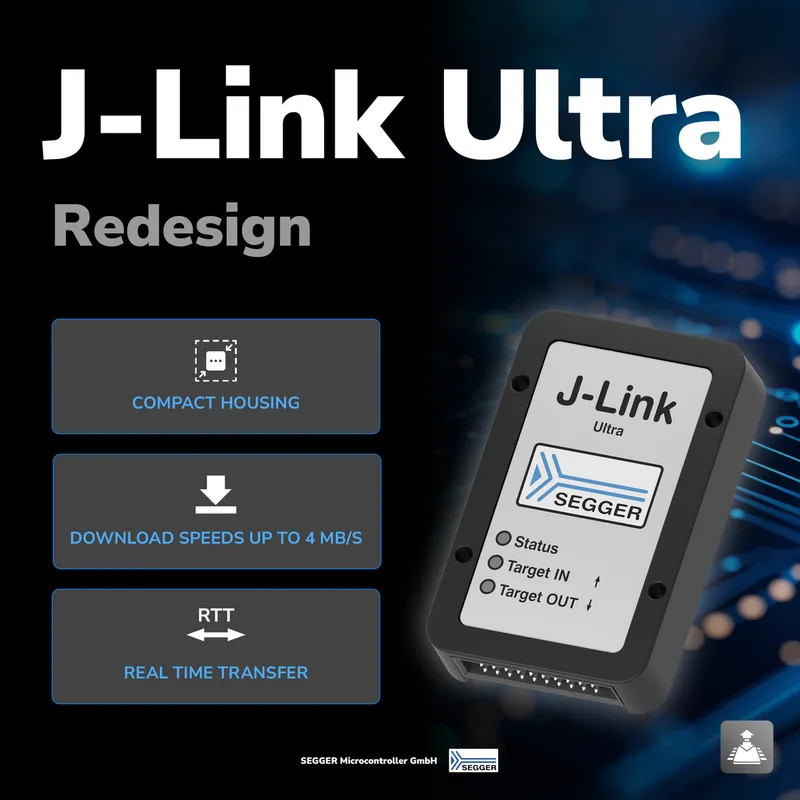
J-Link ULTRA
SEGGER's ultra-fast J-Link debug probe, now redesigned: compact USB-C housing, 4 MB/s download over USB 2.0 Hi-Speed, standard 20-pin JTAG/SWD connector. Buy J-Link ULTRA in India from GSAS Micro Systems.
View J-Link ULTRA →FAQ
Common questions about J-Link BASE
What is the price of the SEGGER J-Link BASE in India?
What is the difference between J-Link BASE and J-Link BASE Compact?
Does the J-Link BASE support RISC-V?
Which IDEs work with the J-Link BASE?
Does the J-Link BASE include J-Flash and unlimited flash breakpoints?
When should I upgrade from the J-Link BASE to a faster model?
Interested in J-Link BASE?
Get pricing, an evaluation unit, or a technical consultation from our application engineers.