India is one of the world’s largest automotive markets, and the domestic wiring harness industry supplies millions of harness assemblies annually to passenger vehicle, commercial vehicle, and two-wheeler OEMs. Every harness must pass electrical testing before shipment, the OEMs require it, the safety regulations demand it, and the economics of warranty and recall make it non-negotiable.
The Automotive Harness Testing Landscape
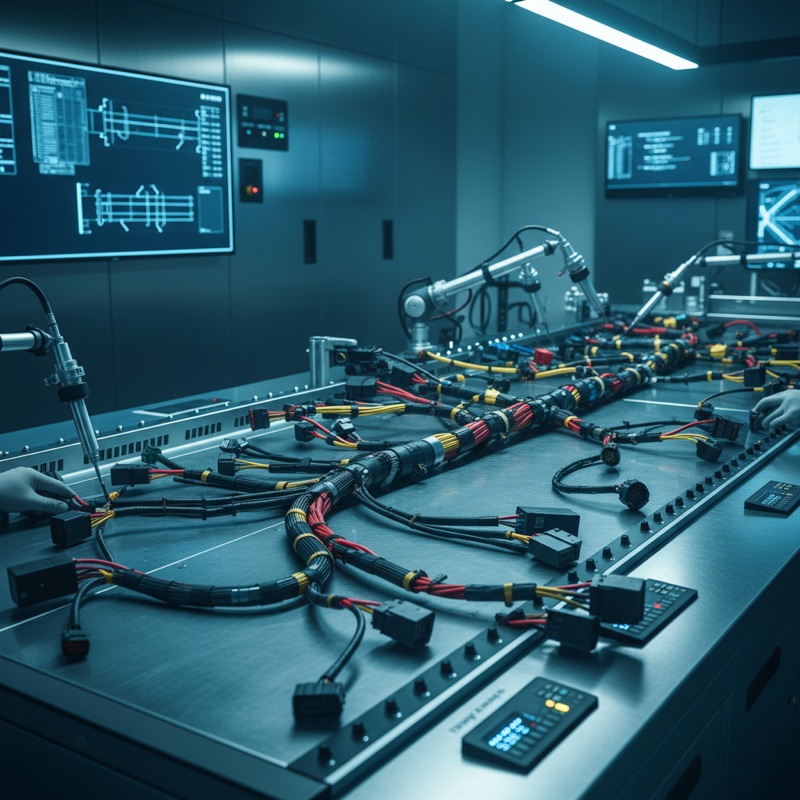
Automotive wiring harnesses are complex assemblies. A modern passenger vehicle contains 40-60 kg of copper wiring, organised into multiple harness sub-assemblies: engine compartment, dashboard, body, door, roof, and trunk. Each sub-assembly contains dozens to hundreds of conductors terminating in multiple connectors.
The harness must deliver power reliably at currents ranging from milliamps (sensor signals) to tens of amps (headlights, motors, heating elements), while maintaining insulation integrity in temperature extremes from -40 C to +125 C under the hood.
Indian harness manufacturers in Pune, Chennai, Delhi NCR, and Bengaluru test every harness at end-of-line before shipping to the vehicle assembly plant. The test requirements are defined by the vehicle OEM in a wiring harness test specification that typically covers:
Required Tests
| Test | Purpose | Typical Requirement |
|---|---|---|
| Continuity | Verify all connections present | Resistance below specified limit per circuit |
| Wiring Correctness | Verify no miswires | Every pin on the correct net |
| Insulation Resistance | Verify isolation between circuits | IR above specified minimum (typically megohms) |
| Hipot Withstand | Verify dielectric strength | AC or DC withstand voltage per OEM spec |
| Resistance Accuracy | Measure conductor resistance | Within OEM tolerance band |
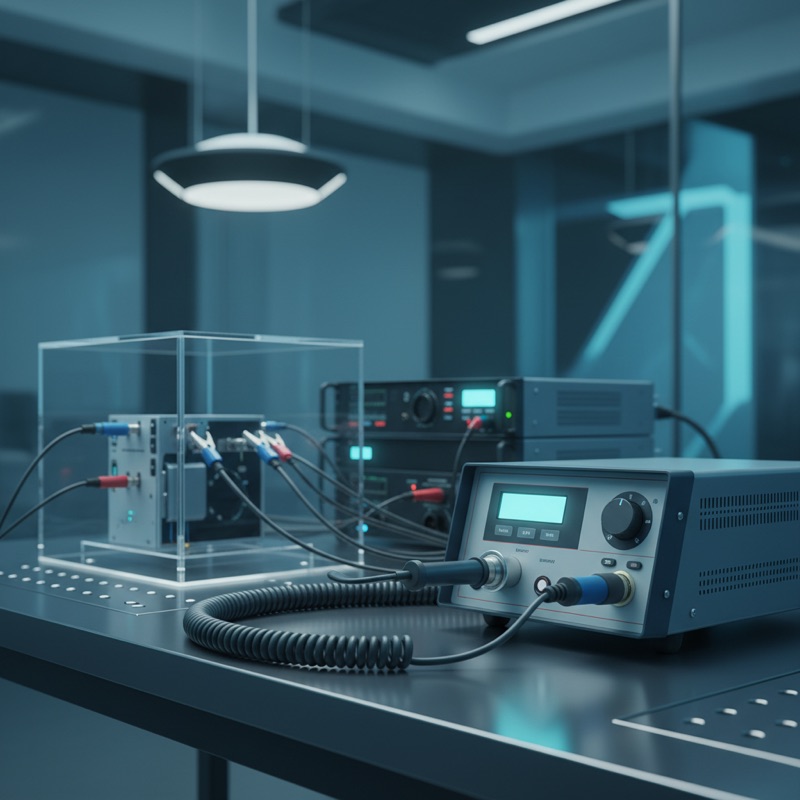
For high-current circuits, power feeds, motor circuits, heating elements, OEMs increasingly specify 4-wire (Kelvin) resistance measurement to detect marginal crimps that would pass a simple continuity check but cause field failures. The Microtest 4-Wire Harness Tester provides the milliohm-resolution Kelvin measurement these specifications require.
For signal-level circuits and lower-current applications, 2-wire continuity checking with insulation resistance and hipot testing is standard. The Microtest 2-Wire Tester and 8740K serve these requirements.
Mixed-Model Production Challenges
Indian harness factories typically produce harness variants for multiple vehicle models on the same production line. A single line might produce dashboard harnesses for three sedan variants, two SUV variants, and an electric vehicle variant, each with different connector configurations, circuit counts, and test specifications.
The Microtest testers address mixed-model production with:
Barcode-triggered program selection. Each harness variant has a unique part number. The operator scans the barcode, and the tester loads the correct test program, net list, resistance limits, hipot voltage, insulation resistance threshold, for that specific variant. This eliminates the operator error of testing with the wrong program, which is one of the most common root causes of shipped defective harnesses.
Self-learn capability. When a new harness variant enters production, the tester can learn the correct wiring from a known-good reference harness. The operator connects the golden sample, runs the self-learn function, and the tester generates the test program automatically. This reduces test engineering time for new model introductions.
500+ programmable test files. The tester stores hundreds of test programs, one for each harness variant, so no time is lost downloading programs from an external system when switching between variants on the production line.
Fixture Design for Automotive Harnesses
The test fixture, the interface between the tester and the harness connectors, is often the most challenging part of the test station setup. Automotive harness fixtures must:
- Accommodate multiple connector types: headers, sealed connectors, blade fuse boxes, ring terminals, and grounding points
- Provide reliable electrical contact: spring-loaded probe pins with sufficient force to ensure consistent contact resistance
- Guide the operator: fixture layout that matches the harness connector layout, with colour-coded or labelled connector nests to prevent mis-insertion
- Withstand production use: thousands of insertions per shift without degradation of contact quality
For 4-wire testing, each connector pin position needs four contacts (two current, two sense), which doubles the fixture complexity compared to 2-wire testing. The fixture investment for 4-wire testing is higher, but the marginal crimp detection capability justifies the cost for high-current automotive circuits.
GSAS provides fixture design consultation for Microtest cable harness tester installations, working with Indian harness manufacturers to optimise fixture layout, contact selection, and operator ergonomics.
IATF 16949 and Traceability
Automotive quality management under IATF 16949 requires documented evidence that every harness has been tested, with traceability linking test results to individual harnesses or production lots. The Microtest testers’ SPC logging provides the data foundation for this traceability:
- Test results (pass/fail, measured values) logged with timestamp and harness identifier
- Failure mode distribution reports for quality meetings
- Trend analysis showing measurement drift that predicts process problems
- Exportable data for integration with MES (Manufacturing Execution Systems) and QMS (Quality Management Systems)
EV Harness Testing: Emerging Requirements
India’s growing electric vehicle sector introduces new harness testing challenges. EV high-voltage harnesses carry 400-800 V DC for battery-to-inverter connections, with current levels that demand exceptional crimp quality and insulation integrity. Hipot test voltages for EV harnesses are significantly higher than for conventional 12 V automotive harnesses, and the safety implications of a high-voltage harness failure are correspondingly more severe.
The Microtest 7631 Hipot Tester with its AC 5000 V / DC 6000 V capability and multi-channel scanning addresses the elevated hipot requirements of EV harness testing.
Why Buy from GSAS
GSAS Micro Systems is an authorised Microtest partner in India, providing cable harness testers, hipot testers, fixture design consultation, and production line integration support for automotive harness manufacturers. Our team serves the major automotive manufacturing hubs, Pune, Chennai, Delhi NCR, Bengaluru, Hyderabad, and Mumbai: with local demo units, application engineering, and after-sales support. Contact GSAS to schedule a demo at your facility.
Also appears in:
Interested in Microtest tools?
Talk to our application engineers for personalized tool recommendations.
More from Microtest
View all →
Power Measurement for Server PSUs: Microtest 7140 Power Analyzer
7 Apr · 5 min

Wireless Charger QC Testing with the Microtest 9901
7 Apr · 5 min

Motor Stator Testing in EV Manufacturing: Microtest MT-6910 Series
7 Apr · 5 min
PCB Incoming Inspection with Multichannel LCR Testing
6 Apr · 5 min
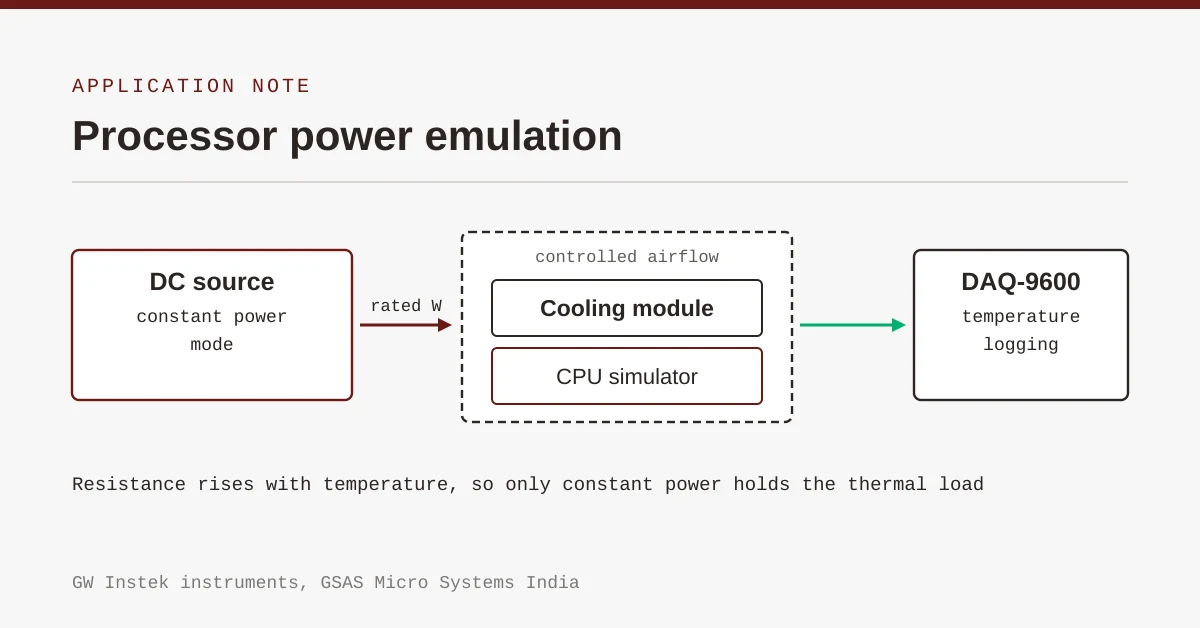
Emulating Processor Power for Thermal Testing: Why Constant Power
7 Oct · 7 min
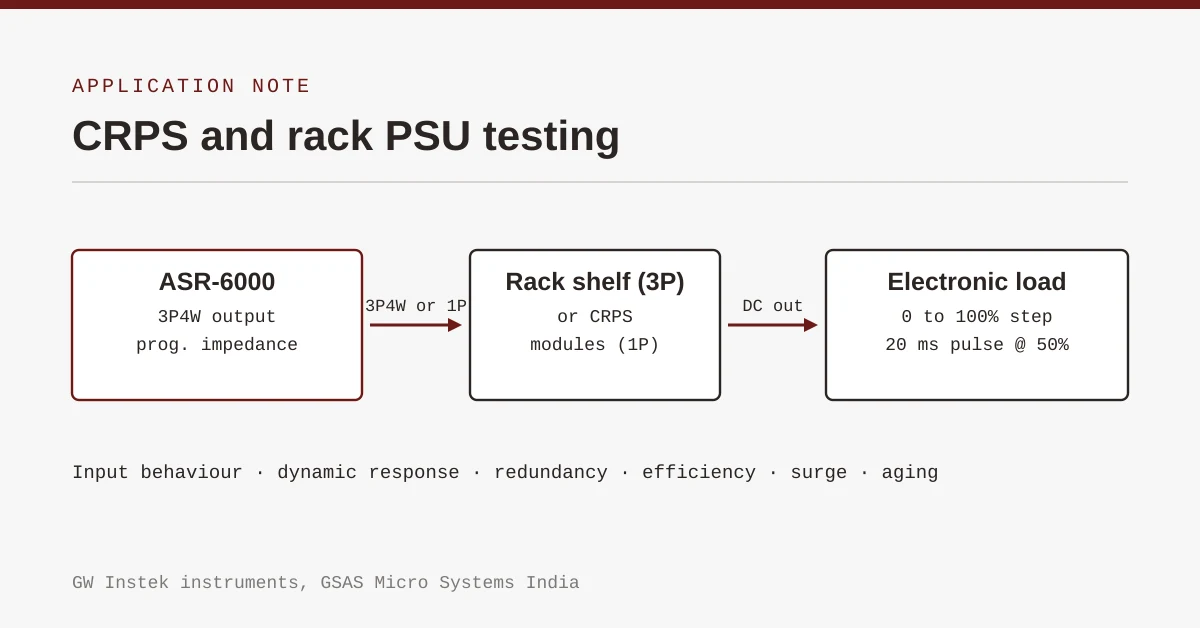
CRPS and Rack Power Supply Testing: The Six Tests That Matter
7 Oct · 7 min