
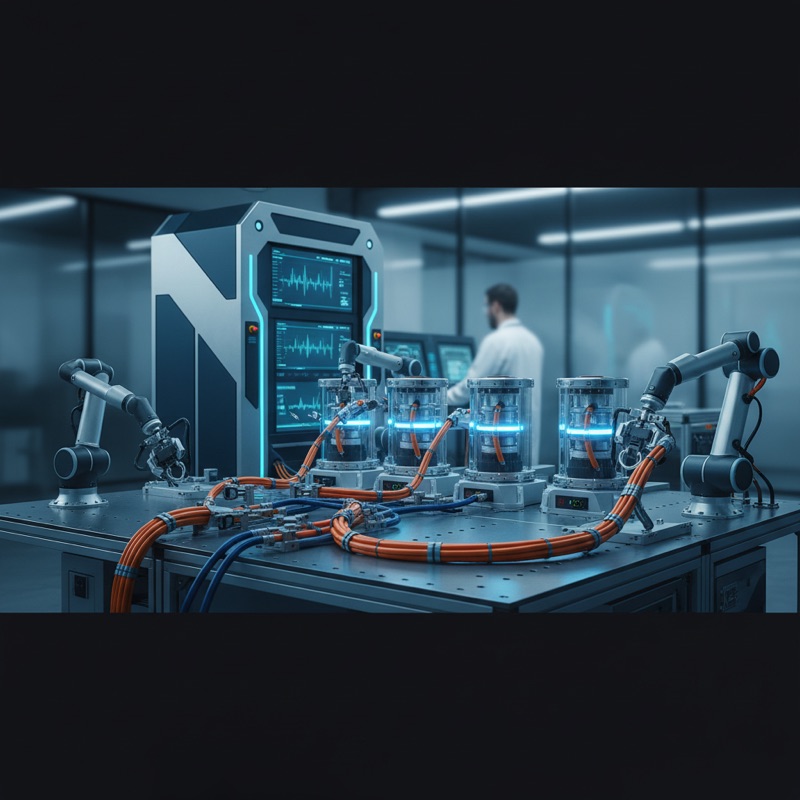
India’s electric vehicle market is growing rapidly, and with it comes a fundamental shift in cable harness requirements. Traditional 12 V automotive harnesses carry power at voltages where a failure causes a blown fuse or a non-functioning accessory. EV high-voltage harnesses carry 400-800 V DC between the battery pack, inverter, motor, and onboard charger, voltages where a failure can cause arcing, thermal runaway, or electrocution.
The testing requirements for these harnesses are correspondingly more demanding.
What Makes EV Harness Testing Different
EV high-voltage (HV) harnesses differ from conventional automotive harnesses in several ways that directly affect testing:
Higher operating voltage. The 400-800 V DC operating range means hipot test voltages are proportionally higher. While a 12 V body harness might be tested at 500-1000 V AC hipot, an EV HV harness requires 2500-5000 V AC or higher, depending on the OEM specification and applicable safety standards (IEC 61851, ISO 6469).
Higher current. Battery-to-inverter cables carry 200-400 A in high-performance applications. At these current levels, even small resistance variations cause significant power dissipation. A crimp connection with 1 milliohm of excess resistance at 300 A generates 90 W of heat, enough to degrade insulation and eventually cause failure. 4-wire Kelvin measurement at milliohm resolution is essential for verifying crimp quality on HV cables.
Electromagnetic shielding. EV HV cables are shielded to prevent electromagnetic interference with the vehicle’s low-voltage electronics, ADAS sensors, and communication systems. The shielding, typically braided copper or foil wrap, must be continuous and properly terminated. Shield continuity and shield-to-chassis resistance testing verifies that the EMI protection is intact.
Safety interlock circuits. EV harness connectors include interlock circuits (pilot contacts) that signal the vehicle’s battery management system when a HV connector is disconnected. This interlock must work reliably to prevent the HV system from being energised when a connector is partially mated or a maintenance cover is removed. Testing the interlock circuit, both continuity and response time, is a mandatory part of EV harness verification.
Test Requirements for EV HV Harnesses
| Test | Requirement | Why It Matters |
|---|---|---|
| 4-Wire Resistance | Milliohm resolution on power conductors | Detects marginal crimps that cause heating at high current |
| Hipot AC | 2500-5000 V AC (OEM/standard dependent) | Verifies dielectric strength at above operating voltage |
| Hipot DC | 3000-6000 V DC | Alternative to AC hipot per some OEM specifications |
| Insulation Resistance | >100 megohms minimum | Confirms isolation between HV and LV circuits |
| Shield Continuity | End-to-end shield resistance | Verifies EMI protection |
| Shield-to-Chassis | Resistance between shield and ground | Confirms proper shield termination |
| Interlock Circuit | Continuity and timing | Safety system verification |
| Partial Discharge | Detection of micro-discharges | Identifies insulation defects invisible to standard hipot |
Microtest Solutions for EV Harness Testing
The Microtest 4-Wire Cable Harness Tester provides the milliohm Kelvin resistance measurement needed for verifying high-current crimp connections on EV battery cables. The ability to detect resistance variations of a few milliohms across the entire conductor path, from battery terminal through crimp connections, cable, and mating connector, ensures that every joint in the HV circuit meets the quality standard required for safe high-current operation.
The Microtest 7631 Hipot Tester with AC 5000 V and DC 6000 V capability covers the elevated hipot requirements of EV harnesses. The multi-channel architecture (8 base channels expandable to 72) supports testing complex HV harness assemblies with multiple conductors and shields, routing the hipot test voltage to every conductor-to-conductor and conductor-to-shield combination through its internal scanner matrix.
Manufacturing Challenges in India
Indian EV harness manufacturing is scaling rapidly, with facilities in Pune, Chennai, Bengaluru, and Delhi NCR building capacity for domestic EV production. The transition from 12 V harness manufacturing to HV harness manufacturing introduces several challenges:
Operator safety. HV harness test stations apply voltages that are dangerous to personnel. Test fixtures must include safety interlocks, protective enclosures, and emergency stop functions. The Microtest hipot testers include output disable interlocks that prevent HV application when the fixture enclosure is open.
Fixture design. HV connectors are physically larger and more complex than conventional automotive connectors, with sealed housings, shielding terminations, and interlock pins. Test fixtures for HV harnesses require careful design to accommodate these connector types while maintaining safe clearances for the elevated test voltages.
Calibration and traceability. EV OEMs and safety standards require traceable calibration of all test instruments used in HV harness production. GSAS coordinates annual calibration services for Microtest instruments to maintain measurement traceability and regulatory compliance.
Training. Production operators and test engineers familiar with 12 V harness testing need training on HV safety procedures, elevated hipot test protocols, and milliohm measurement interpretation. Understanding why a 4-wire resistance reading of 0.5 milliohms above the limit is a critical failure (not a borderline pass) requires knowledge of the thermal consequences at 300 A.
The Growth Trajectory
As India’s EV production scales, passenger vehicles, commercial vehicles, three-wheelers, and two-wheelers, the demand for HV harness test equipment will grow proportionally. Every EV requires at least one HV harness assembly, and every assembly needs 100% end-of-line testing. Harness manufacturers that invest in HV test capability now are positioned to serve the growing domestic EV OEM demand and to compete for HV harness export orders.
The test methodology is the same regardless of EV architecture, 400 V or 800 V, passenger car or commercial truck. The Microtest 4-wire tester handles resistance verification and wiring correctness, while the 7631 hipot tester handles dielectric strength and insulation verification. Together, they provide the complete EV harness test solution.
Why Buy from GSAS
GSAS Micro Systems is an authorised Microtest partner in India, providing cable harness testers, hipot testers, and complete EV harness test solutions with INR invoicing. Our team supports fixture design for HV connectors, test sequence programming for EV harness specifications, and calibration coordination. Harness manufacturers across Pune, Chennai, Delhi NCR, Bengaluru, Hyderabad, and Mumbai can access local demo units and application engineering for EV harness testing. Contact GSAS to discuss your EV cable test requirements.
Also appears in:
Interested in Microtest tools?
Talk to our application engineers for personalized tool recommendations.
More from Microtest
View all →
Power Measurement for Server PSUs: Microtest 7140 Power Analyzer
7 Apr · 5 min

Wireless Charger QC Testing with the Microtest 9901
7 Apr · 5 min

Motor Stator Testing in EV Manufacturing: Microtest MT-6910 Series
7 Apr · 5 min
PCB Incoming Inspection with Multichannel LCR Testing
6 Apr · 5 min
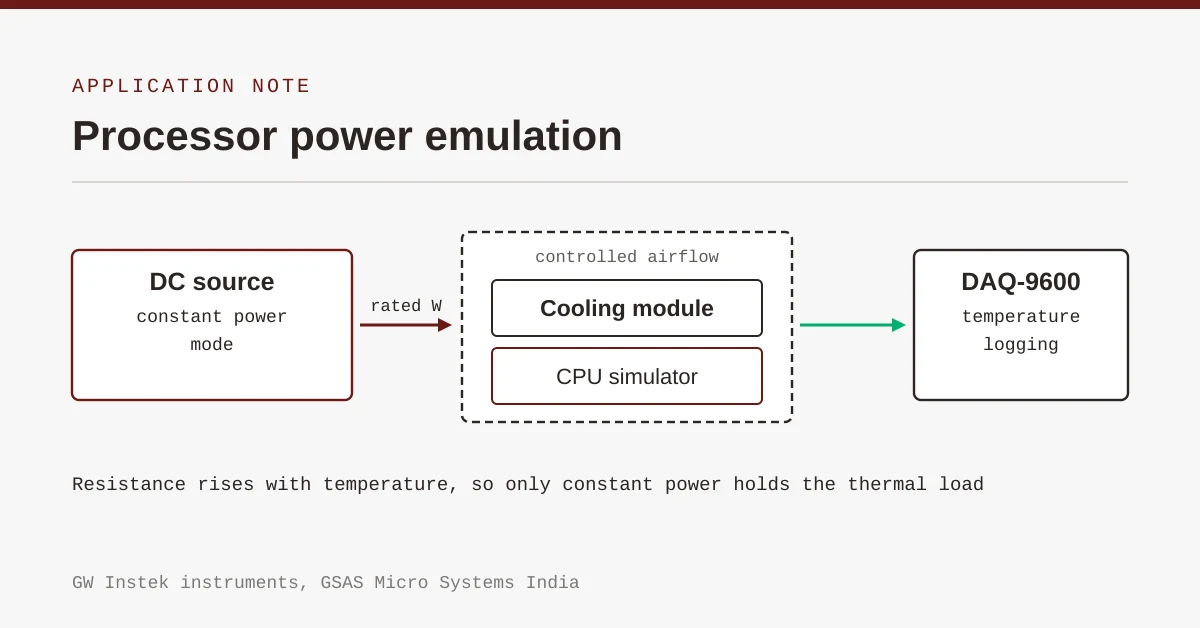
Emulating Processor Power for Thermal Testing: Why Constant Power
7 Oct · 7 min
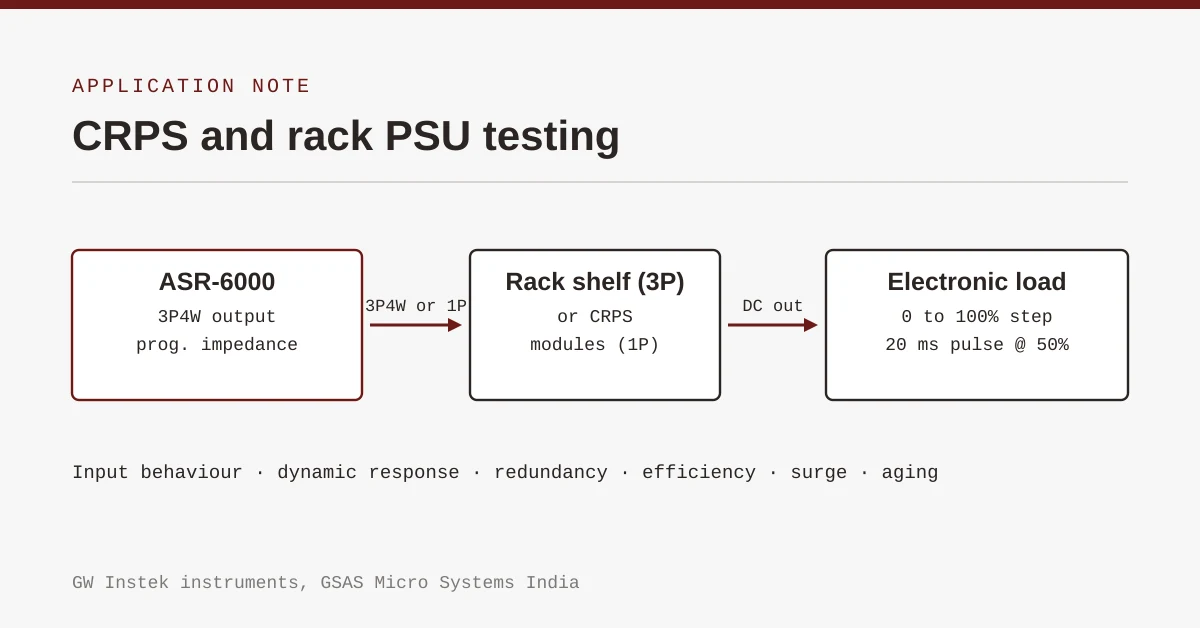
CRPS and Rack Power Supply Testing: The Six Tests That Matter
7 Oct · 7 min