I3C FAQ for Firmware Teams
This page collects the questions engineering teams actually ask when I3C first appears in a design review, with sourced answers. Where a claim comes from MIPI Alliance or from Binho, it is attributed, because I3C is a young enough bus that a good deal of secondhand explanation is unreliable.
If you want the practical route instead of the concepts, go straight to the first I3C transaction tutorial or the I3C sensor bring-up guide.
What Is I3C?
MIPI Alliance describes I3C as “the successor to I2C, incorporating the key capabilities of legacy I2C and SPI interfaces into an advanced, consolidated specification”. It is a two-wire serial bus, SCL and SDA, that keeps the physical shape of I2C while replacing most of what made I2C awkward in sensor-dense designs.
MIPI lists the headline capabilities as legacy compatibility with I2C, a two-wire interface with in-band interrupt support that “reduces pin count and signal paths”, multi-controller support, dynamic addressing, and command-code compatibility. On throughput, MIPI states that I3C “supports a typical data rate of 11.1 Megabits per second (Mbps) with options for higher-performance high-data-rate modes up to 100Mbps”.
MIPI lists I3C v1.0 as a 2016 release. The current version is I3C v1.2.
Is I3C Backwards Compatible With I2C?
At the bus level, yes, and deliberately. MIPI lists “legacy compatibility with I2C (I3C and I2C devices can coexist on the same bus)” as a core capability, and that coexistence is the whole reason incremental migration is possible: a board can move its high-rate sensors to I3C while leaving an EEPROM or a legacy PMIC on I2C.
The nuance that catches teams out is what compatibility does not mean. Legacy I2C targets do not participate in dynamic address assignment. They keep their static addresses and have to be enumerated separately by the controller, which is why mixed-bus bring-up has two discovery paths rather than one, and why a bus scan that finds your I3C devices may silently miss your I2C ones.
We deliberately do not attempt to be the definitive I3C versus I2C comparison here. Our partner Total Phase publishes a well-regarded public explainer on the differences, and MIPI’s own specification pages are the authority on the standard itself. Both are better first stops than a vendor blog for that specific question.
What Do the Acronyms Mean?
The four that appear in every I3C conversation:
CCC (Common Command Code). A standardised bus-management command. Broadcast CCCs go to every device; directed CCCs go to one target. ENTDAA starts dynamic address assignment, RSTDAA resets assigned addresses, ENEC and DISEC enable and disable events such as interrupts, and GETMWL and GETMRL report the maximum write and read lengths a target accepts in one transfer.
DAA (Dynamic Address Assignment). The process by which the controller discovers targets and allocates each a 7-bit address at runtime. Each target answers ENTDAA with a 48-bit Provisioned ID plus its Bus Characteristics Register (BCR) and Device Characteristics Register (DCR). This is what removes the address-pin strapping that identical I2C parts on one bus require.
IBI (In-Band Interrupt). A target raising an interrupt on SDA itself during the idle phase, rather than through a dedicated pin, optionally carrying a Mandatory Data Byte that says why. MIPI cites in-band interrupt support directly as part of what reduces pin count and signal paths.
Hot-Join. A target announcing itself after the controller has already finished enumerating, so a device that powers up late or is physically plugged in at runtime still gets an address.
How Does I3C Reduce Pin Count?
This is the question that decides whether I3C gets into a design, and the answer is concrete rather than marketing.
On an I2C sensor hub, every interrupting device needs its own IRQ line back to the host, and every pair of identical devices needs address-strapping pins to distinguish them. In-band interrupts remove the first category. Dynamic address assignment removes the second. On a hub carrying several accelerometers, gyroscopes and environmental sensors, that is a meaningful reduction in package pins, board traces and routing congestion, which is why the argument lands hardest in mobile and wearable silicon where die and package area are the binding constraints.
Can an I3C Bus Have More Than One Controller?
Yes. MIPI lists multi-controller support among I3C’s technical highlights. Binho’s I3C Cafe device database classifies parts as “Controller + Target” or “Target”, and observes that “Many modern MCUs and processors can function as both Controller and Target, giving designers maximum flexibility in system architecture”.
The practical consequence for validation is that your controller may not be the only one, and a device that is capable of the controller role advertises that in its BCR. A controller implementation that ignores those capability bits works until it meets a bus that uses them.
What Is MIPI I3C Basic?
MIPI I3C Basic is a publicly downloadable subset of the full specification, currently at v1.2. Of the full I3C v1.2 specification, MIPI says it “rearranges the document to make it modular, to clearly identify mandatory and optional features, reduce ambiguity, and allow easier updating of future versions”.
It matters commercially more than it looks. Because I3C Basic is the version available without MIPI membership, it is what most third-party tooling and open-source driver work targets, which is why analyzer and adapter products commonly describe their coverage as I3C Basic rather than full I3C.
What Tools Do I Actually Need?
Binho’s I3C Cafe splits I3C tooling into categories that map cleanly onto three different questions, and the split is worth quoting because buying the wrong category is a common and expensive mistake.
Protocol exercisers: “Products in this category can be used to emulate I3C devices and behave as an I3C controller or I3C Target.”
USB host adapters: “Products in this category are used to actively participate on the I3C bus, either as an I3C Controller or I3C Target.”
Logic analyzers: “Products in this category can be used to observe/record the transactions on an I3C bus, decode the data, and provide a level of analysis suitable for firmware development and debugging.”
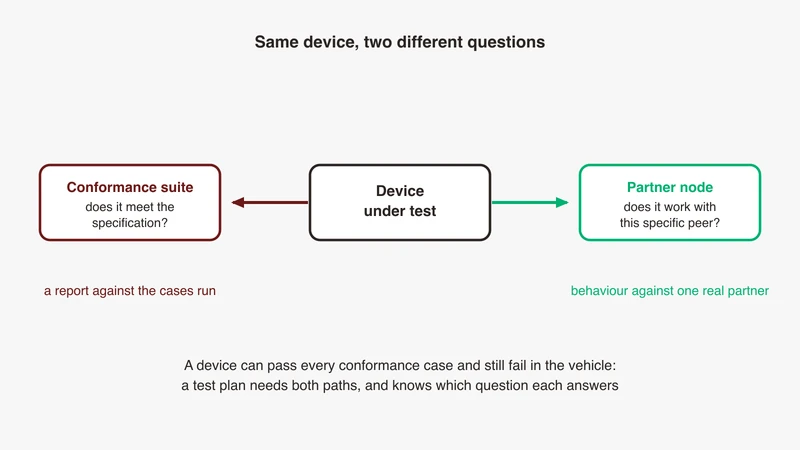
In short: active participation answers “what does this device do if I send it X”, passive observation answers “what actually happened on this bus”. Bring-up needs the first. Debugging a misbehaving system you did not build needs the second. Most programmes need both, and buying only the analyzer is the more common error because it is the tool the team already understands.
Which Binho Product Supports I3C?
The Binho Supernova. Binho specifies I3C spec versions v1.0, v1.1.1 and v1.2, speeds up to 12.5 MHz, SDR mode and HDR-DDR, In-Band Interrupts, Hot-Join and all Common Command Codes, at an I3C signalling range of 0.8 V to 3.3 V, with an I3C role of Controller or Target. The role flexibility is covered in running the Supernova as an I3C target.
Neither the Binho Nova, listed with I2C, SPI, UART and 1-Wire, nor the Binho Pulsar, listed with SPI, I2C, UART, RS-485 and GPIO, includes I3C. For passive decoding inside an existing Saleae Logic workflow, Binho publishes a separate licensed I3C Basic Protocol Analyzer plugin.
Binho also states that it does not simply follow the I3C specification but helps develop it, citing participation in MIPI I3C Plugfests since 2022 and membership of the MIPI Alliance as a Contributor Member, and it runs a public I3C Cafe resource hub with a device database, tools guide and articles.
Should We Adopt I3C Now?
That depends on whether the pin-count and interrupt-handling savings outweigh the switching cost for your specific design, and the honest answer for many boards is not yet. Our note on I3C adoption in Indian semiconductor design centres covers where it is landing first and why the pace has been gradual.
Where it clearly does pay is sensor-dense silicon: SoC sensor hubs, camera interface modules and PMICs, which is exactly the work concentrated in Bengaluru and Hyderabad, with automotive and industrial sensor integration bringing it into Pune and Chennai.
Getting I3C Tools in India
GSAS Micro Systems is an authorized engineering partner in India. We supply the Supernova, Pulsar and Nova with INR invoicing, evaluation units, and application engineering that covers I3C target bring-up, controller-side validation, HDR-DDR testing and Mission Control deployment. Our engineers work with design centres in Bengaluru, Hyderabad, Chennai, Pune, Mumbai, and Delhi NCR. Contact us for an evaluation unit, an I3C workshop, or a technical consultation, or request a quote.
Also appears in:
Interested in Binho tools?
Talk to our application engineers for personalized tool recommendations.
More from Binho
View all →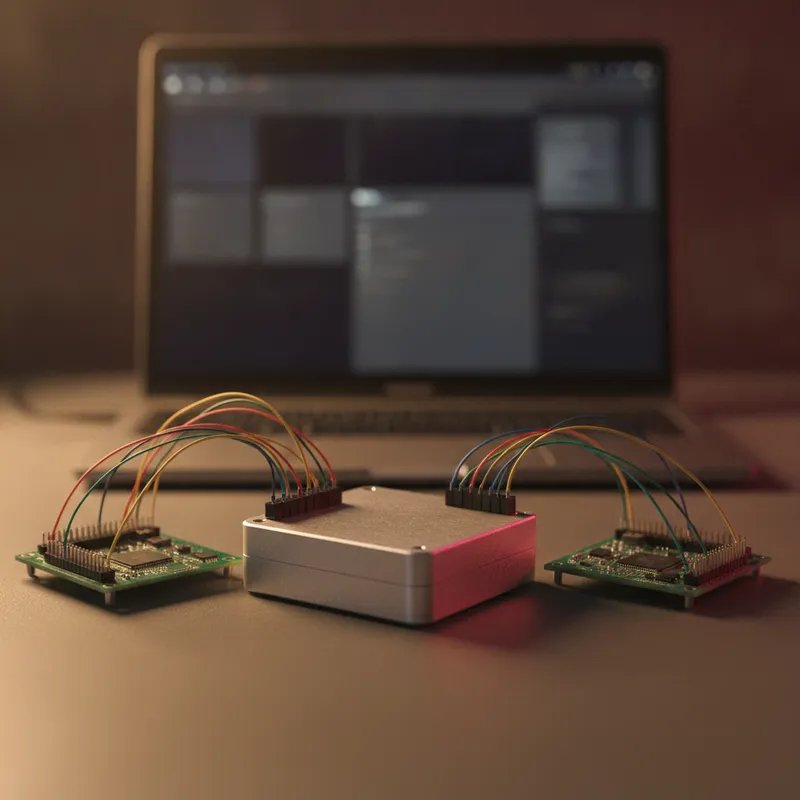
Running the Binho Supernova as an I3C Target: Emulating a Device Against Your Own Controller
31 Jul · 7 min
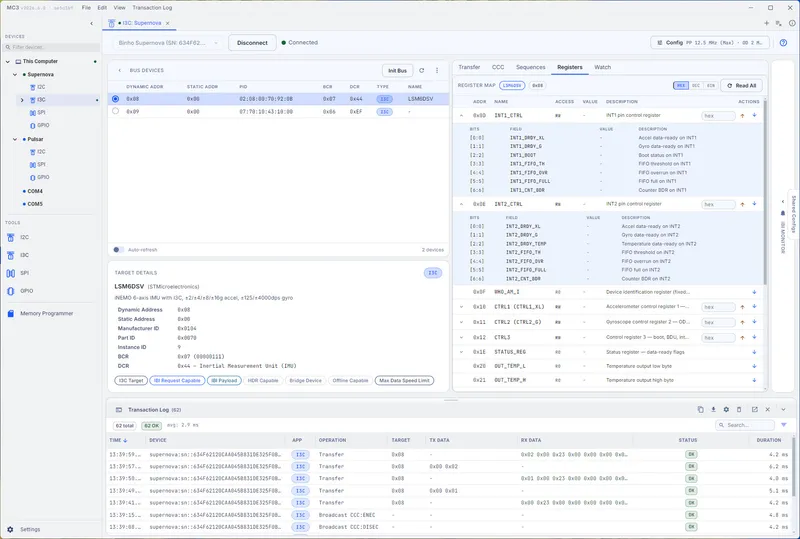
Binho Mission Control 3 (Public Preview): Point-and-Click I2C, SPI, I3C, and GPIO
20 Jul · 5 min
Binho Mission Control: Point-and-Click I2C, SPI, and UART Without Writing Code
7 Apr · 5 min

From Dedicated Analyzers to Multi-Protocol USB Adapters: A Bench Tool Evolution
7 Apr · 5 min
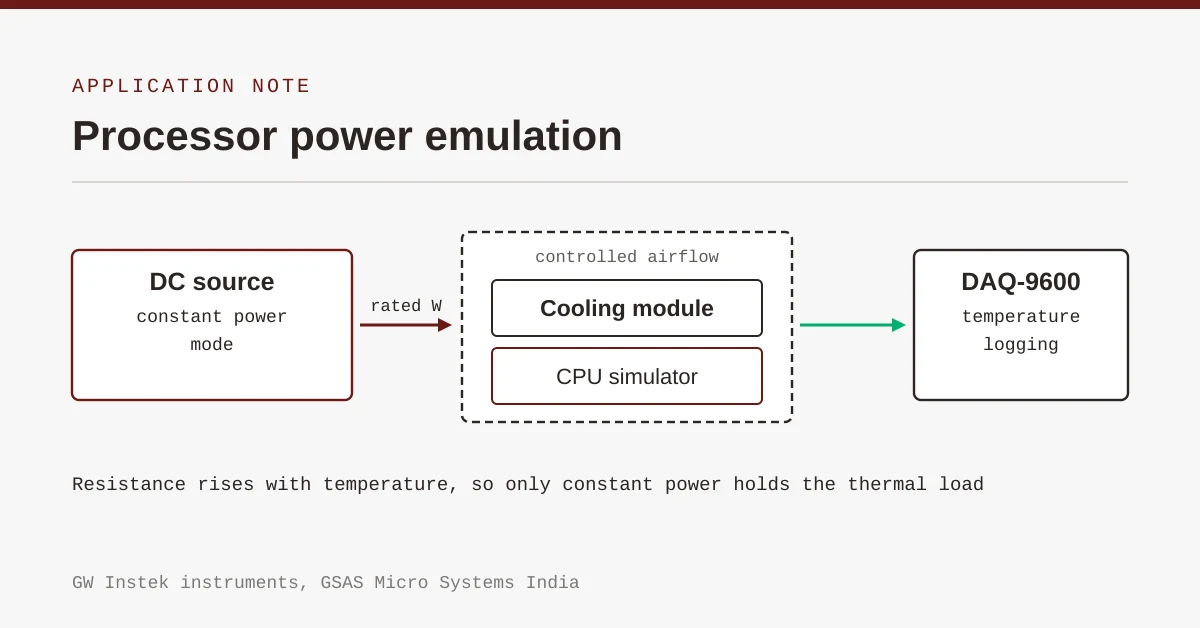
Emulating Processor Power for Thermal Testing: Why Constant Power
7 Oct · 7 min
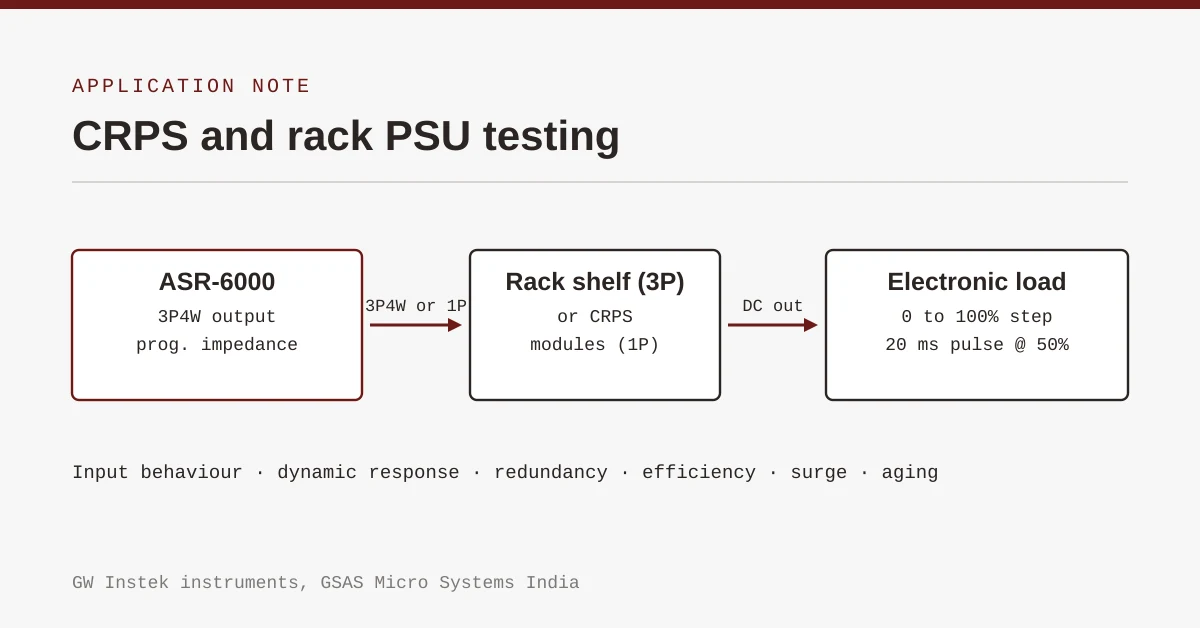
CRPS and Rack Power Supply Testing: The Six Tests That Matter
7 Oct · 7 min