
Embedded Perspectives
Binho
17 articles tagged with Binho.
I3C FAQ for Firmware Teams: What the Bus Is, What Changes, and What You Need on the Bench
MIPI Alliance describes I3C as the successor to I2C, with legacy compatibility so that I3C and I2C devices can coexist on the same bus, a two-wire interface that supports in-band interrupts to reduce pin count, plus multi-controller support and dynamic addressing. This FAQ answers the questions firmware teams actually ask before adopting it.
Running the Binho Supernova as an I3C Target: Emulating a Device Against Your Own Controller
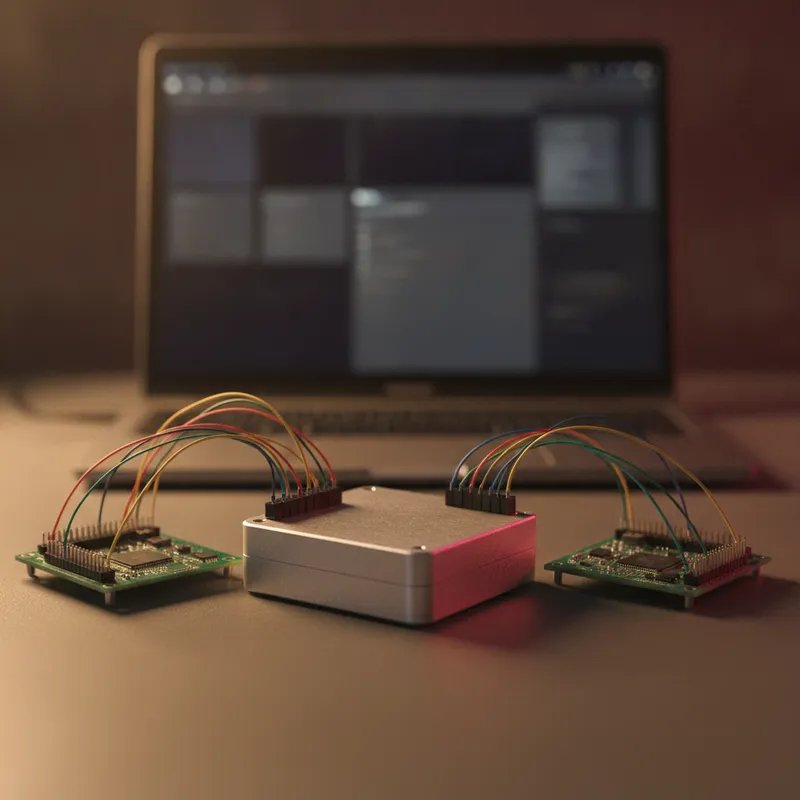
Binho specifies the Supernova's I3C role as Controller or Target, which means the same adapter can stand in as the device under test rather than only driving one. That second direction is how a team validates its own I3C controller, its ENTDAA implementation and its interrupt handling, before the target silicon exists.
Binho Mission Control 3 (Public Preview): Point-and-Click I2C, SPI, I3C, and GPIO
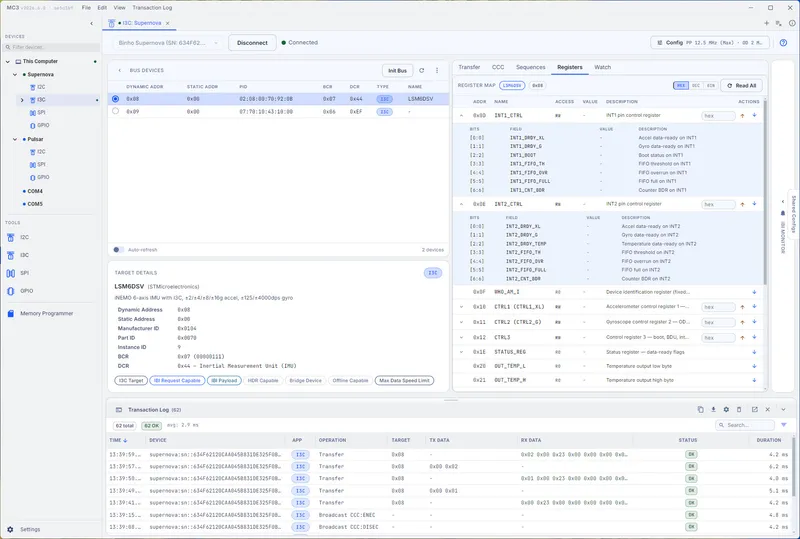
Binho Mission Control 3 is in Public Preview: a ground-up rebuild that drives I2C, SPI, I3C, and GPIO from one workbench in a browser tab or native app, with a visual memory programmer, free for existing Supernova and Pulsar customers. Available in India from GSAS.
Binho Mission Control: Point-and-Click I2C, SPI, and UART Without Writing Code
Binho's Mission Control GUI provides interactive I2C bus scanning, SPI transfers, UART monitoring, and protocol decoding, giving hardware engineers immediate bus access without writing scripts or configuring terminal emulators.
From Dedicated Analyzers to Multi-Protocol USB Adapters: A Bench Tool Evolution
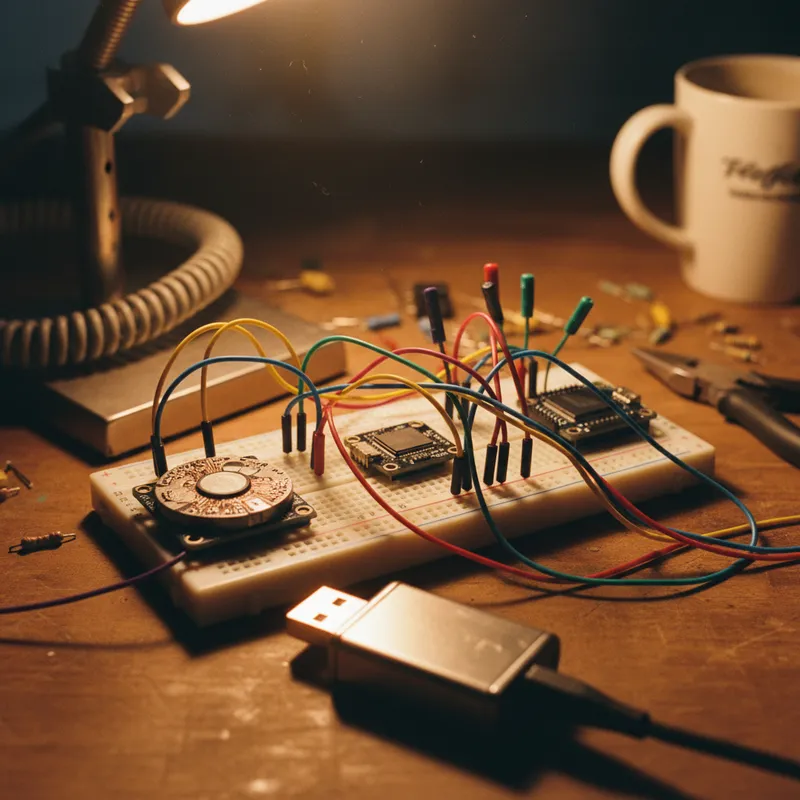
The embedded engineer's bench is consolidating, from drawers full of single-protocol tools to multi-protocol USB adapters that handle I2C, SPI, UART, RS-485 and I3C from a single device with one software environment. The driver is not hardware cost, it is the scripting environment that a shared instrument makes possible.

RS-485 and Modbus Testing with Binho Pulsar for Indian Industrial Automation
RS-485 carries Modbus RTU across most of India's installed industrial base, and the specification that decides whether a link survives a real plant is the common-mode range, not the baud rate. Binho specifies the Pulsar's RS-485 interface as half-duplex with a -7 V to +12 V common-mode input, which covers the ground offsets of long runs between panels.
Binho's I3C Basic Protocol Analyzer Plugin for Saleae Logic, and How It Pairs With the Supernova
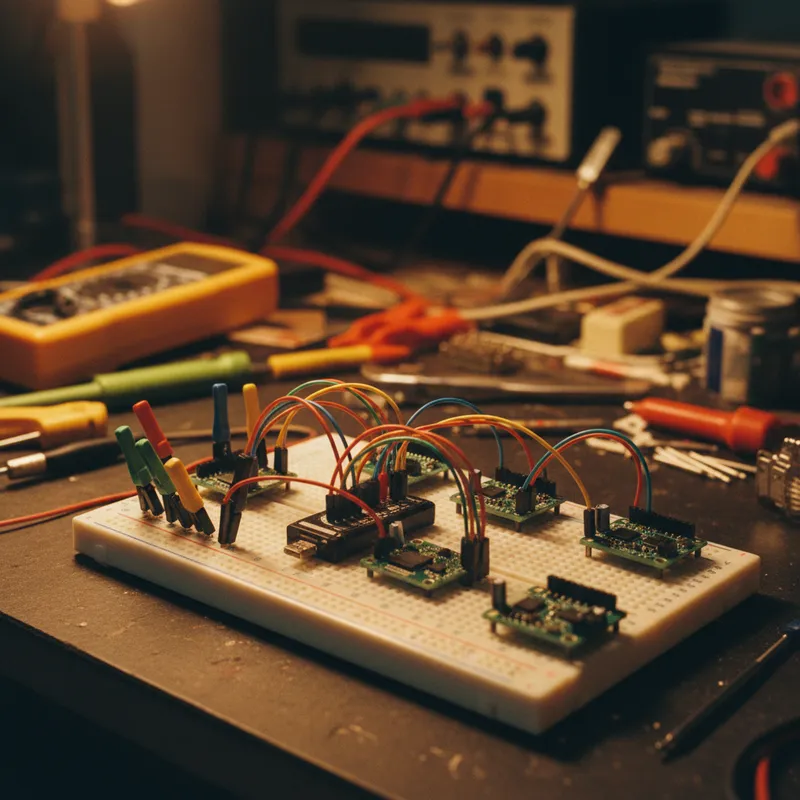
Binho publishes a licensed I3C Basic protocol analyzer plugin for Saleae Logic that decodes spec v1.0 through v1.2 at 12.5 MHz in SDR and HDR-DDR, covering CCCs, In-Band Interrupts and Hot-Join. It is a paid plugin under Flex or Node-Locked licensing, and it is a different tool from the Supernova exerciser: one watches the bus, the other drives it.
Tutorial: Your First I3C Transaction with the Binho Supernova
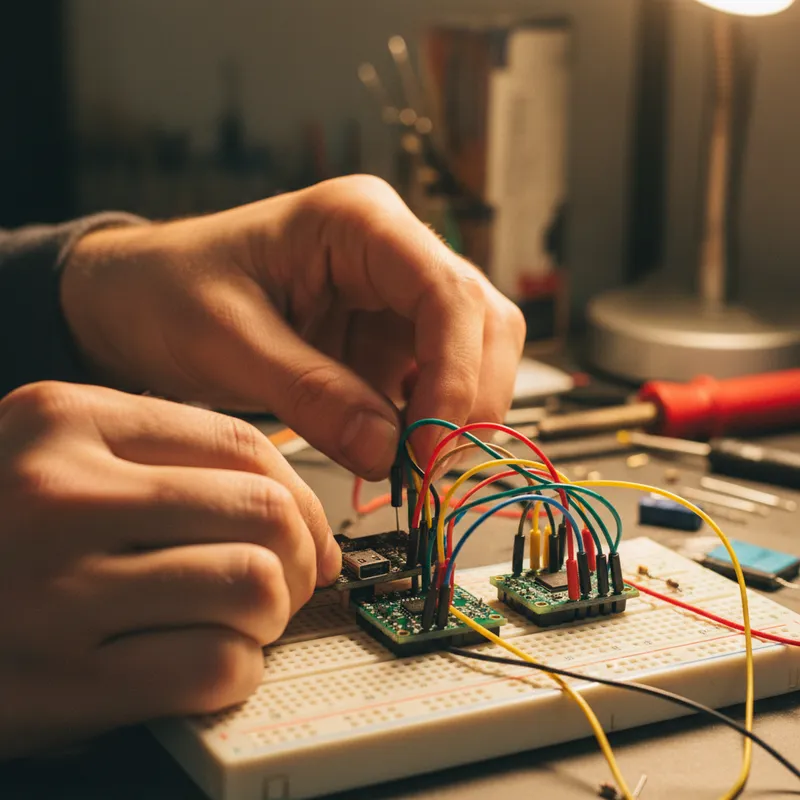
The shortest useful path into MIPI I3C is three steps: initialise the bus, run ENTDAA so the controller assigns a dynamic address to your target, then perform one read. This tutorial walks that sequence on the Binho Supernova using Python, and everything else in the specification builds from there.

MIPI I3C Adoption in Indian Semiconductor Design Centers
MIPI Alliance lists I3C v1.0 as a 2016 release, and the design centres in Bengaluru and Hyderabad that build sensor hubs, camera interface modules and PMICs are where its adoption in India is concentrated. The practical constraint is rarely the specification; it is having bench instrumentation that can drive an I3C bus interactively during bring-up.
I3C Sensor Bring-Up with the Binho Supernova: Bus Scanning, Dynamic Addressing, CCC Commands, and IBI
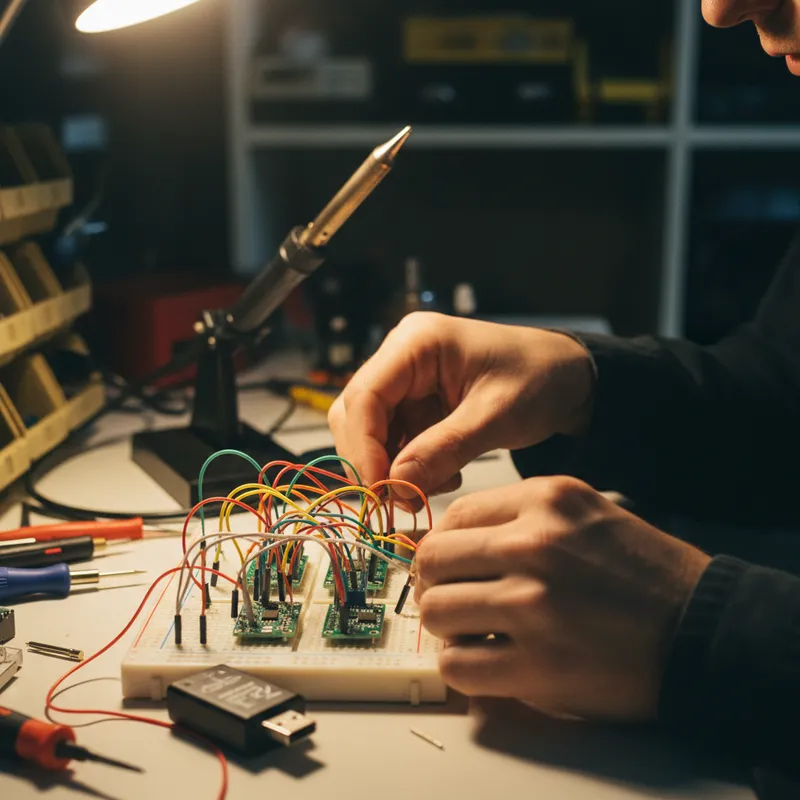
I3C sensor bring-up is not an I2C bus scan with extra steps. Before the first register read you have to reset and run dynamic address assignment, read back each target's Provisioned ID, BCR and DCR, and configure events with CCCs. This guide walks that sequence on the Binho Supernova, which Binho specifies as an I3C Controller or Target at up to 12.5 MHz.
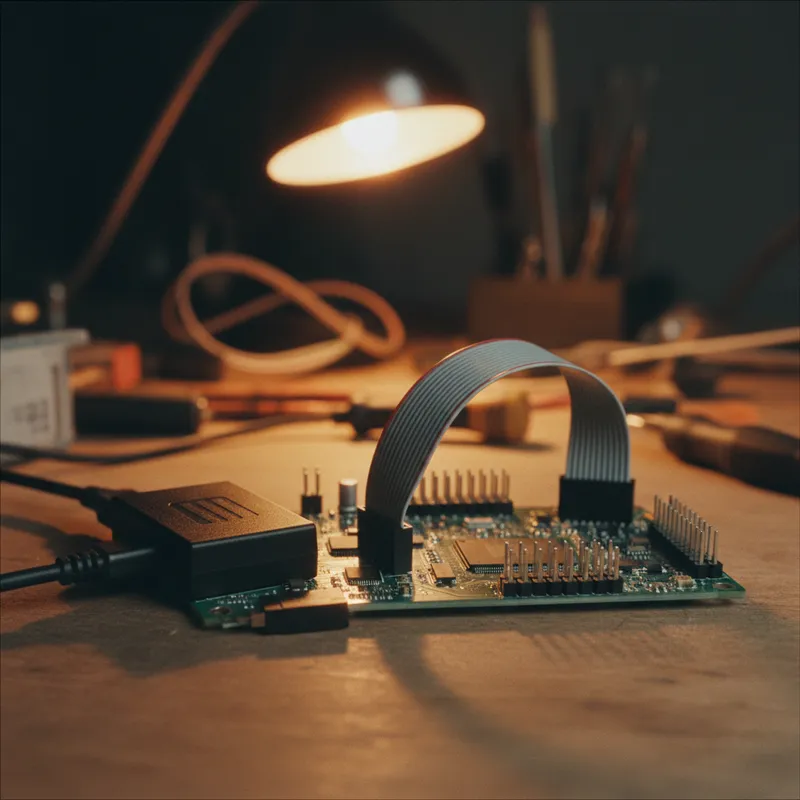
Binho Nova: I2C, SPI, UART, 1-Wire, and GPIO in One USB Adapter for Firmware Debug
Binho lists the Nova's protocols as exactly I2C, SPI, UART and 1-Wire, at up to 3.4 MHz, 12 MHz and 1 Mbps respectively, with 5x shared GPIO pins at 3.3 V logic, powered directly from USB. For a bench that mostly runs conventional serial buses, that one adapter replaces several single-protocol tools.
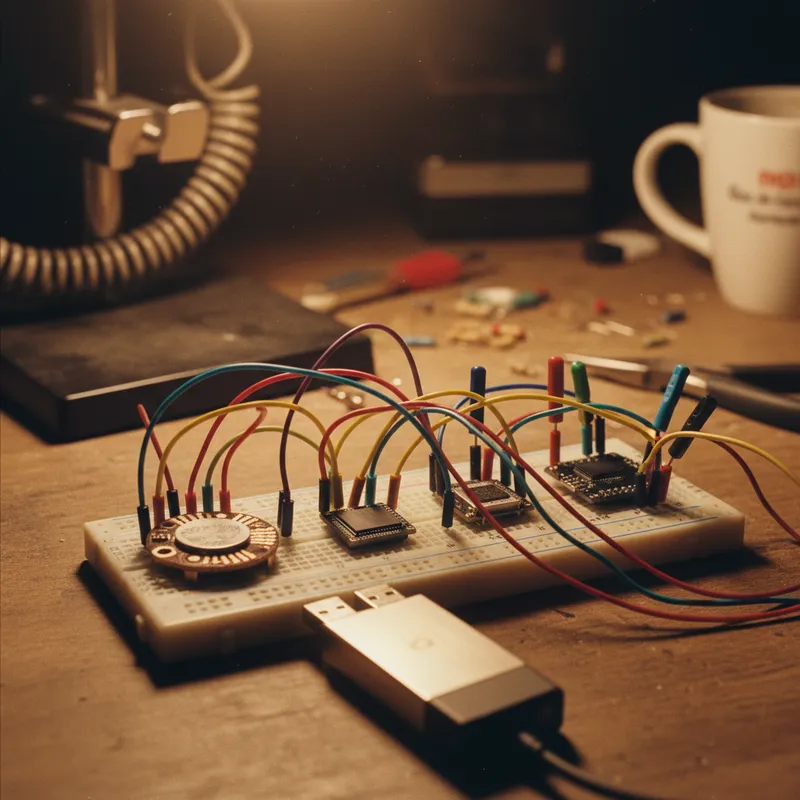
Binho Pulsar: 50 MHz SPI, 1 MHz I2C, UART and RS-485 in One USB Host Adapter
The Binho Pulsar ships with a 50 MHz SPI controller, a 1 MHz I2C controller, UART at 115200 baud, half-duplex RS-485 rated -7 V to +12 V common-mode, six configurable GPIO and programmable 1.2 V to 3.3 V downstream power. CAN-FD and 1-Wire are published by Binho as coming soon, so this guide covers only what ships.
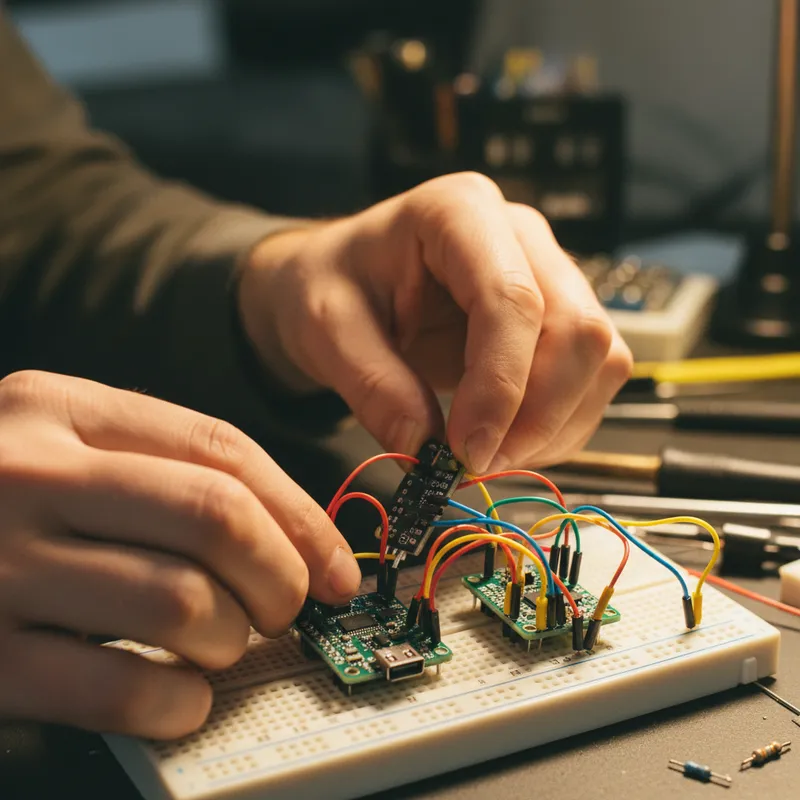
Binho Supernova: A Full MIPI I3C Exerciser for Firmware Teams
Binho specifies the Supernova for MIPI I3C spec versions v1.0, v1.1.1 and v1.2, up to 12.5 MHz, in SDR mode and HDR-DDR, with In-Band Interrupts, Hot-Join and all Common Command Codes, at 0.8 V to 3.3 V, and with an I3C role of Controller or Target. That combination is what makes interactive I3C bring-up practical on a bench rather than only on an FPGA prototype.
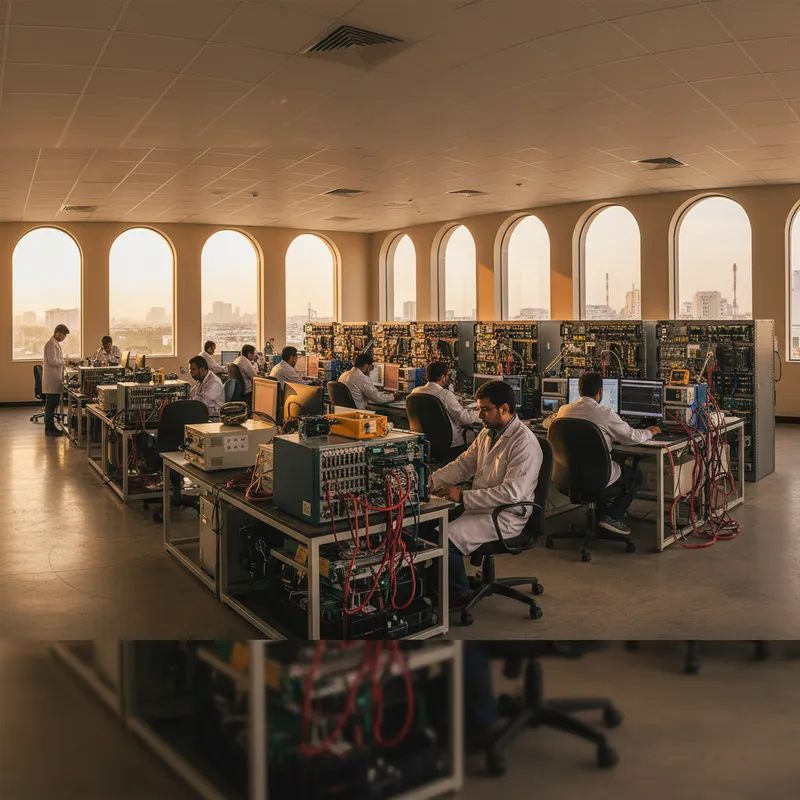
Binho Pulsar for Automotive ECU Peripheral Validation in India, and Where CAN-FD Actually Stands
The Binho Pulsar is a capable ECU peripheral validation tool today, covering SPI at 50 MHz, I2C at 1 MHz, UART and half-duplex RS-485 rated -7 V to +12 V common-mode. CAN-FD is not one of those capabilities yet: Binho publishes it as coming soon, at up to 5 Mbps and optimized for 12 V systems. If CAN-FD sits on your critical path, plan around that.

Tutorial: Reading a TMP102 Temperature Sensor with Binho Nova and Python
A complete I2C sensor read, end to end: scan the bus to confirm the TMP102 answers at its strapped address, read the two-byte temperature register, convert the 12-bit two's complement value at 0.0625 degrees Celsius per LSB, and log it. The same pattern generalises to any I2C register device.
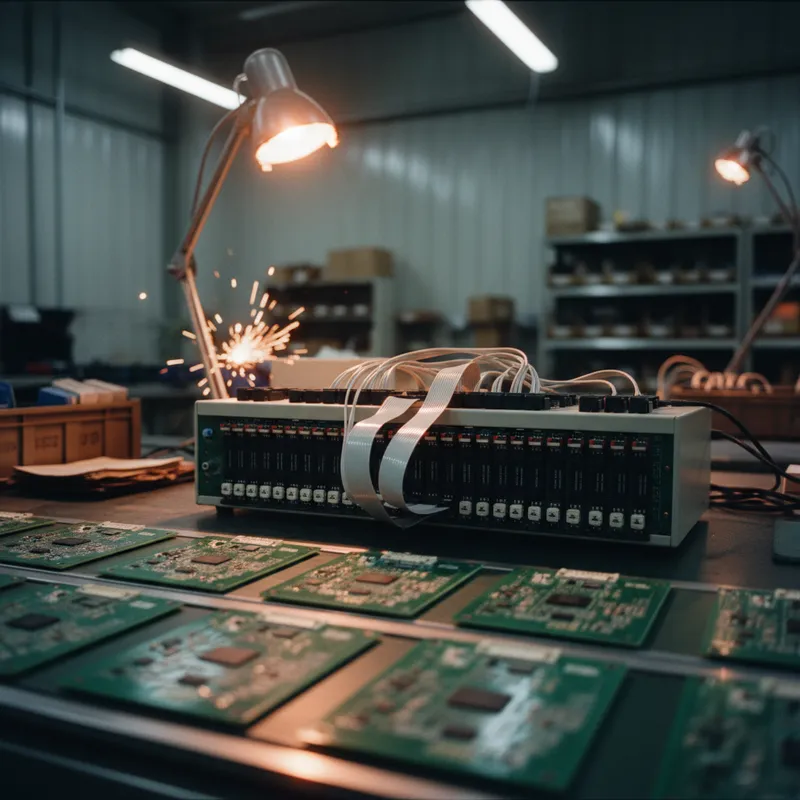
Production EEPROM and Flash Programming with Binho Nova and Python
Programming an external I2C EEPROM or SPI NOR flash is a separate production step from programming the MCU, and it is the step that carries per-unit data: serial numbers, MAC addresses, calibration constants. A scripted Binho Nova station handles the erase, program and verify cycle for both memories from one tool.
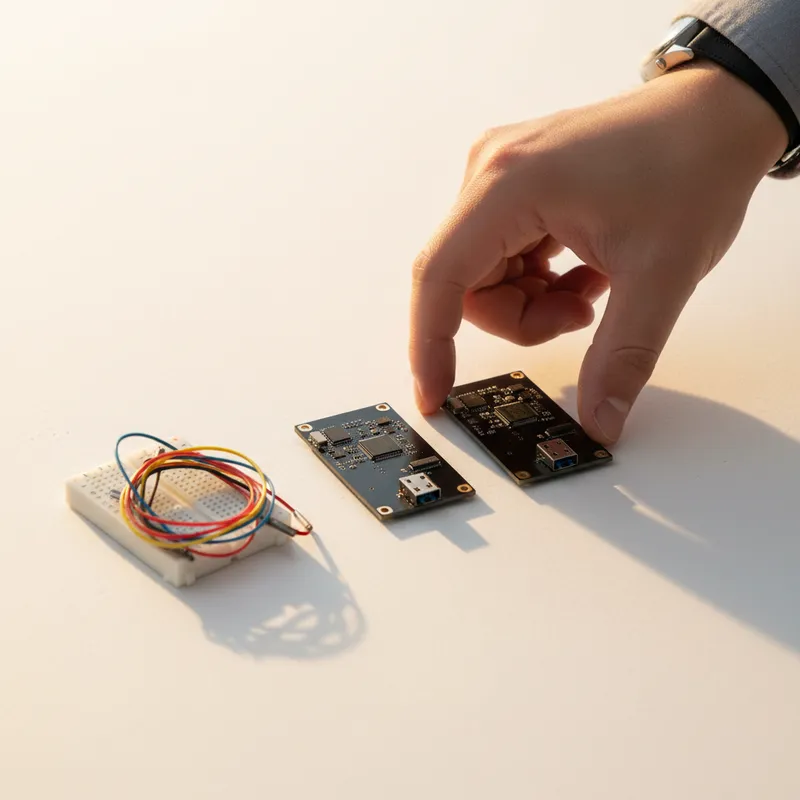
Binho Nova vs Supernova vs Pulsar: Which USB Host Adapter Is Right for You?
On Binho's published specifications: the Nova is the first-generation adapter for I2C, SPI, UART and 1-Wire; the Supernova is the MIPI I3C instrument, specified as Controller or Target at 12.5 MHz with SDR and HDR-DDR; the Pulsar adds half-duplex RS-485 and programmable downstream power. CAN-FD and 1-Wire on the Pulsar are still listed by Binho as coming soon.
Questions about Binho?
Our application engineers help teams evaluate tools, plan validation, and scope pilots across India.